This Chery is for real

As I’m reading the news of a possible taxpayer-funded auto industry bailout / GM bailout I thought I’d offer some observations from down here in Peru.

On my morning walk when I return from teaching at ICPNA I walk by a car dealership where you find brand new, made-in-China Chery cars. These are still a small minority here in Cusco, but you occasionally notice one of them as well as a few Indian Mahindra trucks. The majority of vehicles here are the popular Asian brands, the ever-present “Tico” and a few VW cars. I rarely see any US brands, save for the occasional antique landyacht.

I think the trouble at the “Big 3” US automakers reflects a corporate culture of staying in a comfort zone that I wrote about in a previous post. While the Latin American market isn’t very big by US standards, it is a developing market and the US manufacturers seem to have largely ignored it. On the other hand, US outsourcing has helped create the world’s manufacturing base in Asia – with which GM, Ford and Chrysler now have to compete.

Update: check out this great analysis of Detroit’s 20th century mistakes.

In addition to all of the discussion that is sure to follow about inefficiencies, quality, labor relations and product design, I believe US businesses in general need to rethink how to build a global presence in order to be successful. Don’t outsource your core business and if you do source overseas, build up good relations with your foreign partners and establish your brand there – if only in anticipation of future growth. The idea of cheap overseas labor without some valuable presence in the market where you buy the labor is an unsustainable illusion.

I don’t think the near-term options for the US auto manufacturers are very attractive, and a big wad of government cash won’t solve their predicament unless they also improve their business plans to resolve the underlying problems in their industry. In addition, I’m a bit skeptical that GM and the rest of the industry is waving the white flag just at a time when big government bailouts are the flavor of the day, and a president supported by organized labor was just elected.

Ward Welvaert

international business
turnaround consulting
aviation/airline consulting
CIS applications
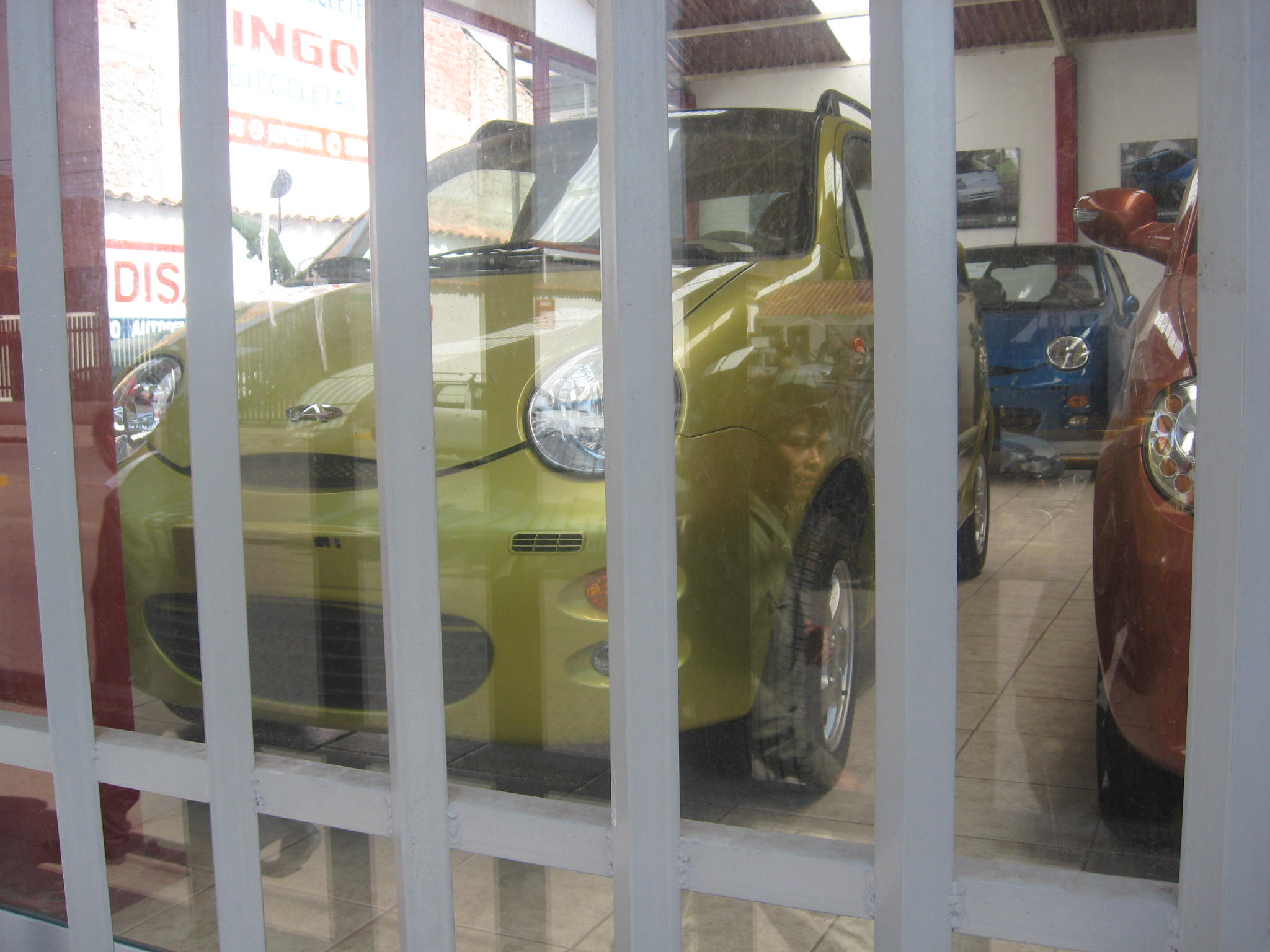
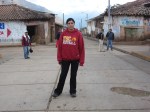
New Chery cars at a Peruvian dealership

New Chery cars at a Peruvian dealership

New Chery cars at a Peruvian dealership
New Chery cars at a Peruvian dealership

Visit to Accha, Peru

We visited Patricia’s grandmother “mama Vicky” in Accha this week. Accha is a very traditional Peruvian town about 4 hours outside of Cusco.

We see “mama Vicky” regularly here in Cusco, but this was the first time I was over at her house in Accha. She gets around great for her age, and is obviously way more in her element in Accha than at her other house here in the city.

The trip to Accha is a bit of an adventure in itself, with the Peruvian bus drivers apparently unfazed by the steep ravine along the side of most of the unpaved roads that lead to Accha. Once there, Patricia and I had a good time just relaxing in the sun, taking walks, and generally acting like city-slickers do out in the country.

Accha is a traditional Peruvian agricultural town, where the locals mostly raise sheep and grow corn and other typical Andean crops. Most of the work is still done by hand, I only noticed 2 or 3 farm tractors in town and we rarely saw more than 3 or 4 cars in one day. The tranquility was absolutely refreshing compared to life in the city.

All the locals were very friendly and greeted us everywhere. Since gringos don’t get out to Accha very often, the little kids in town tended to stare at me and tell their buddies “mira un gringo!”

I uploaded more pictures on our Flickr page.

Patricia and "mama Vicky" in Accha, Peru

Patricia and mama Vicky in Accha, Peru

In Accha, Peru

In Accha, Peru

The end of supply-side economics?

I was reading the news stories the other day about the Boeing machinists strike and the potential sale of Chrysler. Interestingly both those companies are headed by former GE executives. My friends at the GE plant where I used to work are actually affected by the Boeing strike, not a fun prospect with the holiday season coming up.

Now working for GE was the best job I’ve ever had. The company still has a fixed pension plan, affordable health insurance, education benefits, etc. In the aircraft engines business we had world-class engineering, a very safe work place and generally a fantastic team of people.

However, I was never a big fan of GE’s corporate culture and I believe the current meltdown in stock markets, credit markets and housing prices has much to do with corporate America’s culture and beliefs. Jack Welch’s infamous idea of double-digit earnings growth is no different from the belief many real estate investors held in recent years of double-digit price increases. Those kinds of beliefs totally ignore the fact that money is just a funny printed paper bill, it has value only in how it facilitates the exchange of goods and services.

In my opinion the current crises show that globalization, outsourcing and supply-side economics in general have their limits. The banks and hedge funds who were leveraging their funds 30 times or so were in effect playing Federal Reserve, printing up their own money. Problem is, if you don’t offer some valuable goods or services, the money remains just a funny printed paper bill.

In terms of housing prices, the damage has already been done. Either prices have to return to historical levels or we have to experience steep wage inflation to bring the cost of owning a home back in line with personal incomes. We may be able to apply some bandaids such as 40 year mortgages, but at the end of the day we have to bite the bullet on this one.

As for Chrysler, Boeing or any other company trying to prepare for what will undoubtedly be a significant global slowdown the answers are easier. People’s quality of life isn’t determined by how much stuff they have. I make less in one week here in Peru than I used to make in a day at GE, but I’m just as happy if not happier. Hopefully CEOs like Bob Nardelli and Jim McNerney can wrap their minds around the idea that people’s quality of life is more important than earnings growth. You only have to look as far as companies like Honda or Southwest Airlines to realize that a company that offers good products/services and has a motivated workforce will do well in the long run.

Ward Welvaert

international business
turnaround consulting
aviation/airline consulting
CIS applications

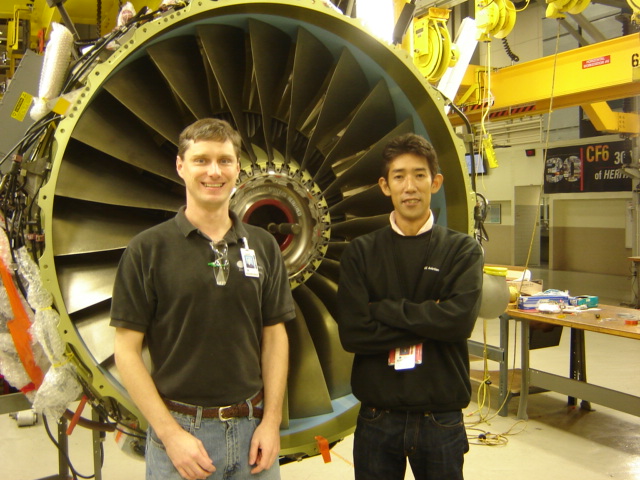
Me and my friend 'Bridge' at the GE jet engine shop in Durham, NC.

My friend 'Bridge' and I at the GE jet engine shop in Durham, NC.

Stories and traditions in Cusco – ICPNA AV2 writing exercise.

This is the writing exercise for AV2 9:05 at Icpna Cusco.

The Cusco area has a rich history with many great traditions, myths and legends. In the comments to this post, write a story about any of the legends or traditions in our area or Peru in general. This can be a well known story (e.g. origin of Cusco, Señor de Huanca, etc) or a story only you know (e.g. someone in your family who believes they saw a ghost). I especially like the less well known stories, the kind that a typical tourist would not hear about.

Make it interesting and entertaining. Above all, use your own words!!! Everyone in the class writes one story, but you get extra points for commenting on your classmates entries (or any other entries on this blog).

Ward

Procession of Señor de los Milagros

The annual procession of Señor de los Milagros was held on Oct. 12 in our neighborhood. Here in Peru, much of the month of October is devoted to Señor de los Milagros. It is believed that Señor de los Milagros protects the Peruvian people from dangers and fears. I found some great info on the legend of Señor de los Milagros at kleph.com and also at americaninlima.com and Peru food.

Here’s a picture of Señor de los Milagros passing through our neighborhood in Wanchaq and also in front of the Policia Nacional (PNP) at the plaza Tupac Amaru in Cusco.

Señor de los Milagros

Señor de los Milagros

Señor de los Milagros

Procession of Señor de los Milagros

Separation of church and state is less stringent here in Peru than in the US. At the police station, there was a brief ceremony asking Señor de los Milagros to protect the police officers while on duty, as it is believed he accompanies the faithful and protects them from harm.

Ward

Patricia was in Choquequirao

Hello there,

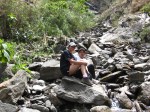
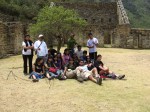
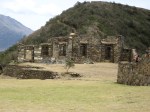
My class of “Autores” decided to go to lovely Choquequirao, which is one of the last places where the Inkas lived. We left Cusco on Thursday night around 8pm and we arrived to Ramadal around 11pm. We had to get all our stuff and start walking down to Cachora for around 3 hours, then we camped there in the middle of the main square. Early in the morning we got ready to start our trekking of 32 km to Choquequirao. The whole trip was terrible because my friends and I were always the last group to arrive to the points where we were supposed to rest. Also, I got bunch of mosquitos bites everywhere, I spent more money just on water and I also started to drink water from the springs, which was the yummiest water I have ever drunk. I can’t tell everything that I went thru on this trip, but at the end it turned out to be cool. I even miss the place, but I doubt I will go back to Choquequirao again…

Patricia

Starting a business in Cusco, Peru (ICPNA I-12)

Since I’m teaching about business in my current class at ICPNA, I decided to start a class project to open a coffee shop on the Plaza de Armas in Cusco. We already have a McDonalds in Cusco and will soon have a Starbucks, so let’s give them some competition.

Our fictional business will be a fancy coffee shop with yummie breakfast, snacks, etc. We will have wireless internet, friendly service and a hip atmosphere.

Here’s what I need from my team, that is, the class:

  • Ideas for names.
  • Ideas on how to set the place up (decorations, themes, uniforms, ….)
  • What kind of things we will sell.
  • Legal stuff: how to set up a legal entity (EIRL, SA).
  • Financial plan and accounting policies. Let’s not get in trouble with SUNAT or my uncle Alan Garcia.
  • Marketing plan.
  • A good location in anywhere in beautiful downtown Cusco Peru.
  • Employees, employee manuals, policies, procedures, …
  • Ideas on how to reward our employees.
  • Policies / ideas to prevent theft from customers and employees.
  • Suppliers: where to get good food, coffee, drinks, ice cream,…. Also furnishings and furniture to open our place.
  • Lobbyist to have lunch with the mayor and governor of Cusco once a month.
  • Business plan.
  • Exit strategy, meaning, what to do if our business doesn’t work out.
  • Any other advice or items I’ve overlooked.

Write at least 2 or 3 comments before the end of our class next Friday 9/26!!!! Any thoughts and ideas are welcome, explain/justify your ideas.

Ward

My I-12 class at ICPNA

My I-12 class at ICPNA

Consulting, CIS, aviation

This month I’m going to take a big leap of faith and finally start my own business down here in beautiful Cusco, Peru. I have a lot more inspiration than money – but that’s never stopped me before. If all I wanted was a comfy job somewhere I would have stayed with GE…

Speaking of corporate America, watching what is happening in the US tempts me to seek consulting work back in the corporate world. I always felt that some corporate culture in the US dangerously drove people to fudging their numbers. I often had the outside opinion on a lot of issues, which typically got rejected quickly because we all stayed inside a certain comfort zone. I don’t claim to have a silver bullet, but at the same time all the big shot bankers and corporate executives that are now making excuses are the same people who led their companies down the primrose path of self-destruction in the first place.

Ward Welvaert

turnaround consulting
aviation/airline consulting
CIS applications

Visit to Copacabana, Bolivia!


We had some trouble getting back from La Paz to Cusco due to the transportation strike in Cusco last week, so we spent a day in Copacabana waiting for the next bus back to Cusco. In my opinion this was the best part of our trip to Bolivia. Copacabana is a touristy spot on lake Titicaca, with fantastic scenery and a lot of laid-back little bars and cafes. We took a nice boat trip on lake Titicaca and visited the “Isla del Sol” where you have great views of the lake and surrounding mountains. The same afternoon we crossed the border back into Peru and took the bus back to Cusco…

– Ward Welvaert

Visit to La Paz, Bolivia

We made a trip to Bolivia last week to pick up my new Peruvian visa at the Peruvian consulate in La Paz. Archaic government rules mean that a visa typically grants permission to travel to a country, so in most cases you have to pick it up outside of the issuing country.

We took advantage of the opportunity to take a little vacation, stopping in La Paz, Copacabana (Bolivia) and Puno (Peru). La Paz is a fairly typical large Latin American city, located in a canyon made by the Rio Choqueyapu. The center of the city is at an elevation of over 3,600 meter (~12,000 feet) above sea level, but the outskirts of the city reach over 4,000 meter (13,000 feet) in El Alto. I’m not a huge fan of big cities, so I enjoyed Copacabana more than La Paz.

In Bolivia poverty is more visible and widespread than in Peru, and right now there is also civil unrest between the middle class and the poorer ethnic Indian population. La Paz is a stronghold of support for the ethnic Indian president Evo Morales, while the richer cities in Bolivia such as Santa Cruz are more opposed to him. Support for “Evo” is very visible in La Paz, on billboards, grafitti and public demonstrations.

– Ward Welvaert