The worst workshop ever

I’ve sat through my share of corporate workshops and training, in the US as well as here in Peru. Some I found valuable, others less so, but at the school where I teach we had a workshop this weekend that took the cake in a bad, bad way.

It was long – 8 hours with no more than 1 hour of interaction, the remaining 7 hours you sat and listened. It was in Spanish – knowing full well there were several gringos in the audience (including me) whose Spanish ranges from mediocre to non-existent. It was boring – by the end of the day even the Directors of the school looked exasperated. No schedule – There’s never a schedule for our academic meetings, you just sit and wait for whatever comes next.

A friend of mine said “It’s like a D-version of Dr. Phil.”

It was offensive and demeaning. The parts I did understand were about psycho-analyzing yourself, but in a very “in-your-face, you’re life is all bad, let me tell you how to live” kind of way. The facilitator yelled at grown adults like they were kindergartners.

To top it all of this workshop was held at the Royal Inca Hotel in Pisaq, an absolutely beautiful place with outdoor recreation facilities and a spa. The weather was beautiful… yet we spent the better part of the day inside listening to a condescending fool.

I usually skip the mandatory -yet unpaid – monthly academic meetings, but I thought I’d sign up for this one since it was supposed to be a fun weekend to get to know each other. The only fun part was when we took a break after lunch to check out the pool, although swimming an olympic size pool after drinking rum and coke was a bit tricky. That’s how bad it was… I resorted to drinking hard liquor in the middle of the day.

And this is going to help me how?
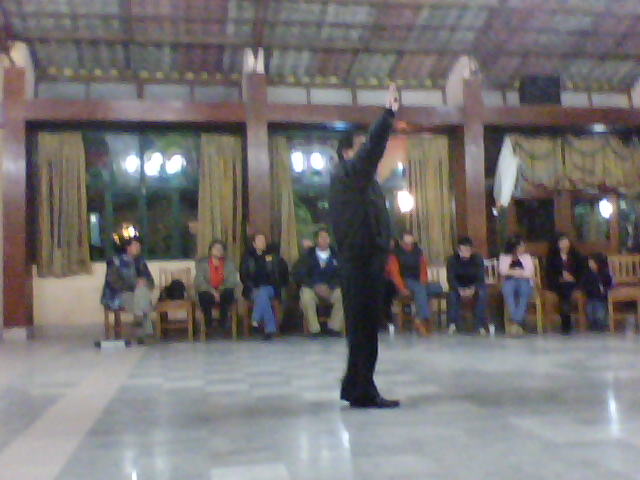
And this is going to help me how?

Even the Directors on the far end look bored

Even the Directors on the far end look bored

Unfortunately I don’t deal well with situations such as these, and I said some choice words as the day went on. I didn’t want to play the gringo card and leave, because I’m getting really disappointed at how our Peruvian teachers are treated, they don’t enjoy the same liberties us gringos do. Even though the school receives US taxpayer money, I would bet no US lawmaker would want their son or daughter to be treated like a Peruvian teacher here.

The plan was to stay overnight and “have fun” the next day, but I decided to skip out and head back to Cusco at night. I might have said things I would regret if I had stuck around to get drunk with the rest of the teachers and the Directors.

Village people coming to Cusco

That’s right, I don’t mean people from small villages like Accha, but The Village People, the 1970s disco band of “YMCA” fame.

Now Cusco has great nightlife, with live local bands playing bars and discos around the main square and in San Blas. But since I’ve been here, no big name bands have performed in Cusco, which is really surprising considering the amount of culture, history and fun-seeking tourists in the city.

Here’s my wishlist of rock ‘n roll bands who really, really, really ought to come and play in Cusco:

1) Bruce Springsteen. Fresh of his superbowl performance here’s a chance for “the Boss” to prove he’s really all about working people: play a free live show on the shores of Lake Titicaca during 4th Continental Summit of Indigenous People. Have some cervezas with Evo and fly back home to tell the bureaucrats at the State Department that Evo’s not all that bad after all.

2) Mark Knopfler. Just once I want to hear Love over Gold (translation: the reason I’m here) live.

3) Paul Simon. Supposedly Paul Simon spent some time in Cusco. He made the Peruvian song El Condor Pasa famous in the West in 1970, and consequently brought attention to Peru long before tourism here became mainstream. Plus, he’s from New York so maybe he can bring along some people who know how to make real pizza.

4) Peter Gabriel. You’re going to be in Lima later this month, why not take the 1 hour flight to Cusco and play a small gig here?

5) Last, but not least: what could be more Peruvian than this?

“The mountains and the canyons start to tremble and shake,
the children of the sun begin to wake.”

Led Zeppelin!!! The band was more into symbolism than any other I know, and Cusco is full of the symbolism of the Incas. Come on guys… I will make arrangements for you to play at Sacsayhuaman during Inti Raymi, the traditional midsummer celebration of the Incas, what could be more mythical than that?

One of my all time favorites, Jungleland, just begging to be performed in the jungle of Peru:

Feel free to add suggestions 😉

Message to Jeff Immelt:

Jeff,

There’s no real easy way to say this: please quit screwing my friends!!!

I’m sorry. This blog was previously free of profanity.

But Jeff, sometimes it’s better to say what you really think, and I honestly feel bad for my ex-collegues at GE who saved up for their retirement in GE stock. I got sentimental once and bought about $1,200 worth of GE stock for my 401(k), it’s probably worth $200 now. Some of my friends had their entire life savings in company stock, now they’ll be saying “hello, welcome to Wal-mart” for the next 20 years.

What really makes me angry Jeff, is that I remember seeing a memo from you several years ago saying “we still do too many things by the rules of some old playbook.” So I think you knew long ago the culture you inherited from the GE of Jack Welch was nothing but a grand illusion, but why didn’t you do anything about it?

Jeff, ayude me pues, GE’s Short/Current Long Term Debt alone is $193 billion, that’s 6 times the entire foreign debt of Peru, a country of 29 million people.

But let’s put things in perspective Jeff. Fly down here to Cusco (economy ticket on LAN is $800) and I’ll introduce you to a 10 year old kid in my English class. He has no hands but is happy as anything, he gets by just fine despite his disability. I can also introduce you to about 4,000 other kids where I teach, every one of them believes tomorrow will be better than today, and so do I.

I’ll also introduce you to Mama Vicky, who worked the land with her own two hands her entire life. Funny thing Jeff, Mama Vicky might “be worth” more than all of GE right now, since she has a house in a good area of Cusco – and no debt. But the point is this: she worked hard to provide tangible things to her family for eighty-some years, and GE can do the same thing.

GE makes lots of great things, tangible things, but GE culture is lousy. When I was at GE Jeff, kids with MBAs who didn’t know which pointy end of the airplane goes down the runway first had better career opportunities than hard working engineers and technicians. And what’s up with V-dollars? Come on Jeff, that sounds ridiculous even for a guy who went to business school.

I like how you cut the dividend Jeff, it was a decision based on reality. Quit worrying about AAA credit ratings. I know, I know, it affects the cost of capital. But borrowing money like it’s going out of style is what got us in this predicament, so let’s not borrow any more, okay Jeff.

Come have a few cervezas at Mama Africa with me and we can talk about how to ditch GE’s stale old 20th century culture and split of the industrial businesses in a successful IPO.

Seriously Jeff, you might think I’ve been drinking too much coca tea, but GE was a standard-bearer for business in the late 20th century, and that kind of culture is exactly what caused the recession. So let’s stop doing things like we did in the 20th century, that was a decade ago. Let’s look forward and start a radical overhaul of GE, so my friends can say “Welcome to Key West” or wherever they choose to retire, not “Welcome to Wal-mart” for the next 20 years.

Celebrando mis 21 años…

lista para cantar...

lista para cantar...

Si pues, ayer celebre mis 21 años…pero de vida artistica. que cuantos cumpli? bueno como todas las mujeres dirian… Eso no se le pregunta a una mujer… asi que mi edad queda en secreto.
Como todos los años la pase con mi familia, prepare mis infaltables gelatinas, mazamorra morada, flan, pop corn y otros, yo se que estas cosas son para fiestas infantiles, pero como hace tiempo en mi familia ya no hacemos esto porque mis primos ya crecieron y como siempre me ha gustado comer estas cosas en los cumples, pues no dudo en prepararlos ya sea para mi cumple, la de mis hermanos, la de mi mama y ahora para el de Ward, y yo supongo que lo seguire asiendo por largo tiempo mas.
Algo que si cambiara en las celebraciones de mis proximos cumpleaños es que tendre alguien mas que me dara un abrazo pero no como mi tia, prima, sobrina , mama, hermana o amiga sino que sera mi hija quien este presente en estas celebraciones.

Summary / Translation:

In the best Peruvian tradition we celebrated Patricia’s birthday with food, drinks and family 🙂

Last day of class

The school where I teach English (ESL) is on a monthly schedule, like many of the private institutes here in Cusco. Last day of class is typically quite an experience and yesterday was no exception. This month my schedule was in the afternoon, when most students are teenagers, and here’s how it all went down:

  • I arrive about five minutes before class starts, when the students are feverishly copying each other’s workbooks. In true Peruvian fashion, they generally ignore my daily reminders not to wait until the last minute.
  • We get in the class and all the 15 year old girls pretend to really like me, tell me I’m the best teacher ever.
  • I go over everything that’s on the final exam. Most students ignore me entirely and instead make a feeble last-minute attempt at studying for the exam.
  • I hand out the exams and someone promptly asks me to explain the very same question that I was giving them the answers to about 30 seconds earlier… At that point I can’t help them because I’m busy tracking down the one student who tried to steal an extra copy of the test so he can sell it at Molino later.
C.C. Molino, a place full of pirated CDs, movies and ESL tests...

C.C. Molino, a place full of pirated CDs, movies and ESL tests...

I wish I hadn’t said that…

After I snatched the exam back from the kid who tried to make a profit of extra exam copies, one girl gave me a mean look because I wouldn’t explain to her the very same thing I was talking about a few minutes earlier… and that’s when I told her exactly how I felt. In no uncertain terms I explained to her this is my “fun job”, that I get paid as much to teach the class for an entire month as I used to make in 3 hours and that she better not give me any grief because it’s not worth it to me.

Shame on me 😦

Then I went home, graded the exams and saved the grades on a diskette. You read that right, a diskette. Some fool in IT conned the “Directors” into believing diskettes are somehow safer than email.

Teacher… I have to have a really good grade or else my family will…

When some kid fails class, it’s often a huge problem in their families. I wish someone would explain to parents here that it makes no sense to send their kid to the next class – where they won’t learn a thing – if they haven’t mastered the fundamentals in the class before. The point isn’t to get some arbitrary grade, but to be able to express your ideas in a new language.

“It’s not what you know, it’s what you do with your knowledge that matters.”

My best friend, Bert, used to tell me that, and he did more to bring an end to the Cold War than Pope John Paul II. It took me years before I actually started to believe him.

Here in Cusco kids study a lot of things, but they often don’t apply what they know. Many families want their kids to bring home good grades and fancy certificates from institutes all over Cusco, but none of that matters unless you actually apply what you’ve learned.

Overall I really enjoy teaching English. Most students like me because I’m a gringo, and for that same reason I can get away with flaunting all the petty rules our “Directors” make. Instead of teaching my kids good old fashioned values like the Directors want, I play loud rock ‘n roll music in class and tell them all to be rebels, not to accept the status quo in Peru but to fight against poverty, prejudice and the injustice of “haves vs. have nots” in society.

Then I walk out, smile at the old ladies who run the place and say “hola chicas”. Bert would be proud.

21 reasons globalization as we know it is over

Here they are:

21 reasons globalization as we know it is over

21 reasons globalization as we know it is over

Front row: Glinish, Pamela, Jose Luis, … Back row: Luis, Milagros, Tania, … You get the idea. They were my students at ICPNA a few months ago.

I always ask them why they’re studying English, what their goals are.

Some examples: Pamela (the youngest one on the first row) is studying at UNSAAC to be an accountant, so is Tania (3rd. on the back row). Williams (2nd. from right on the back row) is a tour guide and Sharon (next to him) will probably be accepted in the performing arts program at the Católica in Lima. Jose Luis (front row) is studying medicine, his father is a doctor and dentist.

Not one of them ever told me they want to work a menial job in near slave-labor conditions for little money to support some fat cat CEO’s illusion of competitive advantage.

Some of the students at ICPNA may be privileged compared to the average Peruvian, but others proudly tell me they are the first generation in their families who have the opportunity to study and pursue a professional career. All of them are working hard to get a better life.

The old idea of globalization, selling natural resources to multinationals, outsourcing jobs for cheaper wages or moving factories to avoid environmental regulation is simply doomed – and that’s a good thing.

Old style globalization often did not add any tangible value, or improve the lives of the average Peruvian (or middle class America). Globalization 2.0 will be about real value, exchanging goods, ideas and services based on differences in geography, culture, infrastructure, economies of scale, etc.

I have ideas…

Even in the current downturn I’m very optimistic about the opportunities here in Peru, where the median age is 26 and the per capita GDP is $8,500. I have a ton of ideas: a floatplane business to visit Lake Titicaca, a web development company in Cusco, an export business of typical Andean products, … We’ll save the details for another day 🙂

Cusco in rainseason

The weather in Cusco is generally mild, although it is not like anything I’ve experienced in the US or Europe. There are no Florida hot summers or Wisconsin frozen-car-battery winters. In Cusco you only have 2 seasons: dry season from April-November and rainseason the rest of the year.

During rainseason in Cusco it rains for a few hours every other day or so, but typically the rains aren’t heavy downpours. Since it is summer in the Southern hemisphere, temperatures are mild except during and right after the rains.

Traffic on Av. Cultura during rainseason in Cusco

Traffic on Av. Cultura during rainseason in Cusco

Green areas look nicer during rainseason

Green areas look nicer during rainseason

The mountainous terrain and generally lousy building codes / civil engineering here make for a wet and dirty city during rainseason:

The Incas were great architects, but that was long ago.

The Incas were great architects, but that was long ago.

Worship the sun

Visit Cusco and you’ll understand why the Incas worshipped the sun: since the city is at an elevation of 3,400 meters (11,000 feet) there is little protection from the sun. During periods of sunshine the temperatures are mild but us gringos need hats, sunglasses and sunscreen to keep from getting a severe sunburn.

As soon as the sun goes down, it gets colder than the proverbial witch’s boob – or wizzard’s balls for the emancipated crowd. The coldest months are May – June, when the days are shortest here in the Southern hemisphere. Since there is no heat in most houses, when it is cold outside it’s also cold inside. It’s not unusual to wear a scarf inside the house, as I am right now.

What to bring:

If you’re planning to visit Cusco, bring some light clothes to wear when it’s sunny and a warm jacket for nighttime. Hundreds of vendors will try to sell you chalinas (alpaca scarfs), chullos (typical Peruvian hats) and sweaters, so you can get those here instead of bringing them in your luggage.

Looking for names of Inca princesses

In an instant I’m no longer the guy who tells tall tales of flying old airplanes or traveling the world. I’m now the guy who shows baby pictures:

5 months - Thank goodness she looks just like her mommy!!!

5 months - Thank goodness she looks just like her mommy!!!

2 big tummies

2 big tummies

We found out yesterday that everything is going well with nuestra calatita and it’s going to be a girl !!!. Suggestions for girl names are welcome, since everyone told Patricia up to now it was going to be a boy, she was looking mostly for boy names…

Due date is June 14, so we’ll keep up the news on what it’s like to have a baby in Cusco, Peru 🙂

Help us out. Patricia speaks Spanish and English. I speak Dutch, English and some Spanglish. My parents speak Dutch but Mama Vicky prefers Quechua… Please vote:

Google speaks Quechua

A lot can be said about the success of Google, how the company largely took over the lucrative internet search business from one-time internet darling Yahoo!, and many of Google’s other success stories are the stuff college case studies are made of.

Here in Peru I noticed one more reason why Google became so successful: Google speaks Quechua.

Quechua is a native Indian language spoken here in the Andes region, it is believed to date back well before the Incas’ time. Today Quechua is an official language in Peru, it is spoken by the native Indian, typically rural, population in both Peru and Bolivia.

Of course lots of websites are available in different languages, that in itself is not the point. But think about this quote from Umair Haque’s Smart Growth Manifesto:

“Outcomes, not income. Dumb growth is about incomes – are we richer today than we were yesterday? Smart growth is about people, and how much better or worse off they are – not merely how much junk an economy can churn out.”

The significance of Google’s Quechua site is that I can’t imagine Google sees any substantial revenue from it.

I don’t say this to put down the Quechua language, but simply because most of the native population who speak Quechua also speak Spanish, and they revert from one language to the other seamlessly, with Spanish typically spoken in the cities and used in business.

Cost/benefit is an entirely different concept from revenue/cost. Even though Google may not see much revenue from its Quechua site, thanks to Google lots of schoolkids in little towns all over Peru can read and search information in their native language.

I believe it’s well past time to stop managing companies like we did during the era of supply-side economics in the 20th century. In the 21st century, businesses will find opportunity when they do things because it’s the right thing to do, when the outcome is something you would be proud of.

Kids in rural Peru whose native language is Quechua learn Spanish in school.

Kids in rural Peru whose native language is Quechua learn Spanish in school.

Mining concessions in Peru

CORRECTION – see comments: Due to my mediocre Spanish I earlier stated mistakenly that the mayor of Acomayo granted mining concessions, it was in fact the government, and local authorities are protesting the developments. My apologies to the mayor of Acomayo.

Original post, corrected:

I just read here that the Peruvian government has granted significant concessions in the Acomayo area to the mining industry without proper consultations with the people of Acomayo.

Allow me to be perfectly selfish here: Acomayo is not too far from Accha, and if you mess with Accha, you’re messing with me. If this causes any trouble for Mama Vicky in Accha, I might just have to get involved in the opposition movement…

Sarcasm aside, I once read a column in “El Comercio” that said “Peru is a poor country because Peruvians act like poor people.” Peruvian authorities are typically eager to sell the country’s natural resources out for what they believe is a big sum of money. However, if the financial crisis proves anything, it’s that money is just funny printed paper. You can’t eat it, dance with it or teach it to sit and wag its tail.

Now mining is a necessary and honorable industry. Without it we would not have roads, infrastructure, hospitals, etc. But if Peru wants to improve its economy beyond the business districts of Lima, business and political leaders need to focus on applying the country’s fantastic human and natural resources to improve the quality of life for all Peruvians, instead of just looking for big payments of foreign cash.

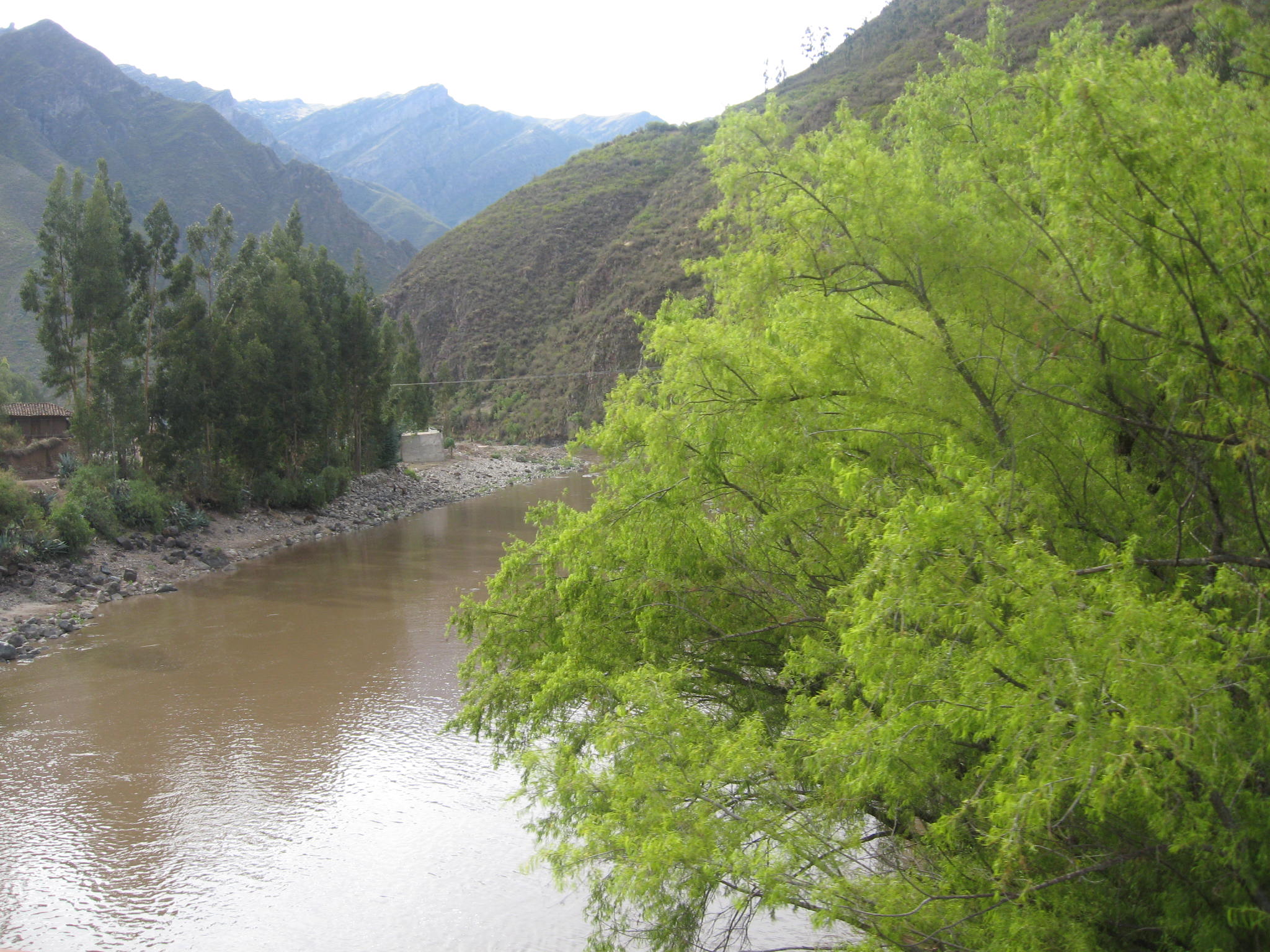
I'll have my river without lead, please.

I'll have my river without lead, please.

NB: a good site for news about the impact of mining on Peruvian communities is Conacami Perú: Confederación Nacional de Comunidades del Perú Afectadas por la Minería

NB: I didn’t keep the column I referred to above, it was printed in El Comercio around the signing of the Hunt Oil project. If anyone happens to come across it, please let me know.