Pais de coca cola

This morning I paid the “tasa anual” or yearly tax on my carné de extranjería. All in all it took me several hours to accomplish this, getting a current official copy of our “acta de matrimonio”, a bunch of other copies, a “pago” at the Banco de la Nacion, etc.

While I was waiting in line at the Peruvian immigration office this morning, one of the other folks waiting in line said:

“Dicen Peru es el pais de la COCA COLA… Mitad de los Peruanos estan cultivando COCA, y la otra mitad haciendo COLA

So true…

Meaning, loosely translated, “if Peruvians aren’t growing coca they are somewhere standing in line”. Or you could look at it as the Peruvians in rural areas (the ones chewing coca) work the land and the mines, doing productve stuff, while the folks in the city eat ice cream, write blogs like this one and spend countless hours on inane bureaucracy, doing not much of anything productive 🙂

Cola means “line”, it’s one of the first words you’ll ever learn in Spanish, right up there with mañana and un rato. Although it must be said Peruvians are horrible at making a cola, they are habitually trying to cut in line…

In this great future – part 2

A while ago I wrote about difficult times in the recent history of Peru, borrowing words from Bob Marley “in this great future, you can’t forget your past…”

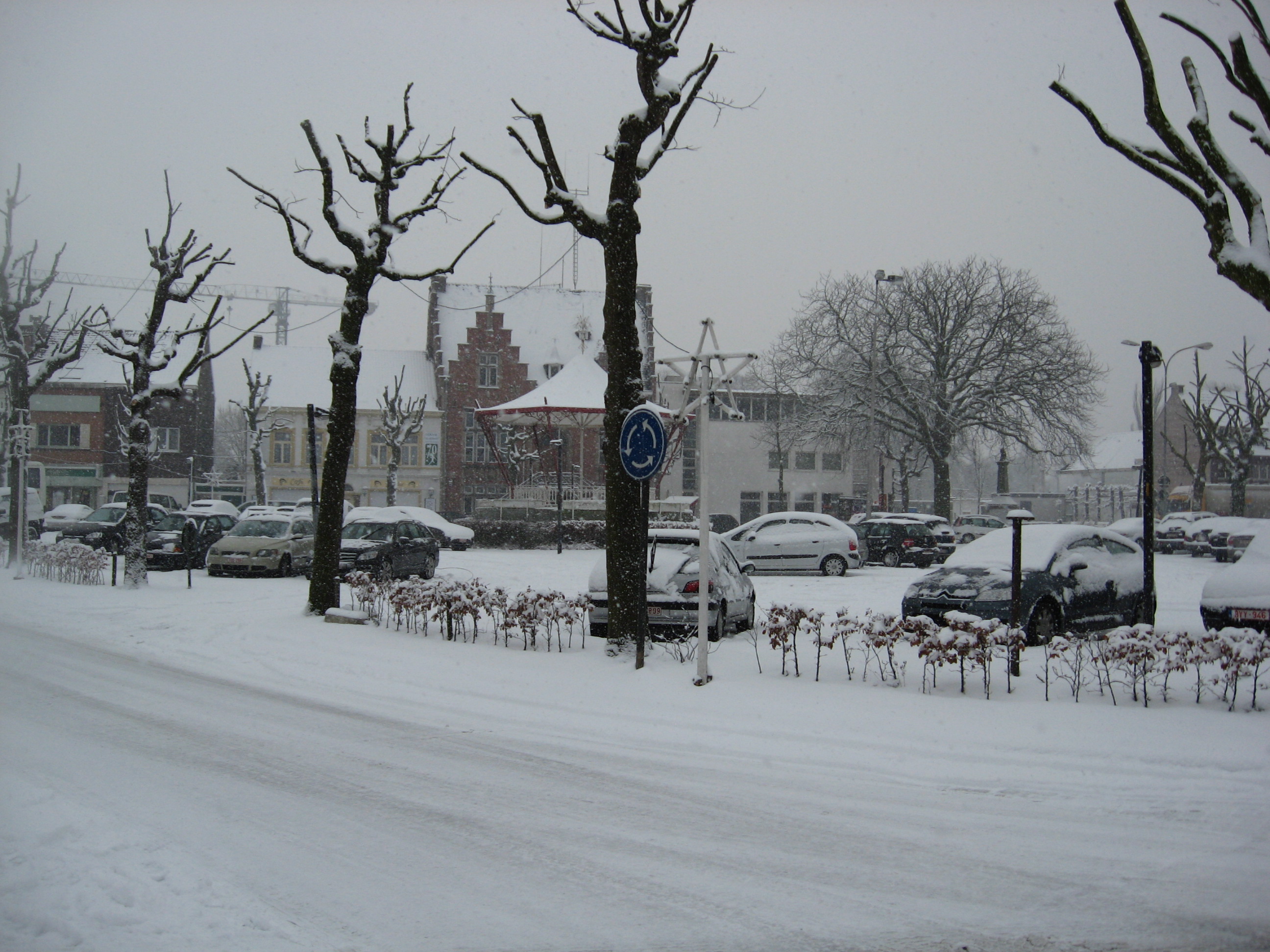
The same is true for Belgium, where we are currently spending the holidays with my family. Life wasn’t always easy here either. Take a look at the main square in my town, nice and picturesque in the snow…

Main square in Oostakker, Belgium

Main square in Oostakker, Belgium

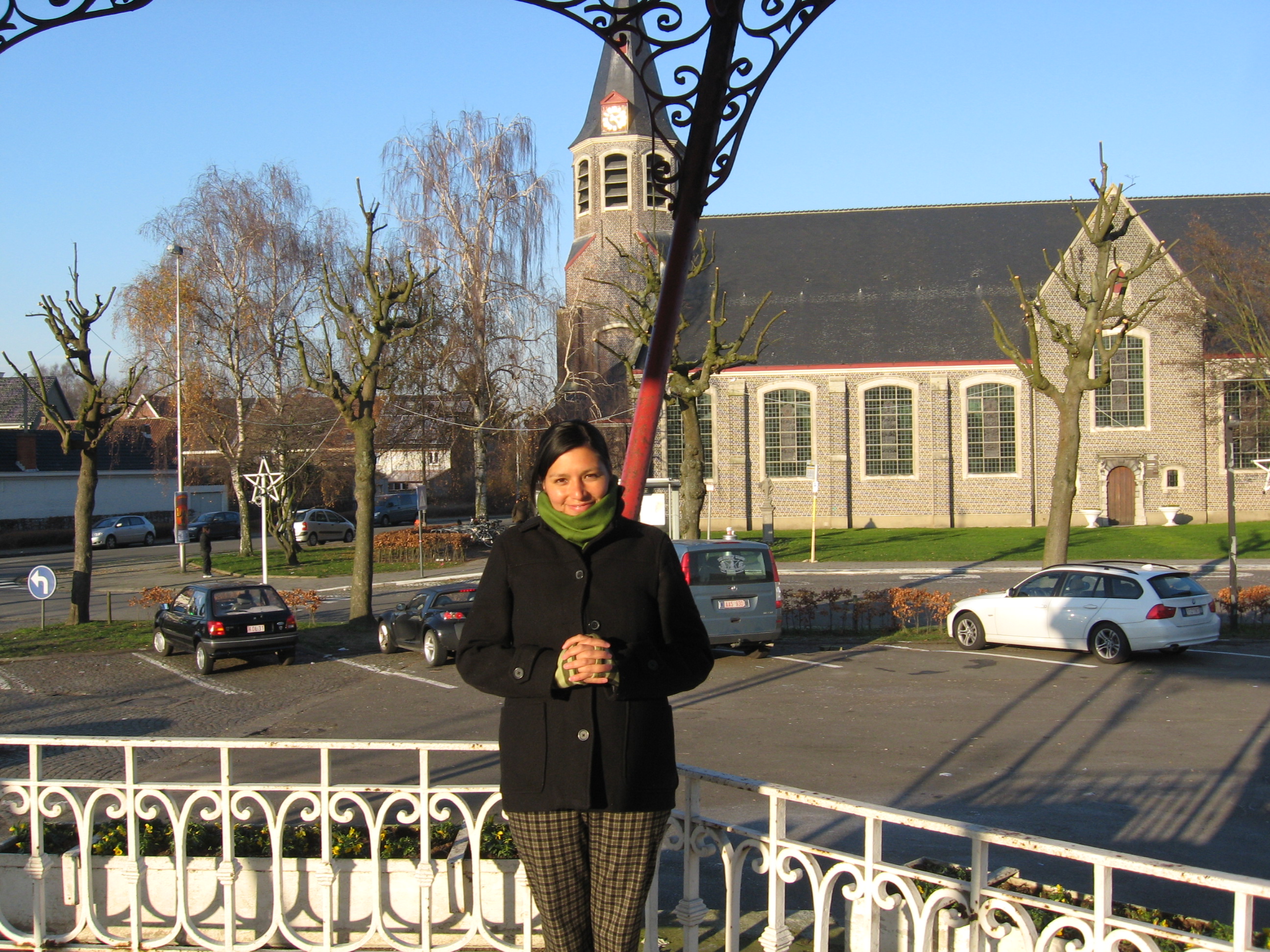
There’s a cute gazebo in the middle of the main square, where we were being all touristy…

The gazebo in the main square in Oostakker

The gazebo in the main square in Oostakker

Patricia on the gazebo

Patricia on the gazebo

But take a closer look… the gazebo is built on top of a World War 2 era bombshelter, the red door is the original entrance. When we were kids we’d go inside and play, although it often had standing water inside. It’s not the only bombshelter in town, there are several more scattered around.

Entrance to WW2 era bombshelter

Entrance to WW2 era bombshelter

In Peru there are so many young people that a middle-age white guy like myself is positively ancient, not many people are around with any recollection of World War 2, but in Europe there are still many people who remember WW2. My grandmother used to tell us about how they slept in a home-made shelter they dug in the backyard, my grandfather was in the the Belgian army at the beginning of the war. My other grandparents had a farm and would secretly help people with food when the rations weren’t sufficient.

“in this great future, you can’t forget your past…”

Un rato

It is said the very first word of Spanish you’ll ever learn is “mañana”, which literally means “tomorrow” but in real life Latin cultures usually means something like “some day in the future, possibly”.

When I was a kid, my parents built a small vacation home in Spain. At our first visit, my dad went to buy some stones to finish the patio. The stones were supposed to be delivered “mañana”. So when no truck showed up the next day, my dad rode his bicycle in town to inquire… only to be told kindly “mañana”. This happened again the next day, and the next day, and it became a ritual for the entire 7 days of our stay, until the last day of our vacation when day my dad agreed to have the stones delivered some 6 months down the road when we’d be making another, longer trip to Spain. The entire time my family of course took the Spanish contractor at face value, thinking “mañana” actually meant the same thing as “tomorrow”, or “morgen” in Dutch.

Here in Peru the word “mañana” has an equally dubious meaning, and I’ve learned another one just like it: “un rato”, which literally means “a moment” or “a minute”. But nothing could be further from the truth. When someone in Peru tells me “un rato”, it pretty much means “nothing is going to happen for at least 45 minutes”.

In fact, when the baby starts to fuss because she’s hungry and Patricia says “un rato”, I’ve learned I can put in a pirated Led Zeppelin DVD to keep the baby entertained and distracted and pretty much make it through half the DVD before the “rato” is finally over. Hey, rock and roll beats walking around with a crying baby for 45 minutes 😉

Gotta go now, in un rato we’re going to eat dinner…

$1202

The current price of gold, one of Peru’s 2 main exports (the other is copper).

Here in the Empire of blood and gold the effects of the run-up in gold prices are decidedly mixed. While gold certainly has been good for Peru’s macro-economic numbers, the current gold rush in places such as the pristine jungle of Madre-de-Dios has undeniably had a significant environmental and social impact.

Gold mining in the jungle of Madre-de-Dios, Peru

Gold mining in the jungle of Madre-de-Dios, Peru

On the purely financial aspect, I tend to agree that gold will likely do no better than protect your purchasing power in the long run. Gold has no intrinsic value and I’d say the current run-up is largely due to lack of faith in paper currencies, since central banks are printing them up like Monopoly(tm) money, but you can’t expect artisan miners in Peru or the suits at the TSX to give 2 hoots about that.

Here’s to Peru’s Ministerio de Energia y Minas.

In this great future…

you can’t forget your past.

I may fuss about some things in Peru, but at the end of the day I’m very optimistic about the future. What keeps surprising me is how the young population (median age is 26) appears indifferent at times to the recent history of Peru.

Take the post office here in Cuzco, for example. Looks ok from the outside…

Cuzco post office

Cuzco post office

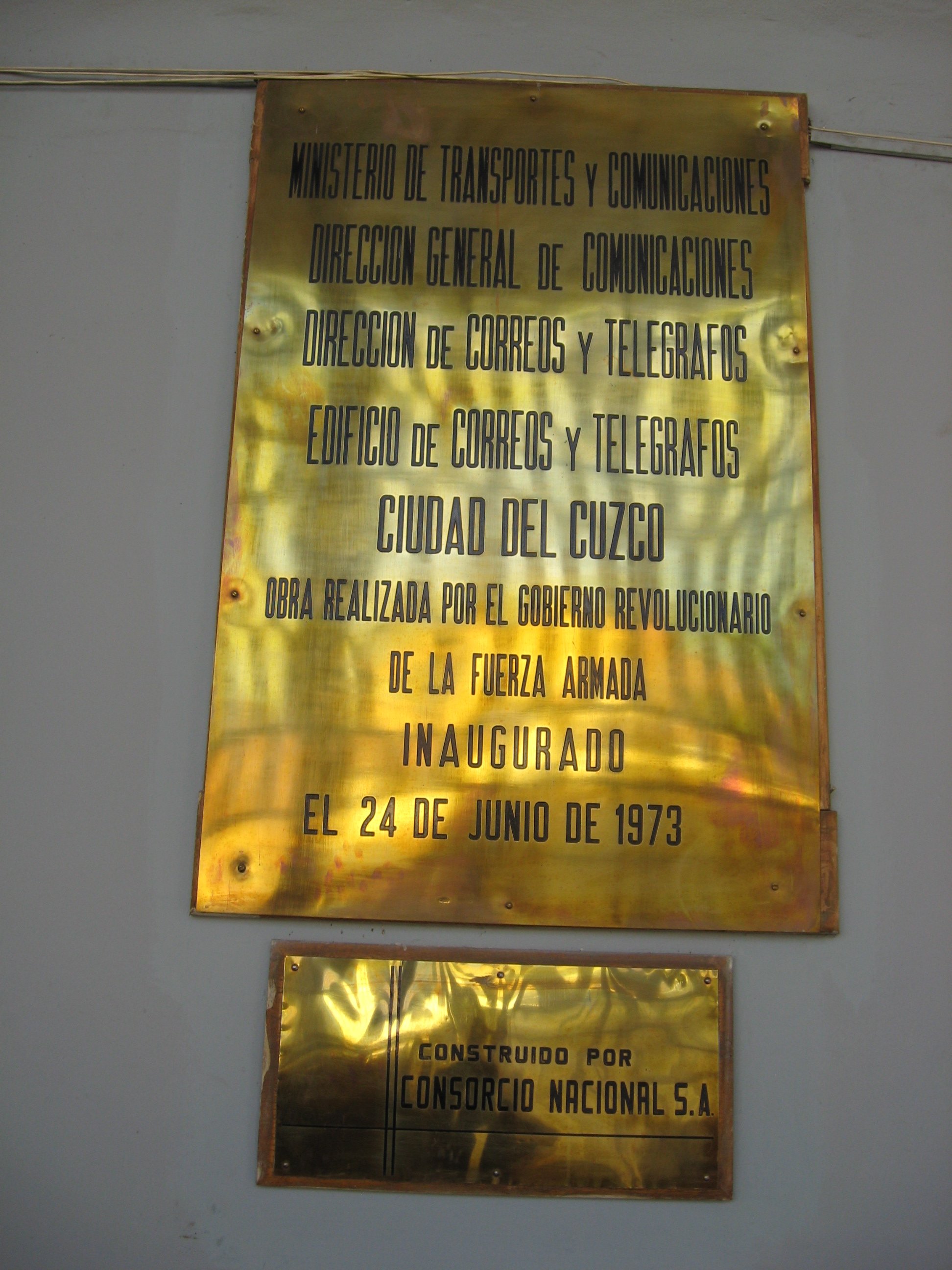
Now inside: “…built by the revolutionary government of the armed forces of Peru. June 1973.”

Gobierno revolucionario de la fuerza armada

Gobierno revolucionario de la fuerza armada

The military government of Velasco Alvarado was later overthrown in another military coup, and in the 1980s followed by the disastrous first term of Alan Garcia, hyperinflation and the terrorism of Sendero Luminoso.

History intrigues me, a lot can be learned from it, but we often don’t. Just in way of one current example, here in Peru those who are considering to allow ex-militants of Sendero Luminoso back into politics should consider the simple wisdom of the late great Bob Marley:

“in this great future, you can’t forget your past…”

They weren’t idle words for Bob Marley… songwriter’s credit (and royalties) for the song “No woman no cry” is given to Vincent Ford, a man who ran a soup kitchen in the ghetto where Marley grew up. It is believed Marley wrote the song to console Mr. Ford’s widow at his death.

Here’s to hoping Peru won’t forget it’s past and the future will be bright.

Peruvian economists

It’s really a shame this should be a headline in Peru’s newspaper of record, El Comercio.

“Economists: continued growth is not possible unless poverty is reduced”.

Peruvian economists

Just saying, that one is right up there with “the sky is blue” and “Bill Gates not hurting for money this week”.

But such is the dilemma that is Peru: for the suits in Lima economic growth has long been detached from quality of life for ordinary Peruvians, especially in the provinces. Take for example this chart from official INEI statistics, during a period where GDP grew at a 9% annual clip.

Peru quality of life

Chullo tip to IKN.

Now I’m not pretending to have an easy solution for the quality of life issues in Peru, but hopefully some of the suits in Lima will start to seriously look beyond the neo-liberal dogma that “what’s good for business is good for everyone”.

I’ll propose a new ideology for economists in Peru: “do what’s good for the people and economic growth will follow”.

  • Stimulate the economy in the provinces
  • Improve the infrastructure in Lima’s slums and in the provinces
  • Respect labor and environmental protections
  • Reduce bureaucracy and hold the bureaucrats accountable
  • ….

The economy in Peru is too dependent on tourism and export of base metals. While those are great sources of revenue, the suits who run Peru should look at adding technology, manufacturing and quality services, the types of employment that would raise the standard of living of the average Peruvian worker.

At the end of the day, the Peruvian economy is the total of what the average Peruvian worker contributes to it, and expects to receive from it. Not in monetary “funny printed paper” terms, but in terms of products and services. It’s a no-brainer, focus on the quality of life of ordinary Peruvians and economic growth must follow.

Abuelo’s birthday

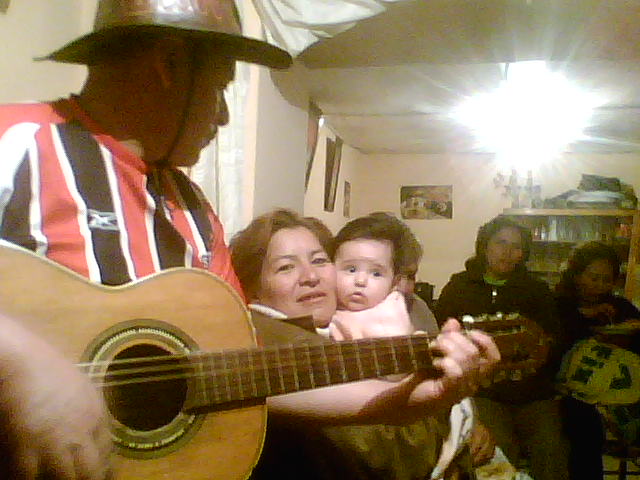
Patricia’s dad, Carlos, celebrated his birthday yesterday. Patricia’s dad and several of his family members played traditional Peruvian folk songs on the guitar, banjo and accordion. We all ate yummie lechon, even Brianna!!!

After a few cervezas papi even danced to traditional Peruvian folk music… bad uncoordinated gringo 😉

Carlos playing guitar

Brianna Nayaraq con su bisabuela

Brianna Nayaraq con su bisabuela

Baby Brianna watching her grandpa play guitar

Funny printed paper

2 cool charts I copied from Rolfe Winkler at Reuters. To illustrate my point that money’s just funny printed paper.

US public debt outstanding

US public debt outstanding

US public debt, doesn’t include unfunded healthcare and Social Security oblications. Original here.

Dow Jones historical chart valued in gold

Dow Jones historical chart valued in gold

Dow Jones historical chart as valued in gold. Original here.

Peruvians should pay attention to these, since Peru historically has very close ties to the US and gold is a major part of Peru’s foreign exports. To stay up to date on all things gold and Peruvian economy, head over to IKN.

Read ’em and weep

The real-estate classifieds for Cusco, that is. Here’s a few examples:

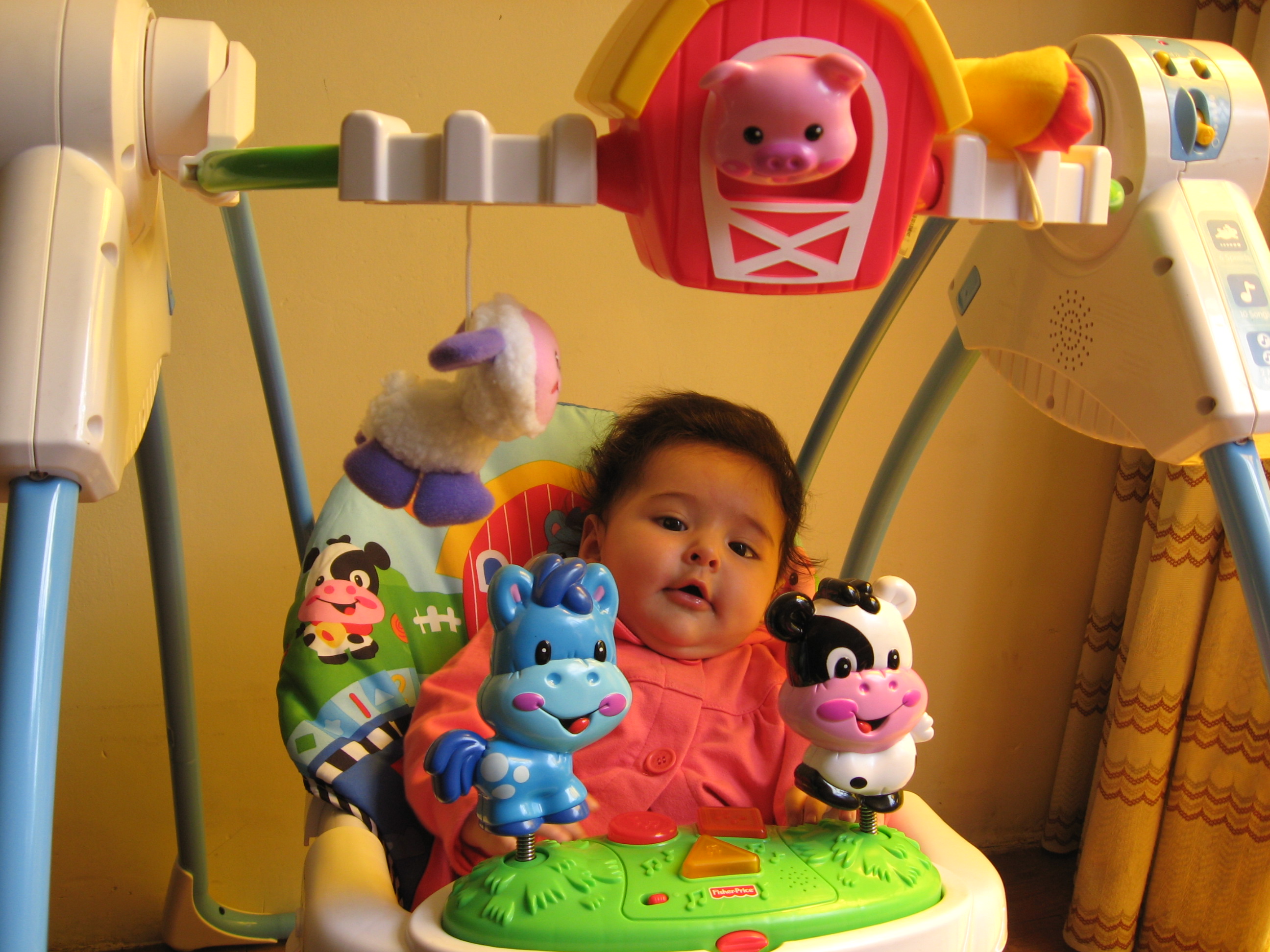
We’ve started looking to buy a house or apartment in Cusco, because the apartment we’ve been renting is becoming too small, especially since baby got a new swing 😉

Brianna in her new swing

Brianna in her new swing

Real estate here in Cusco is very expensive compared to the rest of Peru, since the area is thriving with so much tourist money. Asking prices for some nice apartments we’ve looked at range from $60,000 to $120,000, and mortgage interest rates range between 9-14%. This in a country where the per capita GDP is $8,500. If I worked full-time at my teaching job, my entire income would be spent on the $500 mortgage payment if we bought a $60,000 apartment with 20% downpayment 😦

I’m really on the fence about this… to get a nice place that we can afford we may have to look outside the city. I actually prefer the quiet areas outside the city, but then we’d be further away from family, friends, etc.

In terms of real-estate value, I’m worried that much of the increase in Cusco in the past years is speculative and that prices appear to be wildly out of line with personal incomes. On the other hand, I think long-term demographics, conservative lending standards and the mountainous terrain could put a floor under real-estate prices in Cusco, plus we’d be buying something to live in, not as an investment to “flip” in a few months or years.

So if any readers have a rich aunt or uncle… tell ’em to help out a poor gringo in Cusco 😉

Bad dog

Hopefully by the time you read this our dogs will still be alive. Not kidding, yesterday a lady threatened to poison our dogs – and dog poisoning is common here in Peru, as Barb can attest to firsthand.

Now to put the story in context, our dogs are not aggressive, but they are dominant and protective, which is something many Peruvians are not used to. Dogs here in Cusco tend to be skittish, since most roam free in the streets – either as strays or just because their owners allow them – and many people treat the dogs bad, throw rocks at them, etc. The stray/loose dogs also tend to get into fights, as I wrote about earlier.

Our dogs are inside the house most of the time, but occasionally they are out in our front yard, which is fenced in and has a hedge along the inside of the fence. When they’re outside the dogs sometimes bark at people walking by, and sometimes spook them pretty bad. Part of the blame is on me for what happened last night: there are 2 openings in the hedge where the dogs could stick their head through the fence. The dogs have never hurt anyone, nor would they, but I should have put something up to prevent the dumbasses from scaring the passers by.

So while I was cooking dinner last night the dogs started to bark. Usually they only bark for a few seconds and the people in the street simply walk by. But last night the barking went on so I stepped outside to see a lady with 2 young kids standing by our fence fussing at the dogs. As soon as I stepped outside, she said “Sir, I’m going to poison your dogs!”

No could you please put your dogs inside, or your dogs scared my kids, nothing like that. Just “I’m going to poison your dogs”. Right in front of her kids…

So I replied “if you poison my dogs you’re going to jail”. To which she said “you’ll never find me, you don’t even know who I am….” teaching her kids the invaluable ethical concept that it’s not a crime unless you get caught.

At this point I wasn’t mad yet, I just told her not to worry about the dogs, they are inside a fence and won’t hurt anyone. But she kept fussing and yelling and when she finally walked down the street she yelled again that she would poison my dogs.

At that point I did lose my temper and yelled back in my best worst Spanglish exactly what I thought about her sex habits and ancestry.

Ten minutes later a knock on the door. You guessed it, the poison lady was back with a policeman in tow. To set the stage a bit more, our apartment is literally across the street from a police office, at least 50 policemen walk by our house every day, and no one has ever complained.

Patricia answered the door and I missed the first part of the conversation since I was in the kitchen, but by the time I walked out the policeman was visibly annoyed at the poison lady who just kept arguing despite the fact that Patricia was apologetic and promised to put up a better fence. The policeman agreed that just putting up a wire to keep the dogs away from the openings in the hedge would be a good idea…

At the end of the day there are a lot of problems with dogs in Peru: stray dogs, aggressive dogs that run loose, many dogs that don’t get rabies shots, etc. The policeman agreed that a gringo with 2 dogs inside a fenced yard really isn’t a problem, but the poison lady kept saying no one should have dogs like ours, she was going to poison them (right in front of the policeman), etc. etc. The policeman finally nudged her down the road and said good riddens.

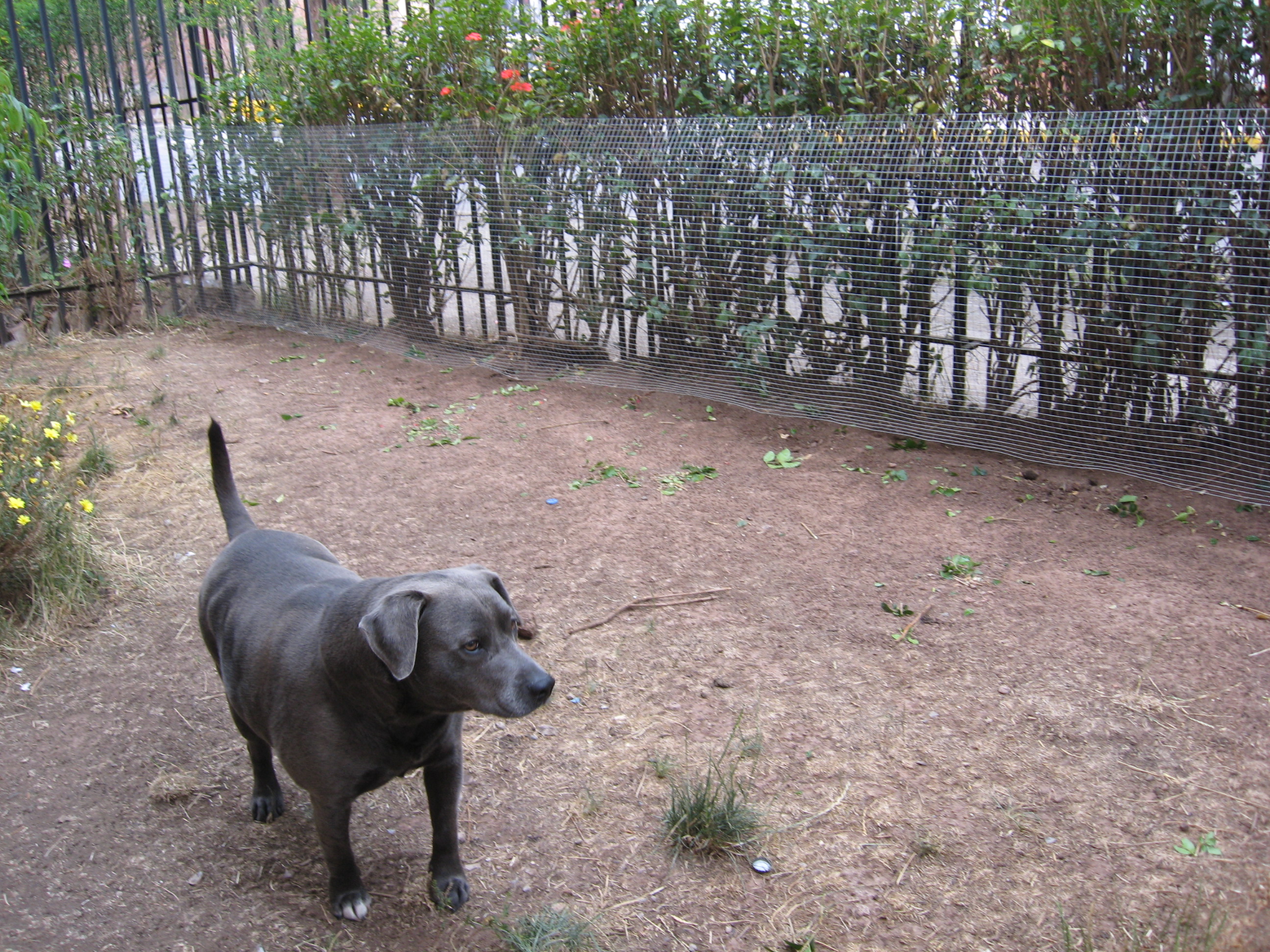
So this morning I put up a new fence on the inside of the yard, so the dogs will stay away from people walking by… It looks a little redneck for the time being, but as soon as I buy a few extra posts it will do the job. Next up, reseed the grass before rainseason 🙂
Manchita checking out the new fence
Manchita checking out the new fence