My most popular Peru pictures on Flickr

I’m a bad picture-taker and lately I haven’t had much time to share via social media – so happy I got rid of my Facebook šŸ™‚ – but occasionally I upload a few pictures to my Flickr page. I’m sometimes surprised by which pictures are rated as most popular or most interesting after some time on the site. The following are some of my most popular Peru pictures on Flickr:

Many of my most popular Peru pictures are pictures of Peruvian food. Here’s a picture of typical Andean food, I believe this was at a wedding party:

Typical Peruvian food

This picture was from our trip to Ancon, a beach resort just north of Lima. I can see why this picture would be popular, I mean, just look how good-looking he is šŸ™‚

Playa Hermosa, Ancon, Peru

Of all my popular Peruvian food pictures, this is actually the only one of food that I cooked myself: papi’s world famous salchipapas! Salchipapas are a popular snack in Peru, french fries, fried slices of hot-dog and all the sauces you crave. I like mine just with ketchup.

Homemade salchipapas

Here’s a picture of Peru’s national dish: ceviche. We took this on our trip to Huanchaco. I was very sad to learn last week that our friend and host in Trujillo unexpectedly passed away last week. QEPD Sr. Alejandro.

Ceviche

My pictures of the shrine of SeƱor de Huanca near Pisac are also popular. According to the legend, the shrine of SeƱor de Huanca is where God made his home among men. It is believed that SeƱor de Huanca will grant any blessing to those who come with a pure heart. The idea of pure heart is not necessarily the definition that the Roman Catholic church might give, it is simply pure heart. The shrine of SeƱor de Huanca is a bit of a blend between the traditional Andean religion and the Roman Catholic religion brought to Peru by the Spanish. For any religious or spiritual person, you should not miss a visit to the shrine of SeƱor de Huanca when you are in Cuzco.

SeƱor de Huanca, near Cusco, Peru

Another picture of the shrine at SeƱor de Huanca, my beautiful wife and baby at the side of the main SeƱor de Huanca church building. In the buildings behind them true believers enter to light candles and ask for the blessing of SeƱor de Huanca.

SeƱor de Huanca

Another example of the blend of Andean and Roman Catholic influence: Chiriuchu is the typical dish on Corpus Christi. Chiriuchu is the Quechua word for “cold dish”.

Chiriuchu

More Peruvian food pictures. This soup was cooked by Patricia’s 80-something grandmother, on her fogon, traditional cooking over an open wood-fired flame.

Traditional Peruvian soup

What would all that good food be without a good drink? I don’t have any pictures of Peru’s national drink, Pisco Sour, but here is a picture of another drink more popular in the North of Peru, algarrobina.

Algarrobina

Many visitors come to this blog searching for info on SeƱor de los Milagros. SeƱor de los Milagros is worshipped in Peru as He is believed to protect Peruvians from earthquakes and other harm. The month of October is month of SeƱor de los Milagros, during this time there are processions throughout Peru when the image of SeƱor de los Milagros is carried through any and all neighborhoods. Here is some good background on the origin of SeƱor de los Milagros.

SeƱor de los Milagros

Another way you will see the blend of Andean and Christian culture is at Christmas, take a look at this typical Andean baby Jesus figure, it looks nothing like the traditional Roman Catholic image of Jesus:

Typical Peruvian "baby Jesus"

Finally, we haven’t really done much touristy stuff in quite some time but here is a picture of Patricia and some of her friends visiting Choquequirao. It takes 3-4 days hicking (there and back) to visit Choquequirao. Really, you shouldn’t let the picture fool you because even though they all look like tough adventurers here, the truth is all of them are very much city slickers šŸ˜‰

Patricia and friends in Choquequirao

As I said, I’m not a good picture-taker by any stretch of the imagination. If you are looking for really good Peru pictures, check out Cusquenian’s Flickr page.

Finally, I also upload some of my flying / ferry pilot pictures if you’re into that kind of thing.

Meet me out in the street, mamacita tonight!

I’m craving hot greasy pizza at the moment. Peruvian pizza isn’t that great but the exception is La Romana Pizzeria in Cuzco. The pizza is excellent and the servers know us well enough to tolerate our wild little Brianna.

Tonight I’m in the mood for a yummie pizza (mitad Vaticano y mitad Romana) and a jara de sangria, but the question is whether mamacita linda will be home early enough. One of the only bad things about living in Peru is that people who work corporate type jobs must work really long hours. Patricia’s normal hours are 9:00am to 8:00pm, 6 days a week! She does get a 2-hour lunch break which is enough to run home for a bit.

It’s not unusual for Patricia’s work hours to run a bit late in the evening, so here’s to my mamacita linda:

Meet me out in the street, to be exact, at La Romana Pizzeria on Av. Tullumayo in beautiful Cuzco, Peru šŸ™‚

Also, not meaning to change the subject to awful bad, we have another reason to celebrate today in addition to my craving of hot greasy pizza: 20-something years ago today, somewhere in Cuzco in the back of a taxi (*) on its way to the hospital, a baby girl was born. Feliz CumpleaƱos a mi cuƱada!!!

(*) Not kidding, true story.

Souvenirs are overrated

I travel quite a bit and of course I have to bring home gifts from every trip I go on. Mamacita linda has even trained our 2-year old daughter to say ā€œbring giftsā€ when she knows papi is ready to go on a trip. Most of the gifts I bring for our daughter get some use but the ones I get for mami usually end up collecting dust and taking up space:

  • The T-shirt I brought mami from Iceland 2 years ago? Worn once I think.
  • Necklace and earrings I bought in Cartagena? Never used.
  • The Big Ben souvenir mamacita asked me to bring from London? Stuffed in a file cabinet.
  • The cute pillow from Poland? Never used and haven’t seen it in forever.
  • The cute polar-bear hairclip I picked out at the souvenir store in Kuujjuaq, Nunavik? Mami looked at it once and said: ā€œCute, but you go to Canada and bring me back something made in the Philippenes??ā€ Never been used.

I could go on. Clothes are always a bad idea. I buy something stylish and sexy and mamacita says ā€œI can’t wear that here. It’s too cold in Cuzco to wear that.ā€ I buy something comfy and mamacita says ā€œWhy do you buy me old lady clothes like that? Buy me something cute next time would you.ā€

Anyway, I’m writing this sitting in departure gate 19 of the Lima airport, waiting on a flight to Miami. I’m on my way to Kansas to pick up another new airplane from Cessna. The real reason I’m fussing and ranting about souvenirs right now is that souvenirs take up space in the airport where something useful could be, say something like FOOD!!! Airport food is never a great idea but in Lima the choices are really slim. For all the great food you can find in Peru the Lima airport is not a good place to go when you’re in a rush and haven’t eaten.

At the Lima airport there’s a food court with a McDonalds, Papa Johns and a few others. You can get a pretty good ā€œpollo la brasaā€ at Manos Morenos but they give you like 6 french fries. There’s a Dunkin Donuts at the food court in the Lima airport and you can always tell the Cusquenos traveling home to Cuzco because you’ll see them carrying a dozen donuts through the Lima airport (there’s no Dunkin Donuts in Cuzco). I always feel like such a fool when other gringos in the airport stare at me walking through the airport with my Dunkin Donuts bag. They’re probably thinking something like ā€œwhy would this fool come all the way down to Lima to buy a dozen donuts?ā€

At any rate, other than the food court there are few restaurants in the Lima airport. There are 2 restaurants in the international gate area, both ridiculously overpriced. Cheap Dutchman that I am I’ve never eaten at either of them. I just ponied up S/.26 (~$10) for a soda and sandwich at the 365 Deli by gate 19. Ten bucks for a sandwich that had like 2 slices of roast beef on it!

Peruvian food is great but forget Lima airport. The first thing I plan to do when I get to Wichita tomorrow is stuff my tummy with a big juicy steak šŸ˜‰

Hey you – wanna know a secret?

Can you keep a secret? Promise not to tell?

Here it is, ready? The password for the WIFI at the Hotel El Gran Marques in Trujillo is “moche”.

I know this because I stayed at the Gran Marques on my last overnight stop during a trip from the US to Peru last week. I don’t know if the friendly people at the Gran Marques intended for me to publish their little secret but then again I can’t really see a lot of this blog’s readers heading to the parking lot of the Gran Marques just to take advantage of free WIFI.

There is a point to the story – and the point is that they chose “moche”. Not “Inca-this” or “Inca-that”, “Machu Picchu” or “Wayna Picchu”, but “moche”. The people at the Gran Marques are proud of their Moche heritage and for that reason alone I will stay at the Gran Marques again on my next trip!

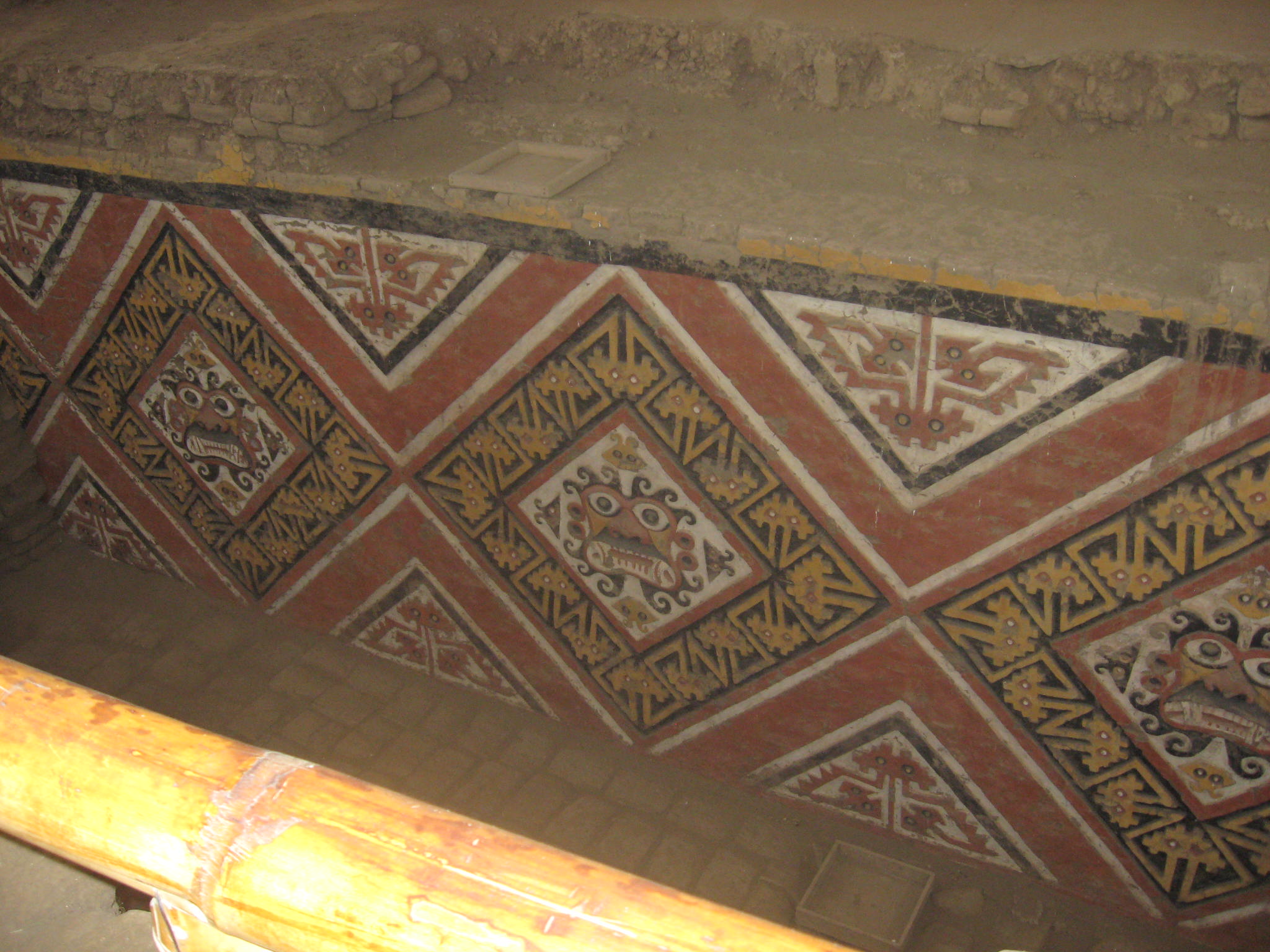
Moche was a pre-Inca culture in Northern Peru and today the people in Northern Peru remain proud of their Moche ancestors. Today the Moche culture is perhaps best known for their elaborate paintings such as this one at the Huacas del Sol y de la Luna.

moche painting

Moche painting in Northern Peru

Trouble is, unless you’ve had a chance to spend a good bit of time in Peru outside of the typical tourist circuit you may have never heard of Moche or any of the other the great cultural diversity that exists in Peru.

Take a look at this screenshot, I typed “Peru” in Google and searched for images only:

peru-images-google

Screenshot of Google image search for Peru

You can only see part of the results in the picture above but try it for yourself, type “Peru” in Google’s image search and see what you get. Other than a few pictures of maps and flags, my search results returned:

  • 1 picture of a blond girl at Lake Titicaca,
  • 1 picture of the beach near Miraflores,
  • 8 pictures of Machu Picchu, and,
  • Nothing else!

Now Machu Picchu is a fabulous place to visit and the touch-stone location for Peru or maybe all of Latin America, but I regularly hear the same sentiment from Peruvians and expats here alike that the image of Peru – and what little bit the typical tourist visits – is incredibly one-dimensional and not at all representative of the diversity that exists in Peru.

There is so much more to Peru than just Pizza Street in Miraflores, the Inca Trail and Machu Picchu. Unfortunately you have to sort of seek out the path less traveled to get to know the rest of Peru.

Traditionally Peru has been said to consist of 3 regions: the coast, the Andes mountains and the jungle, but even that is too simplistic. Lima as a modern-day metropolis is a distinct area, the North of Peru has its Moche heritage, there is an Afro-Peruvian culture, Asian influence, and regions like Arequipa and Puno have a very distinct feel to them unlike the rest of Peru.

If you have a chance to visit Peru and want to see what the country is like away from the typical tourist circuit, sneak away from your tour group and just hop on any bus – don’t even ask where it’s going. There are many great things to be discovered!

Some pictures of the North of Peru:

trujillo cathedral

Trujillo Cathedral

algarrobina

Algarrobina, a drink more typical of the North of Peru

moche paintings

Moche paintings

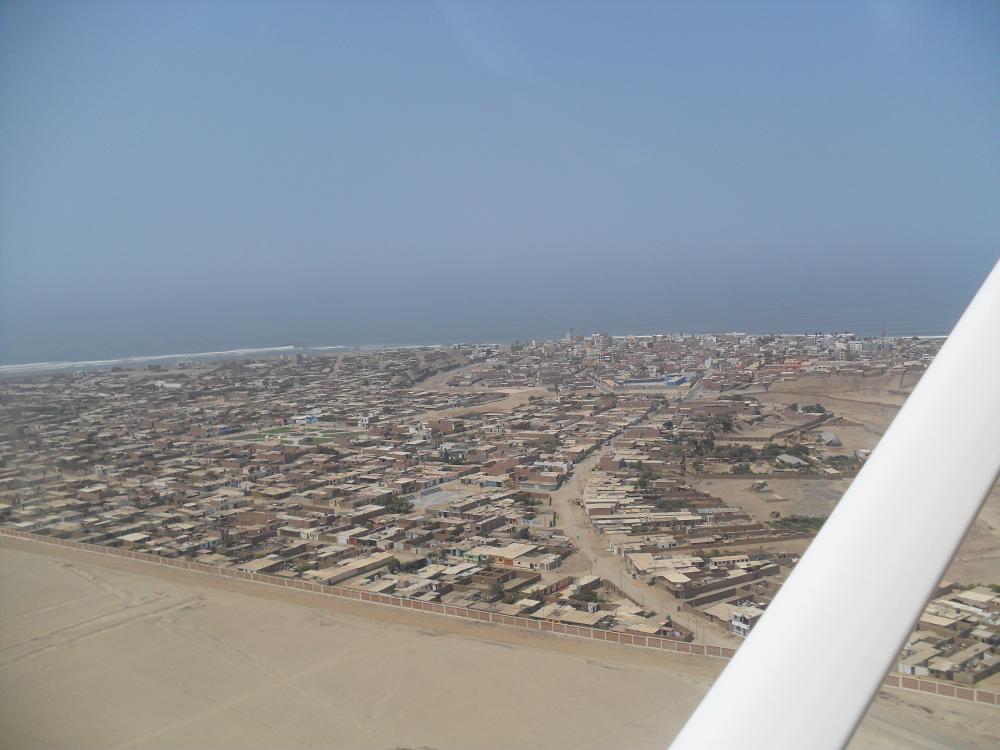
huanchaco

Huanchaco, Peru

huanchaco

A picture I took on takeoff from Trujillo, the beach town/resort of Huanchaco

DĆ­a de todos los Santos Vivos

Yesterday, Nov 1, was “DĆ­a de todos los Santos Vivos” here in Cuzco, the celebration of the Catholic holiday All Saints Day. Since the time of the Spanish conquistadores, much of the traditional Andean culture in Peru has been absorbed or continued in some form in the Catholic religion and Catholic holidays, therefor the celebration of “DĆ­a de todos los Santos Vivos” in Cuzco is a blend of Andean and Catholic traditions.

From gosouthamerica.com:

The Andean emphasis is agricultural, since November 1 is in spring south of the Equator. It is the time of returning rains and the reflowering of the earth. The souls of the dead also return to reaffirm life. During this time, the doors are opened to guests, who enter with clean hands and share in the traditional dishes, particularly the favorites of the deceased. Tables are bedecked with bread figurines called t’antawawas, sugarcane, chicha, candies and decorated pastries. At the cemeteries, the souls are greeted with more food, music, and prayers. Rather than a sad occasion, the DĆ­a de Todos Santos is a joyous event.

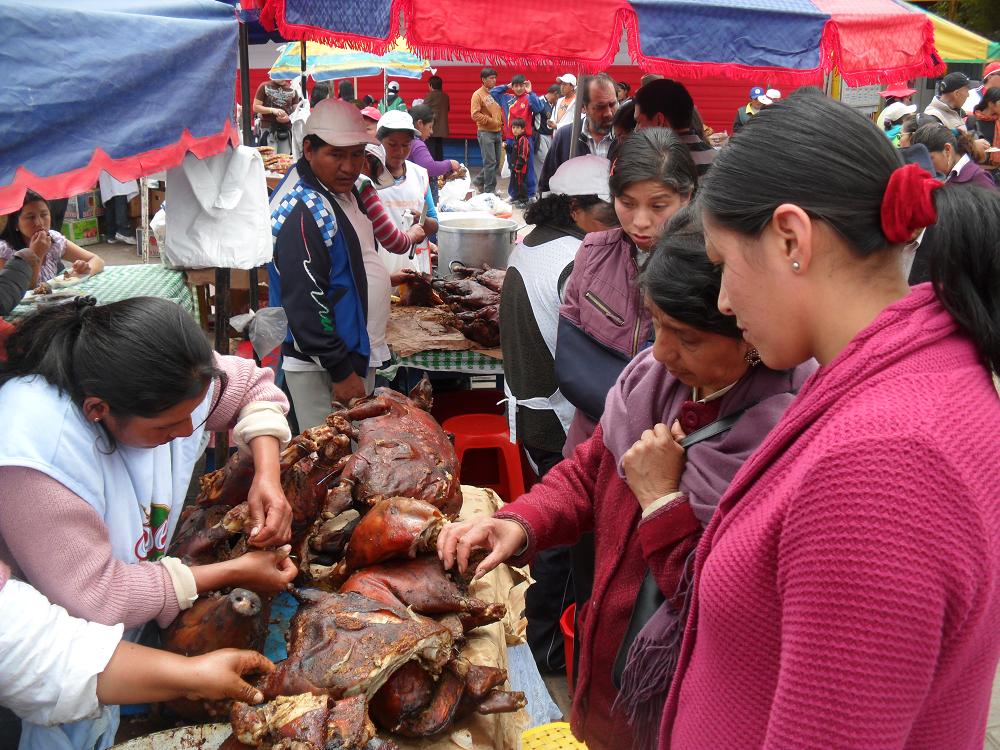
And how better to celebrate such a joyous event than with food! Here in Cuzco the traditional meal on “DĆ­a de todos los Santos Vivos” consists of lechon (suckling pig) and tamales.

buying lechon

Buying lechon on DĆ­a de todos los Santos Vivos in Cuzco

Here in Cuzco, Oct 30 to Nov 1 was also the festival of the bread, or T’anta Raymi. Sweet bread figurines, known as pan wawas (from the Quechua word wawa which means baby) are sold everywhere during these days. At the plaza Tupac Amaru close by our house we saw this gigantic pan wawa and I believe there was an even larger pan wawa set to be displayed in the center of the city.

pan wawa in Cuzco, Peru

A giant pan wawa on display at the plaza Tupac Amaru in Cuzco, Peru

There was a sort of baptising celebration for the pan wawa which again seems like a blend of Catholic and Andean traditions. We didn’t stay for the baptising of the pan wawa, we wanted to go back to the house and devour our yummie lechon šŸ˜‰

You’ll never see this on the FB pages of expat Peruvians – part 7863

The widely reported news about wages in the US. From the Washington Post, the newspaper which was always said to be in bed with the US Army:

New report shows more workers falling behind average wage level

Fifty percent of U.S. workers earned less than $26,364 last year, reflecting a growing income gap between the nation’s rich and poor, the government reported Thursday. There were fewer jobs, and overall pay was trending down — except for the nation’s wealthiest. The number of people making $1 million or more soared by over 18 percent from 2009…

Read the complete article here.

Now I’m not talking about skies are falling here, and I’m sure a lot of the low income earners are college students working part-time jobs and the like, but the fact remains that fully half of working people in the US earn about the same or less than what Patricia earns here in Peru.

I guarantee you’ll never see that on the FB pages of expat Peruvians in the US. If you read any of those you’ll come away with delusions of grandeur, false notions that every Peruvian who ever moved to the US has 5 cars and runs 3 popular money-making Peruvian restaurants.

BTW – Patricia works for a cellphone company and her job is considered good-paying but it is a front-line job, she’s not in management or executive pay – yet šŸ˜‰

FƩlix Casaverde

Yesterday the great Peruvian guitar player FƩlix Casaverde passed away, he was only 64. From his biography on Facebook:

Guitarrista Profesional Autodidacto Con 49 aƱos de vida profesional, Interprete Compositor y Arreglista. Actualmente dedicado a la pedagogia y hacer arreglos musicales. Obra maestra “CUATRO TIEMPOS JOVENES NEGROS”, ” BALANCE”, ” ELEGIA A MARIA” , “YANINHA” , entre otros.

Peruvian music reflects the diversity of Peru, from traditional Andean music to the Afro-Peruvian rhythms and contemporary pop music.

More info about the life and death of FƩlix Casaverde at La Republica.

Ratero!!!!!!!!

I’m walking back to our house. Deep in thought about some computer code for one of my customers.

A lady in traditional Peruvian dress on the opposite side of the street looks a bit upset or out of place. She’s carrying a baby on her back. She’s yelling something I didn’t understand right away. I’m still in my own world.

A young man – maybe still a teenager – walks by quickly, his head down.

The lady’s yelling louder and more clearly now. RATERO! RATERO!

Other people in the street are looking up and start yelling as well. RATERO! RATERO!

The young man starts running down the street.

I finally snap out of my own world. “Ratero” means “thief”. Apparently the guy had robbed something from the poor lady but she was alert enough to notice. A bunch of people are now running after the ratero and a bit down the street they catch up.

I was mad at myself. I missed my chance. If I hadn’t been in my own world so much I would have stood a decent chance of being the first to catch this little robber. I didn’t stick around too long but it looked like all ended well for the poor lady and the little robber was about to get what he deserved. In 4 years here in Peru this was the second time that I witnessed a public chase after a ratero. Unfortunately both times I was just too late to run after the guy myself.

Peru is generally a safe country but petty crime is quite noticeable and people are understandably upset about it. You can probably argue that in the most recent Peruvian presidential elections the final vote came down to the 2 candidates that were perceived as the toughest on crime. We regularly hear about break-ins and the like. It’s happened to friends and neighbors. At Patricia’s work there’s always a line of people looking to buy new cellphones because their old one got stolen.

The only thing I’ve lost to a ratero was a camera about a year or so ago. That was my own fault because I was in a large crowd and put the camera in an open pocket. More recently kids took a ball and a little purse that belonged to Brianna but again it was my own fault because I left the stuff unattended in the park while Brianna went to play in a different area.

The rateros like to “case” houses pretending to be utility company employees and the like. They prey on empleadas (maids) who are home alone and may not know any better. One guy came to “case” our house pretending to be with the gas company. I let the dogs out and haven’t seen the guy since.

Roxi and Manchita keeping a watchful eye outside

Roxi and Manchita keeping a watchful eye outside

Patricia laughs at me and thinks the dogs won’t do anything if a ratero came to our house. Maybe that’s true but even the appearance of security alone is typically enough to make the ratero move on the the next house. Quite frankly most Peruvians don’t have any experience with strong protective dogs (the street dogs are generally skittish) and I have no doubt in my mind that our mutts would put the average ratero in the hospital for a very long time – especially if any of us are home. The little dog is a Jack Russell mix and hates everyone but me. The bigger dog is a Blue Pitbull and has never had an original thought in her life. She just does whatever her “big sister” does. When the little dog gets mad the big dog gets madder. The big dog is mild mannered and timid by herself, but the little dog isn’t scared of anyone. I’ve seen her get mad at 10 people or a Mastiff that outweighed her by 140 pounds.

Of course petty crime doesn’t just happen in Peru. My father was working in his garage in Belgium one day when a thief snuck up beside the house and stole a bicycle. I got pickpocketed at the Atlanta airport once. When Patricia lived in Ohio some guys came to “case” their neighborhood. I guess it happens everywhere.

If you’re visiting Peru some ideas for your safety/security are just be alert and watch your belongings while you’re in crowded places or on a bus. Don’t be a dumbass like me and walk around Inti Raymi with a camera in an open pocket. Be alert at the bus stops, people will enter the bus to sell candy and drinks, or from outside through the bus windows. Rateros will enter the bus to steal your stuff while you’re distracted or asleep. Don’t flaunt expensive jewelry or electronics, don’t leave your belongings unattended, common sense stuff like that.

If you want more security I’ll be happy to rent you a pair of protective mutts šŸ˜‰

Please stop eating asparagus now

At first I was excited when I found out that much of the asparagus found on grocery store shelves in the US is “Product of Peru”. Just take a look next time you’re in the produce department, chances are those yummie green asparagus will be wrapped in a blue-ish purple elastic band stamped “Product of Peru”. I used to be happy to see that, because unlike our South American neighbor Chile – which exports lots of wine and grapes – you don’t see hardly any Peruvian products in overseas stores.

Peru has very little arable land due to it’s climate and geography but there are multiple micro-climates in the varying elevations of the Andes mountains. As a result, Peru produces a variety of excellent fresh foods, such as avocados, coffee, it’s famous purple corn, potatoes, etc.

When I first moved to Peru I used to pick up a package of delicious fresh asparagus (they are so much yummier when fresh) practically once a week but lately I hardly ever see asparagus in our local grocery store any more. Since Peru signed several free-trade agreements in the past few years – with China and the U.S. – I’ve heard grumblings that too much of the best Peruvian products are exported and not enough is left for domestic consumption. The same is said of course of the natural gas that Peru produces.

Truth is I have no idea when the season for asparagus is and what the true reason is for the lack of asparagus at our “Mega” store, but just in case please stop eating asparagus for a month or so šŸ™‚

Fresh asparagus are great with many meals, one of my favorites is pasta with my famous home-made pasta sauce and side of asparagus:

pasta with homemade sauce and asparagus

Pasta with papi's famous homemade pasta sauce and side of asparagus

Like any good kid Brianna isn’t too keen on eating her vegetables, but she likes papi’s homemade pasta sauce:

brianna-eats-pasta

If you think that looks cute you should see her after she's all done...

Before you ask, here’s the recipe for my famous homemade pasta sauce:

STEP 1: Go to store and buy favorite pasta sauce.

STEP 2: Add meat of choice, lots of fresh tomatoes and beer – preferably something good like Cerveza CusqueƱa.

STEP 3: What, you think I’m a chef or something? There is no step 3. Eat and enjoy!

As for preparing the asparagus, I boil them in salted water for about 5 minutes and then stir-fry them in a pan with butter, salt and pepper. Listo!

Agriculture, by-the-way, is making a huge comeback worldwide. Farmland is fetching record prices in the Midwest and Canada. I was recently in Saskatchewan, Canada – which is another whole story – where farm fields are a mile square or bigger and a friend-of-a-friend who farms 4,000 acres or so told us business is booming.

I’m proud of the fact that my grandparents were farmers and my father (and his brother) continued to take care of the farm after his parents retired. Occasionally I see ranches advertised for sale in some areas of lower elevation near Cuzco, so if you’re interested in becoming an avocado farmer in Peru, just shoot me a message šŸ™‚

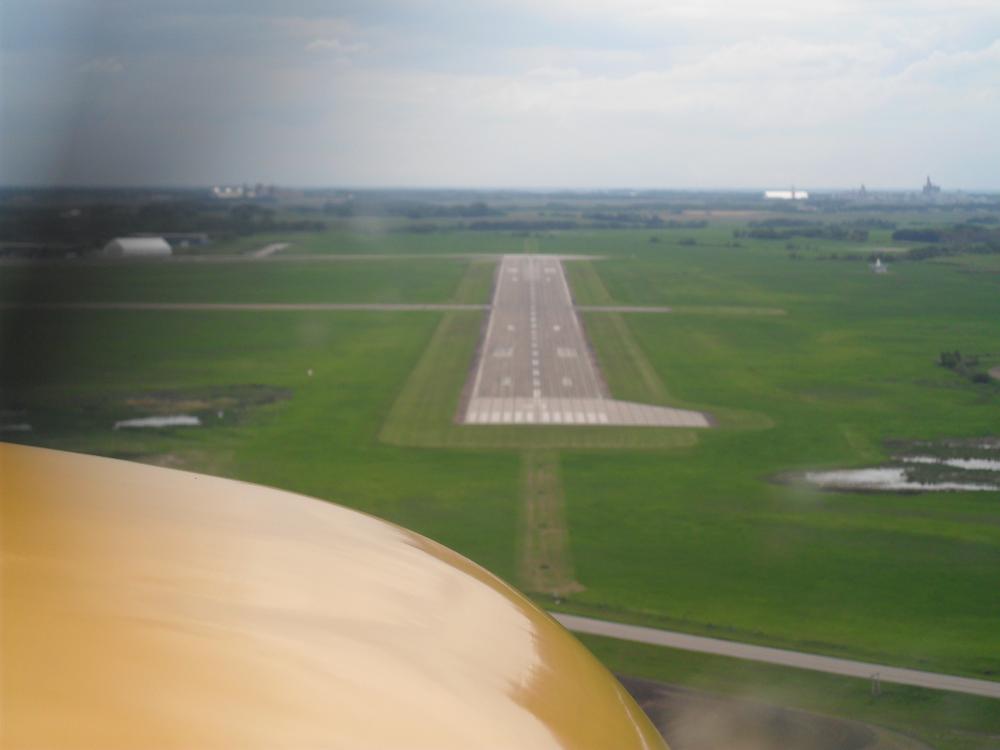
landing-at-yorkton

Landing a Maule M7 in Yorkton, Saskatchewan