Proselytizing in Latin America

9:00 am the doorbell rings. You know who it is because it happens all the time: somebody wants to talk to you about the Bible. American (US) churches are relentlessly proselytizing in traditionally Roman Catholic Peru. Many homes have stickers on the door saying “we are Catholics, don’t bother”. About once a month somebody will come to our house, I usually say that I don’t have time because I’m trying to get the kids dressed and off to school and all that good jazz.

Now don’t get me wrong, I respect when someone has a strong faith and they want to share that faith with others. But the truth is, it doesn’t always feel that way. The proselytizing by US churches here in Peru has almost a corporate feel to it, a strategic plan kind of feel. They know the population here is young, the economy is growing, and that many Peruvians are receptive in a very mundane kind of way.

On flights back and forth to the US, I’ve sat next to Americans who came on missionary trips quite often. Many times they struck me as just nice people who wanted to come speak about their religion and do some humanitarian work. I’ve sat next to a doctor and a dentist who had come to spend their vacation in a small town providing medical work. They let it be known they came out of religious motivation, but in a respectful way.

On the other hand, I’ve had quite a few experiences like this: I was sitting in the Plaza Tupac Amaru one day when Brianna was only 6 months old. It was a beautiful day and she was enjoying the sun. We were approached by a group of US missionaries:

“Sir, do you know what’s going on in this world?”

Me: “Well, I try to do the best I can every day…”

Of course that was a dead give-away that I was a Catholic, and US Evangelicals have a very different theology, all about good vs. evil (and then they wonder why they’ve been practically non-stop at war for the past 70 years).

“Well Sir, we’d like to talk to you about the end of the world that is coming soon and that there is still time to prepare.”

Me: “Lady: I have a 6 month old baby. I know I can get run over by a Tico any time or struck by lightning or that our sun can go Supernova or the end of the world can come some other way, but I’d like to think my baby is going to have a full and happy life. I’m really not interested in hearing your end of the world come to our church and you’ll be saved preachings today.”

I know that wasn’t very tactful of me at that time but before you get offended ask yourself: when you’re enjoying a nice day in the park with your family, or when you’re rushing to get ready for work in the morning, would you be appreciative if somebody came to your door to talk about the Tipitaka or the Upanishads or the Qur’an? Would you really? What if they came every month? If you knew they were coming because it was part of an assignment? Almost like a corporate scorecard?

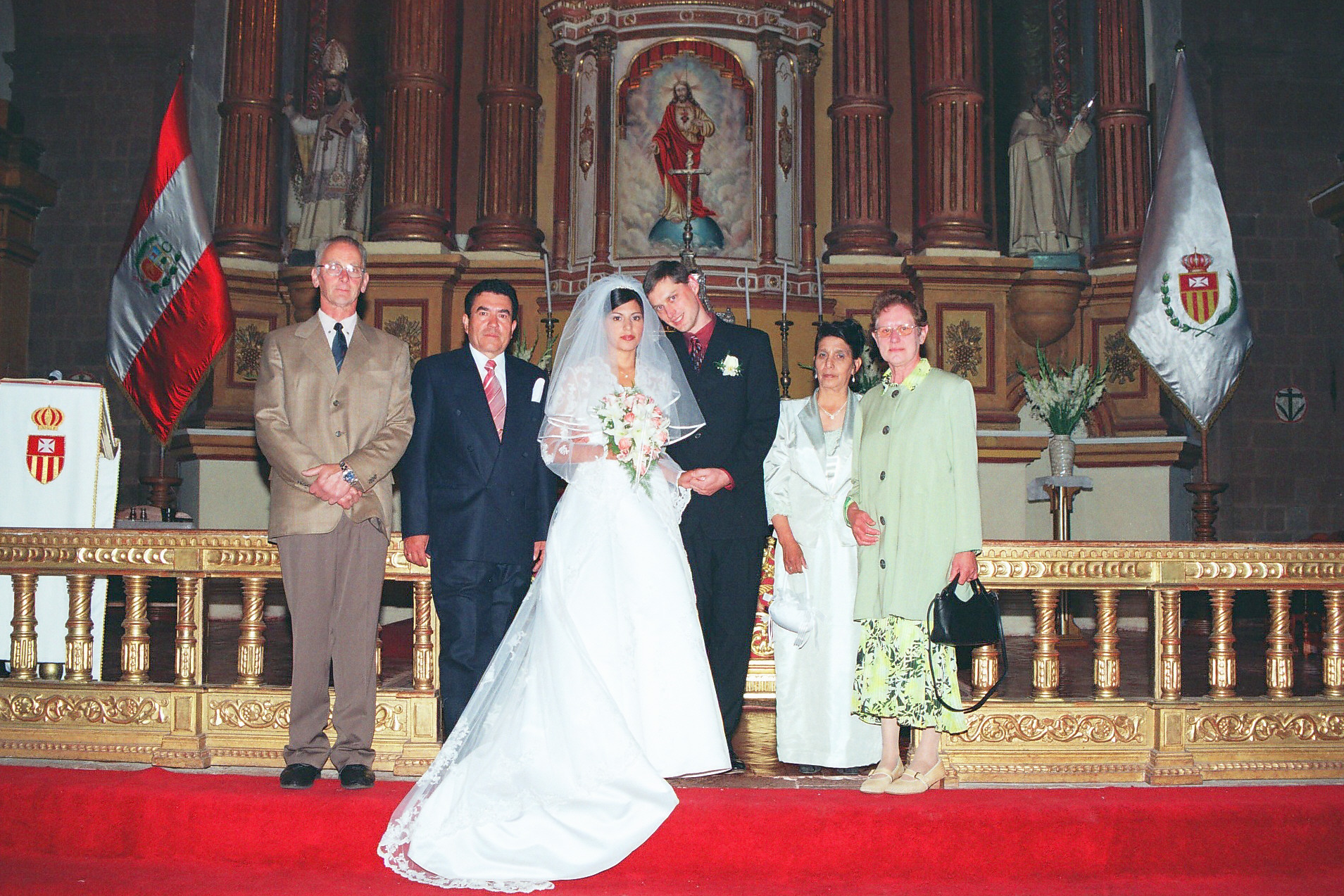
I respect people who have a strong faith and want to share it but please do so with respect for the culture you are in. One thing to realize is that 500 years after the Spanish conquest of the Inca empire, much of the Roman Catholic religion here in Peru remains influenced by the ancient Inca culture. In churches in Peru you will find lots of gold, images of the sun (for the ancient Inca sun god Inti), etc. The traditional images of the Roman Catholic church, such as the Virgin Mary or Jesus on the cross, are typically adorned in strong colors and gold, much like the traditional Andean culture and festivals. Many current religious festivals have their roots in ancient Inca traditions.

All this to say that changing someone’s religion isn’t easy, the number of people you sign up may not really reflect the adoption of your message, especially if that message is delivered with little understanding or respect of the current culture and religion.

altar gold Peru

Inside the Catholic churches in Peru you will find a lot of gold as well as images of the sun, a reflection of the historic Inca culture.

Typical Andean baby Jesus figure

Typical Andean baby Jesus figure.

The church of La Merced in Cuzco

The church of La Merced in Cuzco has elements of traditional Inca culture as well as the Roman Catholic religion. To take pictures inside you have to get married there 🙂

Señor de Huanca

The shrine of Señor de Huanca. It is believed that here God made His home among men.

Señor de los Temblores

Señor de los Temblores – in Quechua “Taytacha Temblores”. One of the best known images of Cuzco.

Power of the sun

It is believed that if you stand in this spot in Machu Picchu with your arms raised to the sun, that you will receive healing and strength from the sun.

Look for the blue rock

I got together with a couple of guys who are in mining a few days ago. Mining is a big part of the economy here in Peru: copper, gold, zinc, you name it. I don’t know much about mining, my father worked in the coal mines in Belgium when he was young but those mines are long gone now. As you might expect, since we’re talking Peru, a good bit of the mining here is informal and badly organized. Peru tends to be that way in many respects, the economy in general is very informal and with poor or little organization. Outside of a few foreign companies (LAN, Telefonica, Saga Falabella, …) the only large and well organized organizations are the police, military and churches, that’s just part of the culture here I guess.

Cuzco is the nearest somewhat big city to the region of Madre de Dios, where a lot of the informal mining takes place. “Informal” is the politically correct term for illegal mines, small mines that have no license and no environmental controls.

My accountant has quite a few informal mining customers and he regularly tries to get me involved with them. Cuzco is one of the most traditional areas of Peru and there is still this weird idea out here that foreigners (so called first world people) are all-knowing and can do anything Peruvians can’t. In the case of my accountant, his “informal” mining customers are always looking for ways to sell their illegal gold. So they ask me if I can make a trip a month to Switzerland with a case full of gold and sell their gold to the Swiss banks. Seriously, just because I’m tall and white they think I can do that, and that it would be OK if I did that. I don’t know what they get in towns like Puerto Maldonado for their illegal gold but I’m sure it’s much below the market price. It’s sad really, because I don’t think those people fully realize the damage they’re doing to the environment but on the other hand, how can you expect somebody who would otherwise be living on $200 a month to turn down a chance to make $30,000 a month?

Anyway, the guys I had a beer with are stand-up people, they’re the guys that do apply for environmental permits and all that good jazz. But I forgot to tell them a secret I got from these local “informal” miners: if you want to find the gold, all you have to do is look at the color of the rock. The blue rock is where the gold is.

I don’t know diddly about geology and drill holes and mineral resource classification but just look for the blue rock if you want to find the gold. So say the locals.

River Madre De Dios

Looking for gold? Nah, just waiting for the boat on the river Madre de Dios.

Priceless jungle Peru

Priceless jungle

Sunset in San Bartolo

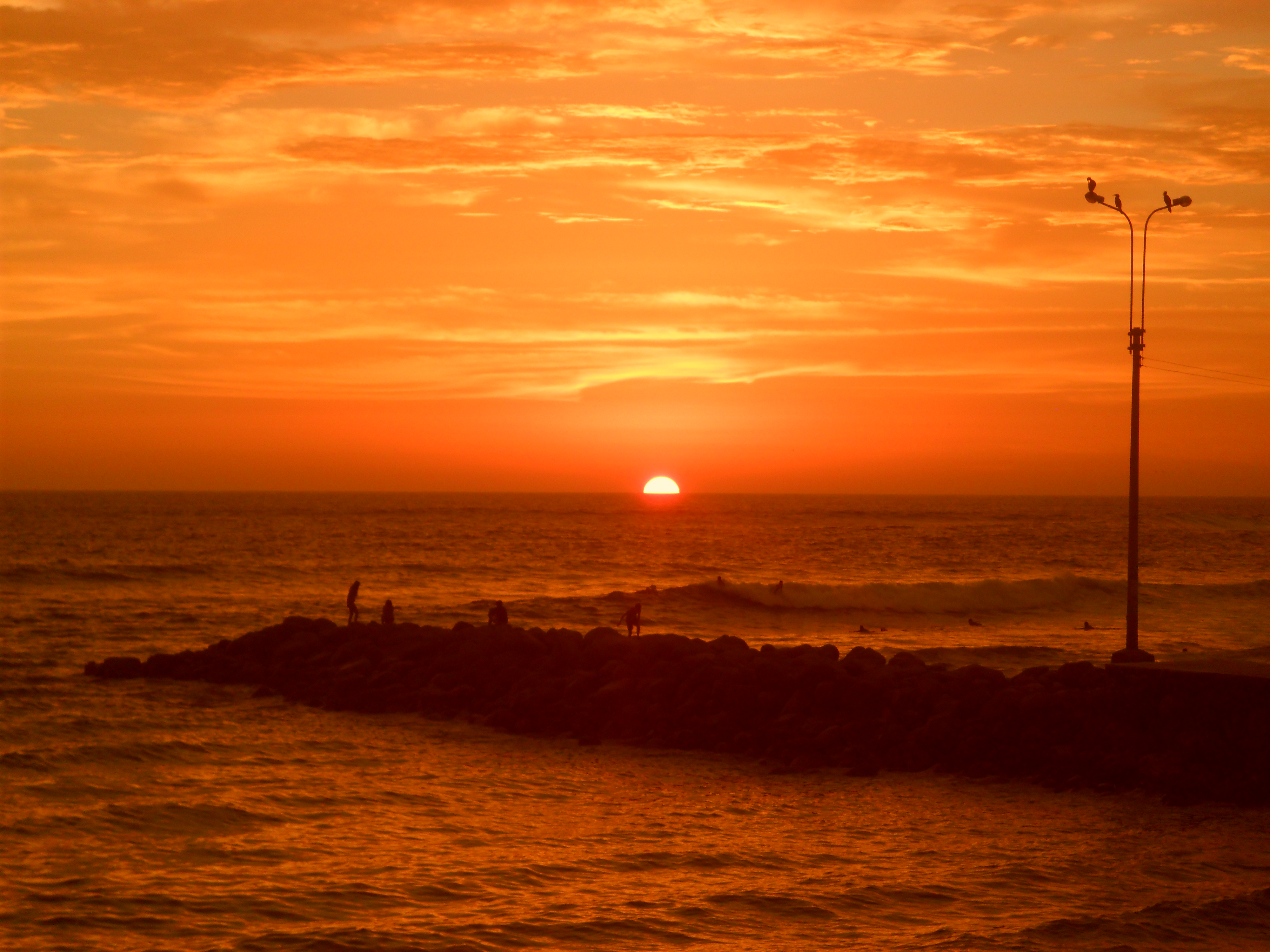
Summer vacation is almost over here in Peru. We recently spent a few days at the beach in San Bartolo, just south of Lima, enjoying the southern hemisphere summer.

A picture of the sun setting over the Pacific Ocean, words just fail:

Sunset over San Bartolo

Sunset over San Bartolo

Papi chancletero!

Happy New Year! Did Santa get you everything you wanted for Christmas this year?

I’m very blessed: I got a new pair of jeans, a stylish new jacket, and a new BABY GIRL!!!

Claire Josephine

Claire Josephine

She’s not a Christmas baby but a December birthday nonetheless. Mommy and baby are doing good.

With this latest addition to the family there are now 3 mamacitas and only one papi in our house. Therefore I have been called “chancletero” on occasion. “Chancletero” in urban Peruvian Spanish means a man who only has daughters, all girls no boys in the house.

I’ve been told that “chancletero” originally had a negative meaning. “Chancletas” in Spanish means slippers or sandals. Back in the day it was thought to be more important to have sons, to carry on the family name and take care of the land. Since “chancletas” are not very valuable shoes, the word “chancletero” is supposed to have this negative connotation that baby girls were less valued than baby boys. This I read somewhere but I can’t vouch for it being accurate.

Having said all of that, I think “chancletero” has long lost it’s negative connotation in urban Peruvian Spanish. Perhaps it’s similar to the word “redneck” in American English, which most certainly had a negative meaning but is nowadays often used without negative connotation – at least in the Old South.

At least I think the people who’ve called me a “chancletero” and “redneck” didn’t think badly of me 🙂

We’re very happy and blessed with our beautiful baby girls. Brianna is very happy to have a little sister too.

Our beautiful baby girls

Our beautiful baby girls

Inca Water Engineering – not what it once was

Ever wonder why some countries were historically known for one thing but now are nothing like that any more?

  • Australia as we know it was founded as a British penal colony, a big prison. Now nothing but friendly people – yes you know who you are 😉
  • Greece pioneered democracy and responsible government. Nowadays not so much. Sadly, I’ve personally spoken to more than one Greek citizen who wants to leave their beautiful country because they are so fed up with the incompetent and corrupt politicians.
  • Julius Cesar wrote that of all the tribes he conquered, the area that is now Belgium put up the fiercest resistance due to “being the most distant from civilization and therefor the most barbaric”. (and you thought I remembered nothing from high school) Nowadays Belgium is home to the EU, NATO, you can’t find a Flemish person in Brussels. Belgium is now an institutional center.

And last but not least:

In the time of the Inca, Peru was known for its architecture, civil engineering and water works. Nowadays, you really really don’t want to know. But I’ll tell you anyway.

Disclaimer: wise man told me you can’t come down to Peru and just expect to take the good without the bad and he’s absolutely right. However, sometimes you just have to get it off your chest so to speak.

This was what our floor looked like on Friday morning, courtesy of a simple “repair” at our next door neighbor:

hardwood floor water damage

Our living room last Friday

Long story short our neighbor decided to “fix” the gutters on their house. The drain from the gutter used to be on the North side of their house, draining into the sewer system. There is a small porch on that side, so instead of fixing the existing drain, the workers decided it would be easier to move the drain to the South side of the house, into a low-lying grassy area, with no runoff at all. The drain ended up literally 10cm (4″) from our house, which happens to be about 1.5 meters (5′) below the neighbors house.

It is now rain season in Cuzco and after a long night of rain we woke up to bulging hardwood floors. Tomorrow we’ll be in the third day of repairs. The neighbors, the owner of our house, ourselves, all combined we have a good bit of time, money and grief over just one day of lousy workmanship. A nice, 40-year old floor scr***d up in less than 48 hours.

Unfortunately that type of thing is not unusual here.

I hate to fuss but picture yourself in this. Our daughter woke up Saturday with bad tonsilitis, I have a lot of year-end work to do that other people’s bonuses depend on, mamacita linda is expecting to give birth to our next princesita any day now. Not the time we want to have to deal with dumbass-induced headache.

But we’ll deal with this and as Bruce says: “Someday we’ll look back on this and it will all seem funny”

* * *

Next time you’re in Cuzco and have a craving for junk food, you should skip Mc Donald’s and head to Bembos across the Plaza de Armas. Food and all is the same but last time we were there we noticed Bembos had hired a young man with Down Syndrome to help with some cleaning and miscellaneous work. I know they’re legally obligated and all but you don’t see that very often. Maybe the young man won’t be there any more, I know these things aren’t easy but I appreciate that they extended the opportunity.

* * *

Maybe I’ll name our next baby goose “Rosalita” in honor of this incident. Or go all Hollywood and name her “Purple Rain”. What do you think?

Watch all the way to the end.

Yes I did have 2 glasses of Argentine Malbec before writing this. I needed it 🙂

Feliz día de la canción criolla

Happy Halloween!

Running late trying to get a last minute Halloween costume? Since 31 October is also día de la canción criolla, why not impress your friends with your Peruvian touch and dress up as your favorite singer of musica criolla?

Eva Ayllón or María de Jesús Vásquez Vásquez perhaps?

Arturo “Zambo” Cavero maybe? Or grab your guitar and pay tribute to the late maestro Félix Casaverde.

From Wikipedia:

Música criolla is a category of Peruvian music that combines mainly African, Spanish and Andean influences. Afro-Peruvian music was first created by African slaves in Peru during the Colonial Period and beyond.

Here are some Youtube videos of musica criolla. Although musica criolla is perhaps most strongly associated with Afro-Peruvian culture you can see the many musical influences, the diversity of Peru is reflected in its musica criolla:

Feliz día de la canción criolla!

Peru is nuts about education

Friday afternoon I picked up Brianna’s 9 page report card at her jardin (kindergarden). She’s 3 now. During the meeting at her jardin there were a number of congratulations from the school to the parents of those children who have recently been accepted to start next year at some of the highly regarded schools in the city. We are coming up on the end of the school year here and the idea is that most of the highly regarded schools offer 2 years of kindergarden (5 and 6 years old) which will help your child get into those schools at the start of their primary education.

There are many small, private jardins for kids ages 2 and up, like the one where Brianna currently is. It’s considered important for those jardins to place children into the highly regarded schools at the 4-5 year levels. The director of Brianna’s jardins called out a number of proud parents including one “whose baby has been accepted IN FIRST PLACE to La Salle!!!!”

Big round of applause.

I personally don’t like the La Salle school. To me it’s very pituco.

Then the director continued about how many more kids are still in the process of “taking exams” for other schools.

I started to write this post on Saturday but couldn’t finish because the power went out several times in our neighborhood. This is considered normal, the water and electricity go out about once a month (and we live in a well established residential area) but 4 YEAR OLDS TAKE ENTRANCE EXAMS???

I first realized that Peru is totally nuts about education back when I was teaching ESL. I understand that everybody wants to give their kids a better life than they had. For Peruvians who remember the bad old days of terrorism, the collapse of the rural economies and hyper-inflation it’s easy to understand that they see a good university education as the ticket to a better life for their children. A good pre-school is just one of the many steps to that ultimate goal of a good university education.

The problem in my opinion is this: Peru has blind faith in education.

I think this blind faith in education has created a generation with quite a few “professional students”, young Peruvians who should have every opportunity in life but fail to take advantage of them out of fear or reluctance to make that next step, get out on their own. The strong Peruvian mothers shelter their kids so much that they often lack incentive, self confidence, at least in a professional sense.

It’s not what you know, it’s what you do with that knowledge that matters.

Studying is a great way to get out of having to look for a job. 25-years old, living at home and never worked a day in your life? Just sign up for another “institute” and mom will be proud. Want a new laptop or internet at home? Just tell mom you need it for “homework”.

Also, savvy business people make a ton of money in Peru with education. Sadly, in my opinion many of the for profit private institutes aren’t very good. It’s just business.

* * *

My father didn’t go to college. He worked on the farm until he was 16, then he went to work in the coal mines. My grandfather didn’t go to college, he got sent to war, to go kill young men he didn’t even know – because people with degrees from the finest universities in the world told him to.

valle_sagrado_baby_goose

Brianna Nayaraq 🙂

valle_sagrado_mami

Think you know Cuzco: where was this picture taken?

valle_sagrado_papi

Papi Inka or my new casa de campo?

I win my first argument with a Peruvian bureaucrat

It has always been said the problem with gringos doing business in Latin America is that gringos don’t understand the culture. Businessmen from large multi-nationals just wanted to come down to “close the deal and get the heck out of this place”. I don’t know if that’s still true since the larger metropolitan cities in Latin America are very cosmopolitan nowadays (business people and Secret Service agents alike may actually look forward to visiting Latin America nowadays). However, getting things done in Latin America remains very different from in the industrialized countries. The big difference is that you have to be genuinely interested in the people you do business with, the places you operate in, the culture, the history, etc. You cannot come down to Latin America in a strictly business mindset, close the deal and get out of there.

I’m good at doing business here in Peru. I take an interest in people, culture, history. I chat up people for no reason other than to be social. You have to be social here in Latin America. The same holds true for dealing with the bureaucracy in Peru. You can’t just walk into a government office and expect straightforward explanation of what to do, how long it will take, etc. You have to shake hands with the security guard, tell him the nature of your tramite (the paperwork you’re doing), go to 3 different desks, make nice talk at each desk, profusely thank the bureaucrats as if they are really being helpful, etc.

The trouble is, even though I’m quite good at getting things done in Peru, I still can’t navigate the bureaucracy. No matter how nice or social you are with the bureaucrats, they stick to their rules and forms and you simply never get the final “OK, you’re done” until they are happy.

It’s never good to loose your cool with a Latin American bureaucrat but some situations push the limits of your patience:

  • Before Patricia and I were legally married the municipality needed a translated copy of my birth certificate. We gave them a certified “international birth certificate” that conforms to some international treaty, but that wasn’t enough. They wanted the original birth certificate, translated, certified in Belgium, then taken to Lima and certified there.
  • I spent a lot of time and money to get my Peruvian pilot’s license which I was told would have all my same ratings as on my US license but at the very end of the process they issued my license with a single rating only, saying I’d need to spend another $6,000 or so to get the rest of my ratings.
  • I recently incorporated a company, “The Silver Lining Company, EIRL” here in Peru. “EIRL” stands for Empresa Individual de Responsabilidad Limitada. On one of the forms that was generated by the “Registros Publicos” (national registry), the word “Responsibilidad” was misspelled (by them, not by me). I was told it would take 3 days to correct that!
  • One of my international flight permits to deliver a small Cessna from the factory to Peru was delayed by almost a week because we had specified “Ferry Flight” instead of “Vuelo Traslado” (= ferry flight) on the permit request.

Some of these issues may seem petty but if you’re trying to get a job, buy a house, get married or something like that and you can’t get past the bureaucracy it can be very frustrating. I was recently at the US embassy in Lima where another person wanted to have some documents notarized to get a job at a university in Lima. The embassy told this person they couldn’t notarize her forms because the embassy had to comply with the Hague Convention. As I understand it, the Hague Convention simply means you get a certified form only from the originator of the form and then it is supposed to be respected worldwide. But what do you do if the person at the other end of the transaction doesn’t know there exists a Hague Convention and insists you “get it notarized at the embassy”. While I was listening to this conversation at the US embassy it was quite obvious this is almost a daily issue for them, people coming to get papers legalized that the embassy can’t or shouldn’t legalize.

Long story short no matter how you try to make sense with a Peruvian bureaucrat they always win.

Until now!

A few weeks ago I won my first argument with a Peruvian bureaucrat. I have to go twice a year to the Peruvian immigration office to renew my visa. It’s the typical tramite: you go into the office and stand in line to get some forms. Then you take the forms to the Banco de La Nacion and stand in line to pay a fee. You make some copies of various documents, get the copies notarized, return to the immigration office to turn the whole thing in and listo, visa is extended.

Last year I had a problem when I renewed my Peruvian visa. When you enter or leave the country your movements are supposed to be recorded in a database, but when I enter (or leave) through Trujillo or Piura airports on my ferry flights, the entry is often not recorded. I pass immigrations and customs, get a stamp in my passport, but for some reason the entry is never made into the database. When I renewed my visa last year my “movements” didn’t add up, for example, I had 2 entries for “leaving the country” without one for “entering the country” in between. I spent about 6 weeks, a bunch of time, tramites, photocopies, notary fees, trips to the immigration office, and then it was supposedly resolved.

When I went to renew my visa this year I did my tramite in about 2 hours, got my new sticker on the back of my carnet extranjeria and was home free. Or so I thought. A half hour after I left the immigration office I got a phone call that there was a problem and I needed to return to the office. I went back and the officials there told me my “movements” didn’t add up again. They showed me the list of movements and even the ones that were supposed to have been corrected last year were missing again, as were some from my more recent trips.

The friendly lady at the immigration office in Cuzco told me to go make certified copies of my passport, all the pages with the stamps that show me entering or leaving Peru, get them all notarized, write a letter to request that my “movements” be fixed and pay a fee to fill out some forms.

I didn’t loose my cool at first. I kindly told the lady I simply wouldn’t do it. I said I had spent a lot of time and money doing the same thing last year for nothing (the problem still existed even with my movements from last year). It was not my problem, I pass through immigration and customs on all my trips. It’s simply a system issue with international flights through airports other than Lima (both Piura and Trujillo are airports of entry, meaning they accept international flights).

The bureaucrat lady and I go through the same conversation about 3 times. She tells me to do a bunch of stuff and I kindly tell her I won’t. After about 3 or 4 times beating a dead horse I finally loose my cool and raise my voice.

“Look lady, I ain’t doing nothing. It’s your problem, you fix it!!!!!!!!”

This never works. You just shoot yourself in the foot. So I was completely dumbfounded when another bureaucrat at the next desk stood up and agreed with me. He walked over to the first bureaucrat lady and said something like, if my entries/exits were not through Lima that all they had to do was send an email to the airports (ie. Piura or Trujillo) to confirm the movement or have them put it in the system or something of this nature. I didn’t follow the exact details of the conversation between the 2 officials but they quickly decided I didn’t have to do anything else, all was fixed, they would take care of it.

I was happy and at the same time I couldn’t believe it, I had actually won an argument with a Peruvian bureaucrat 🙂

What expats in Cuzco talk about

The other night I went out with a couple of fellow expats in Cuzco. Lori is a software/marketing executive turned English teacher and Mark runs “Machu Pizza” here in Cuzco. Lori has spent most of the past 10 years or so here in Cuzco, having moved here from California. Mark has been in Cuzco for about 3 years. Mark’s Peruvian girlfriend was also with us.

Living in Peru has given me a new point of view about minorities. I am a minority now for the first time in my life. No matter how much I like Peru and how friendly Peruvian people are to foreigners, there is some level of comfort in being with people who are like you, and like most expats I know, I get together or spend time regularly with other expats. There’s another perspective to this as well: Mark, Lori and myself are very different by the traditional “classifications” that we try to apply in the US. Lori is an African-American woman, I’m a middle-age white guy. In the US we’d be lumped in entirely different “categories”, but here in Peru we’re the same category (GRINGO). While we may have different ethnicity, our backgrounds and life experiences are similar. Diversity is more than checking off a box on an HR form.

At any rate, the four of us devoured one of Mark’s pizzas and shared a bottle of cheap Peruvian wine. Bad for the waist but good for the soul. Here’s some of the things we talked about:

Pizza

We fussed about how Peruvian pizza isn’t that great. Mark is planning to overhaul the entire pizza scene here in Cuzco with his “Machu Pizza” restaurant and little pizzas sold from “Machu Pizza” carts outside schools and markets. Here in Peru this sort of “informal economy” is very common, there are street vendors selling candy, snacks, drinks on practically every street corner. Mark is planning to become the mogul of street corner pizza vendors 🙂

Peruvian workmanship and reliability

As a kid I remember going to my grandmother’s house one day while she was preparing food to cook. My grandmother was using a little knife to cut some food and she complained that her knife “was a Spaniard”. I didn’t get it at first (I was only 5 or 6 at the time) and she had to explain to me what she meant was that the knife was doing work of inferior quality – it was not sharp at all.

I sort of took offense to my grandmother’s comment at the time because I loved Spain, it’s where we went on family vacations. But my grandmother had a point: in the late 70s (not that long after the Franco era in Spain) when northern Europeans like us would go on summer holiday in Spain we found that quality of workmanship was not nearly as good as in the more industrialized countries in northern Europe. You can love a place while still being realistic about strengths and weaknesses in an economic or practical sense (*).

During our conversation Mark told us he bought a welding machine and is building his own mobile pizza ovens for his streetvendor carts. He tried to have one oven built by a local mechanic or contractor, but never got it done. One part of the job was done well and on time but then the job never got finished. After much delay and promises of “tomorrow” Mark eventually retrieved his partly-built oven and finished it himself. I fussed about the 2-year old park in my neighborhood that’s already falling apart, Lori complained about some of the sub-standard workmanship on her house that she is building. These are very typical gripes of expats. I love Peru but it’s not a place to go for high-quality workmanship and reliability in an industrial sense.

Peruvian web sites are really bad

Mark mentioned something about a web site he’s had in the works for 6 months now, still not ready. Most Peruvian websites are terrible quality. I think it has to do with the education at the universities and higher-education institutes. The quality of education in IT seems really bad and not practical.

Why Peruvian kids love to work at McDonalds

Mark told us he’s having trouble getting reliable help for his restaurant, not uncommon in his business I’m sure. Several of the young people who had worked for him have gone on to work at fast-food restaurants here in Cuzco. We have 1 each of McDonalds, Bembos, KFC and Starbucks in Cuzco and many kids look at them as cool or great places to work. We amazed how fast-food jobs – at least with the big multi nationals – are regarded highly here in Cuzco, unlike back home.

* * *

So it would be a fair question to ask, after all that fussing, why don’t we just go back to our own countries?

Truth is, we discussed that. Despite our typical belly-aching we agreed that we like living in Peru better than in our home countries. There’s a certain quality of life that has nothing to do with mundane considerations like taste of pizza or quality of websites. Here in Peru there is more social interaction than back home, life revolves a bit less around work and money, people don’t take themselves as seriously as in the industrialized countries. And of course as expats every day is a bit of an adventure, maybe that’s not for everybody, but I like broadening my horizons by living in a different culture.

And finally, other than pizza, Peruvian food really is better than the rest 😉

landing_in_Piura_SPUR

I delivered a small Cessna 172 from the factory in Kansas to Lima last month. Here I am on final approach for landing in Piura.

(*) If the EU people had been more realistic about the strengths and weaknesses of the various economies throughout the Euro-zone they might not be in the predicament they are now.

Frogs, drinks and birthdays in Peru

This slideshow requires JavaScript.

Seriously, I cannot party like a young person any more.

Mamacita linda celebrated a birthday last week and we celebrated in the proper tradition of Peruvian birthdays. In other words, eat, drink and dance till the wee hours of the morning. We started with the family at our house, Pisco and soda because I didn’t have time to make proper Pisco Sour for them all, and then to “Sr. Panda” for some yummie food.

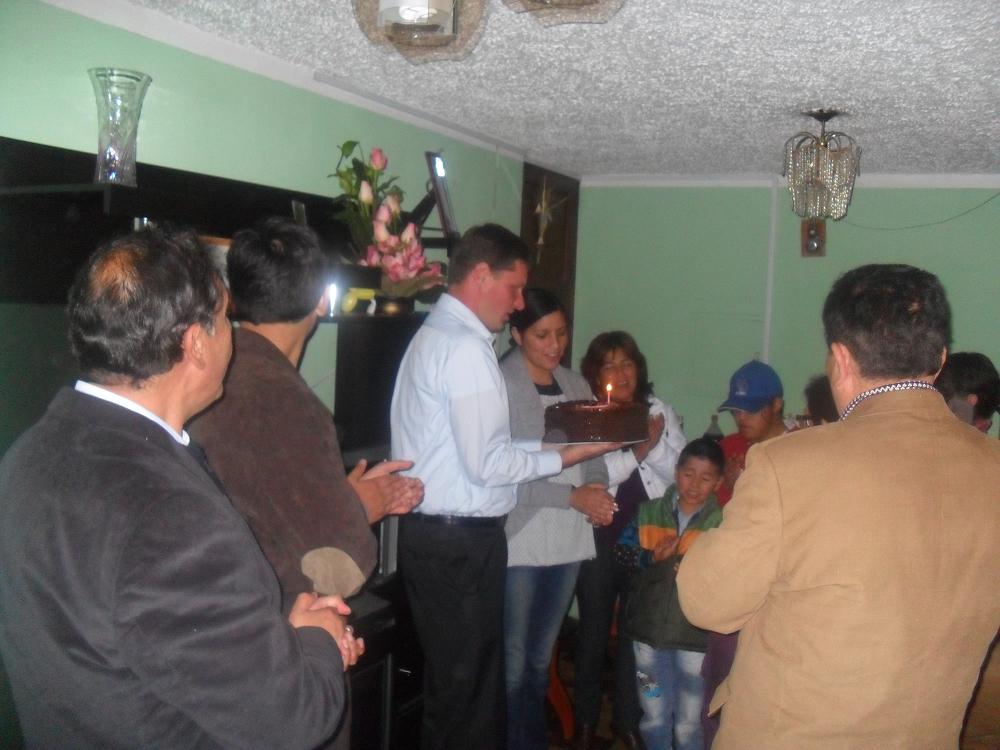
Back at our house for cake. Peruvian birthday cakes only have 1 candle, whether you’re turning 1 or 100. Not like up North where the nr. of candles matches the nr. of years. Peruvians don’t seem to keep track of the years, Patricia doesn’t know her brother and sister’s age without seriously thinking about it.

cake_at_home

Mami's birthday cake

all_of_us_at_home

Mamacita linda on her birthday!

Our apartment here in Cuzco is very small (hopefully this year that will finally change) and we can’t really entertain friends and family together, so we had decided to have the family at our house first and then a few drinks with friends at The Frogs, a sort of hip / bohemian bar close to the Plaza de Armas in Cuzco. We got to “The Frogs” around 10pm and this is where the party really took on its Peruvian character. Some of Patricia’s friends showed up early, but others didn’t show up until 1:00am, which this is totally normal here.

at_the_frogs_in_cuzco

At the Frogs in Cuzco

We had lots of finger food and then more cake. As you can see we had a little glitch where we ran out of forks for the cake…

cake_at_the_frogs_in_cuzco

Cake for mami's birthday at the Frogs in Cuzco.

eating_cake

When you run out of forks....

We had a good time at “The Frogs” with a ridiculous amount of finger-food, more cake, and, errgh, a few drinks. The deal was that Patricia had booked a reserved room for our party and gotten a package-deal with food and drinks. At the end we decided to have the waitress bring all of our remaining drinks for a nice picture 🙂

drinks_at_the_frogs_cuzco

Drinks at the Frogs in Cuzco

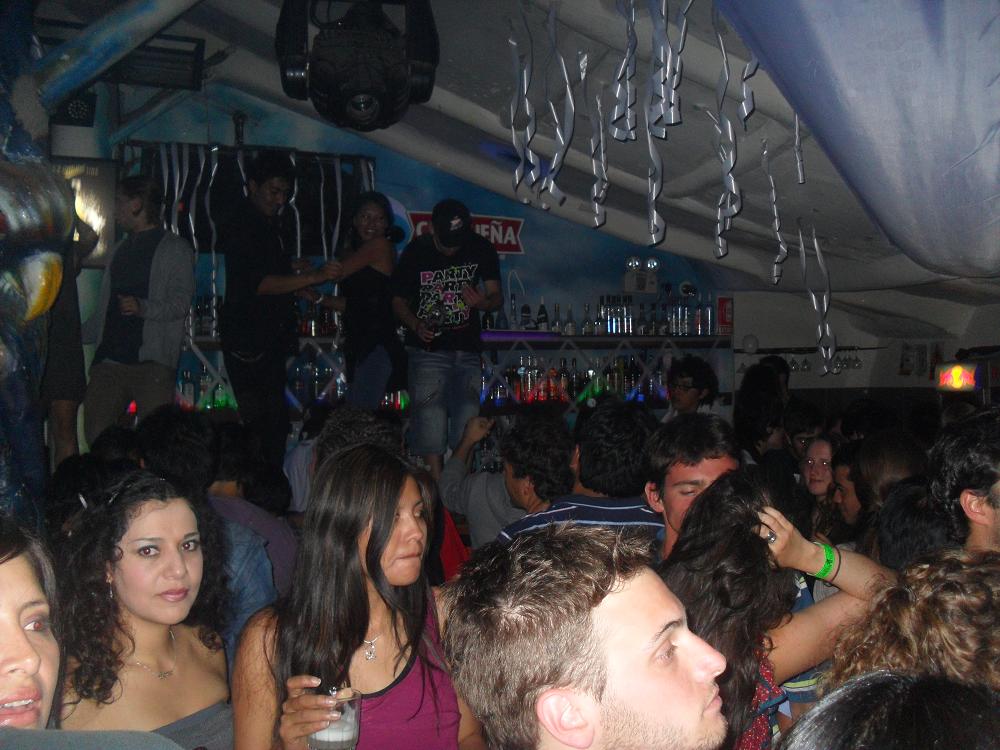
If you thought the party was over just because it was going on 2:00am or so, you must not be Peruvian! At 1:00am the party around the Plaza de Armas in Cuzco is just getting started. The girls decided to take the short walk from “The Frogs” to the Plaza de Armas and go dancing at one of the local discos, I think it was “Mythology”.

A few months ago there was a big to-do about the mayor of Cuzco trying to close all the discos at the Plaza de Armas. How’s that bone-headed idea working out you ask?

Just have a look… I mean, nightlife is part of any big tourist city, from Miami to Amsterdam to Downtown Disney.

mythology_disco_plaza_de_armas_cuzco

Mythology disco at the Plaza de Armas Cuzco

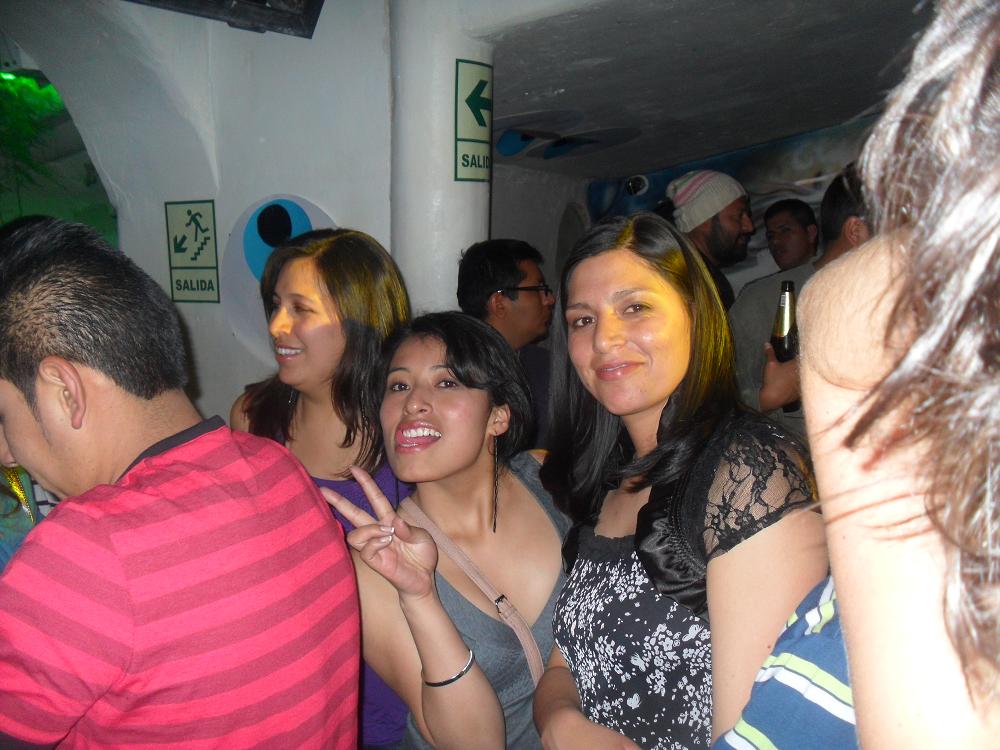
at_disco_plaza_de_armas_cuzco_karin

Mamacita with one of her best and most-outgoing friends

In the wee hours of the morning we headed home but some of Patricia’s friends stayed out a bit longer. I suffered the next morning, this party stuff is for young folks 🙂