Halloween in Cusco

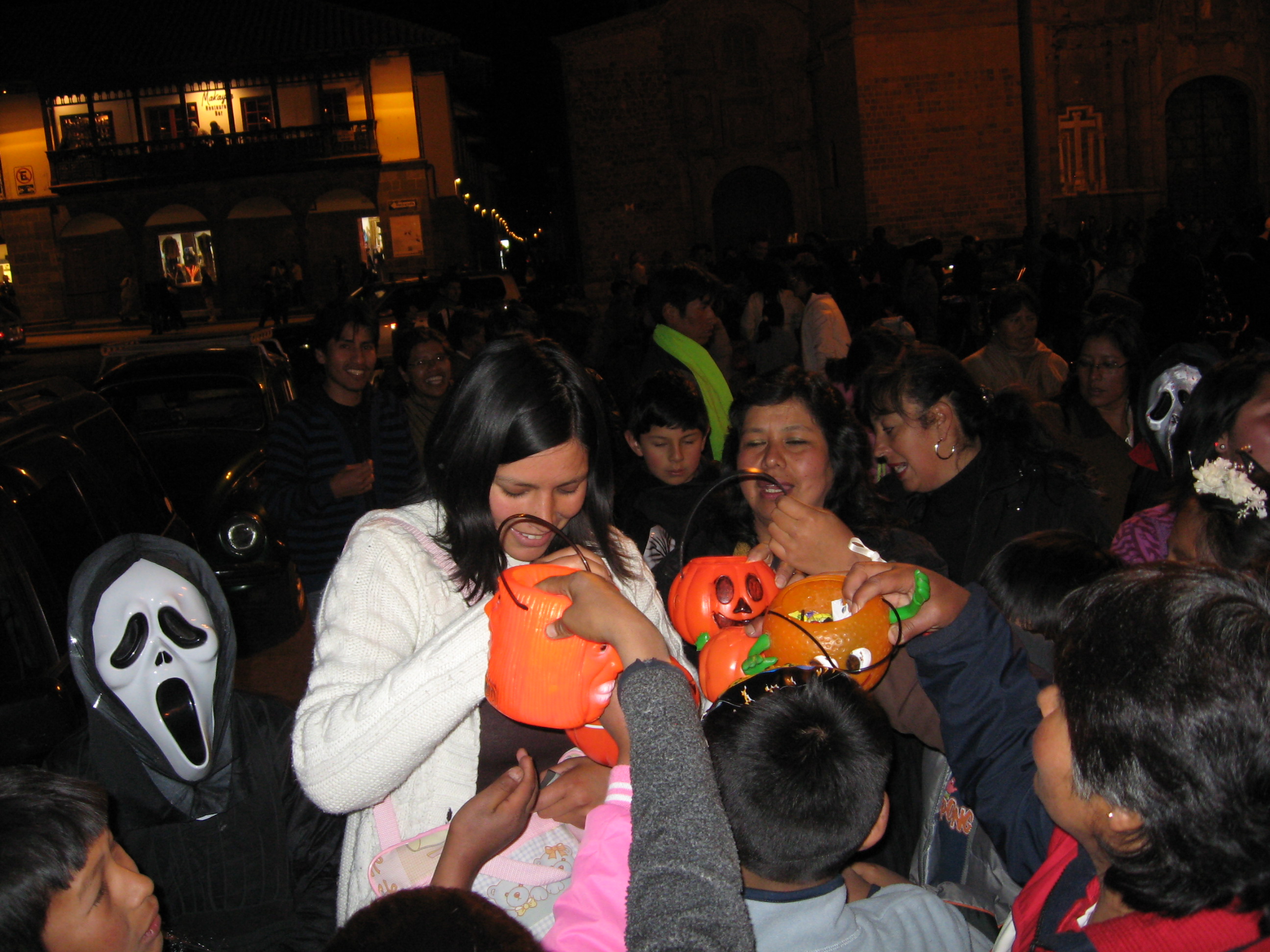
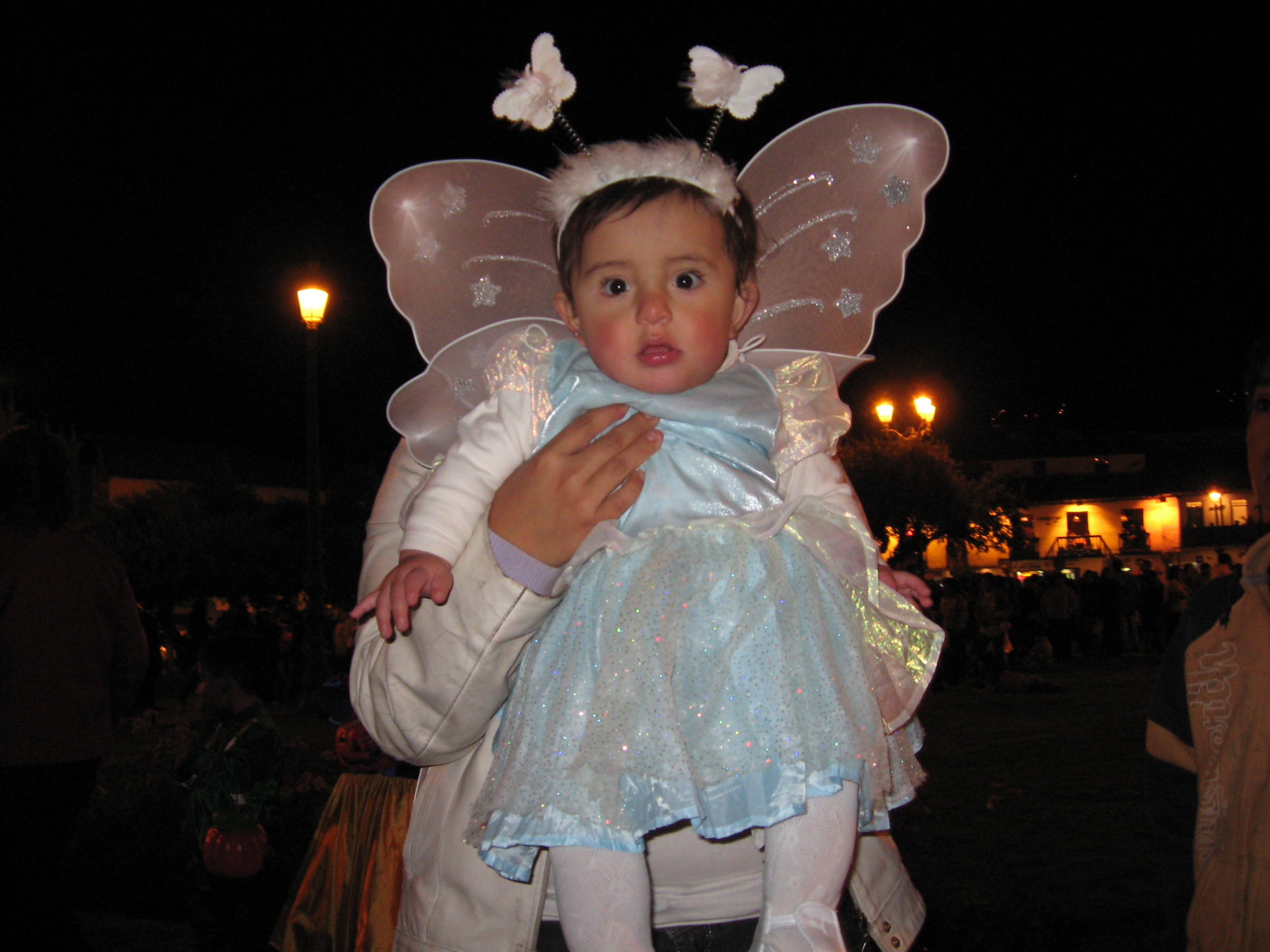
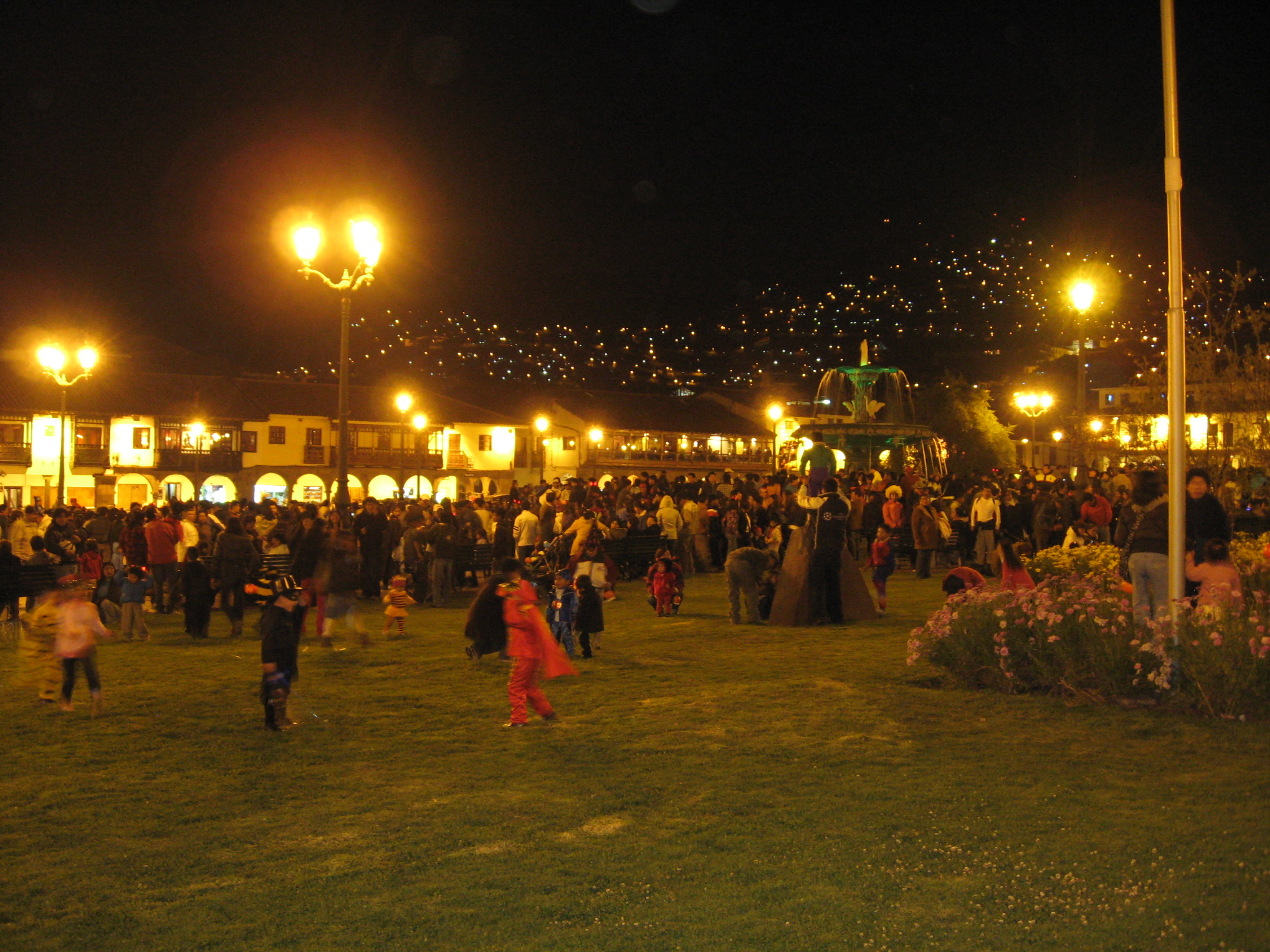
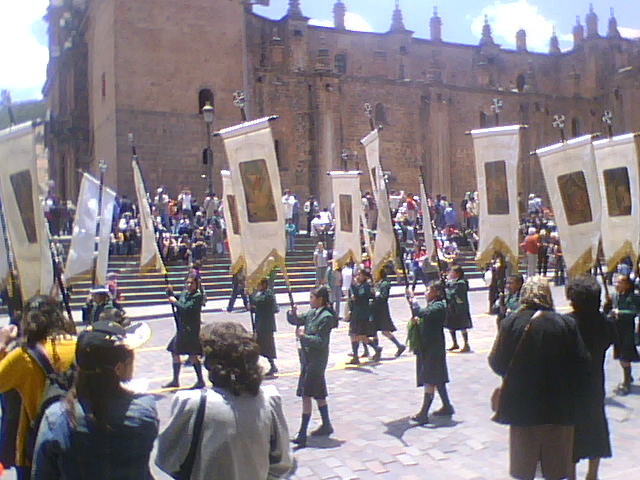
A few pictures of Halloween at the Plaza de Armas in Cusco, Peru:

Now I have to admit, I used to not like Halloween, thought it was a good day to lock the doors, turn the lights off and let the dogs out. But that was long ago, now Halloween is one of my favorite holidays.

I don’t think Halloween is as big an event in Peru as in the US. In regular neighborhoods, you don’t see many kids dressed up, and in typical Peruvian fashion (better later than earlier) most kids are buying masks in the afternoon on Oct 31 – not like in the States where Wal-Mart is full of Halloween costumes for the entire month of October.

We went to the Plaza de Armas last night to check out the crowd and hand out candy. Peruvian kids don’t really go “trick-or-treating” like in the US, they just sort of walk up to you with a little plastic pumpkin and say “Halloween”. Patricia had warned me that we’d be mobbed as soon as kids noticed we had candy, and sure enough, we practically got run over by happy little ones, and sometimes their moms as well. One kid tried to come back a few times, and when Patricia noticed he said “that wasn’t me, that was my twin”. One day I’ll do a post on little white lies in Peru, they’re out of control at times and usually so obvious it’s plain funny.

Anyway, got of on a tangent… For those of you who get into folk legends, some Belgian scholars believe the origin of Halloween has to do with a Dutch folk song, Lied van Heer Halewijn

“Heer Halewyn zong een liedekyn,
Al wie dat hoorde wou by hem zyn.

En dat vernam een koningskind,
Die was zoo schoon en zoo bemind.

Zy ging al voor haer vader staen:
“Och vader, mag ik naer Halewyn gaen?”

“Och neen gy, dochter, neen gy niet!
Die derwaert gaen en keeren niet

…”

Find the complete lyrics here. But if you’re looking at me to sing the song, you’ll need to wait until I’m seriously inebriated 🙂

Tramites y mas tramites

Alternate title: Reasons why Peru is poor, number 936

The absence of posting over the past 2 weeks (bad, bad blogger) was because we were in Lima working on a bunch of tramites, or loosely translated “applications”.

Tramites are basically a bunch of cumbersome bureaucratic paperwork. Compared to the US or Europe, simple things such as getting a driver’s license or incorporating a business require much more paperwork here in Peru, and cost a lot of otherwise productive time.

Worse yet, some tramites either have to be done in Lima or take a lot longer if done from in the provinces. This of course tends to hold back economic opportunities in the provinces as compared to Lima, while any well-fed monkey (but apparently not the idiots in suits who run Lima) can tell the provinces are exactly where more opportunities are needed in Peru.

Also frustrating is how some parts of the process that you expect to be straightforward can take so long. For example, it took us 4 days and 4 trips to downtown Lima to get our marriage license stamped by all the relevant pencil pushers.

So we were running around Lima like mad, spending half my earthly kingdom on cab fares and “pagos” at the Banco de la Nacion. But we didn’t do too bad on our tramites, really:

  • Getting the Peruvian convalidacion of my pilot’s license – struck out, more on that later.
  • Brianna’s Belgian passport – check
  • Patricia’s Belgian visa – check

I started to lose my patience with the required español to holandés translations at the Belgian embassy… since there’s hardly anyone at the embassy who speaks holandés, but thankfully the really nice people at the embassy didn’t fault me for my rather skinny tolerance for bureaucracy 😉

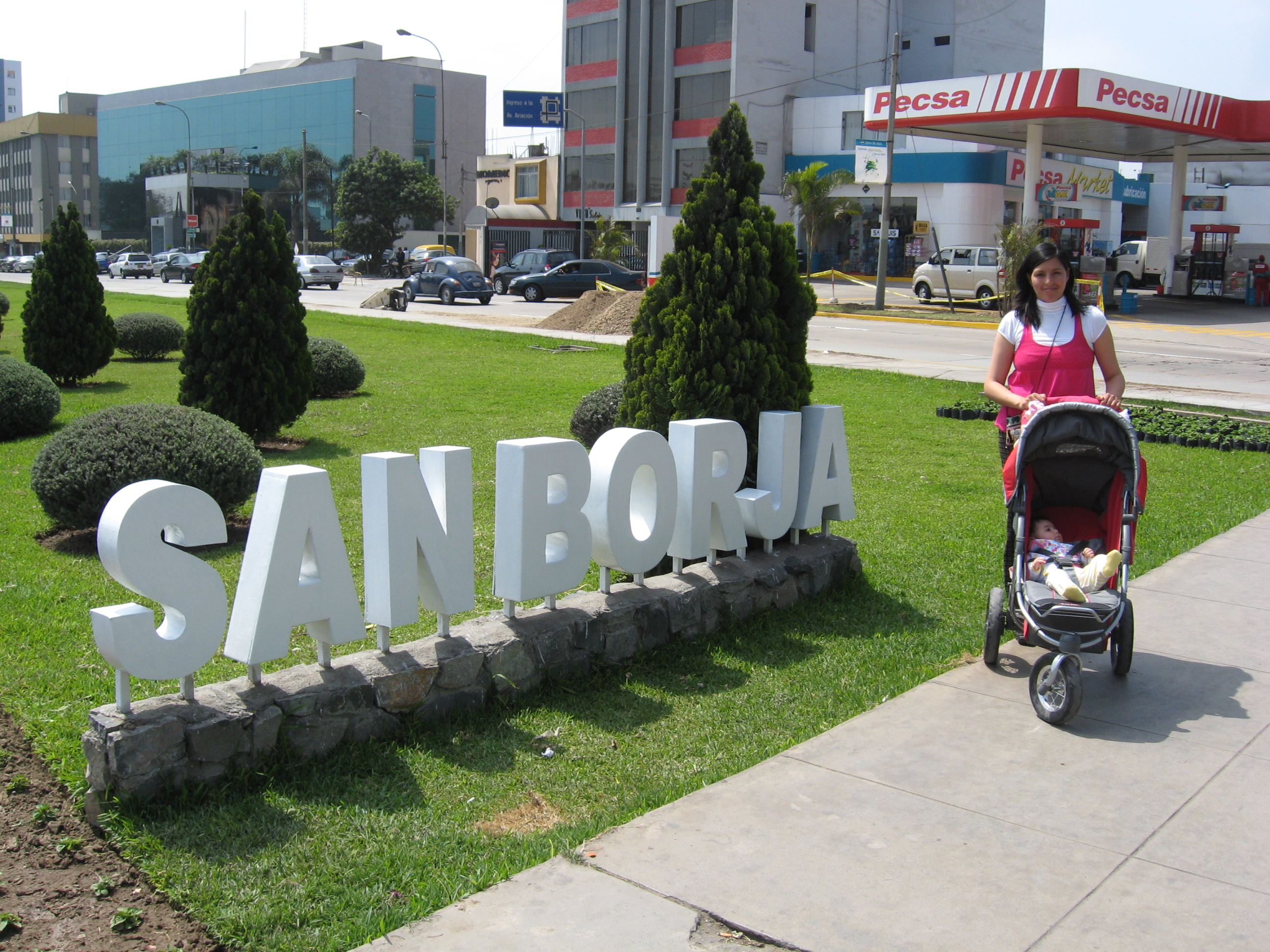
We were lucky to be able to stay in our cousin’s apartment in San Borja, so the logistics of traveling with baby were well taken care of.

A little R&R after a hard day of tramites

A little R&R after a hard day of tramites

Av. San Borja Norte, a nice area of Lima

Av. San Borja Norte, a nice area of Lima

Señor de los Milagros

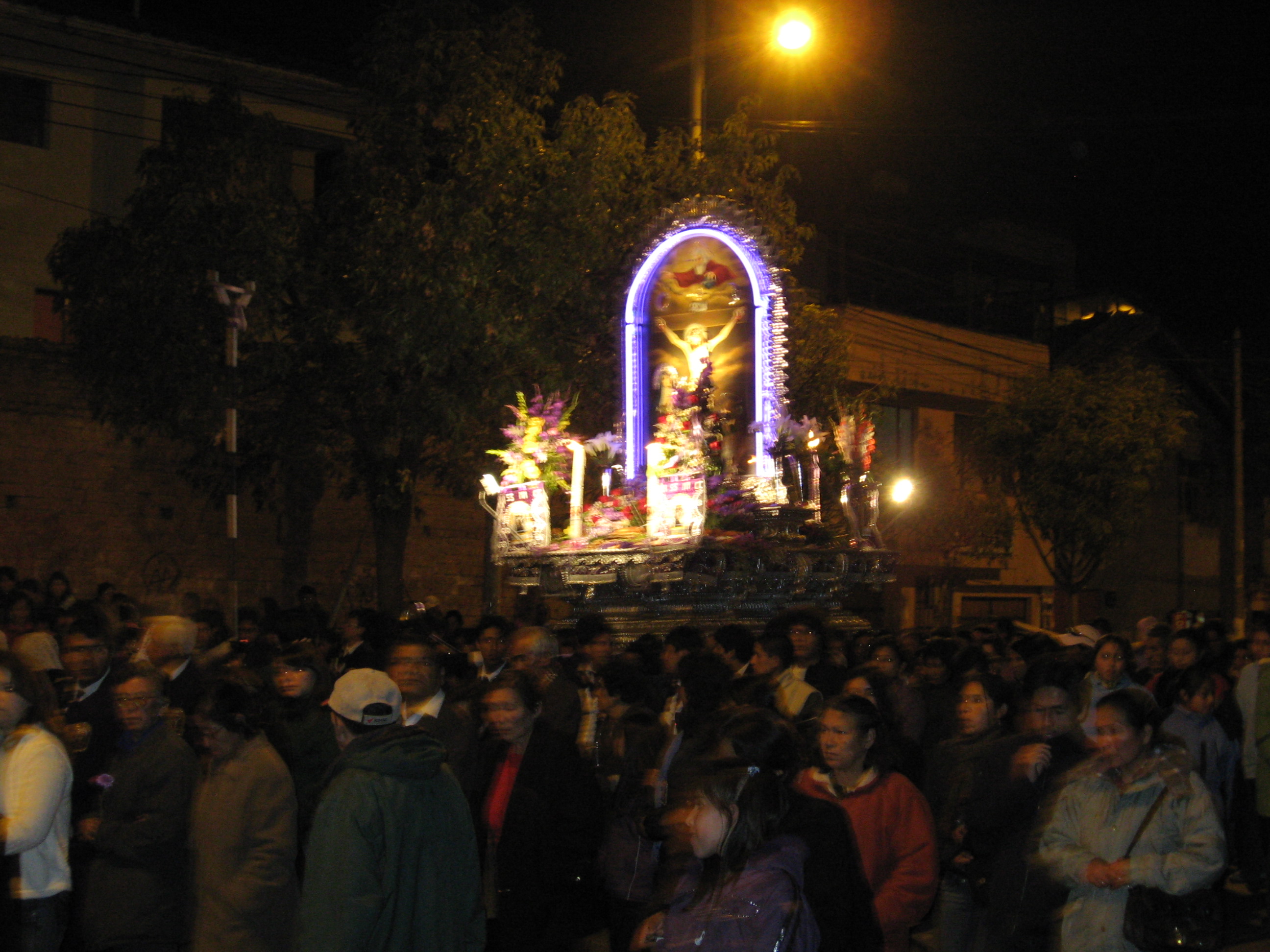
The procession of Señor de los Milagros in Cusco passed by our house last night. Peruvians worship Señor de los Milagros (Lord of Miracles) as it is believed he protects them from harm. An excellent explanation of the tradition from Kleph blog:

The Lord of Miracles, or El Señor de los Milagros as it is known in Spanish, is actually a centuries-old painting on the wall of a relatively obscure church in central Lima.

According to tradition, in 1651 a slave who had converted to Catholicism painted the depiction of Christ on the cross on the wall of a building in the outskirts of Lima where new devotees to the faith gathered to pray.

When a devastating earthquake struck the city four years later the entire building collapsed except for the wall adorned with the painting. Over the next several decades, the image became associated with miraculous incidents. More and more people, particularly the descendents of slaves, began to worship at the site.

This concerned both the church and Spanish authorities and, in 1671 the image was ordered destroyed. According to legend, workers were not able to do so. But, for whatever reason, officials eventually relented and built a proper church on the site – the church of Las Nazarenas.

When another huge earthquake struck Lima in 1687, the chapel was destroyed but, once again, the wall adorned with the painting remained standing. This cemented the importance of the image to the faithful and church leaders ordered a painting of the image to be taken out in procession that October – the tradition that continues to this day.

Señor de los Milagros

Señor de los Milagros

Señor de los Milagros, Cusco 2009

Señor de los Milagros, Cusco 2009

Procession of Señor de los Milagros in Cusco

Procession of Señor de los Milagros in Cusco

Here in Cusco the celebration of Señor de los Milagros is less elaborate than the mes morado (purple month) celebration in Lima. I imagine the simpler celebration in Cusco reflects the fact that Señor de los Milagros is native to Lima and Cusco has other typical celebrations of Señor de los Temblores during Holy Week (Semana Santa) and Señor de Huanca during the month of September.

Batalla de Angamos

Today, October 8, is a holiday in Peru to remember the battle of Angamos. During this battle (LA BATALLA DE ANGAMOS), fought on October 8 of 1879 in the war between Peru and Chile, famous Peruvian Adm. Miguel Grau Seminario was killed aboard the ironclad Huáscar, which was subsequently captured by the Chilean navy.

We took a walk to the Plaza de Armas this morning, had some ice cream and watched a parade. The parade supposedly was not for the official holiday, but a religious procession that just happened to coincide with the holiday. It was a beautiful day out, but we forgot to take the camera so I took some crappy cellphone pictures instead 🙂

Parade at the Plaza de Armas

Parade at the Plaza de Armas

Parade at the Plaza de Armas

Parade at the Plaza de Armas

Going to Rio in 2016

Good news for Latinos, the Olympics are coming to Rio. Other than Madrid and Rio, the other 2 finalist cities would not have been easily visited by Latinos. I’m glad Chicago didn’t win. I mean, I love the city of Chicago, but it’s, well, in the USA, and Latinos have a really tough time getting visas there 😦

On a side note, my father wouldn’t watch a minute of the Beijing Olympics in 2008, he’s seen so much brutal poverty in China that he couldn’t stomach the fabulously expensive games for the elite… Rio will likely be more of the same.

Now it remains to be seen if Peruvian authorities will support Peruvian athletes leading up to the Olympics and put together a good team…

Unconventional

In the comments to this recent post I somewhat defended my ideas around business and geopolitics as unconventional. I happen to think it’s necessary to challenge the ways of the 20th century and the groupthink of the rich old men in suits who run the world.

Take for example this US government mortgage calculator, it won’t accept a negative value for home value increase. Hmm…

idiot mortgage calculator

idiot mortgage calculator

Chullo tip to the always excellent Rolfe Winkler.

BTW – I think home values in Peru are a bit safer than in the US, since banks in Peru have stuck to conservative loan values (typically requiring 20% down on mortgages) and the demographics in Peru bode well for economic growth in the long term. That said, in areas such as Cusco real estate prices have skyrocketed in recent years, and home prices are entirely out of line with personal incomes.

Best charitable giving in Peru

DISCLAIMER: no offense is intended

Earlier this year one of our best friends in the US asked me if I knew of any good charities in Peru. He had set aside some cash and was looking for a good way to make a donation. Patricia and I have talked about charitable giving in Peru, and since the holidays will be upon us in a few months I decided to write this post as food for thought, so to speak.

If you want to make a charitable contribution in Peru, or a corporate charitable event, what do you do?

In a nutshell, after spending time in Peru I no longer believe in the US/European concept of charitable giving. Big charities, churches and NGOs may have good intentions but often appear culturally disconnected at best or self-serving at worst, with charitable giving an extension of foreign policy or corporate strategy.

Look beyond the idea of selecting a better charity. While writing a check to your favorite charity is certainly a very kind and honorable thing to do, sealing that envelope as you’re sitting safely behind a desk only reinforces ideas that you are already comfortable with: that the big white man can make everything all better for little brown people, that countries like Peru need the US to improve their way of life.

Only, it hasn’t worked in the past 500 years or so and it won’t work any time soon.

No offense, Peruvians LOVE gringos, but we gringos typically go down to Latin America with preconceived notions of how our money, influence and business will make life better, which is practically akin to the Prime Minister of India coming down to Texas and “saving” all the ranchers there by educating them on how sacreligious it is to eat steak.

If you’re already convinced that Latin America needs the US, you will by definition be insensitive to its real needs.

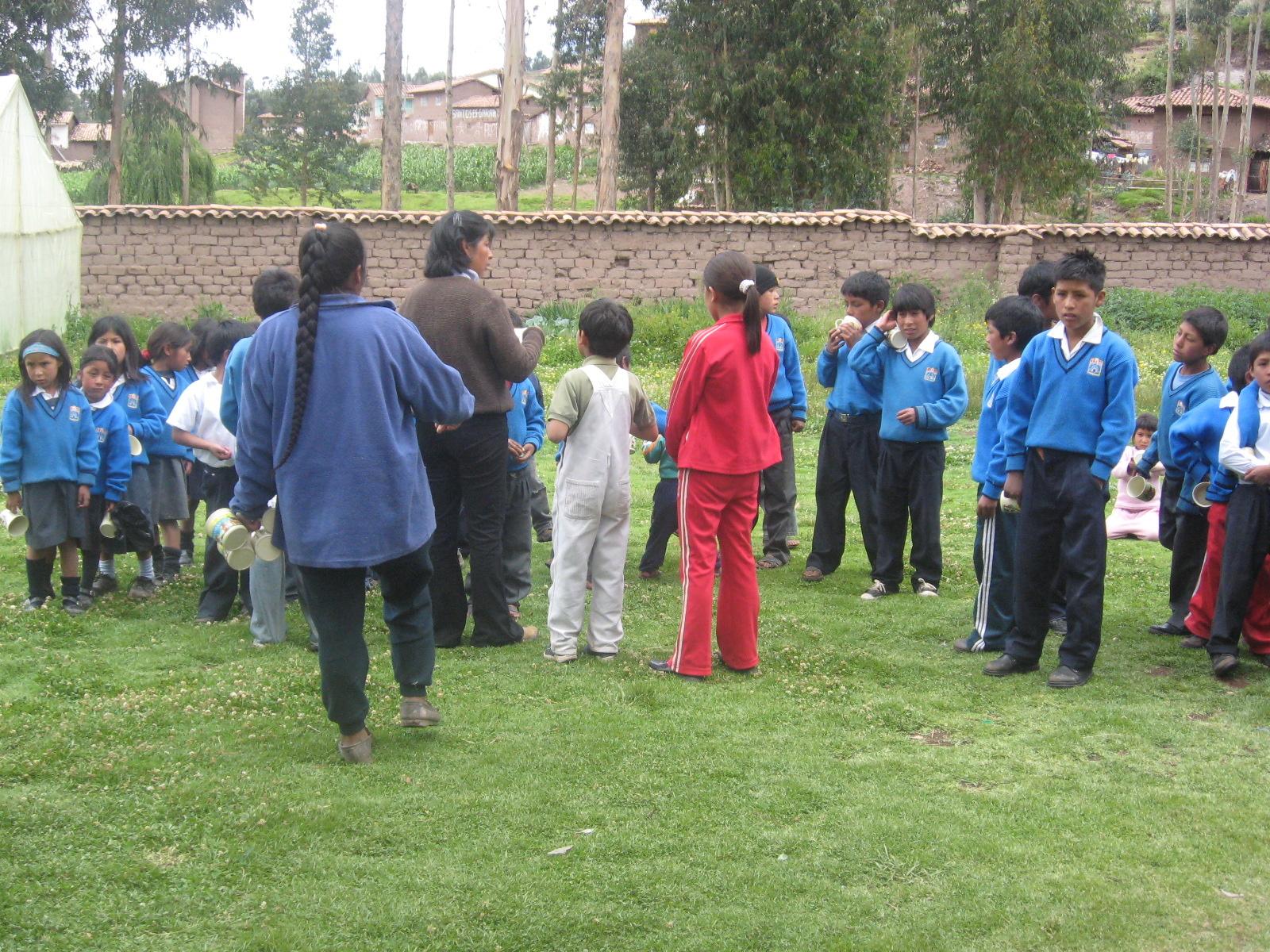
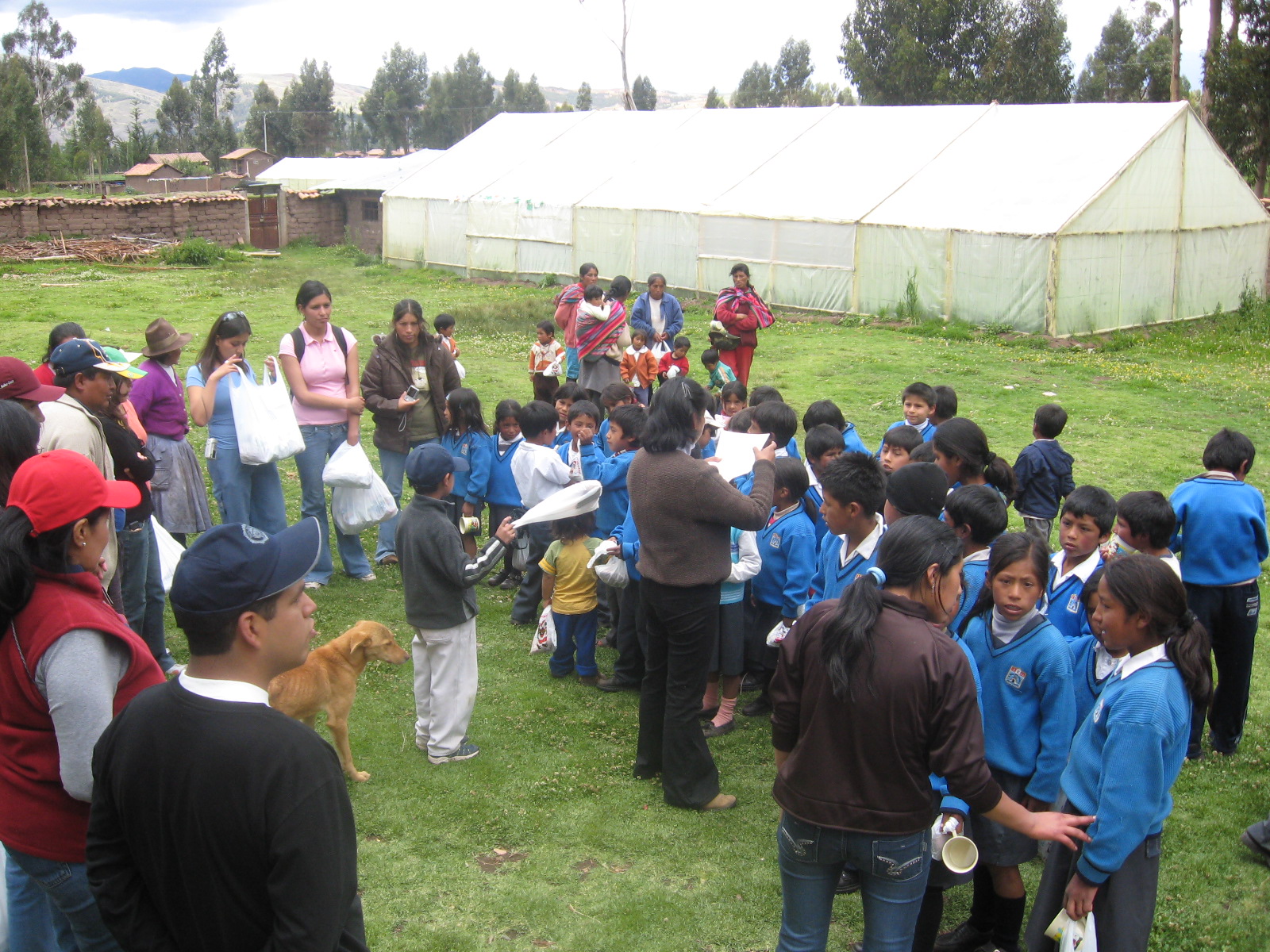
I experienced a great way to do charitable giving in Peru during Christmas of 2007: the office where Patricia worked took a trip to a poor, rural village and handed out Christmas presents to the kids there, served hot cocoa and Panettone (pictures below). In my opinion, the only way to do charitable giving in Peru is to fly down to Peru and do something nice yourself. Take a bus to a small rural town, hand out some toys to kids who have none, or build a library or a medical clinic if you have the resources. You know that warm fuzzy feeling you get when your kids open their presents on Christmas day? A US company or philanthropist can easily fly down to Peru and get the same warm fuzzy feeling 100 times over 2 weeks before Christmas, then go home and do it all over again.

Don’t take my word for it, come see for yourself.

Priceless

Priceless

Schoolkids in rural Peru

Schoolkids in rural Peru

Poor rural children in Peru

Poor rural children in Peru

Handing out Christmas gifts

Handing out Christmas gifts

Prevent brain loss – move to Cusco

A new study claims obese people have severe brain degeneration.

“A new study finds obese people have 8 percent less brain tissue than normal-weight individuals. Their brains look 16 years older than the brains of lean individuals, researchers said today. “

So why would living in Cusco make a difference? The report continues that…

“The main cause, experts say: bad diet, including an increased reliance on highly processed foods…”

In other words, if everything you eat has “high fructose corn syrup” in it, you might want to consider spending a few months in Cusco. Food here is fresh and delicious. Gringos in Cusco lose weight, lots of it.

Typical Andean food

Typical Andean food

McBooby

We were at Don Esteban & Don Pancho the other day when our wawa got hungry, so Patricia fed her. No big deal, unlike in the US, here in Peru you see women breastfeeding their babies in public all the time.

Breastfeeding at Don Esteban & Don Pancho

Breastfeeding at Don Esteban & Don Pancho

According to the CDC, breastfeeding rates in the US fall short of objectives. Duhh… as long as women can’t breastfeed anywhere outside their own homes what can you expect?

I mean, I grew up 2 hours outside of Amsterdam so NOTHING SCARES ME, but what could possibly be offensive about a mother nursing her child? If more women are to breastfeed their babies for longer periods, let them feed their baby whether they’re at a soccer game, in McDonalds or in the comfort of their own home.