What does the election of Ollanta Humala mean for Peru?

Allow me a tangent.

Bert, my best friend, was a counterintelligence agent. A really good one. I’ve said bad things on this blog about US foreign policy and intelligence. From shadowing John Lennon to bombing wedding parties in Afghanistan, much of Western intelligence is the bad product of people stuck in their own ideology and world view, but Bert was nothing like that. Many guys tell tall tales about covert operations, war stories about threats and enemies that sound eerily similar to the latest Hollywood movies, but not Bert. He didn’t carry a gun or shoot bad guys. He didn’t brag and rarely told any stories, I was perhaps the only person he confided in. About certain things he confided in me more than in his own sons.

Bert was a true counterintelligence agent, a card-carrying member of the US Communist party at the height of the so-called Cold War. He played a significant role in bringing about “detente”. He brought Romanian business to Foreign Trade Zone 24 in Scranton PA while Nicolae Ceausescu was trying to move policy towards the West. Bert always maintained Ceausescu was with the CIA. Bert was trusted so much by the Soviets that he did business with the head of the Siberian railroad and Amtorg. When he was out with Soviet agents, the Soviets always would point out the FBI agents watching. “See him over there, he’s FBI.”

His biggest coup was organizing the 1972 Nixon visit to China. Bert always said that the FBI had tried for 25 years to get in with China, but never made any headway. He got in in 2.5 years. Regardless of how you feel about China today, at the time the objective was simply to avoid all-out war.

Bert died several years ago after a long battle with cancer that he blamed on cigarettes and nuclear radiation. He had a large spot on his thigh that was smoother than a baby’s bottom where he believed he’d been hit by Soviet nuclear instrumentation (which he wanted to sell in the US).
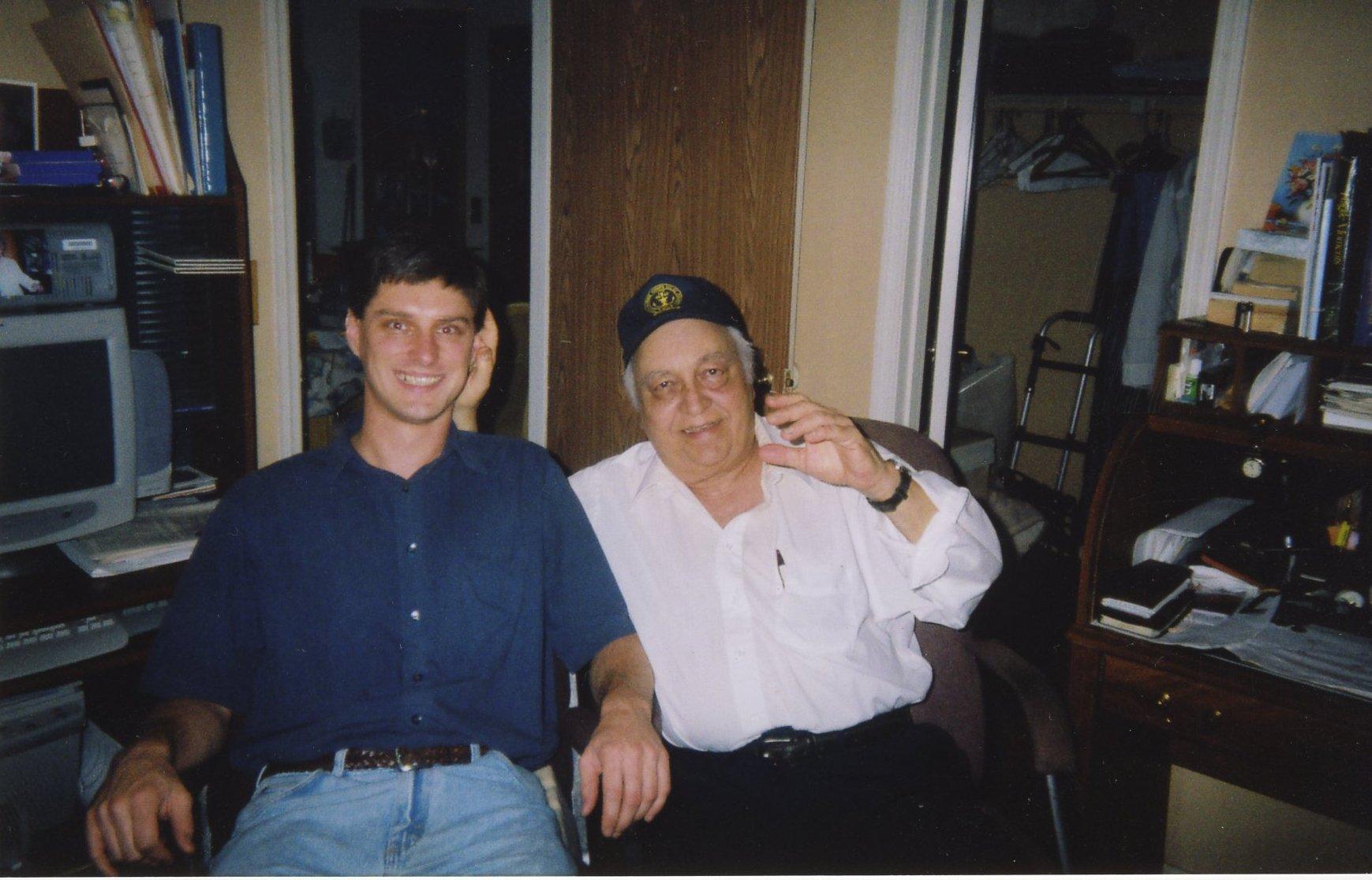
bert

My best friend and I, many years ago. He was already very ill then.

What does any of this have to do with Peru and Ollanta Humala?

There have been many comments and opinions this week about the future of Peru under new President Ollanta Humala (he takes office on July 28). Otto was interviewed by The Motley Fool and he makes reasonable arguments (except that I don’t believe the meteoric rise of the Lima stock market is sustainable in the long run and I’m concerned that the amount of cash that the AFPs are pumping in the stock market is a considerable long term bubble risk).

As for Humala, I said way back in April that people were overreacting and not much would change under Ollanta Humala. I stand by that statement because of something Bert told me long ago. This was one of his stories that he repeated down to each and every detail maybe 50 or 100 times (he readily admitted that some of his past was traumatic and had taken a mental toll on him).

Bert’s career was no fairy tale by any stretch of the imagination. He got hurt and in trouble several times. He joined the US Navy as a young man and served on the Destroyer Leader USS Willis A. Lee. He got seriously hurt in the Navy and was medically discharged (but retired). He walked with a leg brace most of his adult life. He was badly beaten by the New York mob and arrested for being a Communist. He always maintained at one point both the FBI and CIA wanted him dead but the Navy Admiralty said there would be hell to pay if he was harmed. I believe that story because one day at the VA hospital in Tampa a group of young Navy officers came in to salute Bert. Everyone else in that hospital ward said something like: “who the heck are you? In here we’re all just sick old men who used to be somebody, and nobody comes to salute us.”

Bert grew up in a devout Catholic family. The story he told me over and over is that one day early in his career he got in serious trouble and sought refuge in the Vatican. There he confided in a high-level Vatican attorney that he had conflicting feelings about his work. He was raised a devout Catholic but became a counter-intelligence agent and card-carrying Communist.

The response from the Vatican, the Holy See, was this: “Son, you should work for whoever pays you the most.”

Long story short, there is a lot of money in Peru nowadays (mostly thanks to high metals prices and booming tourism) and Ollanta Humala will not want to upset that. Money always wins. Humala will certainly implement some domestic social programs, and that’s not a bad thing, but he won’t do anything so drastic that it would upset the country’s macro-economic prospects.

You can’t just compare Ollanta Humala the person to Hugo Chavez or Lula, look at the environment as well. Peru today is a very different country from 1980 or 1990. There is a lot of money in Peru today and Ollanta Humala will have to work with whoever pays Peru the most.

R.I.P. Bert, and know that at least some of your advice stuck with me.
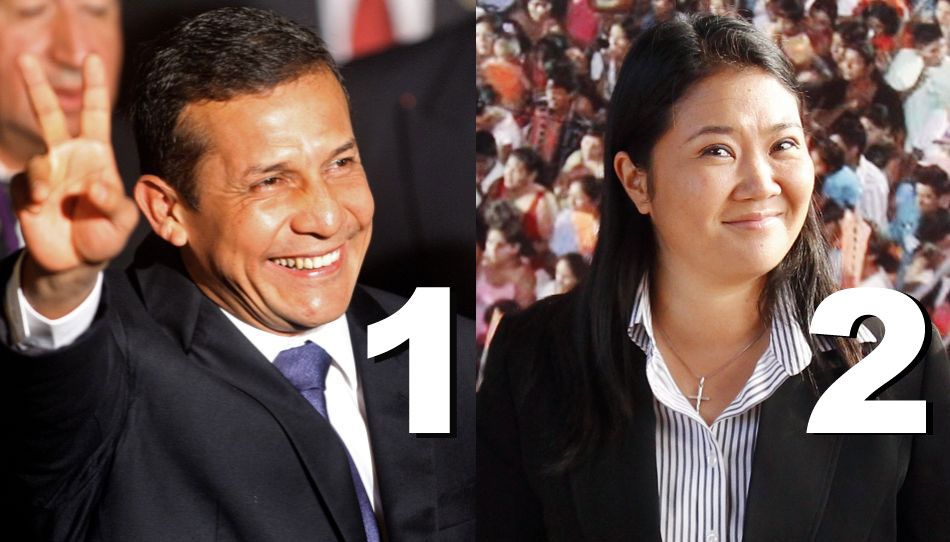
Peru election results

Exit polls for Peru’s 2011 Presidential elections are showing Ollanta Humala 52,6%; Keiko Fujimori 47,4%. Official election results are not due in until later, but it looks safe to say Ollanta Humala will be Peru’s next President.

Exit polls show Ollanta Humala leading Peru elections 2011

Exit polls show Ollanta Humala leading Peru elections 2011

Image courtesy of El Comercio.

UPDATE:

Here are the up-to-the-minute Peru election results from La Republica, the only major Peruvian newspaper that had endorsed Ollanta Humala.

Expect the Peruvian stock market and real estate prices to take a long overdue nosedive tomorrow, but I believe there are many great opportunities in Peru and Ollanta Humala has a chance to prove his doubters wrong.

Results are not official yet, but congratulations to Ollanta Humala.

Peruvian potatoes create unrest in Belgium!

We earthly people take ourselves waaayyyy too seriously sometimes. Just take a look at the video taken this past Sunday when so-called environmental activists in Belgium destroyed a field of genetically modified potatoes. The field was a scientific test organized by multiple universities, where genetic material from Peruvian potatoes was added to Belgian potatoes to make the resulting potato resistant to disease.

There’s a fine line between idealism and stupidity. Both the scientist types and the so-called activists have too much time on their hands or take themselves too seriously, I don’t know. Perhaps they should do something that’s really important to the world, like, say, spend time with their families and loved ones.

Speaking of mixing Peruvian and Belgian genes, check out this apple 😉

Brianna Nayaraq

Brianna Nayaraq, almost 2 years old!

CUSCO, LOS DE ARRIBA Y LOS DE ABAJO

A loyal reader asked me to comment on the following video. From Melissa Peschiera at the Peruvian TV program “REPORTE SEMANAL”: CUSCO, LOS DE ARRIBA Y LOS DE ABAJO (“The haves and have nots of Cusco”):

It’s not a bad report, although it’s sensationalized as anything TV usually is. The report only takes 2 snapshots and leaves out the middle class, which is thriving in the city of Cuzco. Life in our middle-class neighborhood is nothing like either the partying tourists or rural poverty that is shown in the video.

As for the rural poverty, the longer I’m in Peru the more reluctant I’ve become to suggest that more money and material possessions equals a better way of life. Having said that, it is hard to comprehend how the South of Peru (especially the regions of Cuzco and Puno) can be so poor and with such bad infrastructure when so much tourist revenue is generated there. That has to be a failure of local authorities.

Much is said in the report about the popularity of Ollanta Humala in the South of Peru. On the surface it may seem that the rural poor support Ollanta Humala because they believe he offers them a way out of poverty. I’m not convinced of that. I think it has more to do with being able to associate with your leaders. The way of life of the market-oriented, neo-liberal ruling class in Lima during the last 10 years or so is completely foreign to the way of life of the rural poor as well as urban poor, and this in my opinion is the reason why the Peru presidential runoff is between Keiko Fujimori and Ollanta Humala, the 2 candidates who represent the greatest perceived change.

What do you think?

Another expat experience

I had another one of those expat experiences last weekend. One of those moments where you go in no time from “I’m so happy to be here” to “What are these people thinking”, or vice versa.

This past Easter Sunday we decided to take a trip to Urubamba and eat Easter dinner at “Sol de Mayo”. This in itself was a big step for us. “Sol de Mayo” is one of our favorite restaurants, where you get a heaping plate of excellent typical Andean food. However, “Sol de Mayo” was also the place where Brianna decided to throw noodles on the back of an unsuspecting customer about 6 months ago, and we hadn’t been back there since 🙂

Instead of taking the traditional buses from Cuzco to Urubamba, we took one of the “fast cars”. These are simply combis (vans) that drive direct from terminal to terminal, which saves about 20 minutes or so over the traditional buses between Cuzco and Urubamba.

No matter how many times we’ve taken the trip from Cuzco to Urubamba, I still enjoy the beautiful scenery along the way:

Riding from Cuzco to Urubamba, Peru

Riding from Cuzco to Urubamba, Peru.

So we’re the proverbial fat and happy in the back of our combi, no more than about 1/4 of the way to Urubamba, when the driver pulls over to check the rear tire. No big deal, tires get damaged regularly on the winding / pothole-filled mountain roads. The driver gets back in and gets into a fairly agitated discussion with the boletera (the girl who takes bus fares). The boletera gets on her cellphone and starts an equally agitated discussion with the person on the other end of the line.

Next thing we know the combi turns around and limps back to the nearest service station. By now Patricia is mad because she overheard the driver and boletera discussing something about a problem with the tire before we left. The combi pulls into a service station and we get out.

Combi driver knew tire was bad before leaving Cuzco.

Combi has no spare tire.

Service station has no tires.

So these guys started out on a trip with a known bad tire, no spare tire, and a bunch of paying customers in the back. Oh, and the driver drove like a maniac on the flimsy tire. Only in Peru!

The boletera took off walking, never to be seen again. We waited about 15 minutes hoping that a spare tire would magically appear, but then we just hailed a taxi and went the rest of the way by taxi. Luckily the road from Cuzco to Urubamba is quite busy with numerous combis/buses/taxis, so we didn’t have to wait too long.

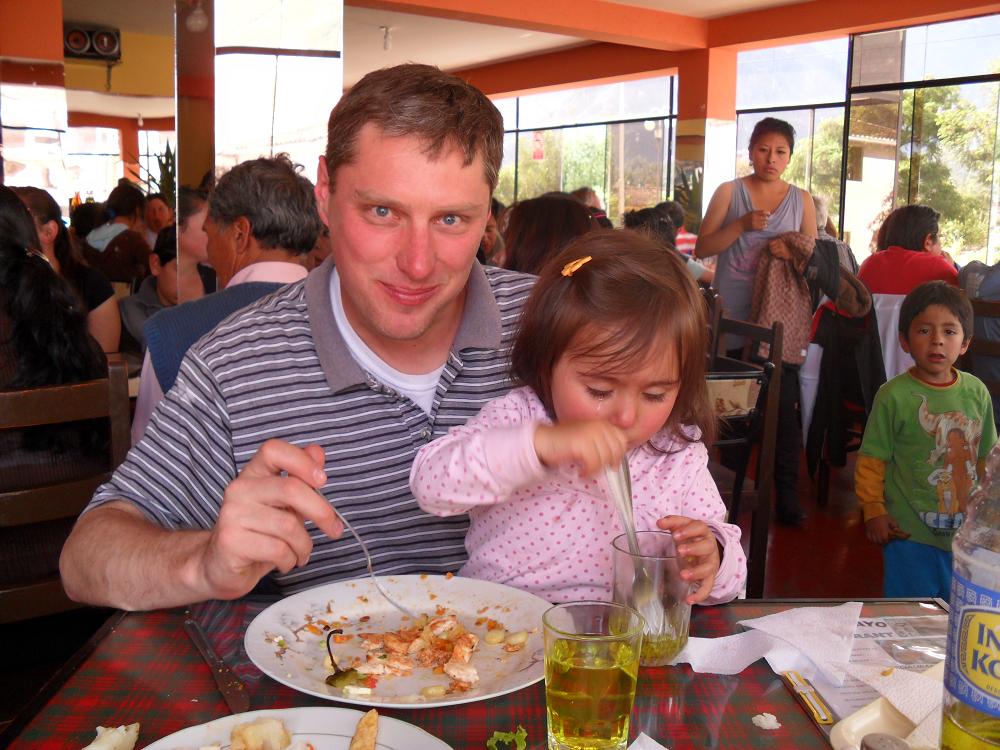
After that we had an uneventful trip and a wonderful Easter dinner. Brianna ran around the restaurant and generally acted like the lovely little hellraiser that she is, but at least no food got thrown at anyone 😉

Typical Peruvian food

Typical Peruvian food

Easter dinner!

Easter dinner!

Papi can smile and chew at the same time!

Papi can smile and chew at the same time!

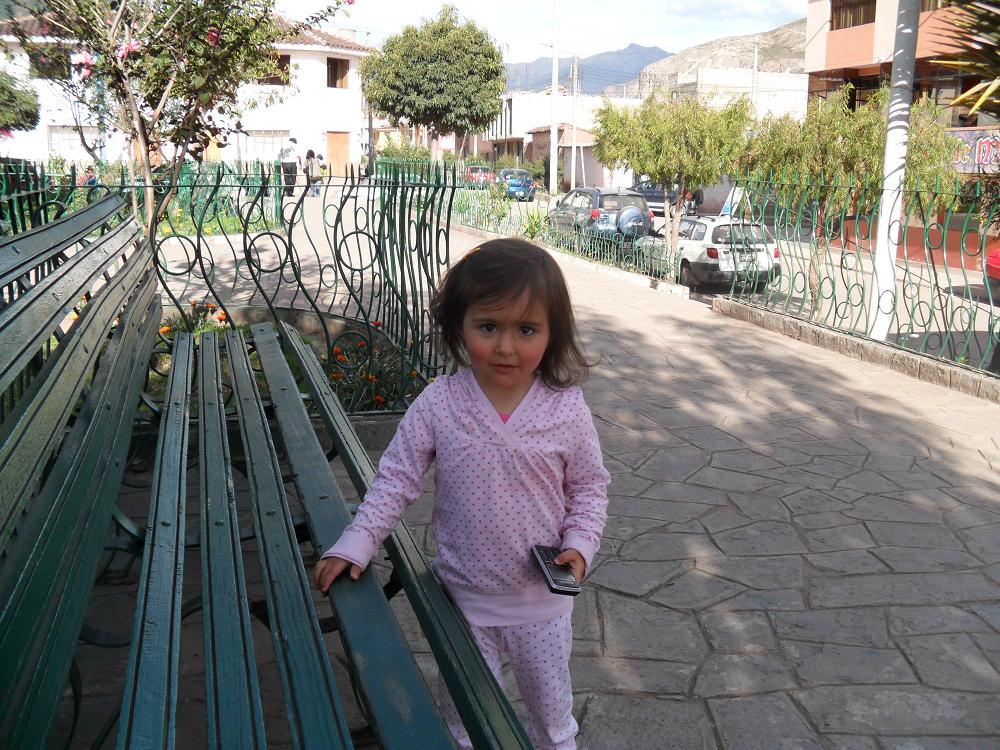
Playing in the park after Easter dinner

Playing in the park after Easter dinner.

Señor de los Temblores and my expat moment

I had one of those expat moments yesterday. Any foreigner who’s spent a significant amount of time in Peru probably knows what I’m talking about. If you’re not familiar, an expat moment is when you go from total elation, “I just love the way of life here”, “I’m so glad I left the rat-race up North behind” to “what the heck are these people thinking” in the span of about 30 seconds. Complete happiness to mindless frustration quicker than you can say Pisco Sour.

Yesterday’s moment came at the annual procession of Señor de los Temblores at the Plaza de Armas (main square) in Cuzco. I’ve written previously about the procession of Señor de los Temblores. This annual procession on Easter Monday attracts tens of thousands to the center of Cuzco. The image of Señor de los Temblores is taken out of the Cuzco Cathedral and carried through the center of the city, with the procession ending back at the Cathedral for the blessing of Señor de los Temblores in front of a crowd of thousands at the main square.

Señor de los Temblores is the patron Saint of the city of Cuzco. It is believed that He protects the city from earthquakes and other harm. The origin of the legend is said to be the devastating 1650 Cuzco earthquake, which was at the time believed to be the strongest earthquake on record. The 1650 Cuzco earthquake continued for a long time only to finally stop when the image of Señor de los Temblores was taken out of the Cathedral and worshipped. Read more about the 1650 Cuzco earthquake here.

Here’s a picture of the procession of Señor de los Temblores by the Cuzco Cathedral:

Señor de los Temblores

Señor de los Temblores

Back to my expat moment. I decided to go to the procession yesterday with our “wawacha” (wawa is Quechua for baby, in Cuzco the word wawa is used more often than its Spanish counterpart “bebe”) accompanied by my mother-in-law and sister-in-law. The four of us found a good spot at the corner of the Plaza de Armas, to the side of the Cathedral. Mamacita had to work until 7:00, so we were tentatively going to meet somewhere at the Plaza de Armas. As it happens we didn’t get together with mamacita until after the procession due to the crowd at the Plaza.

The procession of Señor de los Temblores is a powerful experience. Yesterday was a perfect night, a bright moon and an exceptionally clear night’s sky, even for the famously bright Andean sky. There’s a huge crowd, many true believers as well as tourists and curious bystanders. The crowd, the solemn procession, the ring of the famous Maria Angola bell and finally the blessing of Señor de los Temblores all adds up to a moving experience, whether you’re religious or not.

After the blessing the crowd starts to leave. We tried to wait a few minutes to avoid the rush but get swept up in the crowd heading away from the plaza. These kinds of big events aren’t planned as meticulously as they would be in the US or Europe, crowd control is really limited. As we’re stumbling down one of the narrow streets leading away from the plaza there’s 5 or 6 people behind us holding hands or holding a rope so as not to get separated. The biggest guy up front keeps pushing against me and telling me to “Walk” “Walk” “Walk”. Nevermind there’s no way to walk faster in the crowd.

“Walk walk walk”

I’m having a hard time to maintain my footing and I’m carrying a sleeping baby. Next to me was a lady with a baby behind her back in the traditional Peruvian blanket, getting pushed around all over the place. What I didn’t know at that point is that there was a fat drunk guy just bulldozing his way through the crowd a few rows behind us, in addition to the folks pushing their way through behind us. Finally the pushing gets so bad that people are starting to loose their footing and I loose my temper.

I turn around and yell at the guy behind me:

“STOP PUSHING YOU JERK”

I might have even added in my personal opinion about his ancestry and sex habits…

I’m normally a very laidback guy and hardly ever loose my temper. When I do, people are stunned. This skinny soft-spoken white guy just turned into the devil himself. Everyone stopped. At that point the fat drunk guy who was bulldozing his way through slips by us and people everywhere are yelling at this idiot. All the pushing stopped and everyone was able to walk normally.

I felt terrible. I was at the blessing of Señor de los Temblores, I’m not supposed to loose my temper and yell at people but when you’re holding a baby and feel like you’re going to get hurt, nothing will stop you from protecting your baby.

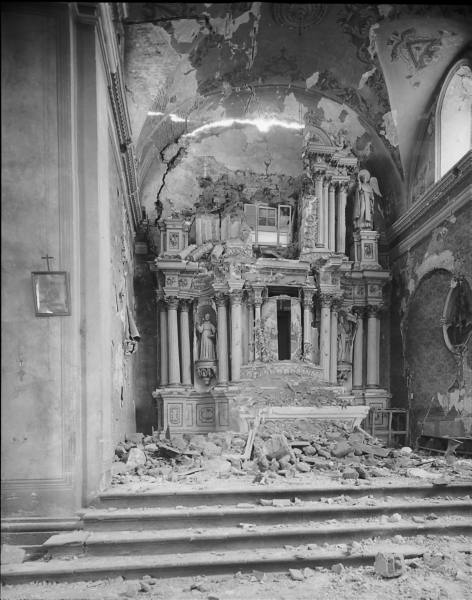
Here are a few pictures of the most recent serious earthquake in Cuzco, in 1950. Pictures courtesy of LIFE:

1950 Cuzco earthquake

1950 Cuzco earthquake

1950 Cuzco earthquake

1950 Cuzco earthquake

1950 Cuzco earthquake

1950 Cuzco earthquake

1950 Cuzco earthquake

1950 Cuzco earthquake

1950 Cuzco earthquake

1950 Cuzco earthquake

1950 Cuzco earthquake

1950 Cuzco earthquake

Peru presidential elections – Unseriously

Round 1 of the 2011 Peruvian presidential elections is over. The June runoff will be between Keiko Fujimori and Ollanta Humala (some background about the candidates here).

Most of our friends don’t care much for either candidate. Among other things, Ollanta Humala wants to re-write Peru’s constitution, likely giving more power to the poor and less to business and foreign investment.

I thought I’d have a little fun on my Facebook page and see just how much bad stuff about Ollanta the typical jeans-wearing, iPhone toting, middle-class Peruvian (ie. most of our friends) would believe.

Facebook screenshot Ollanta Humala

Facebook screenshot Ollanta Humala plans to outlaw Peruvians marrying gringos 🙂

(click on the image for full size)

The people who commented on my silly joke are all good friends and good people (and not all are Peruvian), but it does show how easy it is to plant irrational fear (Glenn Beck anyone?) about anyone whose ideology may not correspond with your own.

The first round election result is fairly interesting, because both Keiko and Ollanta have their followers but there’s also a significant part of Peru’s population (mostly middle class and business establishment) who don’t like either. The fear is that Keiko will bring back more corruption and Humala may upset business and foreign investment to some extent. Peru’s presidential election runoff is almost akin to, say, a choice between Ivanka Trump (daughter of a famous person) and Michael Moore.

My personal input to the Peruvian presidential elections is only this:

1) As a visitor/guest here I don’t care who becomes Peru’s next president. However the Peruvian people choose to govern their country is up to them and I’m privileged to be here as a guest.

2) No matter who wins the runoff, I don’t think there will be a significant change in daily life in Peru. Even though both candidates are seen as potentially having some issues, I think Peru’s society is strong with very close families, reasonable institutions, a fair economy, etc. Politics here can be interesting and colorful, but in my view politics are not that big of a factor in society.

PPK tocando flauta

I said I’d stay away from politics and that’s still true. However with the Peruvian presidential election campaigns coming to a close you can’t get away from it. The upcoming election (Sunday) does promise to be interesting, with Alejandro Toledo, Keiko Fujimori and PPK (Pedro Pablo Kuczynski) all in a close race for second place behind Ollanta Humala. The 2 candidates with the most votes go to a runoff election in June.

During his televised “closing rally” in Lima last night PPK played the flute as he often does before his stump speeches. Regardless of politics, I’d have to think he’ll get a few extra points for this.

A Cuzco rainbow

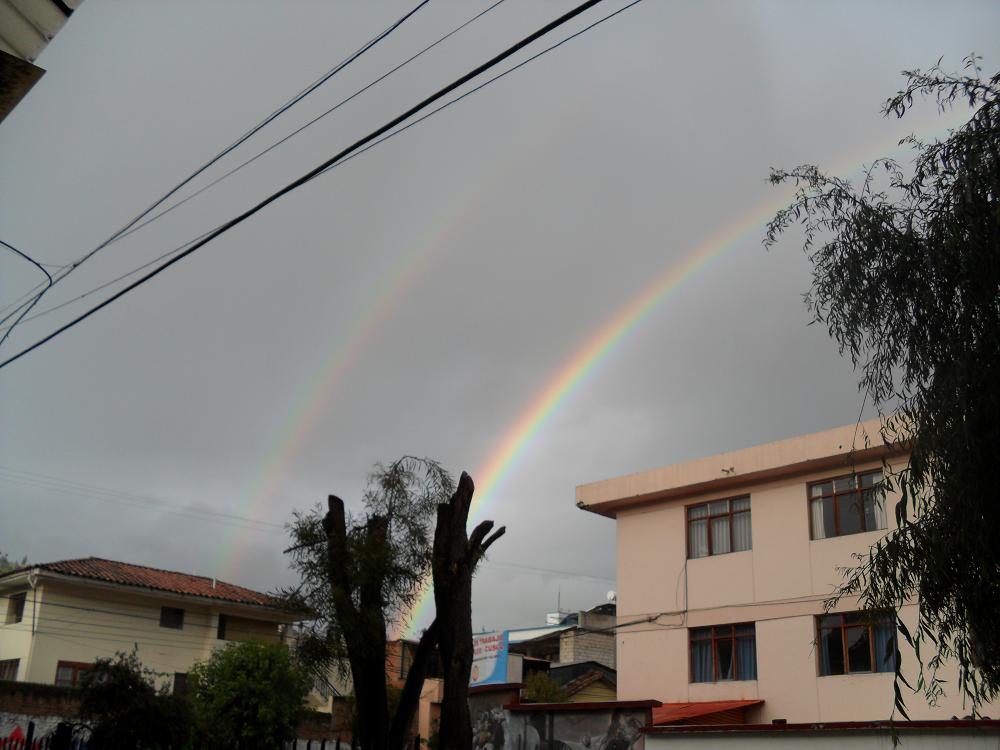
After fussing about the rain a few days ago, we saw the most gorgeous rainbow yesterday: (Click on the picture for full size)

Beautiful Cuzco rainbow

Beautiful Cuzco rainbow

The picture really does not do it justice. This was one of the brightests, most beautiful rainbows I can remember seeing. There’s a second rainbow above, but the inner one was by far the most brilliant. We ran outside and took pictures and showed the rainbow to the little Goose, one of these moments you live for.

Incidentally, Cuzco has a rainbow colored flag. So if you’re in Cuzco and notice a lot of rainbow flags, especially around major holidays and cultural festivals, it’s just that: the Cuzco flag, not the same as the rainbow flag you see “up north” sometimes…

Peru presidential elections are almost here

Peru’s 2011 Presidential elections are almost upon us. April 10 is the big day, and I believe tonight is the final televised debate between the leading candidates.

Let me say 2 things first:

1) I am a guest in Peru so it doesn’t matter to me who wins or loses. I’m privileged to be here and however the Peruvian people choose to govern their country is up to them.
2) I’m Belgian, so you should never take my advice on any matters of politics or government. When it comes to politics, the only thing we Belgians can say is “Thank God for Italy!”

Having said all that, here’s a few notes about the leading candidates in Peru’s upcoming 2011 Presidential elections, for no purpose other than to show how the candidates come across to a gringo. Official bios, photos, web pages and the like can be found here.

1) Alejandro Toledo: He was Peru’s president from 2001 to 2006 and was first Peruvian president of native Indian (Quechua) heritage, but his politics were free-market oriented. He left office to rather low approval ratings, due to the fact that many felt the macro-economic gains that were made did not extend to all Peruvians. On the other hand, nothing bad or particularly controversial happened during his tenure, which was a welcome change from the late 20th century. He’s considered a strong candidate in the upcoming elections, but I know someone who knows some people who know Toledo and say less than favorable things about him.

2) Lucho Castañeda: He was mayor of Lima (home to about 30% of Peru’s population) from 2003 to 2010 and enjoyed generally good approval ratings, easily winning re-election. He implemented the Metropolitano bus system in Lima, which has to be regarded as a great success – although it’s only a small first step in Lima’s transportation solution. Otherwise I don’t know much about Castañeda’s ideology. He’s divorced and conventional wisdom says he has little chance of becoming president without a first lady.

3) Ollanta Humala: He’s the villain of them all, widely painted by his opponents as a “leftist” of the same mold of Evo Morales and Hugo Chavez. Humala narrowly lost the 2006 Presidential elections. He seems to have moderated his stance on some issues like foreign investment, but he remains a controversial figure. His opponents and the establishment in general paint a sad picture of Peru heading for the same abyss as Bolivia under Evo Morales should Ollanta Humala be elected, ignoring the fact that Bolivia has one of the fastest growing economies in Latin America and Evo enjoys high approval ratings. But since when does reality trump ideology in this world? Of all the leading candidates Humala is the only one who’s married to a Peruvian, so at least outside of politics he has good judgement 😉

4) Keiko Fujimori: She’s the daughter of former Peruvian president Alberto Fujimori. Her father was president from 1990 to 2000, when he was driven out of the country by a popular revolution. During Alberto Fujimori’s regime, Peru saw an end to terrorism and the economic chaos of the 1980s, but his regime was also marked by human rights abuse and corruption, especially in later years. Keep in mind that Peru has a very young population (partly due to the stability that was brought under Fujimori) and something like 20% of the voting public has no adult memory of Fujimori’s presidency. However, there has remained a strong “Fujimori” following and political party in Peru, led now by his daughter Keiko. I don’t know much about Keiko’s ideological convictions, but her VP candidate is ultra-conservative. I guess Keiko has a chance only if someone can be elected president just for being the child of a well-known ex-president. Eerrrgh, wait, where did I see that one before?

5) PPK or Pedro Pablo Kuczynski: He’s Patricia’s favorite, and the favorite of many of her friends as well. I have a PPK poster on the window, but my dog barks at it. It has to be said my dog is one of the dumber dogs you’ll ever meet. In seriousness, PPK is perhaps the most Western of all the leading candidates. He held US citizenship (I think he renounced it before the elections) and has worked on Wall Street. He has a free-market ideology and as minister of economy under Toledo should take some credit for the macro-economic gains that Peru has made. Although I’m not a fan of this ideology (ie. what’s good for business is good for everyone), I have to say that PPK appears to be a thoughtful and reasonable person, and considering his age and previously successful career I would be more inclined to believe that he’s running to serve the country as opposed to running in order to make financial gain for himself and his inner circle.

Finally, it always strikes me how so many politicians no matter where you are would like you to believe the world as you know it would end without their magnificent leadership. Consider this quote from the Ottawa Citizen about Belgian politics, titled No Government, No Problem:

Take Belgium, for instance. It’s a European country riven by ethnic tensions. Its public debt is almost as big as its total annual output and it’s in the middle of a political crisis so deep that this week it passed Iraq as the modern-day state whose politicians have taken the longest to form a government.
Yet the buses run more or less on time, the garbage is collected twice a week, exports of pharmaceuticals, chocolate and beer have gone on without interruption and it can still take about a month to get a new telephone line. Life goes on.

And that quote is more than a month old by now, still no Belgian government, beer exports are still going on fine 😉