Clarence Clemons – till we meet again

“Somebody said to me, `Whenever somebody says your name, a smile comes to their face.` That’s a great accolade. I strive to keep it that way.”

Clarence Clemons

Clarence Clemons, longtime saxophone player with Bruce Springsteen, has died. Obituary from AP here.

Were it not for rock ‘n roll music, I’d still be living in the suburb, working a job I liked only for the money.

André Rieu and Mirusia Louwerse

A special treat for my Australian readers – you know who you are 😉

A great live performance at the Telstra Dome in Melbourne by the famous Dutch violinist André Rieu and Australian soprano Mirusia Louwerse (who is of Dutch descent).

Watch in its entirety, something very unexpected happens at the end of the performance.

Happy Mother’s Day

Dedicated to both my late grandmothers on Mother’s Day:


Spijt

Dat in gemelijke grillen
ik mijn dagen kon verspillen,
dat ik haar voorbijgegaan
of een steen daar had gestaan,

dat ik heel mijn zondig leven
heb gekregen zonder geven,
dat mij alles heeft gesmaakt,
dat ik niets heb uitgebraakt,

dat ik niet kan herbeginnen
haar te dienen, haar te minnen
dat zij heen is en voorbij,
bitter, bitter grieft het mij.

Maar de jaren zijn verstreken
en de kansen zijn verkeken.
Moest die kist weer opengaan
geen stuk vlees zat er nog aan.

Priesters zalven en beloven,
maar ik kan het niet geloven.
Neen, er is geen wenden aan:
als wij dood zijn is ‘t gedaan.

Ja, gedaan. Wat helpt mijn klagen?
Wat mijn roepen, wat mijn vragen?
Wat ik bulder, wat ik zweer?
De echo zendt mij alles weer.

Gij die later wordt geboren,
wilt naar wijze woorden horen:
pakt die beide handen beet,
dient het wijf dat moeder heet.

Willem Elsschot – Spijt (Antwerpen, 1934).

“Spijt” (regret) – A poem by the great Belgian writer Willem Elsschot, in honor of his mother. The poem was quite controversial when published because the words are not sweet and loving but raw, powerful and full of emotion.

Willem Elsschot, the great Belgian writer

Willem Elsschot, the great Belgian writer

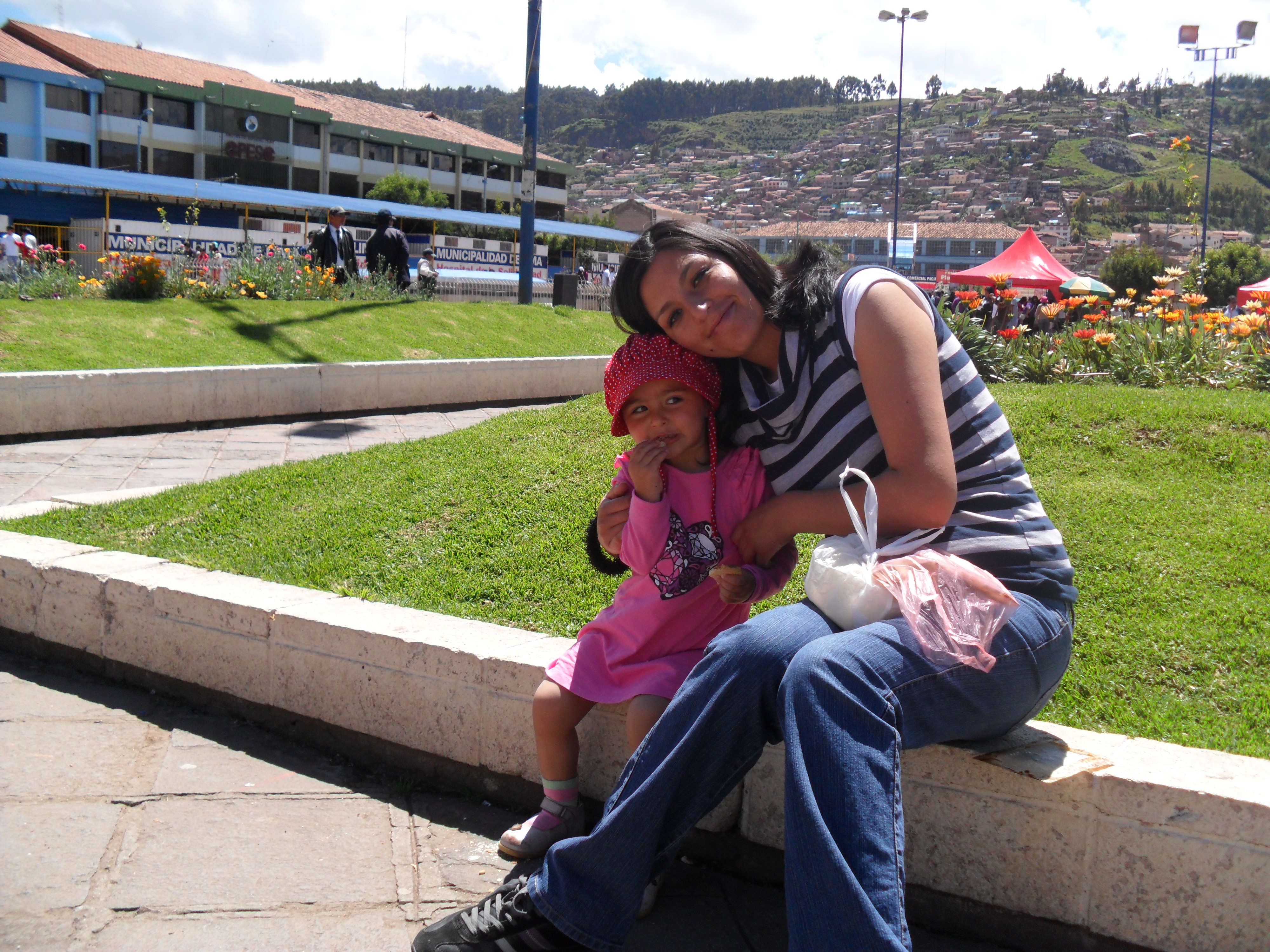
A recent picture of our baby goose with mamacita in the Plaza Tupac Amaru, Cuzco:

In honor of Mother's Day

In honor of Mother's Day

Happy Mother’s Day!

Señor de los Temblores and my expat moment

I had one of those expat moments yesterday. Any foreigner who’s spent a significant amount of time in Peru probably knows what I’m talking about. If you’re not familiar, an expat moment is when you go from total elation, “I just love the way of life here”, “I’m so glad I left the rat-race up North behind” to “what the heck are these people thinking” in the span of about 30 seconds. Complete happiness to mindless frustration quicker than you can say Pisco Sour.

Yesterday’s moment came at the annual procession of Señor de los Temblores at the Plaza de Armas (main square) in Cuzco. I’ve written previously about the procession of Señor de los Temblores. This annual procession on Easter Monday attracts tens of thousands to the center of Cuzco. The image of Señor de los Temblores is taken out of the Cuzco Cathedral and carried through the center of the city, with the procession ending back at the Cathedral for the blessing of Señor de los Temblores in front of a crowd of thousands at the main square.

Señor de los Temblores is the patron Saint of the city of Cuzco. It is believed that He protects the city from earthquakes and other harm. The origin of the legend is said to be the devastating 1650 Cuzco earthquake, which was at the time believed to be the strongest earthquake on record. The 1650 Cuzco earthquake continued for a long time only to finally stop when the image of Señor de los Temblores was taken out of the Cathedral and worshipped. Read more about the 1650 Cuzco earthquake here.

Here’s a picture of the procession of Señor de los Temblores by the Cuzco Cathedral:

Señor de los Temblores

Señor de los Temblores

Back to my expat moment. I decided to go to the procession yesterday with our “wawacha” (wawa is Quechua for baby, in Cuzco the word wawa is used more often than its Spanish counterpart “bebe”) accompanied by my mother-in-law and sister-in-law. The four of us found a good spot at the corner of the Plaza de Armas, to the side of the Cathedral. Mamacita had to work until 7:00, so we were tentatively going to meet somewhere at the Plaza de Armas. As it happens we didn’t get together with mamacita until after the procession due to the crowd at the Plaza.

The procession of Señor de los Temblores is a powerful experience. Yesterday was a perfect night, a bright moon and an exceptionally clear night’s sky, even for the famously bright Andean sky. There’s a huge crowd, many true believers as well as tourists and curious bystanders. The crowd, the solemn procession, the ring of the famous Maria Angola bell and finally the blessing of Señor de los Temblores all adds up to a moving experience, whether you’re religious or not.

After the blessing the crowd starts to leave. We tried to wait a few minutes to avoid the rush but get swept up in the crowd heading away from the plaza. These kinds of big events aren’t planned as meticulously as they would be in the US or Europe, crowd control is really limited. As we’re stumbling down one of the narrow streets leading away from the plaza there’s 5 or 6 people behind us holding hands or holding a rope so as not to get separated. The biggest guy up front keeps pushing against me and telling me to “Walk” “Walk” “Walk”. Nevermind there’s no way to walk faster in the crowd.

“Walk walk walk”

I’m having a hard time to maintain my footing and I’m carrying a sleeping baby. Next to me was a lady with a baby behind her back in the traditional Peruvian blanket, getting pushed around all over the place. What I didn’t know at that point is that there was a fat drunk guy just bulldozing his way through the crowd a few rows behind us, in addition to the folks pushing their way through behind us. Finally the pushing gets so bad that people are starting to loose their footing and I loose my temper.

I turn around and yell at the guy behind me:

“STOP PUSHING YOU JERK”

I might have even added in my personal opinion about his ancestry and sex habits…

I’m normally a very laidback guy and hardly ever loose my temper. When I do, people are stunned. This skinny soft-spoken white guy just turned into the devil himself. Everyone stopped. At that point the fat drunk guy who was bulldozing his way through slips by us and people everywhere are yelling at this idiot. All the pushing stopped and everyone was able to walk normally.

I felt terrible. I was at the blessing of Señor de los Temblores, I’m not supposed to loose my temper and yell at people but when you’re holding a baby and feel like you’re going to get hurt, nothing will stop you from protecting your baby.

Here are a few pictures of the most recent serious earthquake in Cuzco, in 1950. Pictures courtesy of LIFE:

1950 Cuzco earthquake

1950 Cuzco earthquake

1950 Cuzco earthquake

1950 Cuzco earthquake

1950 Cuzco earthquake

1950 Cuzco earthquake

1950 Cuzco earthquake

1950 Cuzco earthquake

1950 Cuzco earthquake

1950 Cuzco earthquake
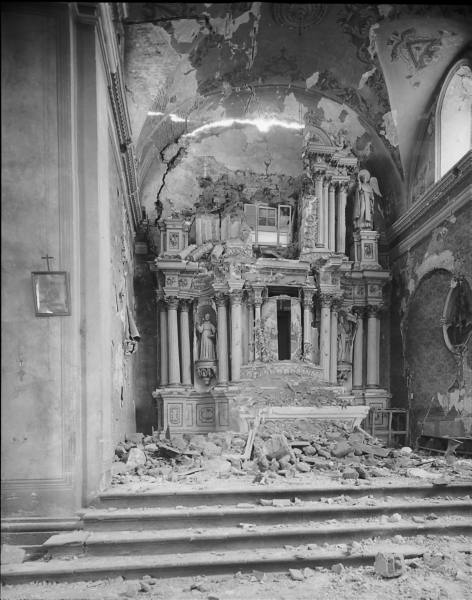
1950 Cuzco earthquake

1950 Cuzco earthquake

Wendy Sulca: Peruvian teenage pop/folklore starlet

I hardly watch TV, but recently it seems like every time a TV is turned on in the room, there’s some show or feature with Wendy Sulca.

Wendy Sulca was a Peruvian child singer who became popular on YouTube and Peruvian TV shows. Now she’s becoming a bit of a teen starlet.

Wendy Sulca is typically introduced as “niña de folklore” and she signs traditional Huayno music, but in my opinion she’s really a pop/folklore crossover. Here she’s singing a Spanish version of Madonna’s “Like a Virgin”.

Wendy Sulca’s most recent hit is “In Tus Tierras Bailare” (in your lands I will dance), where she sings together with La Tigresa del Oriente (The Tigress of the East), and Delfín Hasta el Fin. Alma Guillermoprieto wrote an interesting review of “In Tus Tierras Bailare”.

Some people make fun of her childish voice (according to Wikipedia she’s only 14), but I like her posture and composure on stage, she’s very engaging with the crowd or camera.

According to Wikipedia, Wendy Sulca was born in San Juan de Miraflores, a poor area of Lima. In the official video of her popular song “La Tetita” you see her in the traditional folkloric dress in small towns in the Peruvian countryside, but life in San Juan de Miraflores is nothing like that.

Where will you be in 2020?

Instead of doing some silly year-in-review post, the coming of the new decade has me pondering on how unpredictable the past 10 years have been for me, and wondering what the next 10 years have in store for us, God willing.

In the year 2000 I wasn’t thinking much about the future in 10 years, I was more preoccupied with the future 1 month at a time, but if you had told me in 2000 that by 2010 I would be:

  • Married to a beautiful Peruvian girl
  • Trying madly to keep up with a 18 month old baby
  • Living in Cusco, and,
  • Blogging about life in Peru

I would have probably replied something like:

  • Huh?
  • What??
  • Where is Cusco?
  • What’s a blog???

In hindsight there’s no doubt I could have done many things better, but at the same time I don’t have any regrets. I lived, loved and did the best I could at the time.

Happy New Year to all!!! If you’re ready to celebrate in the Peruvian tradition, put your yellow (good luck) or red (love) underwear on, eat 12 grapes at midnight and get out the fireworks and champagne.

Happy New Year

Happy New Year!

Watch this space for 2011 pictures coming up soon!

Merry Christmas

Merry Christmas to all!

We have our Paneton and hot cocoa ready, and surprisingly our Christmas tree has actually managed to stay upright until now… with our wild little baby goose I had given it about 60/40 odds of being knocked over before today, but I’m glad to be wrong on that prediction.

We will spend Christmas Eve together with family in the Peruvian tradition. We’ll stay up through the night, exchange gifts and eat dinner at midnight.

We decided to skip the nativity scene in our home this year, because said little baby goose doesn’t yet know the difference between toys and nativity scene, so it would just end up strewn all over the floor with the rest of our worldly belongings 😦

I’ll leave you with a picture of the typical Andean Baby Jesus figure, which shows the strong influence of the native Quechua culture on the Christian religion. Just beautiful.

Typical Andean baby Jesus figure

Typical Andean baby Jesus figure

Merry Christmas!

GianMarco 15 Años

Watched the entire “GianMarco 15 Años” movie on the bus to Lima today, a great show taped in Lima’s Estadio Monumental in 2005.

Thanks to the wonders of YouTube, we can share a good bit here. Watch the whole thing, it is well worth it.

Around 4:20 it gets really, really good. He stops for a moment and says:

“Peru is the most beautiful place, we must take care of it”

11-11

Armistice in Europe 1918. 9 million reasons to remember Nov 11, not counting the civilian deaths.

Here’s an excerpt from Wikipedia:

More than 9 million combatants were killed, due largely to great technological advances in firepower without corresponding ones in mobility. It was the second deadliest conflict in history.
… Of the 60 million European soldiers who were mobilized from 1914–1918, 8 million were killed, 7 million were permanently disabled, and 15 million were seriously injured. Germany lost 15.1% of its active male population, Austria–Hungary lost 17.1%, and France lost 10.5%. About 750,000 German civilians died from starvation caused by the British blockade during the war. By the end of the war, famine had killed approximately 100,000 people in Lebanon. The best estimates of the death toll from the Russian famine of 1921 run from 5 million to 10 million people. By 1922, there were between 4.5 million and 7 million homeless children in Russia as a result of nearly a decade of devastation from World War I, the Russian Civil War, and the subsequent famine of 1920–1922.

9 million combatants killed in roughly 4 years, that’s about equivalent to the population of Lima.

9 million reasons to delete those chain emails about the greatness and nobility of war.

Today is not a day for politics, but what worries me at times is that in high school our history teacher argued that the 20th century didn’t start until after World War One ended, that the war was in many respects the result of out-dated thinking between the powers of Europe. Similarly, you could argue that corporate and political culture in the world’s capitals today is still stuck in 20th century thinking.

A bombshelter in Oostakker, Belgium

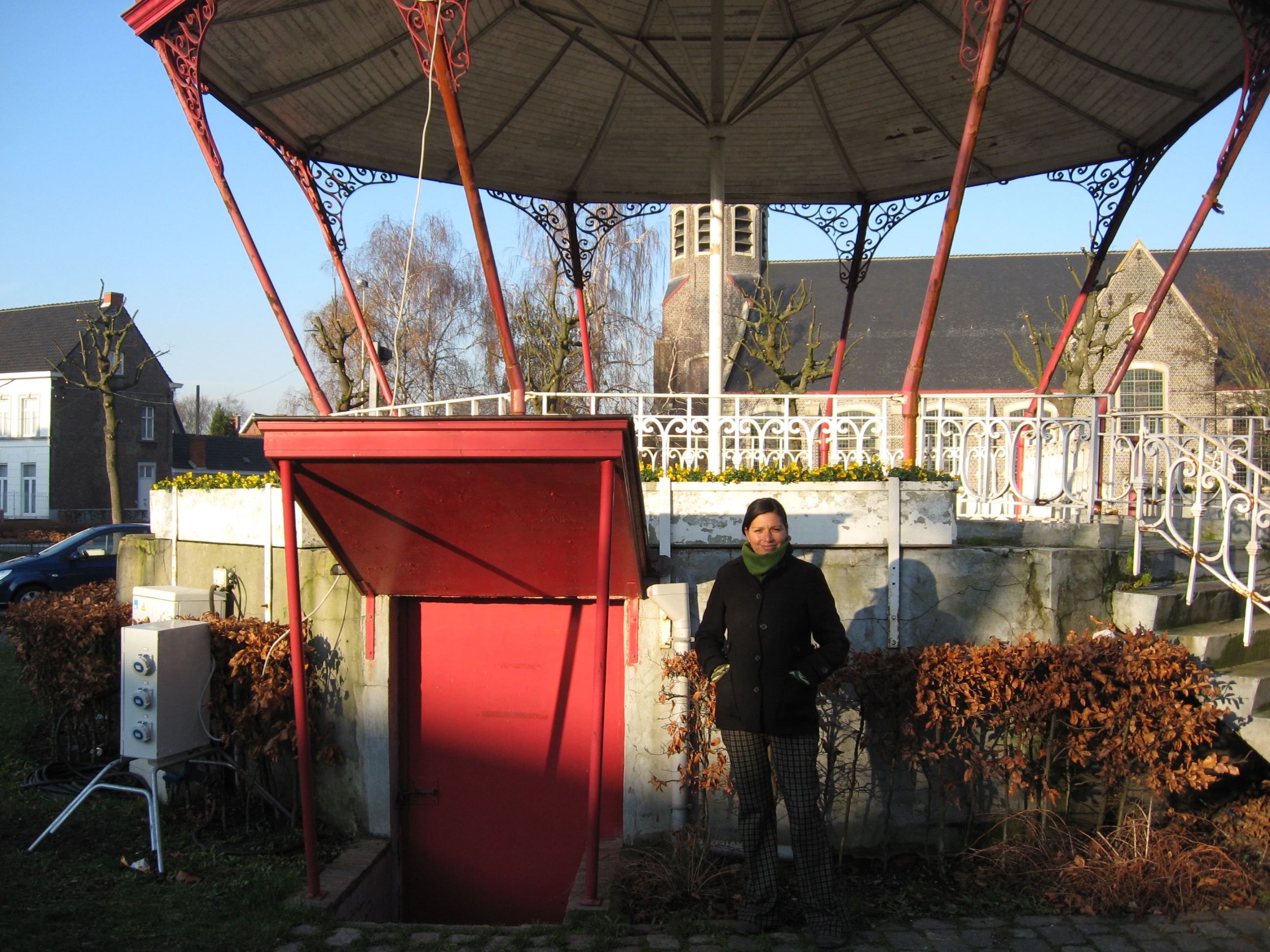
Patricia standing by a bombshelter in my hometown in Belgium, I believe this is a World War 2 bunker.

Mario Vargas Llosa wins Nobel Prize in literature

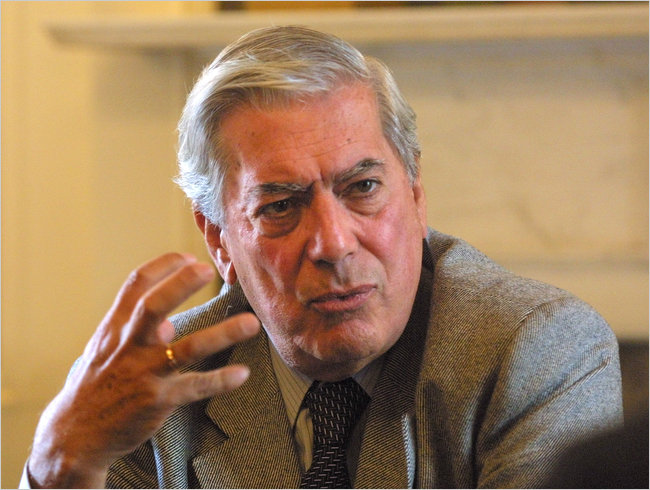
Peruvian novelist Mario Vargas Llosa won the 2010 Nobel Prize in Literature today. The first South American to be awarded the honor since 1982.

“The Peruvian writer Mario Vargas Llosa, whose deeply political work vividly examines the perils of power and corruption in Latin America, won the 2010 Nobel Prize in Literature on Thursday.”

Read the full story at the New York Times and most other major news outlets.

This is a great honor for Vargas Llosa and I hope it will spark some interest in reading and literature in Peru, where average Peruvians in my observation read very little.

Mario Vargas Llosa

Mario Vargas Llosa

Foto (c) Sara Krulwich, The New York Times