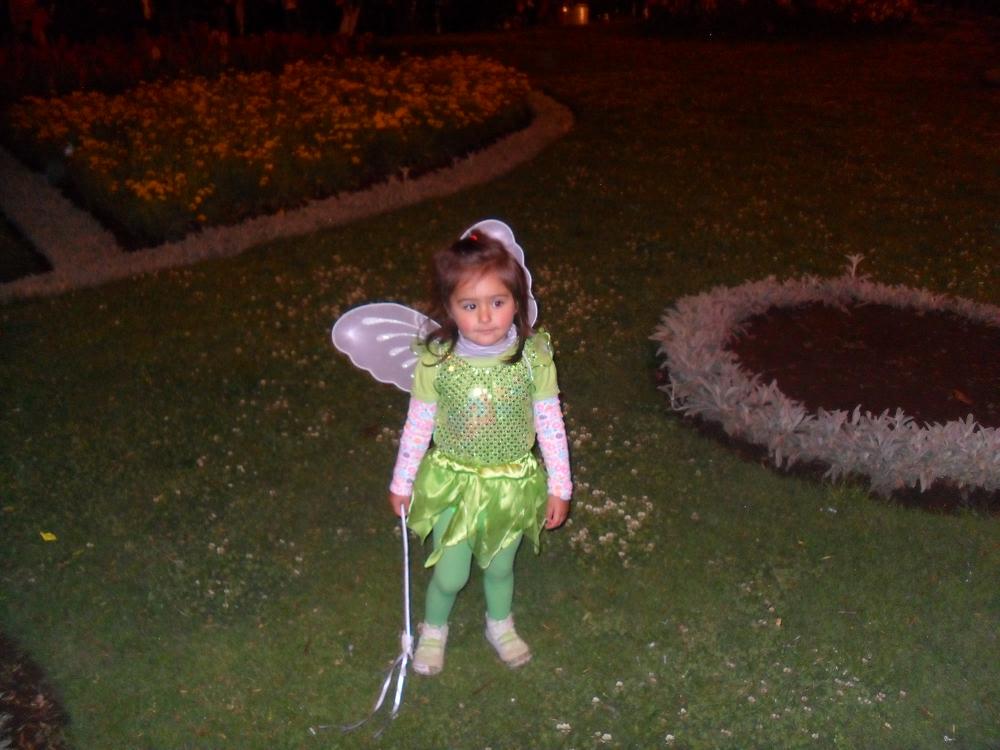
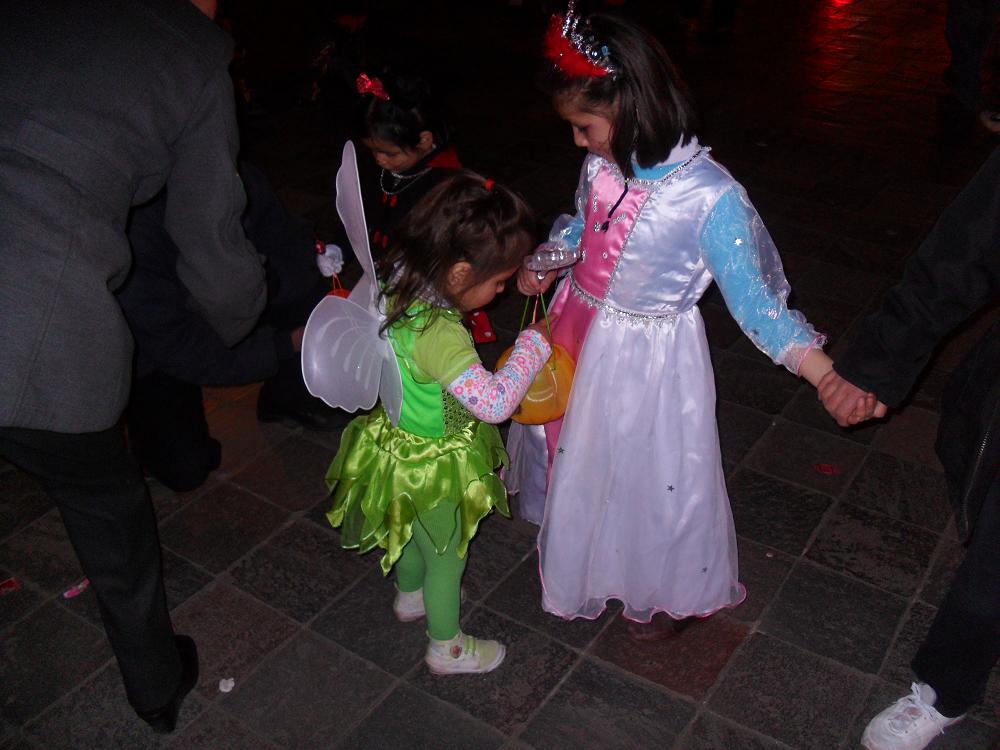
Santa Claus Is Comin’ To Town

We’ve done this here before but I see absolutely no reason to break a good habit. Merry Christmas to all, Feliz Navidad a todos!

UPDATE:

Another one of my favorite Christmas songs: Joan Jett’s live punk-rock style rendition of Little Drummer Boy. Goes to show girls don’t just do soft and mushy.

If you see me blowing at the sky…

It would only be because we’re now in the middle of rain season here in Cuzco.

Cuzco during rain season

Cuzco during rain season.

Now mind you, not everybody is blowing at the sky during rain season in Cuzco, only those people whose birthdays fall during the DRY months of the year. That’s right, there’s a belief or superstition here in Peru that people whose birthdays fall during the dry months can make the rains go away by blowing at the sky!

Occasionally while walking down a street during rain season, when clouds are building or rain starts to fall, you’ll see somebody blowing at the sky. Brianna and I do it all the time when we’re playing in the park and rain starts to fall, it really helps to hold off the rain for a while 😉

Rain season in Cuzco begins towards the end of November and lasts through the beginning of April. It’s not bad really, no tropical downpours, just a steady diet of clouds and rain. But the rain helps rejuvenate the lands and green areas look good again. Meanwhile in the coastal areas of Peru summer is just beginning, so many Cusqueños take a trip to the coast for the traditional summer vacation. It’s something to get used to for gringos coming down from the Northern Hemisphere, when you visit Lima in December everybody is getting ready for Christmas and summer vacation at the same time.

Message to Otto:

Dear Otto, please stop making fun of Peruvian Economists now:

mami_con_brianna_at_UNSAAC_graduation

After the official graduation ceremony at UNSAAC, Peru's newest economist!!!

And another thing, lentils? You take the day off and that’s the best you can think of 😉

All kidding aside, I’m very proud of my mamacita, this past Friday she walked in the official graduation ceremony at the Facultad de Economia at UNSAAC, the major university here in Cuzco. Studying economics at the Universidad Nacional San Antionio Abad de Cuzco (UNSAAC) is very intense and academic, and she did great. Mamacita finished her studies nearly 3 years ago but with baby and thesis her graduation was put on the back burner so to speak.

Felicitaciones Mamacita linda!!!

Hey you – wanna know a secret?

Can you keep a secret? Promise not to tell?

Here it is, ready? The password for the WIFI at the Hotel El Gran Marques in Trujillo is “moche”.

I know this because I stayed at the Gran Marques on my last overnight stop during a trip from the US to Peru last week. I don’t know if the friendly people at the Gran Marques intended for me to publish their little secret but then again I can’t really see a lot of this blog’s readers heading to the parking lot of the Gran Marques just to take advantage of free WIFI.

There is a point to the story – and the point is that they chose “moche”. Not “Inca-this” or “Inca-that”, “Machu Picchu” or “Wayna Picchu”, but “moche”. The people at the Gran Marques are proud of their Moche heritage and for that reason alone I will stay at the Gran Marques again on my next trip!

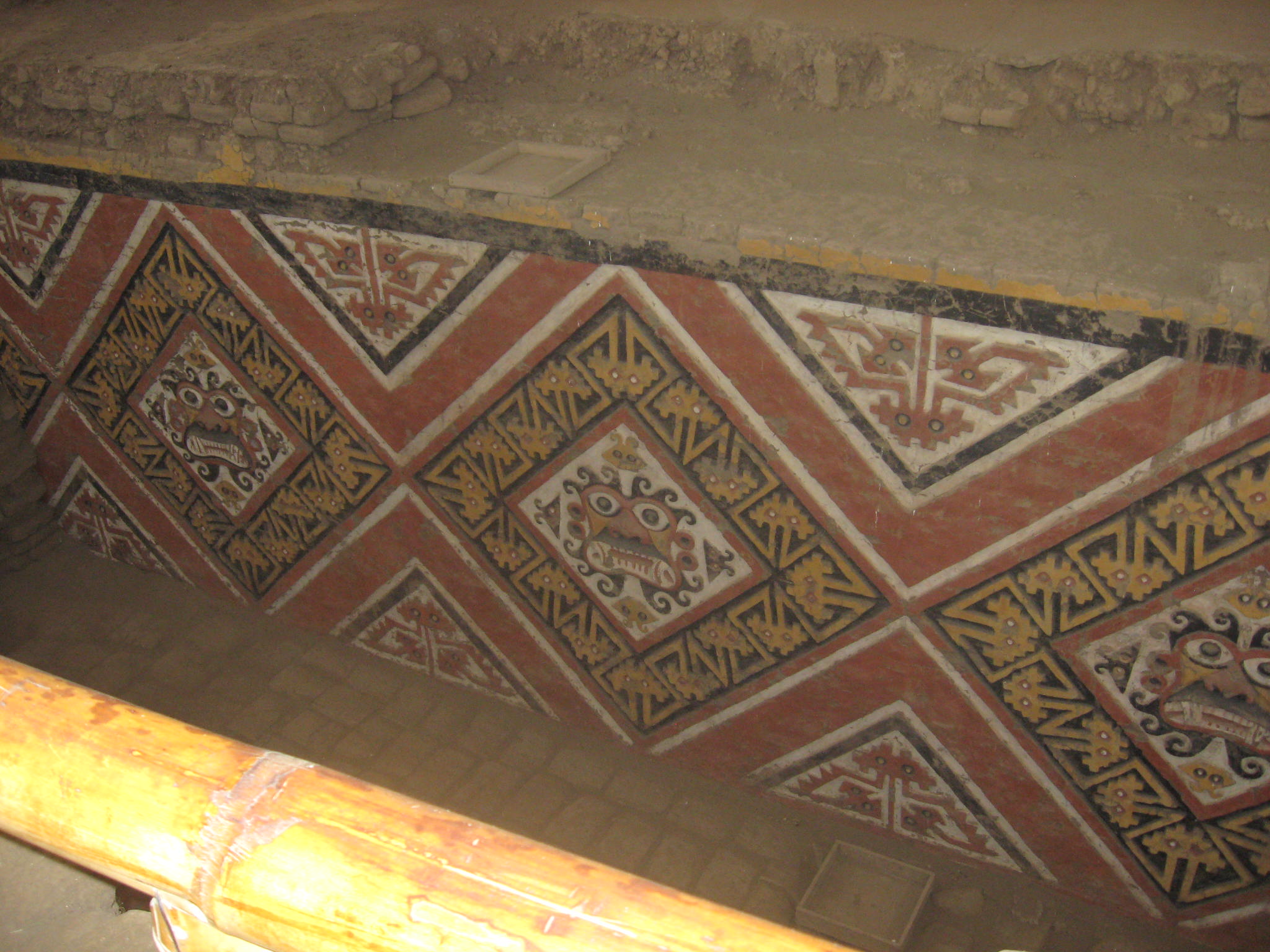
Moche was a pre-Inca culture in Northern Peru and today the people in Northern Peru remain proud of their Moche ancestors. Today the Moche culture is perhaps best known for their elaborate paintings such as this one at the Huacas del Sol y de la Luna.

moche painting

Moche painting in Northern Peru

Trouble is, unless you’ve had a chance to spend a good bit of time in Peru outside of the typical tourist circuit you may have never heard of Moche or any of the other the great cultural diversity that exists in Peru.

Take a look at this screenshot, I typed “Peru” in Google and searched for images only:

peru-images-google

Screenshot of Google image search for Peru

You can only see part of the results in the picture above but try it for yourself, type “Peru” in Google’s image search and see what you get. Other than a few pictures of maps and flags, my search results returned:

  • 1 picture of a blond girl at Lake Titicaca,
  • 1 picture of the beach near Miraflores,
  • 8 pictures of Machu Picchu, and,
  • Nothing else!

Now Machu Picchu is a fabulous place to visit and the touch-stone location for Peru or maybe all of Latin America, but I regularly hear the same sentiment from Peruvians and expats here alike that the image of Peru – and what little bit the typical tourist visits – is incredibly one-dimensional and not at all representative of the diversity that exists in Peru.

There is so much more to Peru than just Pizza Street in Miraflores, the Inca Trail and Machu Picchu. Unfortunately you have to sort of seek out the path less traveled to get to know the rest of Peru.

Traditionally Peru has been said to consist of 3 regions: the coast, the Andes mountains and the jungle, but even that is too simplistic. Lima as a modern-day metropolis is a distinct area, the North of Peru has its Moche heritage, there is an Afro-Peruvian culture, Asian influence, and regions like Arequipa and Puno have a very distinct feel to them unlike the rest of Peru.

If you have a chance to visit Peru and want to see what the country is like away from the typical tourist circuit, sneak away from your tour group and just hop on any bus – don’t even ask where it’s going. There are many great things to be discovered!

Some pictures of the North of Peru:

trujillo cathedral

Trujillo Cathedral

algarrobina

Algarrobina, a drink more typical of the North of Peru

moche paintings

Moche paintings

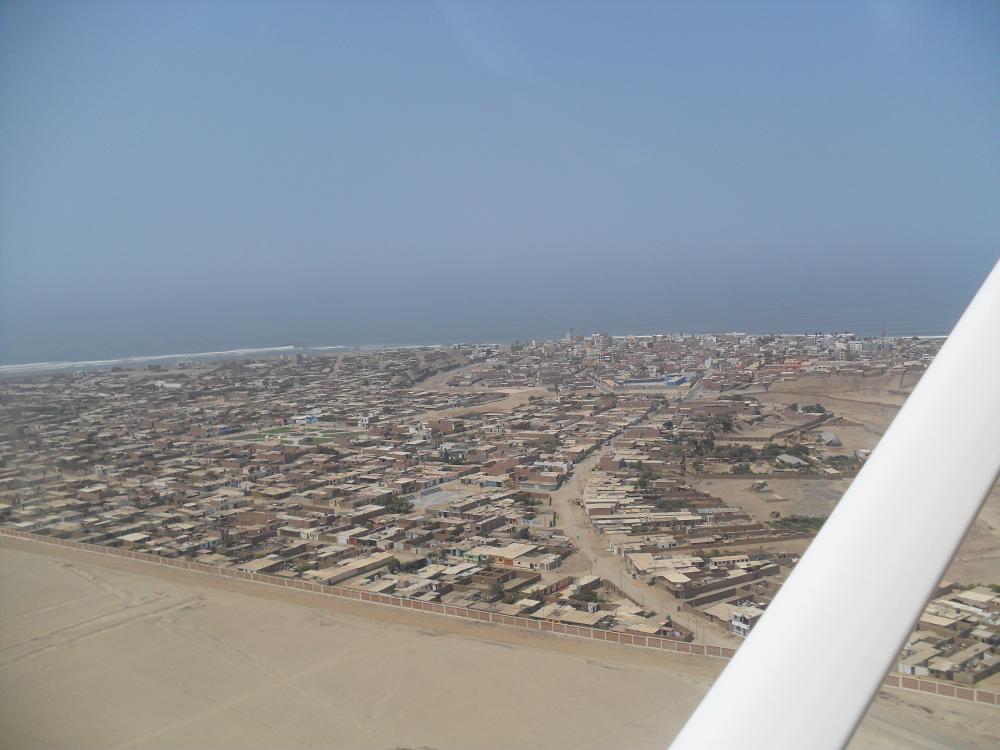
huanchaco

Huanchaco, Peru

huanchaco

A picture I took on takeoff from Trujillo, the beach town/resort of Huanchaco

My 6 hour flight from Cuzco to Lima

Aviation can be cruel sometimes.

Two weeks ago when I arrived at the airport for my flight from Cuzco (CUZ) to Lima (LIM) the airline agent told me my flight had been cancelled due to “operational issues”. No problem, the airline put me on another flight about an hour or so later. I checked in and went to my gate.

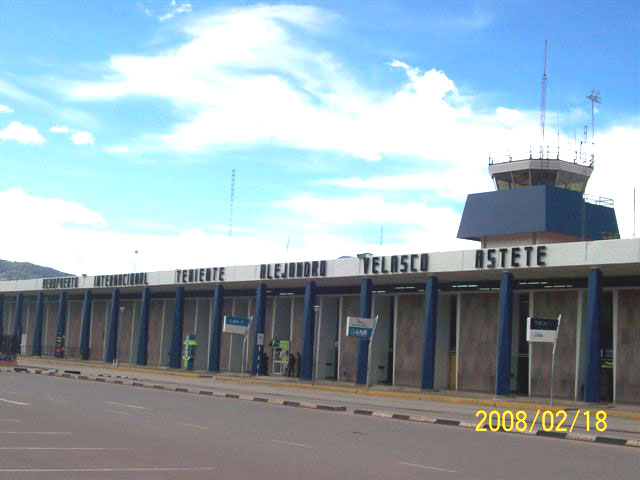
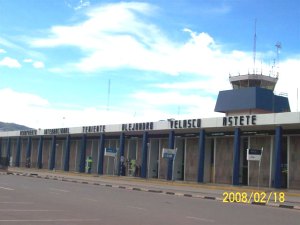
My gate was in the downstairs area of the airport, I believe it was gate 10 or 11 at Cuzco’s AEROPUERTO INTERNACIONAL “TNTE. ALEJANDRO VELASCO ASTETE”. At the Cuzco airport you will generally go upstairs to the gate area but because the airport is quite busy nowadays there are some flights that leave from a downstairs gate area as well. The downstairs gates are normally reserved for international departures but occasionally handle domestic flights.

The gate area started to fill up with passengers when a barely audible announcement was made about a gate change. The downstairs gates are really spartan and don’t have a PA system, the airline agents have to use a portable PA system at each boarding door. Nobody who was more than 30 feet away from the desk could hear which flight was moved so everybody got up and swarmed the airline desk to ask about the gate change. Turns out it wasn’t my flight but the next one after that.

By now it was time for my flight to start boarding and the airline agents tried to get the passengers who had swarmed the desk to form a line and start boarding in a reasonably orderly fashion. Everybody lined up about 3 wide but the agents kept trying to reduce the line to a single file. I thought they were exaggerating and some arguments broke out between the agents and passengers. One of the airline agents raised his voice in a childish condescending kind of way and I told him I wouldn’t have anything of it.

The passengers eventually boarded but by now many were not in a great mood, between the earlier flight cancellation and the back-and-forth at the boarding gate everybody was just relieved to finally be on their way.

I was seated right over the wing. As the plane took off one of the main wheel tires was shaking badly. I remember thinking I hope the crew writes that up when they get to Lima (for the tires to be balanced by maintenance).

I sat back and relaxed. Am I imagining things? No, surely the left engine isn’t shaking now is it? Good grief… These modern airliners never break, they are extremely reliable. I used to work at GE and I can say without hesitation jet engine reliability is just phenomenal. The airplane I was in on that day doesn’t have GE engines (it has IAE V2500s), but the engines are all excellent.

So why the heck is this engine shaking so badly???

I tried to relax, surely it had to be my imagination. I closed my eyes for a few moments. The flight attendants started to serve snacks. Yippie!!! My lucky day, the flight attendants were starting out only 2 rows in front of me, chocolate, crackers and a cup of hot strong Peruvian coffee were only mere seconds away now.

Ding Ding.

The lead flight attendant up front rang the intercom and called all the flight attendants back to their stations. No snacks for the moment. The lead flight attendant said something about turbulence and remain seated. I closed my eyes again. The engines are revving up and down a lot. I figured it had to be because the crew was navigating through some convective weather – in early November rainseason has already started over the Andes mountains.

We’re about 15 minutes into the 1-hour flight now and the Captain comes on the intercom.

“Sorry folks, there’s a mechanical issue with the airplane, we’re turning back to Cuzco.”

Now I’m worried. Not because there’s a mechanical issue, those things happen and there are lots of backup systems, but because he’s turning back to Cuzco. I’m not second-guessing the crew but in most cases if you’re 15 minutes out of Cuzco and 45 minutes out of Lima, you would elect to continue to Lima or Pisco because those are much better airports than Cuzco. Cuzco is one of the more challenging airports to land at due to the elevation and surrounding terrain. In fact, this particular airline has a policy that only Captains are allowed to land in Cuzco. Copilots are not allowed to be the “flying pilot” (the one handling the controls) in Cuzco.

So why is he turning back to Cuzco? Either the problem is a nuisance warning that they can’t figure out but has no bearing on the performance of the airplane, or… it’s something really bad and they have to get back on the ground right away.

We land back in Cuzco uneventfully and the crew parks the airplane in a corner of the airport. As the passengers deplane I looked in the cockpit and overheard the Captain pointing out some issue with the flight instruments to the maintenance crew. Now the return to Cuzco made more sense: Lima and Pisco are far better airports than Cuzco but the coastal weather typically has haze or low clouds, so if you had a problem with flight instruments those airports would probably not be your first choice – you would elect to go to an airport where you have unrestricted visibility like Cuzco on that particular day. On the other hand if you had a problem with an engine, flight controls, brakes or something of that nature, you would probably chose Lima or Pisco where the airplane has much better performance and the approaches are much easier.

While the Captain was pointing out the mechanical problem to the maintenance crew the First Officer (copilot) had stepped out to greet the passengers as they deplaned. He was a young kid of maybe 23 or 24 and looked badly shaken, whiter than white. Airlines down here like to hire young, inexperienced kids because they are more likely to drink the company Kool-Aid. I imagine it was probably the first time ever this copilot had to divert from his normal route of flight. (Read about my most recent diversion here). The Captain looked and sounded confident during the entire ordeal, as he should.

When we got back in the terminal a lot of passengers were now really upset but the airline got everybody on the next 2 or 3 flights reasonably quickly. I ended up arriving in Lima about 6 hours late, but sometimes airplanes will do that to you.

So what was Peruvian about this entire ordeal?

When we filed back into the terminal the same airline agent who had yelled at people before came trudging in, carrying his trusty portable PA system. I was standing by a building column near the desk and the agent plugged his PA system into an electrical outlet in front of me. Only, he didn’t plug it in. His portable PA didn’t have an electrical power plug, it was just 2 bare electrical wires that the young man was expected to wind tightly and stick into the power outlet. I looked at the guy and said, “dude, you’ve got to ask your boss to put a plug on there for you.” Peru uses 220V which is more than enough to hurt a person. I’ve heard stories (not sure if they’re true or not) of people getting killed by 220V electricity and this poor guy was expected to stick bare wires into an electrical outlet probably 8 or 10 times per day, for every time he moves to another flight or gate!

I was one of the last passengers on the last flight to Lima that day and just before I got on the airplane the same airline agent came trudging by again, finally on his way out for the day. He shook my hand and said he was sorry about the ordeal but I said not to worry, stuff happens.

“But please ask your boss to put a plug on that PA system.”
Cuzco airport terminal

The Cuzco airport terminal

Cuzco airport photo courtesy of Corpac.

Día de todos los Santos Vivos

Yesterday, Nov 1, was “Día de todos los Santos Vivos” here in Cuzco, the celebration of the Catholic holiday All Saints Day. Since the time of the Spanish conquistadores, much of the traditional Andean culture in Peru has been absorbed or continued in some form in the Catholic religion and Catholic holidays, therefor the celebration of “Día de todos los Santos Vivos” in Cuzco is a blend of Andean and Catholic traditions.

From gosouthamerica.com:

The Andean emphasis is agricultural, since November 1 is in spring south of the Equator. It is the time of returning rains and the reflowering of the earth. The souls of the dead also return to reaffirm life. During this time, the doors are opened to guests, who enter with clean hands and share in the traditional dishes, particularly the favorites of the deceased. Tables are bedecked with bread figurines called t’antawawas, sugarcane, chicha, candies and decorated pastries. At the cemeteries, the souls are greeted with more food, music, and prayers. Rather than a sad occasion, the Día de Todos Santos is a joyous event.

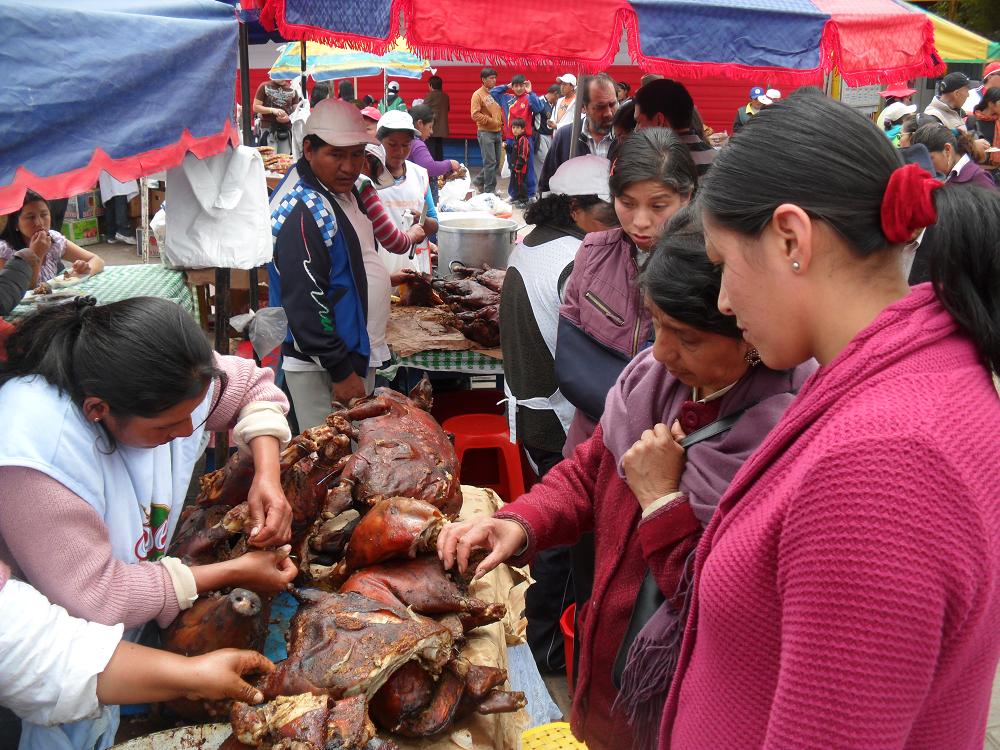
And how better to celebrate such a joyous event than with food! Here in Cuzco the traditional meal on “Día de todos los Santos Vivos” consists of lechon (suckling pig) and tamales.

buying lechon

Buying lechon on Día de todos los Santos Vivos in Cuzco

Here in Cuzco, Oct 30 to Nov 1 was also the festival of the bread, or T’anta Raymi. Sweet bread figurines, known as pan wawas (from the Quechua word wawa which means baby) are sold everywhere during these days. At the plaza Tupac Amaru close by our house we saw this gigantic pan wawa and I believe there was an even larger pan wawa set to be displayed in the center of the city.

pan wawa in Cuzco, Peru

A giant pan wawa on display at the plaza Tupac Amaru in Cuzco, Peru

There was a sort of baptising celebration for the pan wawa which again seems like a blend of Catholic and Andean traditions. We didn’t stay for the baptising of the pan wawa, we wanted to go back to the house and devour our yummie lechon 😉

Rwandan Stories

A friend sent this link, must-read material:

Rwandan Stories

Totally unrelated to Peru or this blog, but well worth your time. Here are a few excerpts:

“I have read that after each genocide historians explain that this will be the last. Because no one could again allow such an infamy. That is an amazing joke. Those responsible for the Rwanda genocide are not poor ignorant farmers, no more than they are ferocious and drunken interahamwe – they are the educated people. They are the professors, the politicians and the journalists who expatriated themselves to Europe to study the French revolution and the Humanities.”

Some words about the role of the international community. The history of the Belgian colonialists in Africa is certainly nothing to be proud of:

“A detachment of blue-helmeted UN soldiers in three armoured vehicles arrived in the little town (of Nyamata), visiting the church, the convent, and the maternity and general hospitals. At each stop they picked up whites – five priests and three nuns in all. Mission accomplished, the convoy turned around and swiftly vanished down the main street.”

Rwandan Stories just won a United Nations Association award:

http://www.RwandanStories.org won the Best Online Award, impressing the judges with its exemplary use of the medium, educational and interactive, it placed the Rwandan genocide into both historical and contemporary contexts.

Go check out the site at Rwandan Stories.

You’ll never see this on the FB pages of expat Peruvians – part 7863

The widely reported news about wages in the US. From the Washington Post, the newspaper which was always said to be in bed with the US Army:

New report shows more workers falling behind average wage level

Fifty percent of U.S. workers earned less than $26,364 last year, reflecting a growing income gap between the nation’s rich and poor, the government reported Thursday. There were fewer jobs, and overall pay was trending down — except for the nation’s wealthiest. The number of people making $1 million or more soared by over 18 percent from 2009…

Read the complete article here.

Now I’m not talking about skies are falling here, and I’m sure a lot of the low income earners are college students working part-time jobs and the like, but the fact remains that fully half of working people in the US earn about the same or less than what Patricia earns here in Peru.

I guarantee you’ll never see that on the FB pages of expat Peruvians in the US. If you read any of those you’ll come away with delusions of grandeur, false notions that every Peruvian who ever moved to the US has 5 cars and runs 3 popular money-making Peruvian restaurants.

BTW – Patricia works for a cellphone company and her job is considered good-paying but it is a front-line job, she’s not in management or executive pay – yet 😉

Félix Casaverde

Yesterday the great Peruvian guitar player Félix Casaverde passed away, he was only 64. From his biography on Facebook:

Guitarrista Profesional Autodidacto Con 49 años de vida profesional, Interprete Compositor y Arreglista. Actualmente dedicado a la pedagogia y hacer arreglos musicales. Obra maestra “CUATRO TIEMPOS JOVENES NEGROS”, ” BALANCE”, ” ELEGIA A MARIA” , “YANINHA” , entre otros.

Peruvian music reflects the diversity of Peru, from traditional Andean music to the Afro-Peruvian rhythms and contemporary pop music.

More info about the life and death of Félix Casaverde at La Republica.