Bus from Lima to Cusco

I recently returned from a North-Atlantic ferry flight a few days earlier than planned. When I arrived in Lima I couldn’t get a good airline ticket from Lima to Cusco, so I decided to take the bus instead.

As the crow flies, Lima to the imperial city of Qosqo is only 364 miles, but by bus the trip takes about 21-22 hours due to the traffic in Lima (2-3 hours) and the winding roads through the Andes mountains.

Taking the bus from Lima to Cusco is a bit of an adventure and a good way to see a little bit of Peru outside of the typical tourist areas. However, be warned: taking the bus from Lima to Cusco is not a good idea unless you are comfortable traveling in cars and busses over winding roads up and down steep mountains. Near Abancay for example the road goes up and back down several thousand feet. Inside the bus it can be very cold at night, so you need to take a blanket along. The restroom on the bus isn’t very clean even by Peruvian standards. Also, you never know what to expect on the grainy TV in the bus, but it probably won’t be anything you’re used to seeing on the boobtube at home.

There are many bus companies in Peru. We take the “Flores” company, which is quite nice and only costs 100 Soles (~$30) each way for the nice seats on the lower level of the bus.

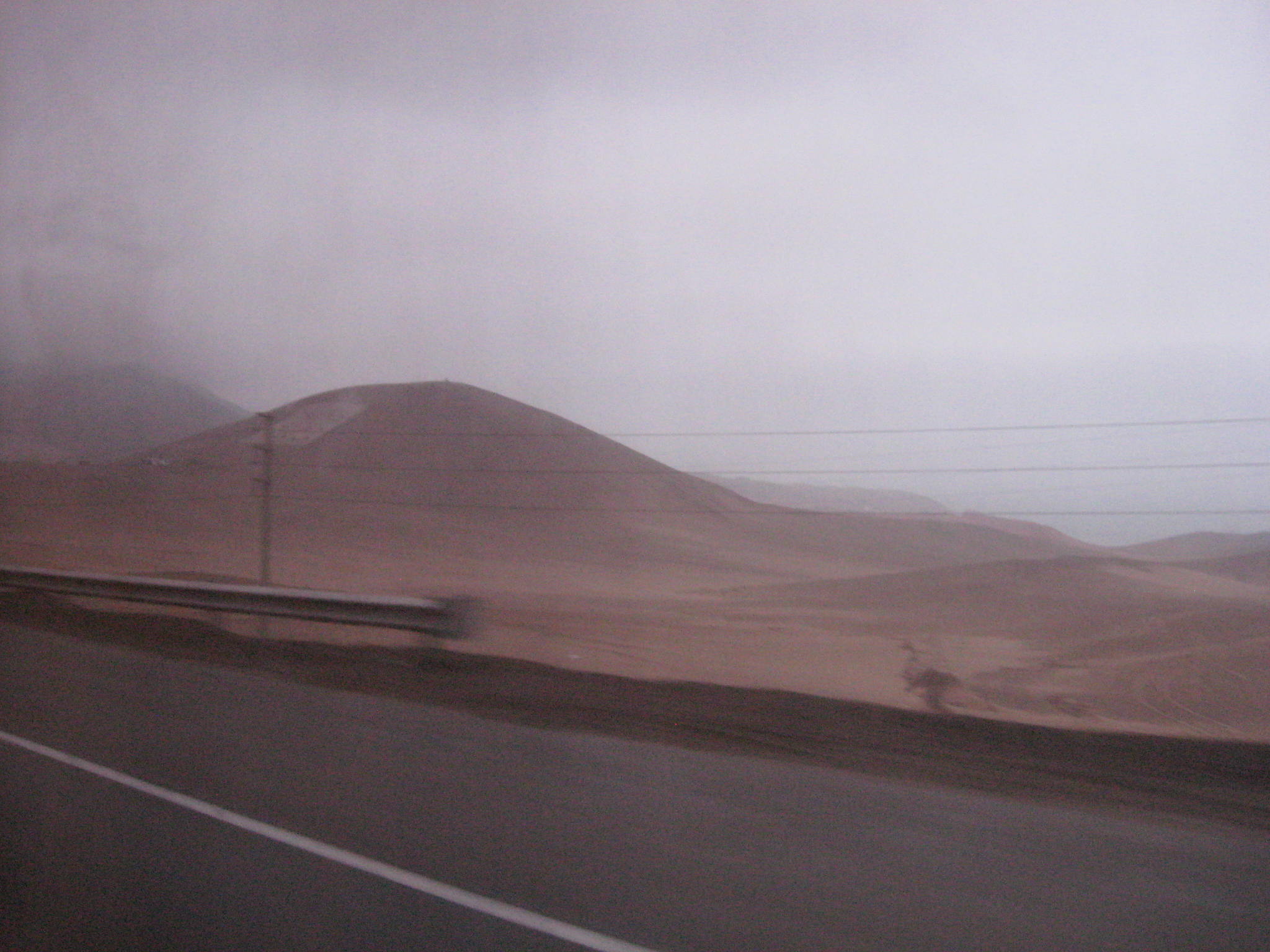
Here’s a few pictures of my last trip:

Visit to Señor de Huanca

Perhaps the most important religious shrine in the Cusco area today is the church of Señor de Huanca, in the Sacred Valley of the Inca, about an hour outside the city of Cusco. Many Cusquenians go here to worship and ask for the blessings of Señor de Huanca.

Patricia with the baby outside Señor de Huanca

Patricia with the baby outside Señor de Huanca

Inside the shrine, believers light candles and pray for blessings of Señor de Huanca. It is believed that if one enters the shrine with a pure heart, Señor de Huanca will grant you any blessings you wish, but if you go inside with less than a pure heart, you will not receive any blessings and may even find harm.

In front of Señor de Huanca's church

In front of Señor de Huanca's church

Family visit to Señor de Huanca

Family visit to Señor de Huanca

It is believed that here is where God made his home among men. There are actually 2 different stories as to the origin of Señor de Huanca, of miracles that are believed to have happened there.

Today, many Cusquenians bring their new cars here to be blessed, because it is believed Señor de Huanca will protect them from harm. In fact, when we were there an entire fleet of at least 15-20 delivery trucks for Coca-Cola / Inka Cola were there.

Overlooking the Sacred Valley of the Inka

Overlooking the Sacred Valley of the Inka

Mommy with baby Brianna by Señor de Huanca

Mommy with baby Brianna by Señor de Huanca

During the month of September, the month of Señor de Huanca, thousands of believers make a pilgrimage to Señor de Huanca. From outside Cusco, I believe the pilgrimage is about a 4-6 hour walk. I haven’t done it, but I’d like to some day.

To visit Señor de Huanca, you can take a taxi from Cusco (by the hospital EsSalud) for 6 Soles (~$2) per person, or you can take a bus to the nearby town of Pisaq and get a taxi from there.

If you’re visiting Cusco, a day-trip to Señor de Huanca is definitely worth it. The shrine of Señor de Huanca is in a beautiful area overlooking the Sacred Valley of the Inca. It is a very quiet place where you will find few tourists but typically several dozen locals who have come to worship. After visiting the church of Señor de Huanca you can enjoy typical Andean food in the nearby town of Pisac or in any of the towns in the “Valley of the South” on the way back to Cusco.

Date night!

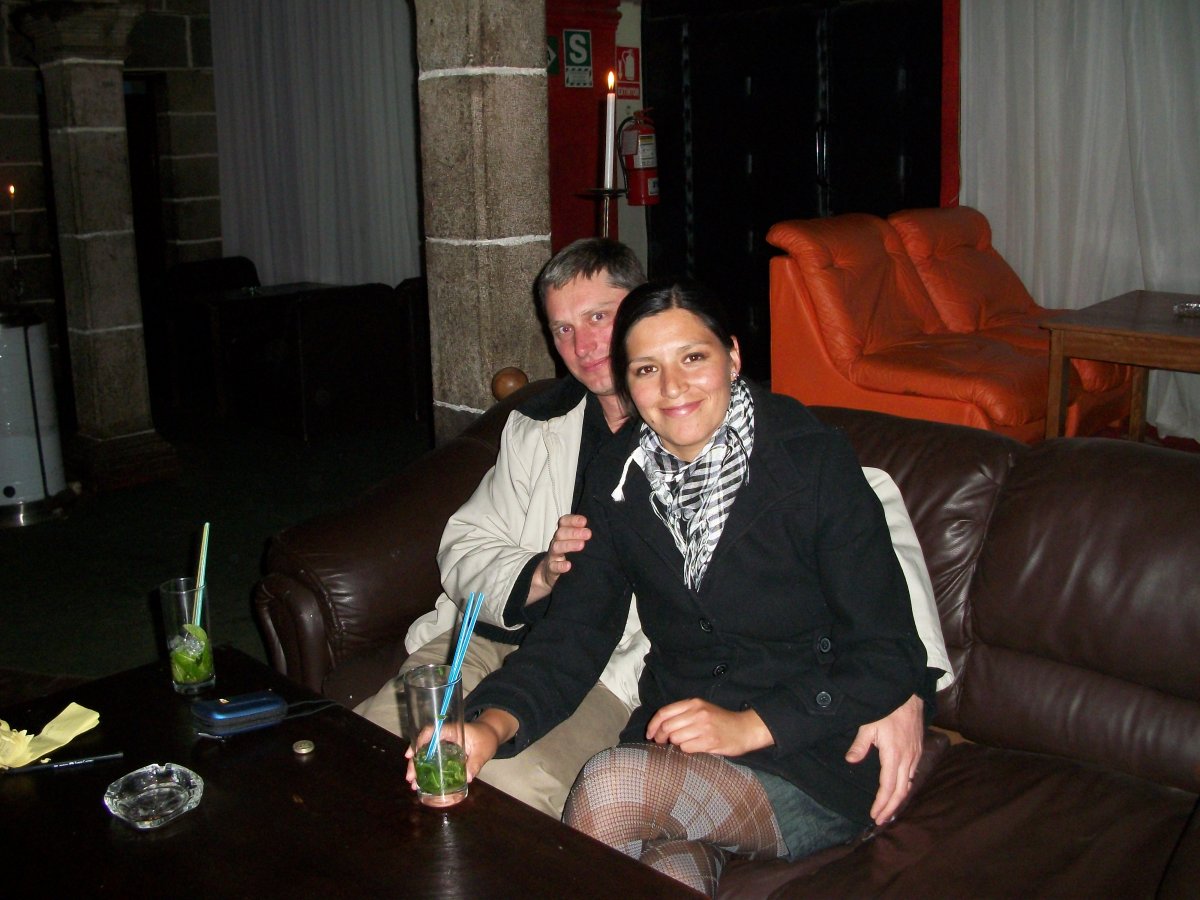
Last weekend was our first post-baby night out. I haven’t been this excited about staying out till 10:30 since I was 14!!!

At the end of the day, people are people no matter where you are. Like any new parents we’ve been overjoyed with our new baby, but also quite overwhelmed. Patricia has been doing a great job taking care of our wawa, but after 10 months just to be able to go out for a few hours without the baby was a big event for us.

Patricia’s mom was kind enough to watch the baby for us while we went out to get a bite and a drink downtown at the Plaza de Armas here in Cusco.

Mommy looking great!!!

Mommy looking great!!!

Que papi este papi!!!

Que papi este papi!!!

First night out post-baby

First night out post-baby

Torrential rains in Cusco

Lots of news about the flooding and mudslides caused by torrential rains in Cusco. Most of the damage is in or near the Sacred Valley of the Inca, about 20 miles outside of Cusco.

Unfortunately most of the English language media coverage and most of the Peruvian government’s efforts seem to be focused on helping the US and European tourists who were stranded in Machu Picchu, but you don’t see much about the ordinary Peruvians who are affected.

I’m actually in the US for a while. Patricia and the baby are safe in Cusco. Hopefully the rains will subside soon. The city of Cusco has rapidly expanded over the past 20 years or so and far too many houses are built on the sides of the mountains surrounding the city, any mudslides in the city would be a disaster.

More at En Peru and Diario del Cusco

Abuelo’s birthday

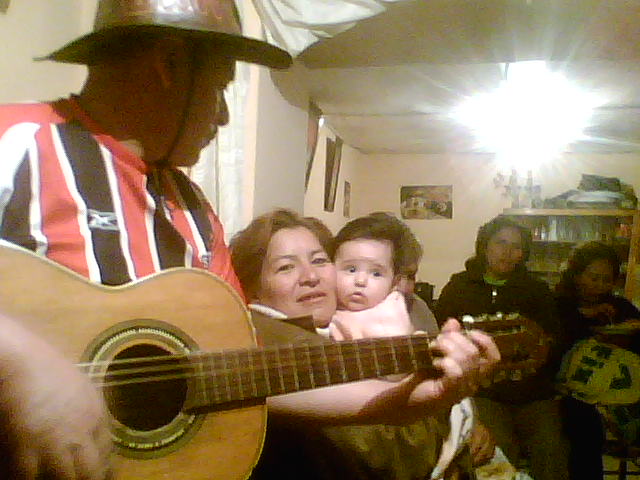
Patricia’s dad, Carlos, celebrated his birthday yesterday. Patricia’s dad and several of his family members played traditional Peruvian folk songs on the guitar, banjo and accordion. We all ate yummie lechon, even Brianna!!!

After a few cervezas papi even danced to traditional Peruvian folk music… bad uncoordinated gringo 😉

Carlos playing guitar

Brianna Nayaraq con su bisabuela

Brianna Nayaraq con su bisabuela

Baby Brianna watching her grandpa play guitar

Read ’em and weep

The real-estate classifieds for Cusco, that is. Here’s a few examples:

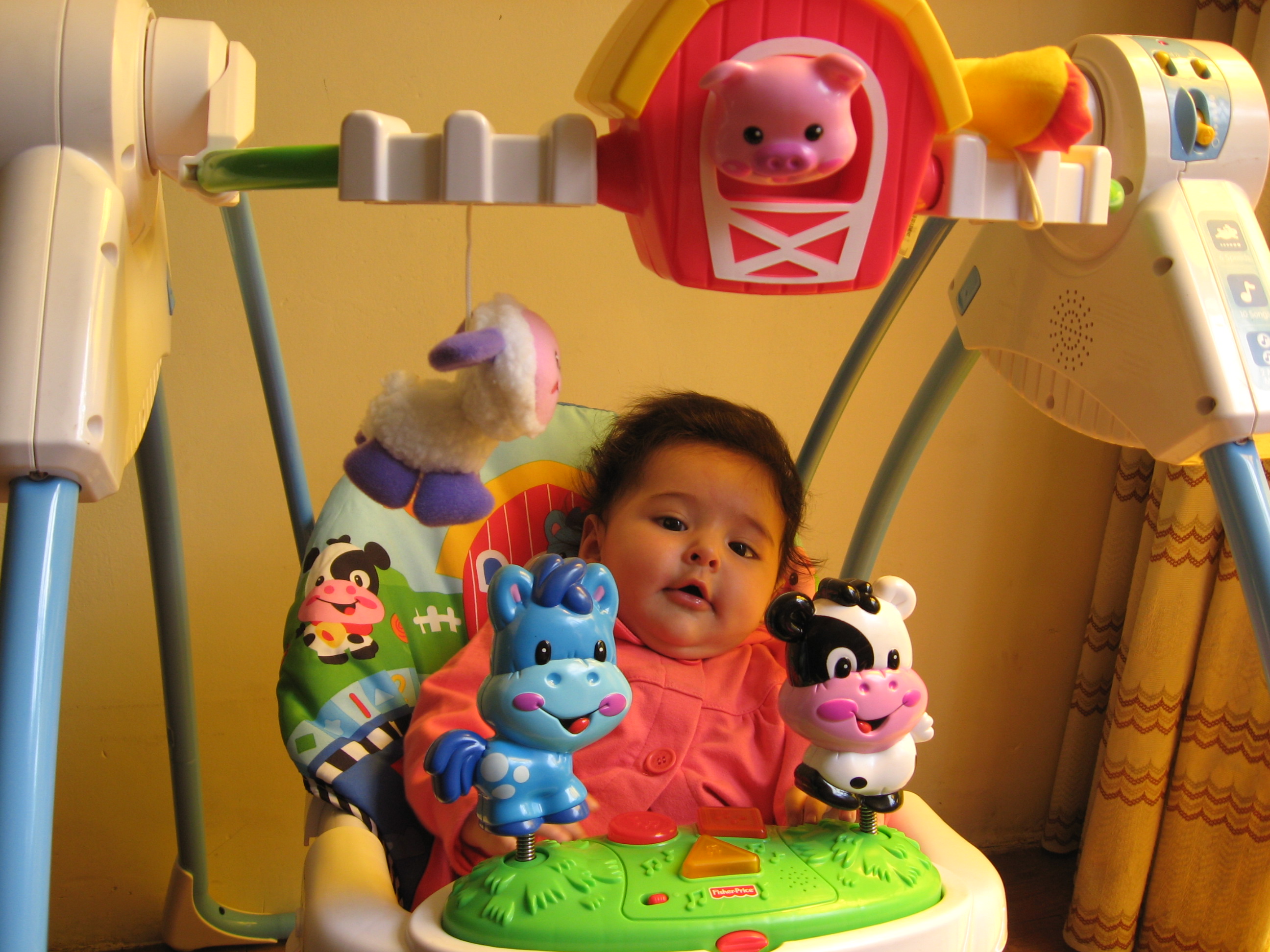
We’ve started looking to buy a house or apartment in Cusco, because the apartment we’ve been renting is becoming too small, especially since baby got a new swing 😉

Brianna in her new swing

Brianna in her new swing

Real estate here in Cusco is very expensive compared to the rest of Peru, since the area is thriving with so much tourist money. Asking prices for some nice apartments we’ve looked at range from $60,000 to $120,000, and mortgage interest rates range between 9-14%. This in a country where the per capita GDP is $8,500. If I worked full-time at my teaching job, my entire income would be spent on the $500 mortgage payment if we bought a $60,000 apartment with 20% downpayment 😦

I’m really on the fence about this… to get a nice place that we can afford we may have to look outside the city. I actually prefer the quiet areas outside the city, but then we’d be further away from family, friends, etc.

In terms of real-estate value, I’m worried that much of the increase in Cusco in the past years is speculative and that prices appear to be wildly out of line with personal incomes. On the other hand, I think long-term demographics, conservative lending standards and the mountainous terrain could put a floor under real-estate prices in Cusco, plus we’d be buying something to live in, not as an investment to “flip” in a few months or years.

So if any readers have a rich aunt or uncle… tell ’em to help out a poor gringo in Cusco 😉

Halloween in Cusco

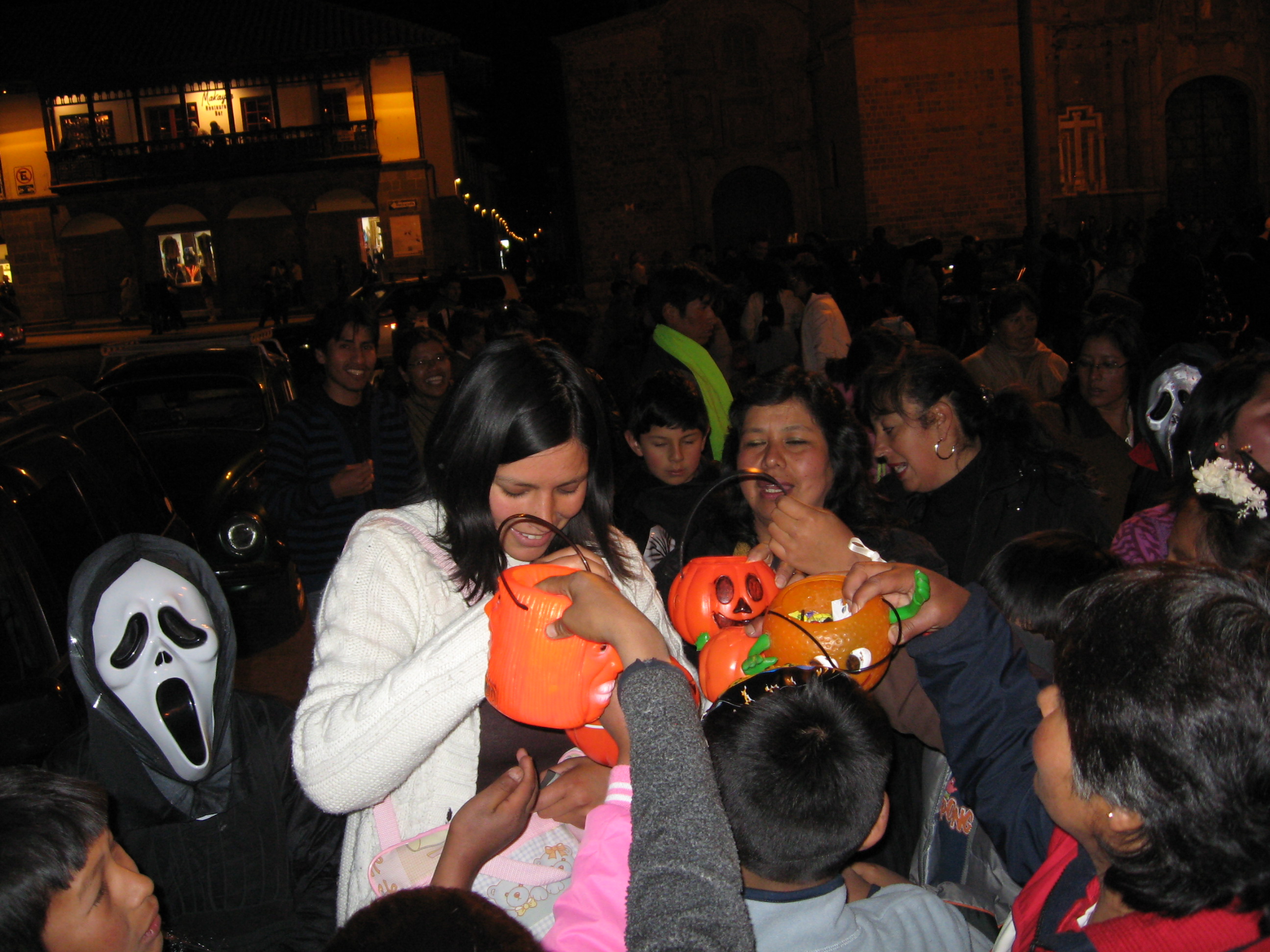
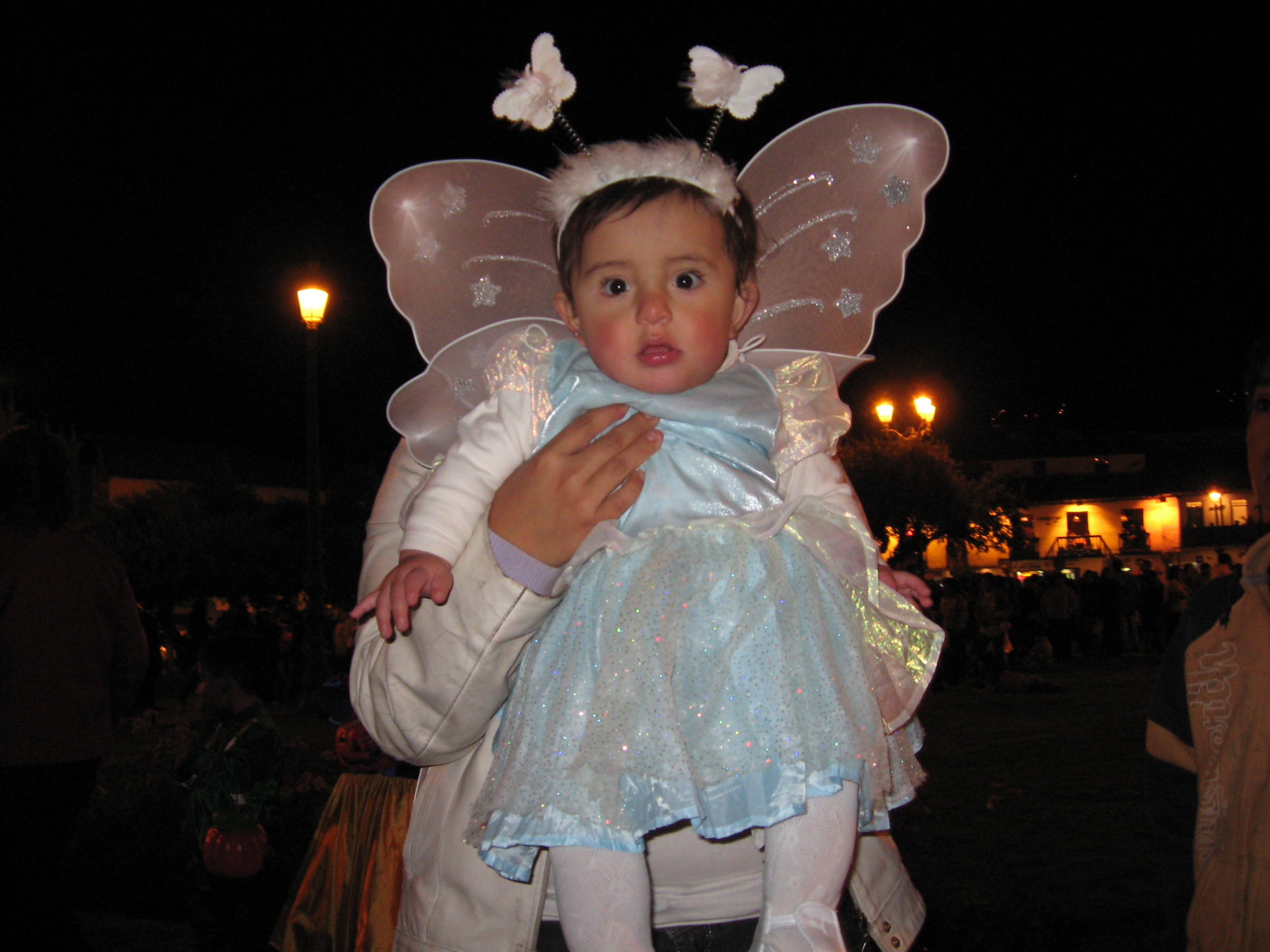
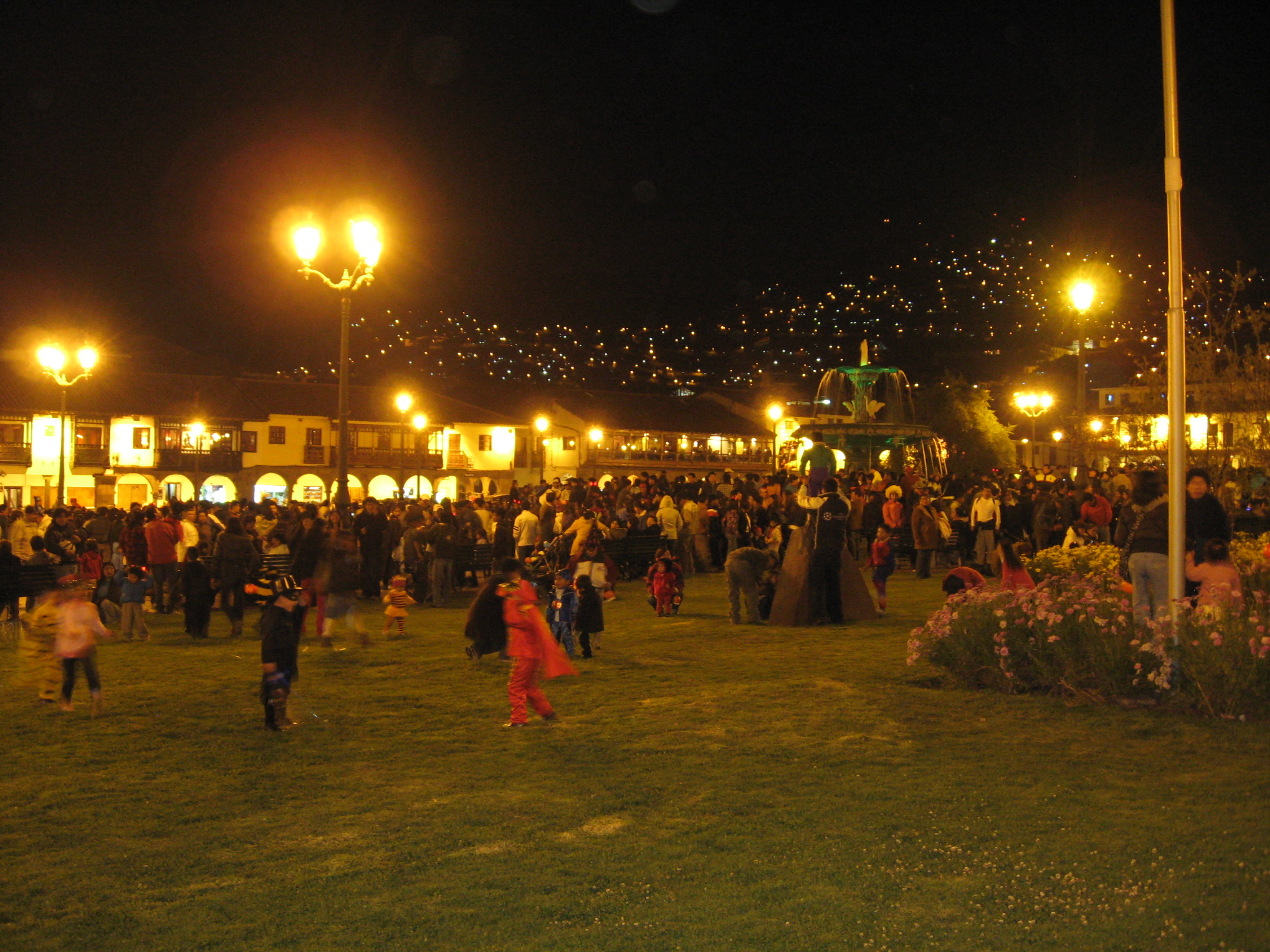
A few pictures of Halloween at the Plaza de Armas in Cusco, Peru:

Now I have to admit, I used to not like Halloween, thought it was a good day to lock the doors, turn the lights off and let the dogs out. But that was long ago, now Halloween is one of my favorite holidays.

I don’t think Halloween is as big an event in Peru as in the US. In regular neighborhoods, you don’t see many kids dressed up, and in typical Peruvian fashion (better later than earlier) most kids are buying masks in the afternoon on Oct 31 – not like in the States where Wal-Mart is full of Halloween costumes for the entire month of October.

We went to the Plaza de Armas last night to check out the crowd and hand out candy. Peruvian kids don’t really go “trick-or-treating” like in the US, they just sort of walk up to you with a little plastic pumpkin and say “Halloween”. Patricia had warned me that we’d be mobbed as soon as kids noticed we had candy, and sure enough, we practically got run over by happy little ones, and sometimes their moms as well. One kid tried to come back a few times, and when Patricia noticed he said “that wasn’t me, that was my twin”. One day I’ll do a post on little white lies in Peru, they’re out of control at times and usually so obvious it’s plain funny.

Anyway, got of on a tangent… For those of you who get into folk legends, some Belgian scholars believe the origin of Halloween has to do with a Dutch folk song, Lied van Heer Halewijn

“Heer Halewyn zong een liedekyn,
Al wie dat hoorde wou by hem zyn.

En dat vernam een koningskind,
Die was zoo schoon en zoo bemind.

Zy ging al voor haer vader staen:
“Och vader, mag ik naer Halewyn gaen?”

“Och neen gy, dochter, neen gy niet!
Die derwaert gaen en keeren niet

…”

Find the complete lyrics here. But if you’re looking at me to sing the song, you’ll need to wait until I’m seriously inebriated 🙂

Señor de los Milagros

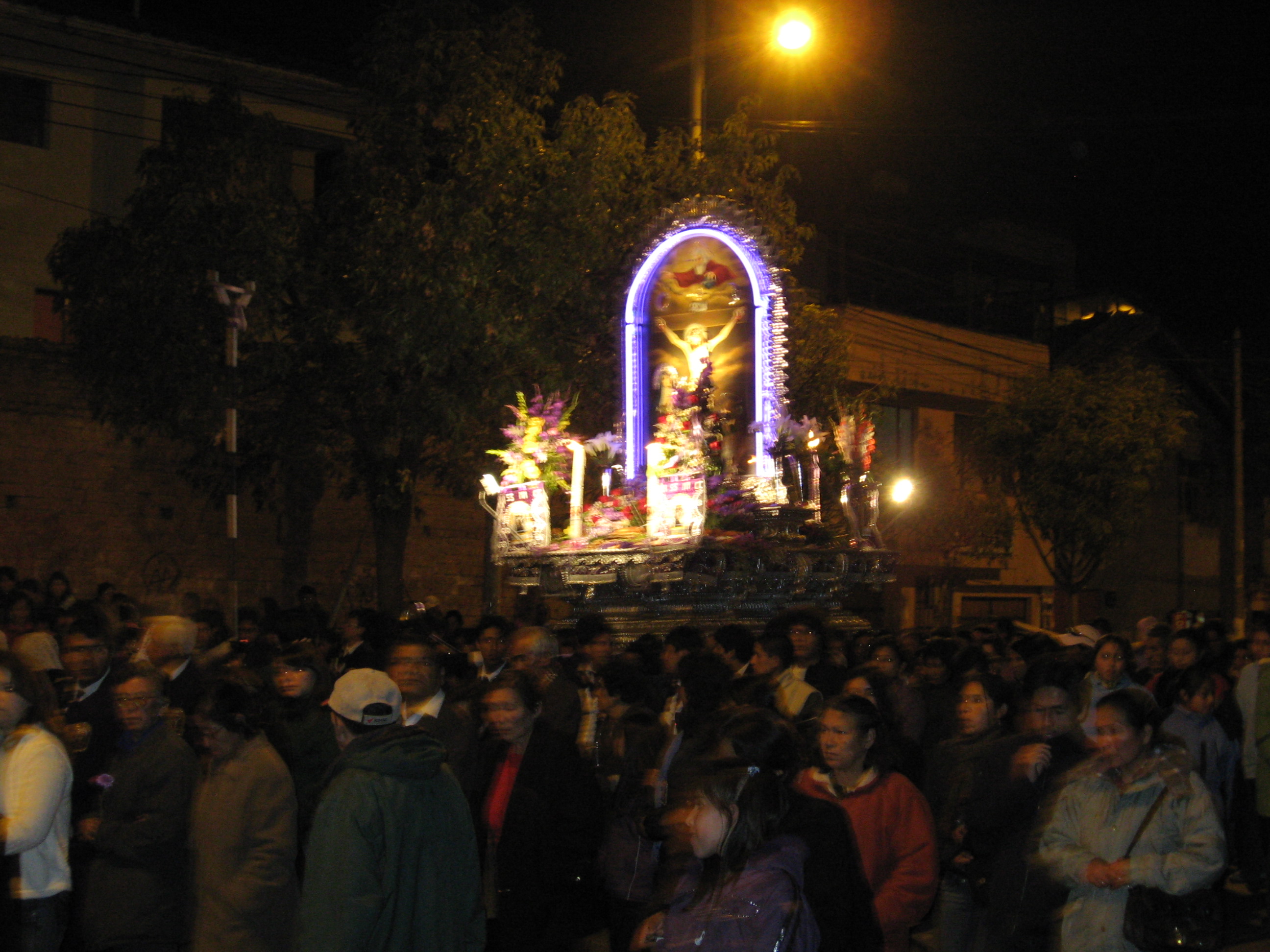
The procession of Señor de los Milagros in Cusco passed by our house last night. Peruvians worship Señor de los Milagros (Lord of Miracles) as it is believed he protects them from harm. An excellent explanation of the tradition from Kleph blog:

The Lord of Miracles, or El Señor de los Milagros as it is known in Spanish, is actually a centuries-old painting on the wall of a relatively obscure church in central Lima.

According to tradition, in 1651 a slave who had converted to Catholicism painted the depiction of Christ on the cross on the wall of a building in the outskirts of Lima where new devotees to the faith gathered to pray.

When a devastating earthquake struck the city four years later the entire building collapsed except for the wall adorned with the painting. Over the next several decades, the image became associated with miraculous incidents. More and more people, particularly the descendents of slaves, began to worship at the site.

This concerned both the church and Spanish authorities and, in 1671 the image was ordered destroyed. According to legend, workers were not able to do so. But, for whatever reason, officials eventually relented and built a proper church on the site – the church of Las Nazarenas.

When another huge earthquake struck Lima in 1687, the chapel was destroyed but, once again, the wall adorned with the painting remained standing. This cemented the importance of the image to the faithful and church leaders ordered a painting of the image to be taken out in procession that October – the tradition that continues to this day.

Señor de los Milagros

Señor de los Milagros

Señor de los Milagros, Cusco 2009

Señor de los Milagros, Cusco 2009

Procession of Señor de los Milagros in Cusco

Procession of Señor de los Milagros in Cusco

Here in Cusco the celebration of Señor de los Milagros is less elaborate than the mes morado (purple month) celebration in Lima. I imagine the simpler celebration in Cusco reflects the fact that Señor de los Milagros is native to Lima and Cusco has other typical celebrations of Señor de los Temblores during Holy Week (Semana Santa) and Señor de Huanca during the month of September.

Prevent brain loss – move to Cusco

A new study claims obese people have severe brain degeneration.

“A new study finds obese people have 8 percent less brain tissue than normal-weight individuals. Their brains look 16 years older than the brains of lean individuals, researchers said today. “

So why would living in Cusco make a difference? The report continues that…

“The main cause, experts say: bad diet, including an increased reliance on highly processed foods…”

In other words, if everything you eat has “high fructose corn syrup” in it, you might want to consider spending a few months in Cusco. Food here is fresh and delicious. Gringos in Cusco lose weight, lots of it.

Typical Andean food

Typical Andean food