Going home…

I spent a few days in the US last week and returned to Peru using my carné de extranjería for the first time!!!

On the flight back, as I walked down the airstair and across the airport ramp here in Cusco, I caught myself humming “Going home”… Rather interesting subconscious association I thought, for a Belgian guy who lived in the US for 15+ years, now strolling “home” to his beautiful wife in Cusco, Peru.

Here’s the song for your entertainment. Keep in mind like all of my music on this blog it’s very artsy rock music. If you’re not into that kind of thing… well I’m terribly sorry you were born too late for great rock and roll music 🙂

Mining and environmental protections in Peru

CNN recently featured the “La Oroya” case on its “Planet in Peril” series. Mining (“la mineria”) is quite controversial here in Peru, being one of the country’s largest industries but also one with a mixed environmental record. I’m seeing some local opposition to the environmental impact of mining, for example we noticed this sign on the way to Accha:

A roadside sign opposing mining near Sangarara, Peru.

A roadside sign opposing mining near Sangarara, Peru.

One thing I hope for is that when taxpayer money is soon handed out to the US auto industry there are strings attached in terms of environmental protection (the metals processed at “La Oroya” are used in industries such as auto manufacturing).

Carne de extranjeria Peru

I finally got the Peruvian resident visa, better known as carné de extranjería, so now I can live and work in Peru more easily. The entire process took over a year, first nearly 6 months to get legally married in Peru and then 6 months to obtain the “carne extranjeria”.

For me, obtaining this semi-permanent admission into the fine population of Peru was hopelessly complicated by the facts that (1) we were living in Cusco, not Lima where all the bureaucracy is and (2) I am a Belgian citizen who’s lived his entire adult life in the US, which made it more difficult to get original documents. You can read the first post on this blog for the silly-but-true story of how a Belgian guy met a Peruvian girl while living in the US, and ended up back in Peru!

OK, got to go now. I have to do some work to pay for all those fees we paid to the “Banco de la Nacion” over the last year or so 🙂

Ward

IPCNA Cusco ESL teachers blog

I finally got around to putting some content on the new ICPNA teachers’ blog. Since I’ve had good luck using this blog in my classes our academic director and I decided to start a blog for use by the ICPNA teachers as a group. Here are the links:

ESL teaching is my “fun job” here in Peru, I’m by no means an expert in the field. So please, visit the blog and contribute your ideas!

Ward

My ESL students at ICPNA in front of the Qoricancha in Cusco, Peru

My ESL students at ICPNA in front of the Qoricancha in Cusco, Peru

Always a rebel – My take on corporate culture in Peru

This weekend during our staff meeting at ICPNA my boss had to devote an entire slide in her presentation to the various rules and policies I tend to play fast and loose with, such as no jeans or sneakers allowed, no food in the classrooms, etc. While she was very kind not to mention me by name, the fact that I’m the only teacher who wears jeans and sneakers 4 days a week made it rather obvious who the culprit was…

To be fair, ICPNA, which is associated with the US embassy in Lima, is an excellent place to work. There’s a friendly atmosphere, a great group of teachers and my boss is always receptive of our ideas and suggestions.

I love all things Peruvian and I’m sure there are many great leaders and great places to work in Peru. However, I’m not naive to the poverty and needs of many people here, and I believe Peruvian corporate culture is a major reason why many in Peru live in poverty or have a miserable work experience:

  • Employees are not regarded as a valuable asset to the business and leadership in many places is totalitarian. As a result, employee participation and individual accountability is very limited, as is innovation and entrepreneurship.
  • Discrimination on the basis of age or sex is commonplace, as is lack of opportunity for people with disabilities. Just look through any employment classifieds.
  • Lack of employee development. Many of my students are not allowed a flexible work schedule to attend class, even though they are learning a skill which is absolutely vital to any business here in Cusco.
  • Lack of environmental awareness and occupational safety in some industries. Read Corey Laplante’s blog about the La Oroya case.
  • Old fashioned and petty rules, such as dress codes, which don’t add any value to the business. Even GE and IBM, some of the most conservative companies in the US, did away with dress codes 30 years ago. Their thinking was employees should have something more productive to do than look at the pants or shoes their coworkers are wearing.
  • No long term vision or leadership. While India became the global IT hub and Asia became the world’s manufacturing base Peruvian middle managers were mired in bureaucracy – not to mention, busy worrying about their employees jeans or sneakers! Read this blog entry about out-of-touch leadership.

Class exercise for ICPNA I-12:

So what do you think, agree or disagree? What are the high-level values businesses in Peru should have today to be successful and improve the way of life in Peru? Read about the culture and values at some successful companies such as SAS, Southwest Airlines or GE – where I spent nearly 5 years.

Speak your mind, what are your thoughts or comments?

This Chery is for real

As I’m reading the news of a possible taxpayer-funded auto industry bailout / GM bailout I thought I’d offer some observations from down here in Peru.

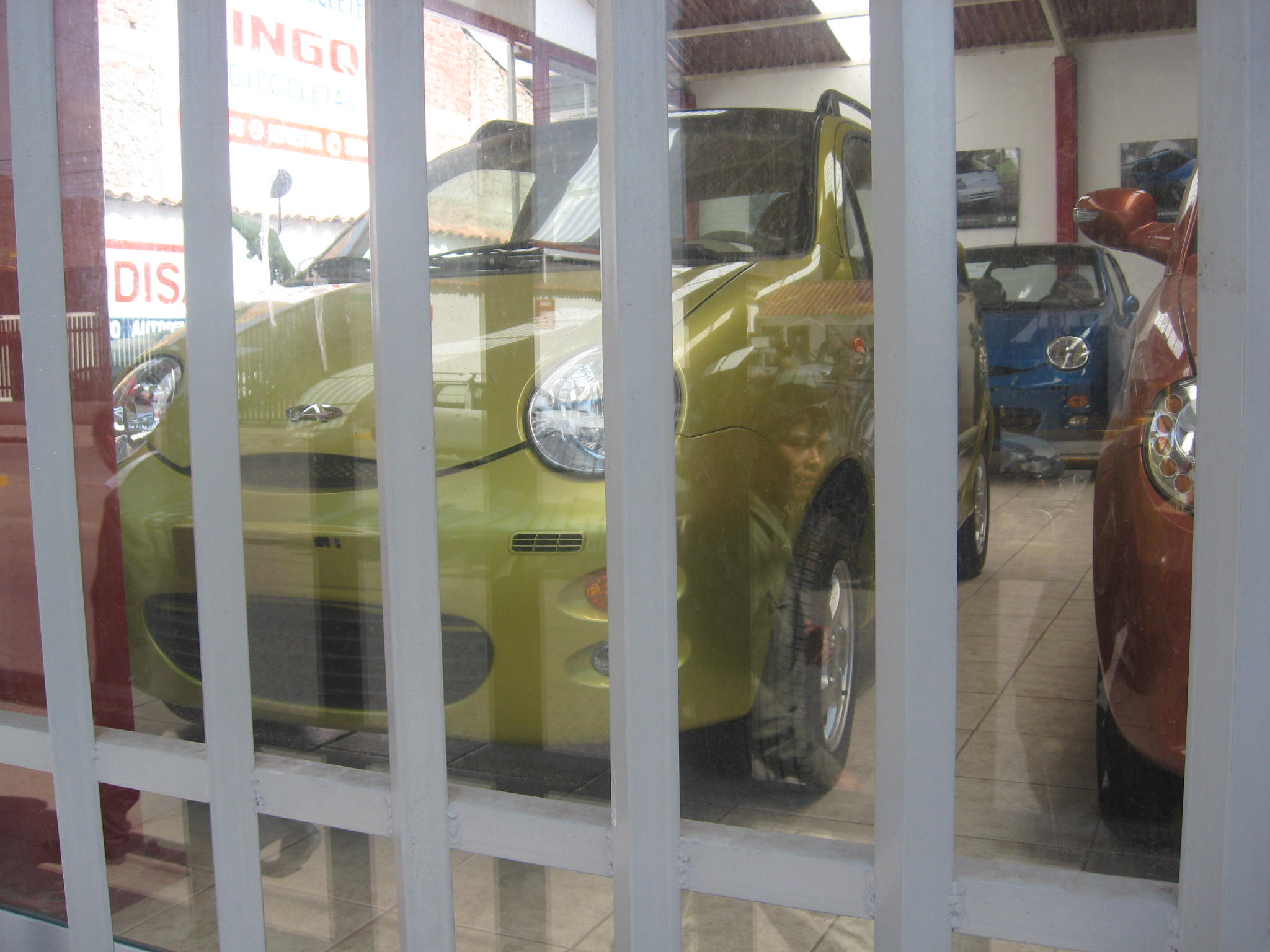
On my morning walk when I return from teaching at ICPNA I walk by a car dealership where you find brand new, made-in-China Chery cars. These are still a small minority here in Cusco, but you occasionally notice one of them as well as a few Indian Mahindra trucks. The majority of vehicles here are the popular Asian brands, the ever-present “Tico” and a few VW cars. I rarely see any US brands, save for the occasional antique landyacht.

I think the trouble at the “Big 3” US automakers reflects a corporate culture of staying in a comfort zone that I wrote about in a previous post. While the Latin American market isn’t very big by US standards, it is a developing market and the US manufacturers seem to have largely ignored it. On the other hand, US outsourcing has helped create the world’s manufacturing base in Asia – with which GM, Ford and Chrysler now have to compete.

Update: check out this great analysis of Detroit’s 20th century mistakes.

In addition to all of the discussion that is sure to follow about inefficiencies, quality, labor relations and product design, I believe US businesses in general need to rethink how to build a global presence in order to be successful. Don’t outsource your core business and if you do source overseas, build up good relations with your foreign partners and establish your brand there – if only in anticipation of future growth. The idea of cheap overseas labor without some valuable presence in the market where you buy the labor is an unsustainable illusion.

I don’t think the near-term options for the US auto manufacturers are very attractive, and a big wad of government cash won’t solve their predicament unless they also improve their business plans to resolve the underlying problems in their industry. In addition, I’m a bit skeptical that GM and the rest of the industry is waving the white flag just at a time when big government bailouts are the flavor of the day, and a president supported by organized labor was just elected.

Ward Welvaert

international business
turnaround consulting
aviation/airline consulting
CIS applications

New Chery cars at a Peruvian dealership

New Chery cars at a Peruvian dealership

New Chery cars at a Peruvian dealership

New Chery cars at a Peruvian dealership

Visit to Accha, Peru

We visited Patricia’s grandmother “mama Vicky” in Accha this week. Accha is a very traditional Peruvian town about 4 hours outside of Cusco.

We see “mama Vicky” regularly here in Cusco, but this was the first time I was over at her house in Accha. She gets around great for her age, and is obviously way more in her element in Accha than at her other house here in the city.

The trip to Accha is a bit of an adventure in itself, with the Peruvian bus drivers apparently unfazed by the steep ravine along the side of most of the unpaved roads that lead to Accha. Once there, Patricia and I had a good time just relaxing in the sun, taking walks, and generally acting like city-slickers do out in the country.

Accha is a traditional Peruvian agricultural town, where the locals mostly raise sheep and grow corn and other typical Andean crops. Most of the work is still done by hand, I only noticed 2 or 3 farm tractors in town and we rarely saw more than 3 or 4 cars in one day. The tranquility was absolutely refreshing compared to life in the city.

All the locals were very friendly and greeted us everywhere. Since gringos don’t get out to Accha very often, the little kids in town tended to stare at me and tell their buddies “mira un gringo!”

I uploaded more pictures on our Flickr page.

Patricia and "mama Vicky" in Accha, Peru

Patricia and mama Vicky in Accha, Peru

In Accha, Peru

In Accha, Peru

The end of supply-side economics?

I was reading the news stories the other day about the Boeing machinists strike and the potential sale of Chrysler. Interestingly both those companies are headed by former GE executives. My friends at the GE plant where I used to work are actually affected by the Boeing strike, not a fun prospect with the holiday season coming up.

Now working for GE was the best job I’ve ever had. The company still has a fixed pension plan, affordable health insurance, education benefits, etc. In the aircraft engines business we had world-class engineering, a very safe work place and generally a fantastic team of people.

However, I was never a big fan of GE’s corporate culture and I believe the current meltdown in stock markets, credit markets and housing prices has much to do with corporate America’s culture and beliefs. Jack Welch’s infamous idea of double-digit earnings growth is no different from the belief many real estate investors held in recent years of double-digit price increases. Those kinds of beliefs totally ignore the fact that money is just a funny printed paper bill, it has value only in how it facilitates the exchange of goods and services.

In my opinion the current crises show that globalization, outsourcing and supply-side economics in general have their limits. The banks and hedge funds who were leveraging their funds 30 times or so were in effect playing Federal Reserve, printing up their own money. Problem is, if you don’t offer some valuable goods or services, the money remains just a funny printed paper bill.

In terms of housing prices, the damage has already been done. Either prices have to return to historical levels or we have to experience steep wage inflation to bring the cost of owning a home back in line with personal incomes. We may be able to apply some bandaids such as 40 year mortgages, but at the end of the day we have to bite the bullet on this one.

As for Chrysler, Boeing or any other company trying to prepare for what will undoubtedly be a significant global slowdown the answers are easier. People’s quality of life isn’t determined by how much stuff they have. I make less in one week here in Peru than I used to make in a day at GE, but I’m just as happy if not happier. Hopefully CEOs like Bob Nardelli and Jim McNerney can wrap their minds around the idea that people’s quality of life is more important than earnings growth. You only have to look as far as companies like Honda or Southwest Airlines to realize that a company that offers good products/services and has a motivated workforce will do well in the long run.

Ward Welvaert

international business
turnaround consulting
aviation/airline consulting
CIS applications

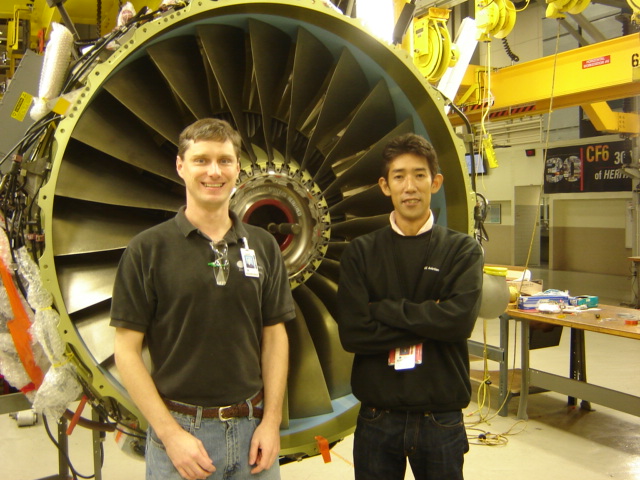
Me and my friend 'Bridge' at the GE jet engine shop in Durham, NC.

My friend 'Bridge' and I at the GE jet engine shop in Durham, NC.

Stories and traditions in Cusco – ICPNA AV2 writing exercise.

This is the writing exercise for AV2 9:05 at Icpna Cusco.

The Cusco area has a rich history with many great traditions, myths and legends. In the comments to this post, write a story about any of the legends or traditions in our area or Peru in general. This can be a well known story (e.g. origin of Cusco, Señor de Huanca, etc) or a story only you know (e.g. someone in your family who believes they saw a ghost). I especially like the less well known stories, the kind that a typical tourist would not hear about.

Make it interesting and entertaining. Above all, use your own words!!! Everyone in the class writes one story, but you get extra points for commenting on your classmates entries (or any other entries on this blog).

Ward

Procession of Señor de los Milagros

The annual procession of Señor de los Milagros was held on Oct. 12 in our neighborhood. Here in Peru, much of the month of October is devoted to Señor de los Milagros. It is believed that Señor de los Milagros protects the Peruvian people from dangers and fears. I found some great info on the legend of Señor de los Milagros at kleph.com and also at americaninlima.com and Peru food.

Here’s a picture of Señor de los Milagros passing through our neighborhood in Wanchaq and also in front of the Policia Nacional (PNP) at the plaza Tupac Amaru in Cusco.

Señor de los Milagros

Señor de los Milagros

Señor de los Milagros

Procession of Señor de los Milagros

Separation of church and state is less stringent here in Peru than in the US. At the police station, there was a brief ceremony asking Señor de los Milagros to protect the police officers while on duty, as it is believed he accompanies the faithful and protects them from harm.

Ward