GE releases 4Q earnings

GE, my former employer, released earnings this morning. As expected, it wasn’t pretty.
GE needs a radical new corporate culture

GE needs a radical new corporate culture

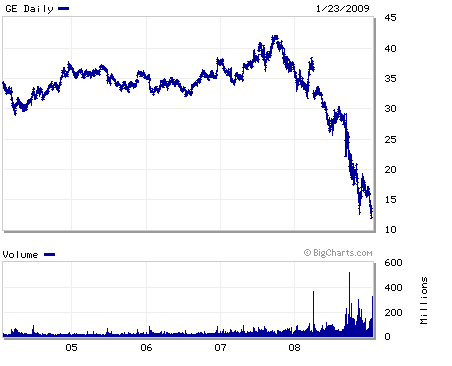
Many of my former collegues who have been at GE since the stock’s heyday of the late 1990s have a hard time understanding how GE stock has consistently lost value for nearly 10 years now while the company continues to post profits. Some of them still believe the stock will go back up like it did in the 1990s.

Now working at GE was very good to me. The company has great benefits, health care, tuition reimbursement, a fixed pension, etc. In the aircraft engines division we had a fantastic team of engineers and technicians, as well as a world-class work environment. It’s easy to understand how many of my former collegues, from inside the company, always believed in GE’s stock.

The trouble with GE is that the finance arm Jack Welch created to buy and sell companies at will, and thereby achieve his illusion of “managed earnings”, has now become a big headache. I’m no finance guy or economist, but check out a great analysis of GE’s creaky balance sheet here.

What to do if I were Jeff Immelt:

GE’s corporate culture needs a radical overhaul. GE’s culture is still focused on things like competitive advantage, doing more with less, earnings growth, and all those tired old 20th century concepts that simply won’t work in the 21st century. Only by having a culture that relentlessly drove an illusion of value did GE end up with north of half a trillion $ in debt.

Change in a large organization is not easy, but here are some ideas:

  • Do away with all the “fast track” management programs (HRLP, OMLP, etc.) These programs are indeed good mentoring tools, but the trouble is they have created an exclusive fraternity. In a company with over 300,000 employees, it doesn’t make sense to largely limit your innovation and opportunities to a select club of “golden boys/girls”.
  • Get rid of most internal metrics and focus on managing people and relationships. Many metrics are unreliable and drive no behavior, or drive unwanted 20th century type thinking.
  • Ditch “Six Sigma”. I’m sure when “Six Sigma” was introduced as a quality tool it had its benefits, but it’s no longer relevant today. I could come up with many reasons why, for one, it stifles innovation, but most importantly “Six Sigma” is a throwback to the old way of doing things, pervasive like a cancer in GE’s culture, and it needs to go. Have a big “Green Book” bonfire. Bring hot dogs and hamburgers and have a “Six Sigma cookout” for employee morale. I’ll take onions and BBQ sauce on my burger please 😉

There are plenty of other things I could think of, but the main idea is that GE was a standard-bearer of business in the 20th century, yet corporate culture of the late 20th century set the stage for today’s crises, and a radical overhaul is needed. You can read Umair Haque’s great thoughts on 21st century economics and why 20th century thinking won’t work any more.

Reality check:

As much as I believe in overhauling corporate culture, GE may also have to make structural changes to survive. If GE were forced to take the kind of write-downs on its financial portfolio that major banks have (and there’s no reason why that’s not a possibility) the company would be in big trouble. It may be inevitable to split the finance arm from the rest of the company.

Some more positive ideas going forward:

  • Spin of the traditional (non-finance) businesses in a successful IPO. Why should all the good people and great technology in the traditional businesses be burdened with the worry about a half a trillion $ debt load?
  • Buy Yahoo! and combine it with GE’s traditional businesses. That’s right, GE’s technology and media businesses would be great partners for Yahoo! – a technology/media company. And coupled with a new and better corporate culture, it would be a cool new place to work!

In the final analysis, you may think I’m naive, just plain wrong or have been drinking too much coca tea. But GE and the rest of corporate America already know how to do business in the 20th century, so if I’m wrong we can always return to the old way of doing things. But if we wait any longer to look forward, it may be too late in case the new reality is here to stay, as I believe it is.

NB: 5 year chart used above courtesy of marketwatch.
Micro enterprise in Cusco, Peru

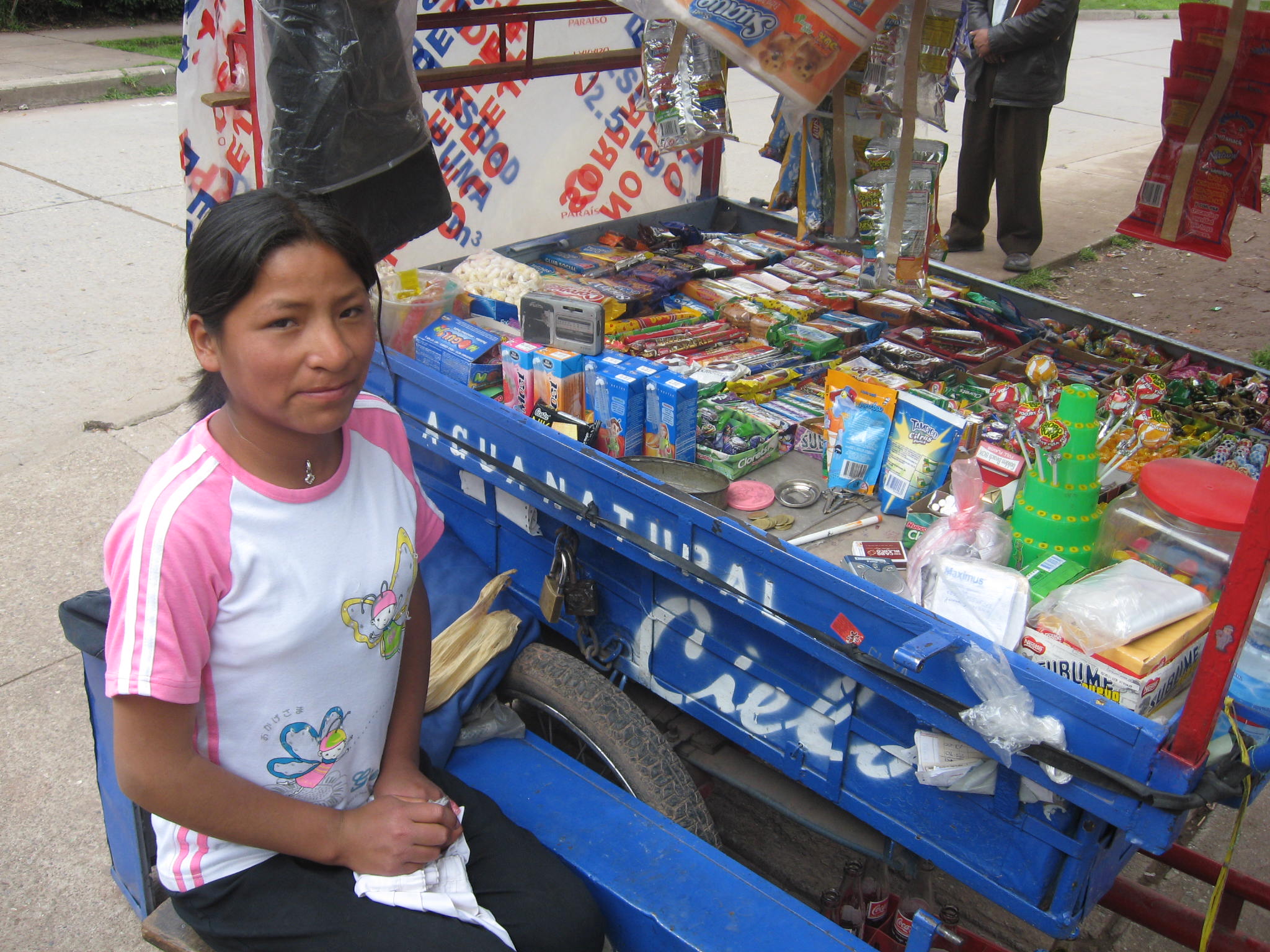
Micro enterprises are everywhere here in Cusco. On every busy street corner you find vendors selling snacks, ice cream, magazines, etc. The vendors typically use some type of converted bicycle as a vending stand, such as the one in this picture.

Typical micro enterprise in Cusco, Peru

Typical micro enterprise in Cusco, Peru

The girl in the picture is 13, she helps her mother about half a day, 6 days a week, taking care of her vending stand. I usually stop by to say hello and buy a piece of candy during my morning walk with Roxi and Manchita.

Ward Welvaert

Leader of the Year: Alan Garcia ???

I just stumbled across this article in Latin Business Chronicle:

“What a year it has been for Peru. It managed to post its best economic performance in 14 years (and Latin America’s second-highest growth rate), post another jump in foreign direct investments, achieve investment grade and host key regional summits with Asia and Europe…Much of the credit goes to Alan Garcia…”

My first thoughts were something like “Madre de Dios… Ayude me pues!!!”. Now I have often said life in Peru has been great to me and there are a lot of wonderful opportunities here, but I find it disappointing that both the media and political / business establishment in Peru often view “progress” strictly in macro-economic terms, levels of foreign investment, nr of free trade agreements, etc.

The unfortunate reality is that the macro-economic gains Peru has made in the last 2 decades have not improved the quality of life of all Peruvians proportionately, hence Alan Garcia’s (and before him Toledo’s) low approval ratings. In addition, in light of the collapse in commodities prices I wrote about earlier, anyone who believes Peru won’t be affected by the global recession is dreaming.

The good news, I agree with Umair Haque that “this is no mere recession: it’s a tectonic global shift in savings, consumption, and investment”. There has never been a better time than now to tackle some of the issues that will improve the quality of life for all Peruvians, such as economy in the provinces, environmental protections, occupational safety, corporate culture, cost of home ownership, etc.

Finally, one of the accomplishments touted by Alan Garcia was the free trade agreement (TLC) between Peru and China signed at the APEC summit. Here’s a wildly speculative, yet extremely intriguing question about what will happen to La Oroya now that the Chinese are coming?

La Oroya – putting the $ in perspective.

I just read this Reuters release on mining giant BHP Biliton:

“BHP Billiton Ltd/Plc (BLT.L) (BHP.AX) will cut 6,000 jobs and close its giant Ravensthorpe nickel mine in Australia, writing off $1.6 billion, as the global resources giant battles a collapse in commodity prices. …”

Much has been written about the environmental situation in the Peruvian town of La Oroya, since it was featured in an episode of CNN’s “Planet in Peril” a few weeks ago. This news release simply illustrates that the money involved to clean up, move or close the Doe Run smelter in La Oroya is just not that big an issue. Mining is a huge industry, and if BHP Biliton is willing to kiss $1.6 billion goodbye just because the economy is slowing, Doe Run and the Peruvian government darn well ought to pony up the money to fix, move or close the smelter at La Oroya.

Read an interesting comment about Doe Run’s history in the US at americaninlima.com.

Ward Welvaert

Another demonstration in Cusco

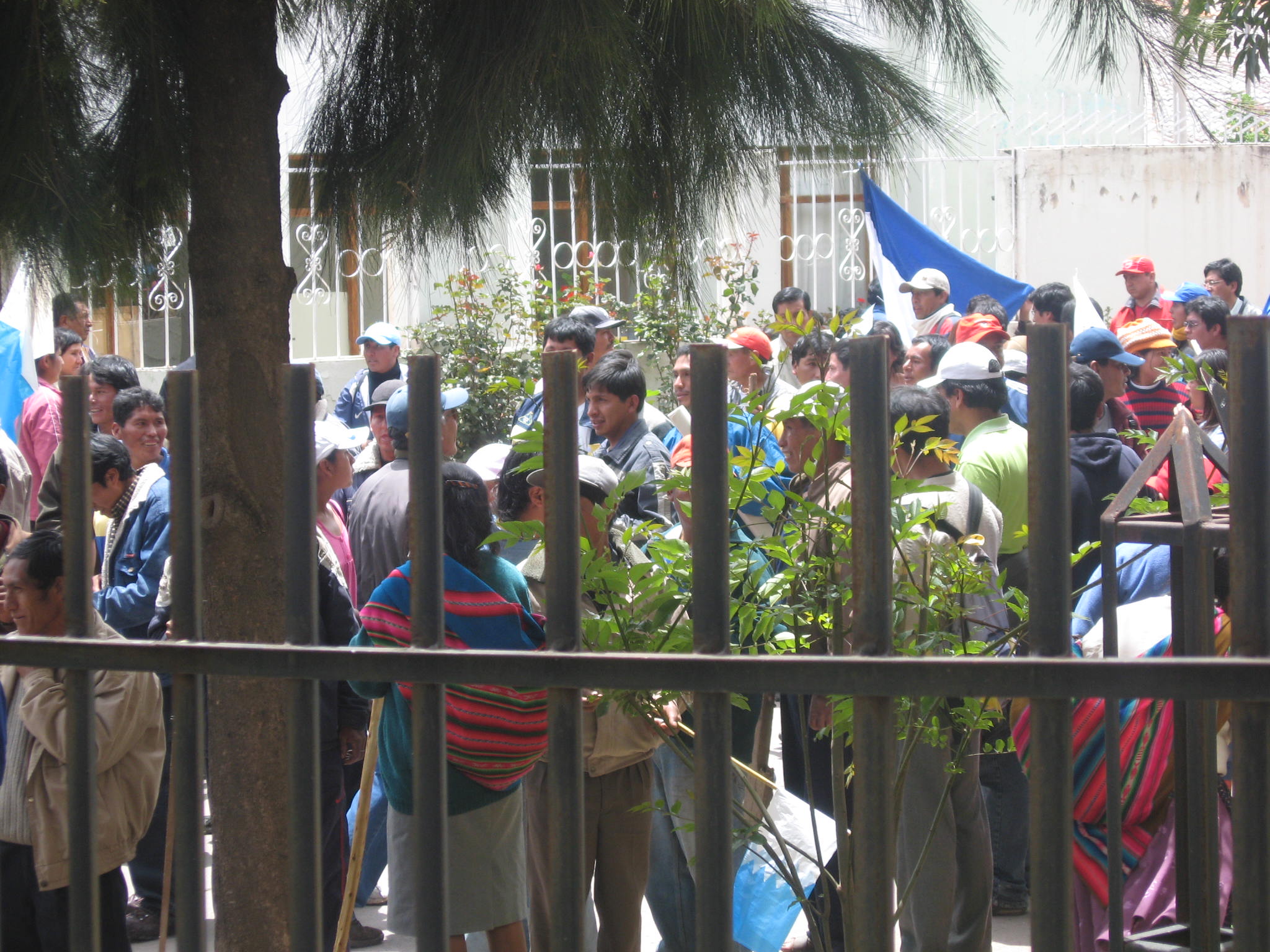
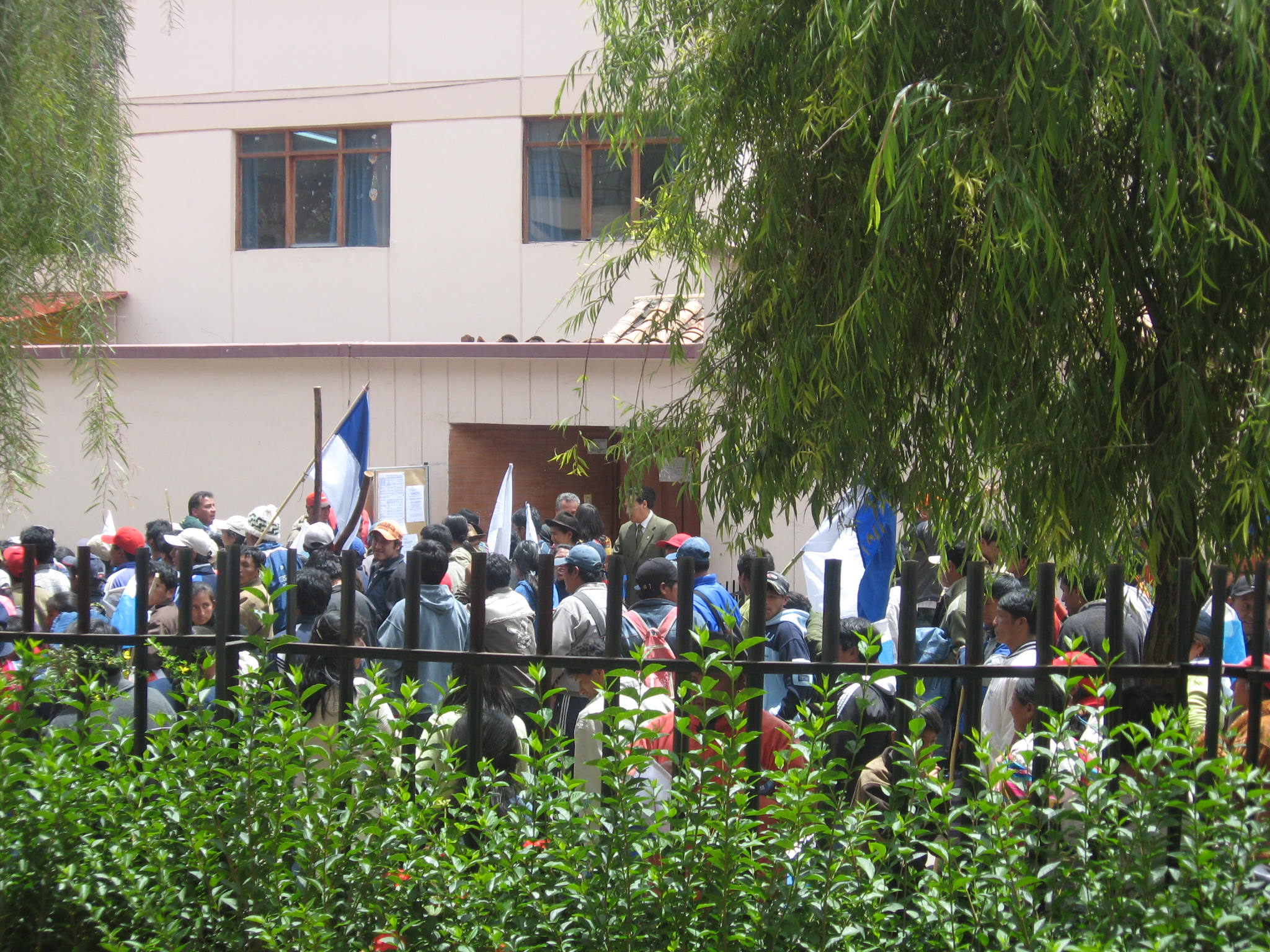
Since we live in front of the Ministery of Labor and around the corner from the Ministery of Agriculture we see occasional demonstrations and street protests in front of our house. I usually have a hard time understanding the slogans the protesters are shouting, but I believe this morning the issue was around zoning and land use.

Here in Peru there is only mild civil unrest, the demonstrations are usually mellow and good-natured. Typically the demonstrators are organized labor or indigenous peasants, while the current government in Peru is center-right. Not meaning to get into politics, I will say that in my observations there is a great disconnect between the middle class / establishment and the poorer / rural populations.

I usually don’t venture out too much while the crowds are in front of our house, since I obviously don’t fit in with either the crowd or the riot police who are 4ft outside of our house. The pictures were taken from our yard.

I’m happy to report that my humble presence here has not been the cause of any civil unrest ;).

21st century globalization – a perspective from Peru

With the start of the New Year there are lots of opinions and blog posts out there about how to deal with the global financial crisis and the economy today. I agree with Umair Haque that “… this year, those with the purpose, courage, and vision to get seriously radical will have the opportunity to reconceive and reinvent the global economy”.

What strikes me in all of the current discussion is how much corporate culture, and many of the solutions being proposed, continue to resemble the ideas and corporate culture of the 20th century – the same tired old ideas that caused the crisis in the first place.

One idea that needs to be revisited is globalization. The old way of globalization was to move labor-intensive work to developing economies to save costs and find less environmental restrictions, see the case of La Oroya here in Peru.

Here’s why and how globalization needs to be reinvented for the 21st century:

  • Relationships matter. Too often the old way of globalization was to “get the deal done” and then get the heck out of this backwards place. The economy is truly global today, the developing world expects to be treated as an equal partner, future growth will undoubtedly be in the developing world – it’s not too late to start building real relationships, but start now.
  • Contribute something. Just buying “cheap labor” is an unsustainable illusion, there has to be a balance, something of value added to the developing economies where you buy the labor. If not, the developing world ends up with a big pile of funny green printed paper and the developed world ends up with a ton of stuff we don’t need and a colossal credit crisis – newsflash: we’re there!
  • So what can the developed world contribute, how can you rebalance globalization? Let’s open-source globalization: share your know-how, human resources and intellectual property. The developing world still needs a lot of improvements, from occupational safety to environmental protections and employee development – things we are good at.
  • Forget about competitive advantage. My old bosses at GE would cringe… $30,000 on tuition reimbursement for business school and I dare say “forget about competitive advantage”? That’s right, globalization was all about gaining an advantage over organized labor, suppliers, etc. Problem is, for a sustainable enterprise you need a good workforce, reliable suppliers, distribution channels, etc. Trying to gain advantage over them is akin to destroying your own future.

There are a lot of opportunities in developing economies. Here in Peru, half of the population today is less than 26 years old and the country’s infrastructure is nowhere near ready for the economic growth that definitely will happen when these young people start their own lives and families.

In closing, consider the developing economies an equal partner. If you’re doing business overseas, you can contribute your ideas and expertise to the corporate culture there, as well as learn from your foreign partners. Globalization today should be about businesses in mature economies benefiting from a solid presence in the developing world while at the same time helping to improve the quality of life there.

Ward Welvaert

If you enjoy living in Latin America… Thank Ambassador Bob White.

Life in Peru has been good to me. I don’t regret for a minute leaving corporate America to spend time with Patricia here in Cusco. I’ve been able to travel, meet a lot of great people, learn a new culture and work on things I enjoy.

There are many sides to Peru and the country still faces a lot of difficult issues, such as poverty, corporate culture and environmental protections. That said, the country is safe, has a free and open society and a generally functional democracy. Today there are great opportunities in Peru, both in life and business.

Life in Peru hasn’t always been this good. In the decades of the Cold War most of Latin America was governed by ruthless dictators and torn by civil war. Basic human rights were violated by security forces, guerillas and paramilitaries alike.

I had the good fortune of meeting one man who dedicated his life and career to promoting human rights and a de-militarization of foreign policy in Latin America, Ambassador Bob White. I met Ambassador White at a conference on Cuba policy when I was in the air cargo business in Florida – thinking at the time at some point the US would normalize relations with Cuba and we could fly there.

It’s certainly not my place to tell Ambassador White’s story, but here are some links that are worth visiting:

The ambassador’s tale
Center for International Policy

During his work in foreign service, Ambassador White was one of the first to question US ties to Operation Condor and he worked tirelessly to bring to justice Salvadoran soldiers who murdered four American clergywomen in El Salvador in 1980. The women were killed only a day after being Ambassador White’s dinner guests at his residence.

Site where Northamerican churchwomen were dumped in El Salvador

Site where Northamerican churchwomen were dumped in El Salvador

Today half of Peru’s population is less than 26 years old and I am often surprised that many of them seem unaware or indifferent to Latin America’s recent history. I teach kids who have no bigger worry than getting a new cellphone or MP3 player. Yet were it not for people like Ambassador White who took a principled stand, life in Latin America today would not be what it is. While there is still a lot of work to be done, I am thankful Peru has great opportunities going forward.

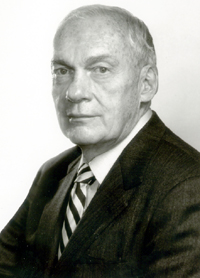
Ambassador Robert White

Ambassador Robert White

NB: Since 1990 Ambassador White has been President of the Center for International Policy, which advocates a responsible foreign policy and supports many Latin American causes.

NB: See the original photo used above on Flickr.

Ward Welvaert

Happy 2009!!! New Year’s Eve in Cusco, Peru

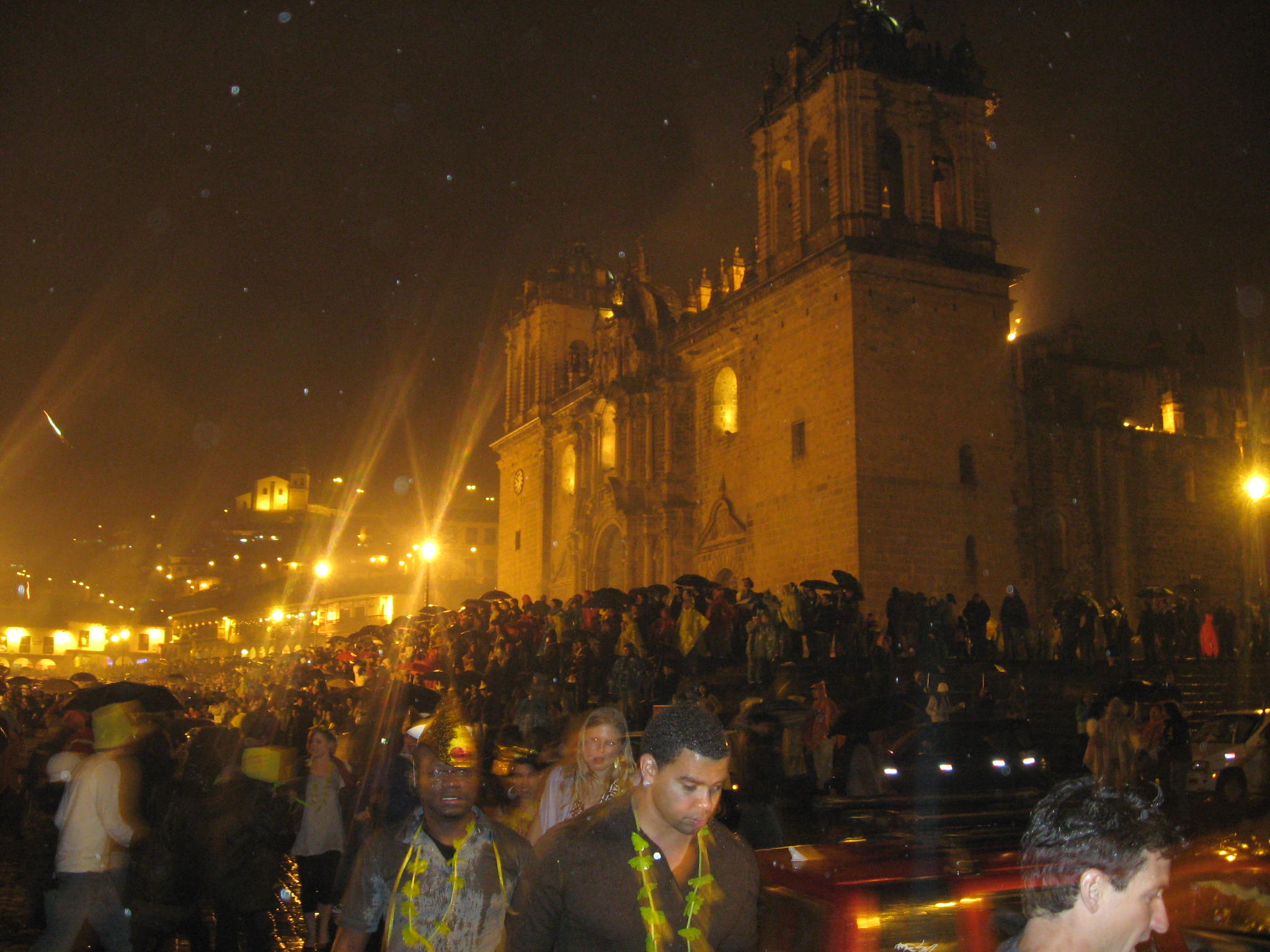
Feliz Año Neuvo! Last night we celebrated the New Year at the Plaza de Armas and a pub called Norton Rat’s here in Cusco. Old married folks like us don’t celebrate too hard, but we had a fun time anyway 😉

Here in Cusco thousands of people gather at the Plaza de Armas on New Year’s Eve. Exactly at midnight the famous Maria Angola bell on the Cusco Cathedral rings in the New Year, and the crowd circles the Plaza de Armas, which is supposed to bring good travels for the next year.

The famous Maria Angola bell on the Cusco Cathedral rings in the New Year

The famous Maria Angola bell on the Cusco Cathedral rings in the New Year

New Year’s in Peru is all about YELLOW. Yellow hats, yellow leis and most of all… yellow underwear! That’s right, one of the traditional beliefs in Peru is that wearing yellow on New Year’s Eve brings good luck for the New Year.

Some of the Peruvian New Year’s traditions I’ve seen so far are:

  • Eating 12 grapes at midnight for good luck.
  • Putting some coins in the corners of the house for good fortune.
  • Wearing yellow underwear!

Fireworks are sold legally all over the city, so New Year’s Eve in Cusco is not for the faint of heart. Since we are now well into rain season, it was also raining all night, which didn’t really spoil the fun.

New Years Eve at the Plaza de Armas in Cusco, Peru

New Years Eve at the Plaza de Armas in Cusco, Peru

Inside Norton Rats on New Years Eve

Inside Norton Rats on New Years Eve

Manchita decided to drink her 12 grapes at midnight - JUST KIDDING!!!

Manchita decided to drink her 12 grapes at midnight - JUST KIDDING!!!

Despite the rain we had lots of fun.

Happy 2009 to all!!!
Feliz Año Neuvo!!!
Gelukkig Nieuwjaar!!!

Christmas in Peru

This year was my second Christmas in Peru. Like in the US and Europe Christmas here in Peru is a time for family and celebrating the birth of Christ Jesus. Of course Christmas in Peru also means food, gifts, fireworks and watching “Home Alone” 1, 2 and 3 for the 23rd time.

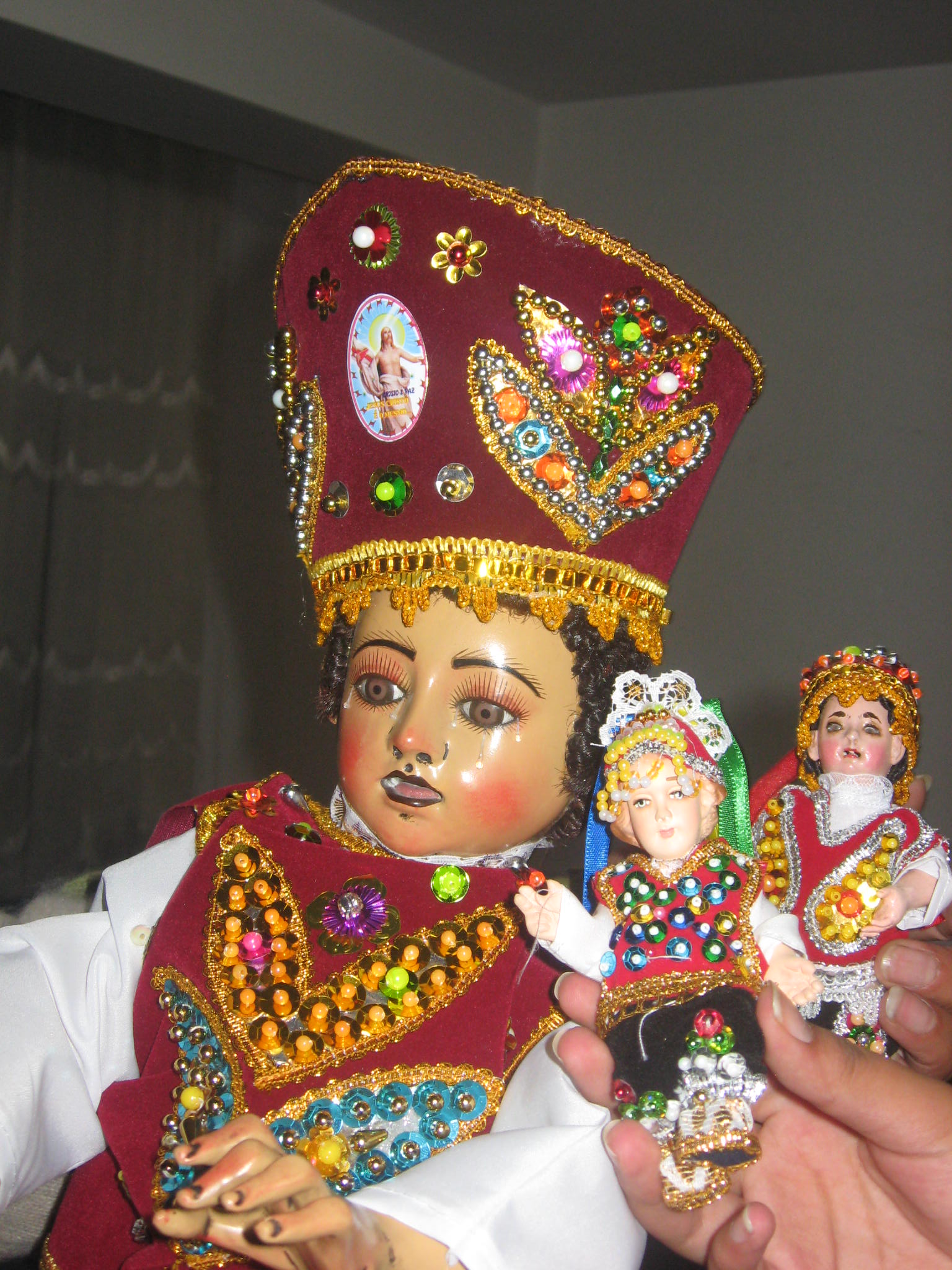
One interesting aspect of celebrating Christmas in Peru is how the traditional Andean religion and culture has blended with Christianity. For example, church altars are often adorned in gold (a throwback to the Inca’s time) and a very typical Peruvian “baby Jesus” figure is used in nativity scenes.

Typical Peruvian baby Jesus figures, Niños

Typical Peruvian 'baby Jesus' figures, known as 'Niños'.

Peruvians celebrate Christmas eve (“la Noche Buena”) with a dinner, followed by an exchange of gifts and fireworks at midnight. The traditional Christmas meal is turkey, and in the weeks leading up to Christmas the typical treat is hot chocolate with a sweet bread called “Panettone”.

I’ve noticed a lot of “Santa” images and figures, but Peruvian Santas don’t seem to follow the US tradition of putting gifts under the tree at night – gifts are simply exchanged between family and friends on Christmas eve. Unlike in the US, Christmas shopping in Peru is typically done only in the last week or even last few days before Christmas.

Last minute Christmas shopping at the Plaza de Armas in Cusco, Peru.

Last minute Christmas shopping at the Plaza de Armas in Cusco, Peru.

Overall we had a great Christmas, wishing everyone all the best.

Ward Welvaert

My first earthquake

A few days ago we had a tiny earthquake (temblor) here in Cusco. To be honest I didn’t believe it was an earthquake until I heard mention of it on the radio the next day.

Peru is prone to earthquakes. The last major earthquake in Cusco was in 1950, I found some great photos of the 1950 Cusco earthquake on Amazilia Alba’s blog.

One of my favorite lines of the Led Zeppelin song “Going to California”:

“The mountains and the canyons start to tremble and shake
The children of the sun begin to wake”

I use this song often when I teach ESL at ICPNA. I ask the students to figure out which part of the lyrics could be about Peru. The reference to earthquakes is obvious, and the Incas used to worship the sun. Typically my students do pick up on the idea that “children of the sun” could refer to Peruvians.

Of course, you can interpret most Led Zeppelin songs any way you like, that’s part of the beauty of it. On the ICPNA teacher’s blog I wrote about how I use the song in teaching.