GianMarco 15 Años

Watched the entire “GianMarco 15 Años” movie on the bus to Lima today, a great show taped in Lima’s Estadio Monumental in 2005.

Thanks to the wonders of YouTube, we can share a good bit here. Watch the whole thing, it is well worth it.

Around 4:20 it gets really, really good. He stops for a moment and says:

“Peru is the most beautiful place, we must take care of it”

I don’t like Miraflores

Other than the Plaza de Armas and historic downtown Lima, Miraflores is probably the best known district of Lima, and the district most visited by tourists. I’m staying in Miraflores at the moment, have stayed here several times before, but I have to admit I don’t really like Miraflores.

To be fair, Miraflores has it’s charm. It’s a beautiful seaside location, home of Parque del Amor, the Malecon verde, Larcomar, etc. In the center of Miraflores is Parque Kennedy, where you always find a mixture of arts, entertainment, restaurants and shopping.

Miraflores is also a center of business and location of the main offices for many companies – which is why I’m staying here at the moment. Miraflores is decidedly more western or cosmopolitan than most other areas of Lima and Peru.

Parque Kennedy in Miraflores, Peru

Parque Kennedy in Miraflores, Peru

So what’s not to like? It just seems like Miraflores, being the center of business and a big tourist destination, has lost some of the things I like the most about Peru. The warmth and friendliness of the people, the laidback way of life that I’ve come to expect in Peru has been lost somewhat in Miraflores to the hustle and bustle of life in the big city.

The main tourist areas around Parque Kennedy and Larcomar are also quite sleazy at night. As a middle-age white guy (the worst demographic, but that’s another story), walking around Parque Kennedy by myself I constantly get hustled for sex and drugs. Just of Parque Kennedy is so-called Pizza Alley, a little street full of pizza restaurants, bars and discos, all more sleazy than Parque Kennedy itself. Before I ever moved to Peru, a Peruvian friend of mine told me if you really want to enjoy the nightlife in Lima, go to places like Barranco or Lince instead of Miraflores and Larcomar.

There are also many beggars and homeless people in downtown Miraflores, but not really in a way that you would empathize with. That’s not to be inconsiderate, I’ve seen many poor people in different settings from Honduras to Peru to the train stations in Europe, and the truth is that places like Parque Kennedy (or the Plaza de Armas in Cusco) just seem to attract people who hustle more than someone who just happens to be down on their luck.

I’m not saying you can’t go to Miraflores and have a good time, just that you’ll be paying extra not to see what the rest of Peru really is like.

Rant over. I’m walking down the street now to have chicken wings at Hooters in Larcomar 🙂

11-11

Armistice in Europe 1918. 9 million reasons to remember Nov 11, not counting the civilian deaths.

Here’s an excerpt from Wikipedia:

More than 9 million combatants were killed, due largely to great technological advances in firepower without corresponding ones in mobility. It was the second deadliest conflict in history.
… Of the 60 million European soldiers who were mobilized from 1914–1918, 8 million were killed, 7 million were permanently disabled, and 15 million were seriously injured. Germany lost 15.1% of its active male population, Austria–Hungary lost 17.1%, and France lost 10.5%. About 750,000 German civilians died from starvation caused by the British blockade during the war. By the end of the war, famine had killed approximately 100,000 people in Lebanon. The best estimates of the death toll from the Russian famine of 1921 run from 5 million to 10 million people. By 1922, there were between 4.5 million and 7 million homeless children in Russia as a result of nearly a decade of devastation from World War I, the Russian Civil War, and the subsequent famine of 1920–1922.

9 million combatants killed in roughly 4 years, that’s about equivalent to the population of Lima.

9 million reasons to delete those chain emails about the greatness and nobility of war.

Today is not a day for politics, but what worries me at times is that in high school our history teacher argued that the 20th century didn’t start until after World War One ended, that the war was in many respects the result of out-dated thinking between the powers of Europe. Similarly, you could argue that corporate and political culture in the world’s capitals today is still stuck in 20th century thinking.

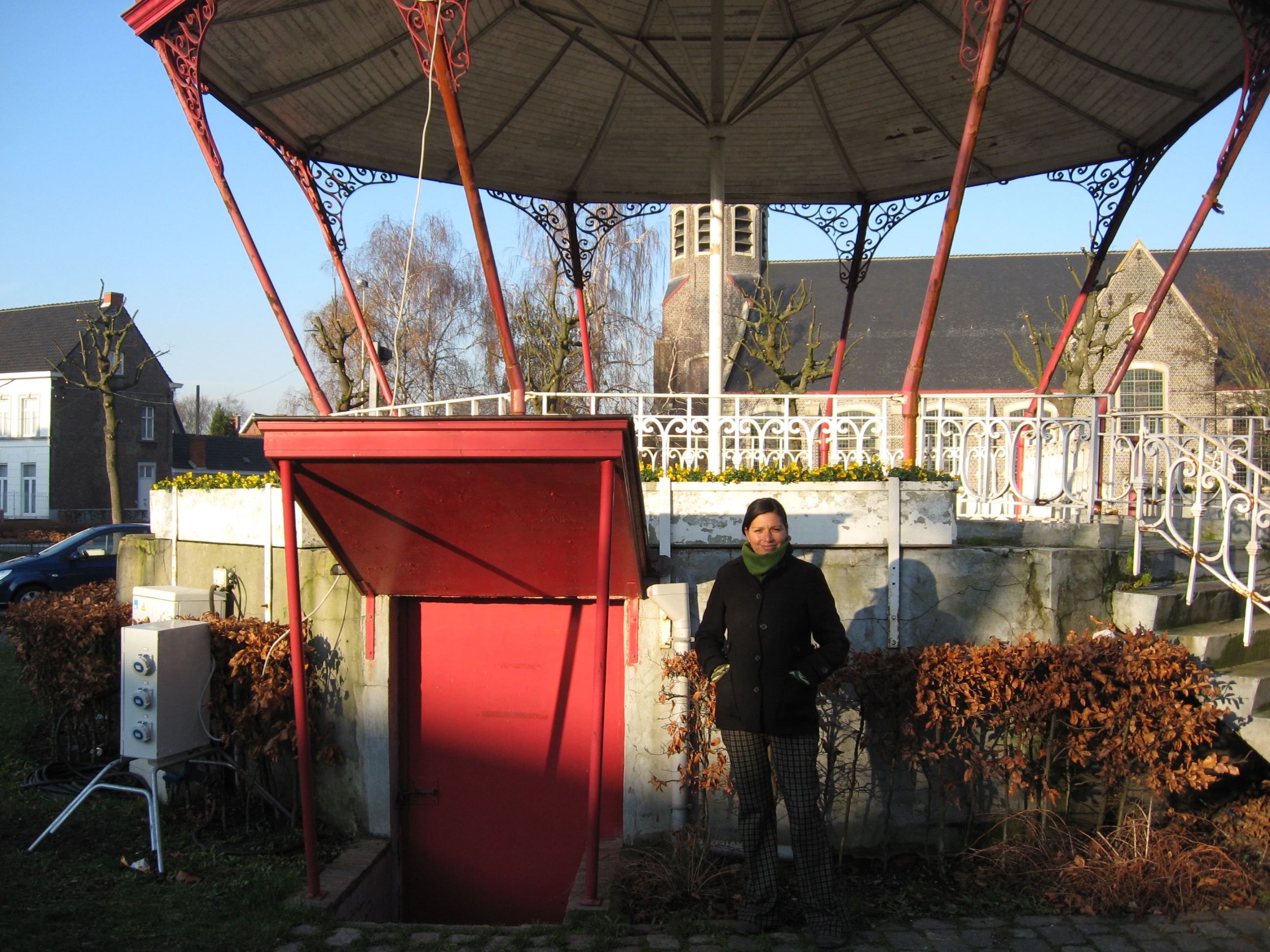
A bombshelter in Oostakker, Belgium

Patricia standing by a bombshelter in my hometown in Belgium, I believe this is a World War 2 bunker.

Cooking in Peru

Much has been written about the many great foods of Peru, but let me give you some insight in the process of cooking, how that great yummie food ends up on our table.

Now my experiences are not representative of all of Peru. There is a world of difference between the elite in Miraflores who have beautiful grocery stores, cooks and maids, and the rural population who live of the land and cook on a fogon. I can only speak from my own experiences living in a middle-class area of Cusco.

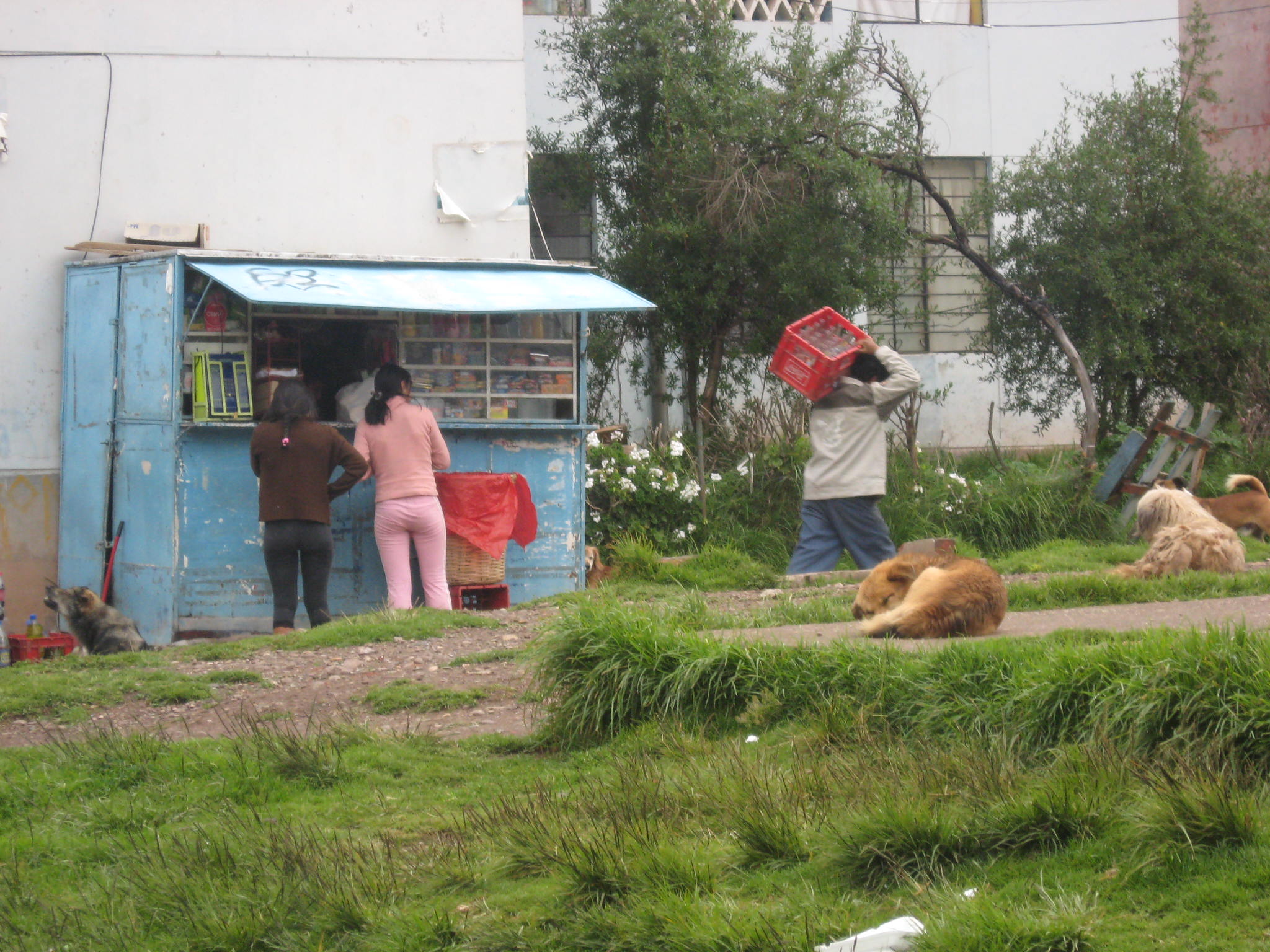
What you need to know in order to grasp the concept of cooking in our neighborhood, is that there are many small stores and very few larger stores in Cusco. In our complex, there must be 6 or 8 of these 1-man or 1-woman stores, like the one in the picture below. Each store is about the size of a big pantry and serves maybe 2 or 3 apartment blocks.

One of the little stores in our neighborhood

One of the little stores in our neighborhood

Just for contrast, a little bit of background about the process of cooking in the other cultures I’ve lived in:

Cooking in Belgium:

Belgian people are super-efficient, in an old-fashioned, hard-working, German kind of way. In addition, for many in the graying population, the Depression and World War 2 are only a generation away, so their comfort level is to stock up a ton of food in their pantries, freezers, etc.

In my house, this is how we used to cook:

(1) Dad peels potatos — God knows Belgians eat a lot of potatos.
(2) Mom gets meat and vegetables out of pantry / fridge / freezer.
(3) 20 minutes later everyone’s at the table eating and another 20 minutes later the dishes are done.

Cooking in the US:

In the US people do everything big, not just in Texas. Twice a week I used to stop at the grocery store on the way back from work and spend $100 or more on groceries. I’d eat as much red meat in a week as I do now in 2 months. Seriously.

(1) Drive home, fire up the grill.
(2) Open bag of salad and put baking potato in Microwave.
(3) 15 minutes later dinner is ready.

Cooking in Peru:

Let’s take a typical weekday, lunch is the big meal. The cooking is usually done by mamacita or my suegra.

12:15 – Hey, it’s time to start cooking.

12:17 – I’m going to Señora Maria’s store. (see above).

12:22 – At the store, there are three or four other ladies from the neighborhood. Everyone talks, and talks for a while.

12:47 – I’m back from the store. Time to cut the vegetables.

12:57 – Holy guacamole, you realize you forgot to buy onions.

12:59 – You go back to Señora Maria’s store only to find out it is now closed, Señora Maria is also cooking. No problem, you go to another “store” 200 yards away.

13:05 – The lady at the other store has the new Avon / Esika / L’Ebel / Leonisa or whatever catalogue, so you check it out.

13:24 – Walking back to the house with your 2 cebollas, you run into your friend from “collegio” and talk for awhile.

13:48 – Back at the house you chop up the vegetables and potatos and throw them into the trusty pressure cooker along with some noodles. Soup will be ready soon.

13:50 – Don’t forget the rice. I think Peruvians eat more rice than Belgians eat potatos.

14:02 – Time to set the table.

14:04 – Yell at your ayudante (in our case, my sister in law). Helen, Heeeleen, Heeeeleeen.

14:12 – Tell Helen to go to “the store” and buy something to drink. Helen and my suegra then argue about what kind of soda to buy and how much money to spend.

14:15 – Food for the wawa (baby) is ready. Papi feeds the wawa.

14:26 – Table is set, Helen came back with soda, soup is served.

14:35 – “Segundo” or the main course is served.

15:50 – Table is cleaned and dishes are done.

Until tomorrow, then we do it all over again 🙂

I have to work 10% harder this year

The man who destroyed my previous employer (or at least he spearheaded the destruction) invented this illusion of 10% earnings growth every year. That kind of corporate BS is NOT what I’m talking about here. In my case, it’s a plain and simple truth: if I want to have about equal income every year that I’m in Peru, I have to work a good bit harder every year.

The reason is that most of my work as a contract pilot or consultant is paid in US dollars, but my groceries are paid in Peruvian Nuevos Soles.

And here’s how the US dollar has been fairing against the Nuevo Sol this year:

US$ vs Peruvian Nuevo Sol - 1 year chart

US$ vs Peruvian Nuevo Sol - 1 year chart

And 5 years:

US$ vs Peruvian Nuevo Sol - 5 year chart

US$ vs Peruvian Nuevo Sol - 5 year chart

View charts at XE.com.

Here’s an article about Peru’s central bank as well as the central banks of other so-called developing economies taking measures to prevent their currencies from rising too much:

And here are Peru’s foreign currency reserves over the past 10 years, standing at around $40 billion at this moment. Chart shamelessly robbed from IKN:

Peru foreign currency reserves

Peru foreign currency reserves

Now foreign currency rate swings are nothing new and I am not predicting the demise of the US dollar or the end of the world here. But it should come as no surprise that consistent near-zero interest rates and monetary easing (printing money) in the US will erode its currency’s value.

When I was a young boy in the early 1980s and Belgium developed large budget deficits and high unemployment, I could not understand why the government just didn’t put all the unemployed people to work printing more money, kill 2 birds with 1 stone.

No matter what the guys in stuffed suits tell you, how they saved the world and you owe them eternal gratitude all that, the fact remains that some future generation in the US (mostly) will have to deliver $40 billion of goods and services to future generations of Peruvians.

Mario Vargas Llosa wins Nobel Prize in literature

Peruvian novelist Mario Vargas Llosa won the 2010 Nobel Prize in Literature today. The first South American to be awarded the honor since 1982.

“The Peruvian writer Mario Vargas Llosa, whose deeply political work vividly examines the perils of power and corruption in Latin America, won the 2010 Nobel Prize in Literature on Thursday.”

Read the full story at the New York Times and most other major news outlets.

This is a great honor for Vargas Llosa and I hope it will spark some interest in reading and literature in Peru, where average Peruvians in my observation read very little.

Mario Vargas Llosa

Mario Vargas Llosa

Foto (c) Sara Krulwich, The New York Times

Peru elections 2010 – ley seca

Yesterday Peru held local / municipal elections. I don’t follow politics very closely but the local elections seem to be quite important because in the provinces outside Lima the local government seems to be more relevant than the central government back in Lima.

Here are the official 2010 Peru election results.

What amazed me about the elections is that the entire country was “dry” by ley seca. No alcohol was sold in the country during the entire election weekend.

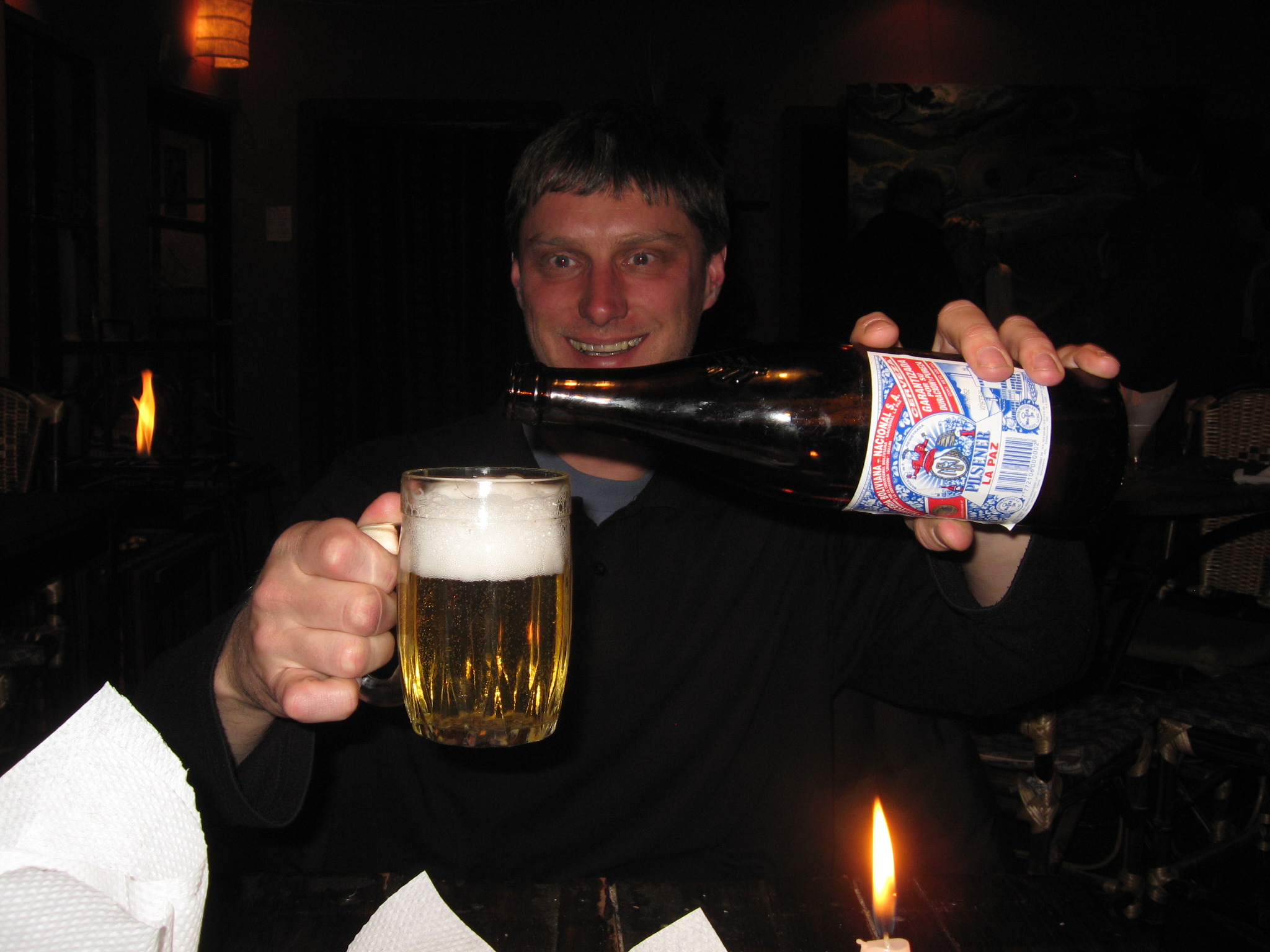
Papi votes in Belgica, so no ley seca for papi! Mamacita went to a birthday party Saturday evening where I believe the ley seca might have been enforced a weee bit loosely as well 😉

no ley seca here!

no ley seca here!

Salud!

Forget 2012 – watch the ice on Ausangate

I shamelessly robbed this picture of my friends FB page, just gorgeous:

Nevado Ausangate

Nevado Ausangate near Cusco, Peru

Picture copyright Jorge Vera.

The picture’s caption:

“…ice is fast disappearing. Local people cite ancient legend that when all the ice is gone from Apu Ausangate, the world as we know it will end and a new one will be born.”

Eerrgghhh, if Hollywood can’t get the end of the world correct, surely Facebook can, right 😉

All kidding aside, the indigenous Peruvian people do worship the “apu” or deity in the many mountain peaks of the Andes. “Nevado Ausangate” or “Apu Ausangate” is a magnificent mountain peak in the Southern Andes of Peru. It is the site of the annual Señor de Qoyllur Rit’i pilgrimage which has origins in Andean culture long before Christianity.

From The Sacred Land film project:

“Today, the indigenous Q’eros community of Quechua people revere the mountains of the Cordillera Vilcanota, believing that they are divinities to be protected. The apu’s servant cat Ccoa holds court in the belly of Ausangate in a palace that only great shamans dare to visit. The glaciers on Ausangate are where the spirits of the dead wait for salvation.”

More info about “apus” from Apus-Peru:

“In the Quechua language of the Andes, “Apu” refers to the spirit of each mountain which is not unlike a god. In every snow capped peak, to smaller hills, there is an Apu. Each Apu is different, with individual characteristics and personalities. They have in common that from them emerge the life giving waters of springs, lakes and rivers, as well as the forests and creatures that dwell in them. Like gods, the Apus possess the power of giving and taking life. Andean people look first to their local Apus and then to Mother Earth when they are undertaking a pilgrimage or enterprise.”

Willie Colon detained in Peru

This is a few days old, and just wild.

“After a successful concert in Lima, the veteran Puerto Rican salsa musician, born in New York, was intercepted on Saturday by Fiscal Police agents, on orders by attorney Lucila Cabrera, an expert in intellectual property crime.”

He’s accused of having plagiarized a song he recorded in 1974. Read the full story at Andina.

Can you say hypocrisy?

Here in Peru intellectual property rights are virtually non-existent. I’d venture to say in Cusco, a city of about 300,000 people, you CANNOT BUY ANY LEGAL CDs or DVDs. There is no store that I know of that sells the real thing. You can buy pirated CDs and DVDs for S/.2 – S/.4 (~$1) all day long.

The Willie Colon story is reminiscent of the controversy around Paul Simon’s “El Condor Pasa (If I Could)”, except that this was settled on friendly terms.

Cusco’s barbed wire obsession

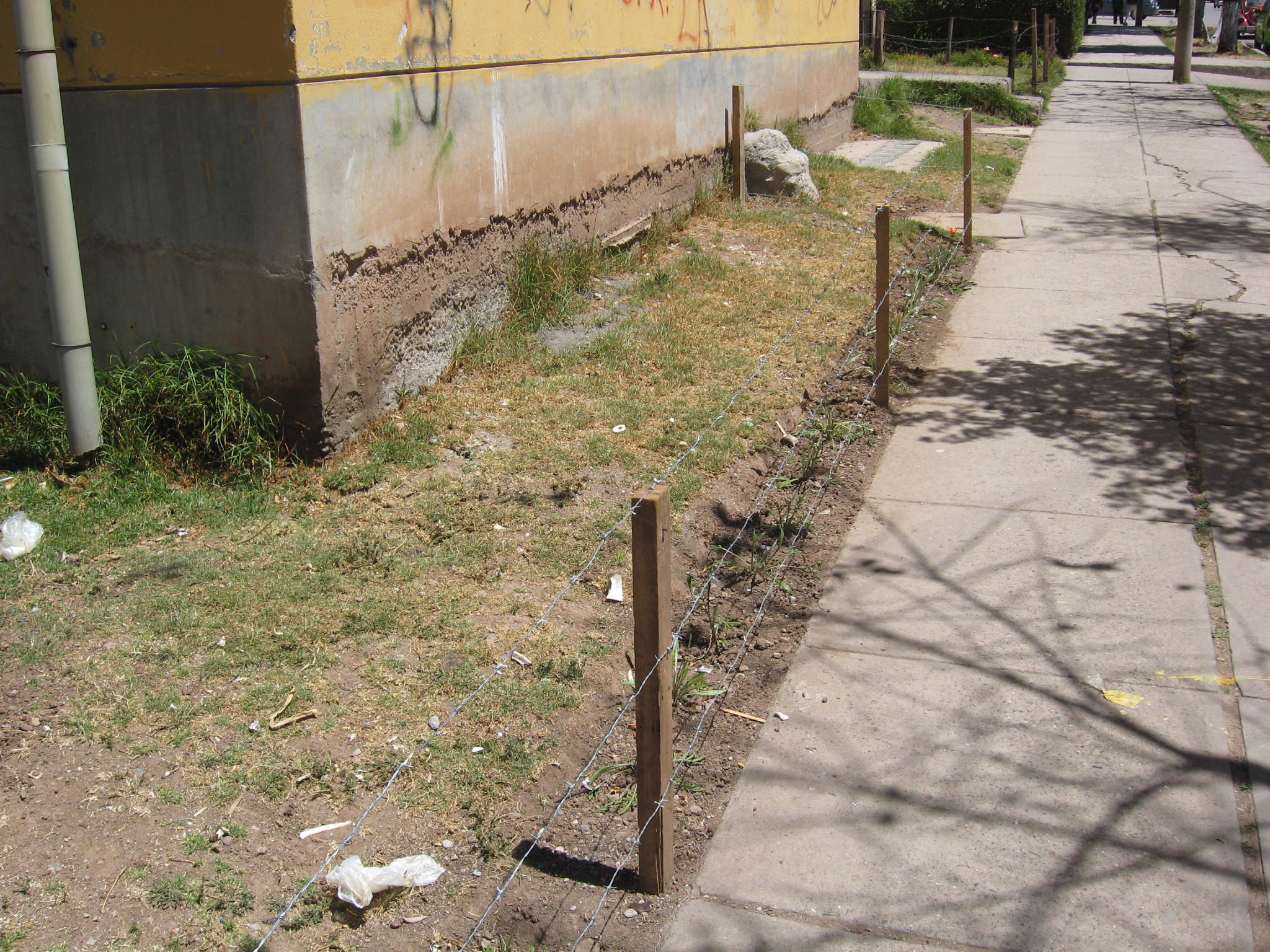
I thought barbed wire was for prisons and farms, but here in Cusco people have different ideas. Barbed wire is everywhere. Take a look…

barbed wire in Cusco

barbed wire

more useless barbed wire

I could take a hundred pictures like this within 2 blocks of our apartment. We live in the heart of the city, yet you see barbed wire everywhere, wrapped around fences, flower beds, gardens, etc.

At first I thought all the barbed wire in the city was a by-product of the huge migrations to the cities in Peru since the 1960s, with people bringing a lifestyle from the country to the city, but you frankly don’t see much barbed wire in the countryside in Peru. Most of the animals are herded and the lands are treated somewhat as community property.

So what gives, why is there so much useless barbed wire everywhere? I say “useless” because every last piece of barbed wire you see in the city is jerry-rigged in the poorest possible fashion, and none of it would even appear to keep any person or animal in or out.

Was there a big recall on Chinese barbed wire that someone down here got a good deal on? Or is it simply the middle-class in the cities paranoia about crime?

There’s definitely a fair amount of petty crime in the cities, but this barbed wire won’t stop any of that. If the powers-that-be were really interested in fighting petty crime, they could simply shut down the black markets where all the stolen goods are sold, like “Paraiso” and “Baratillo” in the Santiago district of Cusco.

At the end of the day, the barbed wire doesn’t stand out too badly because most of it is wrapped around regular hedges and fences where you won’t notice unless you’re looking, but when you have a baby who’s just starting to walk and grab everything, it’s certainly a nuisance. In fact, one time when we were at an elementary school in a small town, a young girl of about 9 or 10 who was playing a blindfold game ran into a barbed wire fence. That’s right, a barbed-wire fence, around a flowerbed, in a school !!!

I still have a 10″ scar on my left leg from running into a barbed wire in my hometown when I was about 8 or 10, so dumbassery certainly isn’t limited to Cusco, but I found the only piece of barbed wire in my town and ran into it… over here, it’s everywhere.