Back in Cuzco… and still raining.

This blog’s been awful quiet for the past month or so because I was on trip “up North”. I was gone for just over a month and was hoping that rainseason in Cuzco would have begun to fade away by the time I got back, but no such luck. I’ve been back in Cuzco since Sunday and we’ve had rain every single day since then. No worries though, another month or so and rainseason should be history. After that the forecast is 70 degrees (20C) and sunny through November.

Speaking of weather, I had some interesting weather on my trip. First I spent a few days in Lima which has hot beach-going weather during the Southern hemisphere summer. Then I was off to Quebec City, where there was about 2 feet of snow on the ground and I saw 3 snowstorms in 10 days:

Quebec City in winter

Quebec City in winter

After Quebec City I headed North to Iqaluit in Nunavut, Northern Canada. Temperatures in Iqaluit were about -27C (-17F) during the day with even colder wind chills. I admire the local Inuit who live there. (Inuits are the native population of the Artic regions, we used to call them “eskimo”, but I think that’s a bad word now)

Frozen Frobisher Bay

Frozen Frobisher Bay

After Iqaluit the temperature got about 10 degrees warmer every day for the next 3 days of my trip. First I flew out of Iqaluit to Greenland:

Preheating the airplane in Greenland

Preheating the airplane in Greenland

Compared to Iqaluit, the -16C (3F) temperatures in Sondre Stromfjord (Greenland) actually felt mild! Then I flew over to the East Coast of Greenland where the forecast 15 MPH winds turned out to be 35 MPH gusting to 50 MPH by the time of my arrival, so I diverted to Reykjavic (Iceland), which was supposed to be my next stop anyway. The next morning I took off amid snow showers in Reykjavic, but when I arrived in Egilsstadir on the East coast of Iceland, the weather was just beautiful:
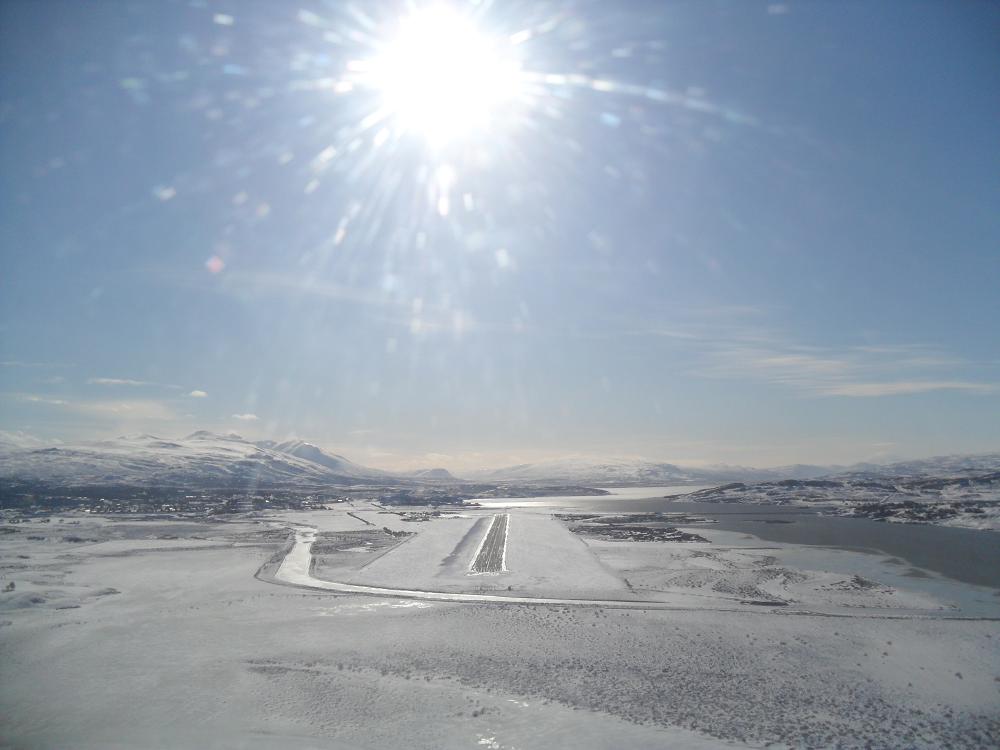
Landing at Egilsstadir, Iceland (BIEG)

Landing at Egilsstadir, Iceland (BIEG)

Finally on to London. I landed in London in rain and low ceilings, but the next day it was sunny and mild, an unusually beautiful day for mid-March:

A beautiful day in London

A beautiful day in London

In case you’re wondering about the reason for the trip: one of the things I do occasionally to stay gainfully employed is to deliver airplanes. Small, personal or business type airplanes. Typically someone buys an airplane in the US and needs it delivered to Europe or another area of the world. I take an airline flight out of Lima to the US to pick up the airplane, deliver it where ever the final destination may be, then take another airline flight back. For most trips I can be back “home” in Cuzco in about 2 weeks, but on this last trip I ran into some delays and was gone about a month.

Read more about the fun and adventure on my flying blog. 😉

Cortesia

Not many popular artists come to perform in Cusco. A lot of well known acts come to Lima, but rarely to Cusco. This past week was an exception: the popular Venezuelan duo “Chino y Nacho” came to Peru. You may never have heard of “Chino y Nacho” up North, but they have a number of hits and are very popular here in South America. Here they are performing one of their recent hits, “Mi Niña Bonita”:

(sorry, I noticed after I posted this that their videos are only on youtube directly)

I had to leave town for a work trip just a few days before “Chino y Nacho” came to Cusco but I decided to buy 2 tickets anyway, so Patricia could go with her sister or a friend.

My cousin Monica:

One thing I should mention is that it is still common to have large families in Peru and a generation or two ago, large families were the norm in Peru. Patricia has a big family on both her mother and father’s side. Like in most families, we’re closer to some family members than others. Likewise, it’s not unusual here in Peru to be close to someone who’s technically a distant relative.

Monica is one of Patricia’s cousins, 17 or 18 years old I think. We’d probably refer to Monica as “distant family”, I’m not sure if Patricia had even met her up to a few years ago. We’re not close but I occasionally run into Monica in town and we were always very friendly and cordial.

A few days before the concert I decided to stop by “Mega”, the big store near our house, and buy 2 tickets to “Chino y Nacho”. As I was walking up to “Mega”, I spotted Monica out in front of the store. She was dressed very nice to attract attention and had a stash of “Chino y Nacho” flyers in her hand. With her was a boy selling tickets. Nothing unusual, you often see young women dressed nice or flashy to attract attention and sell or promote something in front of a store. We talked for a while and I bought my 2 tickets to “Chino y Nacho” from my cousin Monica and her friend.

Normally I would never buy something like that in the street in Peru. There’s a huge “informal economy” in Peru, street vendors sell anything from ice cream and candy to books, arts, crafts, pirated DVDs, you name it. Something like tickets I would normally never buy in the street, because there’s a lot of fake or pirated stuff out there. I even asked Monica, “These aren’t “bamba”, are they?” (bamba=fake). But I bought her tickets anyway, you know, she’s my cousin…

I gave the tickets to Patricia and instead of being happy she was mad at first, because she didn’t want to go to the show without me 😦

Then I left for my trip to Lima and the US and all was well. However, a day before the concert Patricia called all excited and asked how much I paid for the tickets. I told her the story, all proud and happy that I had bought the tickets from her cousin who had sold me two S/.65 tickets for S/.60 a piece.


“Noooooooooooo!!!”

“You paid S/.60 for free tickets!!!!”

As usual, Patricia was right: the tickets say cortesia (courtesy) right on them. There’s no price printed on them. They are free tickets. I should have known…

Turns out Monica was working as event staff at the concert and somehow “obtained” a stash of free tickets, which she subsequently sold to unsuspecting fools like me. Probably most people were smarter than me (not difficult to do), noticed that they were free tickets and “bought” them at a significant discount. It wouldn’t be unusual for someone to get a few free tickets and sell them at half the value of a paid entrance, but S/.60 for S/.65 tickets??? To your own cousin!!!!

Oh well, live and learn. There is so much “bamba”, pirated or otherwise useless stuff in the “informal economy” in Peru. Never buy tickets in the street in Peru, not even from your own cousin 😉

Featured: Don’t land in the Pisco!

I finally got my Peruvian pilot’s license a few weeks ago. I’d worked off and on over the past 6 months to convert my licenses. Didn’t have time or money to work on my license full-time, that’s why it took so long. Plus everything had to happen in Lima… that’s one of the bad things about Peru, when you live in the provinces you have to go to Lima for practically any significant government issue.

Anyway, here’s a teaser from my flying blog about taking the flight test for my Peruvian pilot’s license:

Coming back to the checkride, as we were doing maneuvers just north of the “Rio Pisco”, about 10 miles north of the Pisco airport, the DGAC examiner cuts the engine. All 105 mighty horses in the Cessna 152 decided to quit on me at the very same instant.
We were at 3,500 feet at the time. I looked to Pisco airport in the distance and realized I couldn’t make the airport. I told the examiner I’d land on some green fields I spotted nearby.

For all the excitement go read “Don’t land in the pisco!” Since you’re reading this, you already know it all ended well 😉

Wendy Sulca: Peruvian teenage pop/folklore starlet

I hardly watch TV, but recently it seems like every time a TV is turned on in the room, there’s some show or feature with Wendy Sulca.

Wendy Sulca was a Peruvian child singer who became popular on YouTube and Peruvian TV shows. Now she’s becoming a bit of a teen starlet.

Wendy Sulca is typically introduced as “niña de folklore” and she signs traditional Huayno music, but in my opinion she’s really a pop/folklore crossover. Here she’s singing a Spanish version of Madonna’s “Like a Virgin”.

Wendy Sulca’s most recent hit is “In Tus Tierras Bailare” (in your lands I will dance), where she sings together with La Tigresa del Oriente (The Tigress of the East), and Delfín Hasta el Fin. Alma Guillermoprieto wrote an interesting review of “In Tus Tierras Bailare”.

Some people make fun of her childish voice (according to Wikipedia she’s only 14), but I like her posture and composure on stage, she’s very engaging with the crowd or camera.

According to Wikipedia, Wendy Sulca was born in San Juan de Miraflores, a poor area of Lima. In the official video of her popular song “La Tetita” you see her in the traditional folkloric dress in small towns in the Peruvian countryside, but life in San Juan de Miraflores is nothing like that.

Ticos are dying

The Tico is a small car that was produced by Daewoo. In the 1990s, thousands were imported to Peru, mostly for use as taxis. I don’t think Ticos would be street legal in the US or Western Europe (although I have seen some in Poland), but here in Cusco the fact that they are so small and maneuverable actually made them quite handy.

When I first visited Peru in 2005, it seemed like 80% of the taxis in Cusco were Ticos. You see many of them in other parts of Peru as well, but I think Cusco was like the Mecca of Ticos, because the narrow city streets were perfect for the Tico. In Lima you see some Ticos, but when you’re on a major highway like the Via Expressa, riding in a Tico is pretty scary.

Considering that most Ticos are used as taxis and circle the potholed streets of Cusco 12 or 14 hours a day, it’s quite surprising that they have lasted this long. However, the Ticos are really showing their age now.

Tico has seen better days

This Tico has seen better days

Most Ticos are not quite in as bad a shape this one that I saw parked along the Panamericana highway, but when I’m hailing a taxi I now often pass up a Tico to wait for a better car…

In the years since I’ve been visiting Peru, Ticos are noticeably becoming a smaller part of the taxi fleet, with more and more new cars taking their place – mostly Toyota, Suzuki, some European brands as well as the Chinese brands such as Chery and Jac.

Egypt

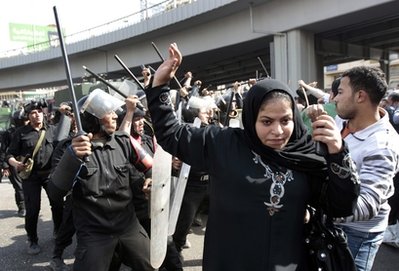
Occasionally I get sidetracked into something totally unrelated to life in Peru, like the current news about violence and government crackdown in Egypt.

Here’s a bit of information from Congressional Research Service about US economic and military aid to Egypt:

Since 1979, Egypt has been the second largest recipient, after Israel, of U.S. foreign assistance. In FY2009, Egypt was the fifth largest aid recipient behind Israel, Afghanistan, Pakistan, and Iraq respectively. In the last decade, overall U.S. assistance to Egypt has declined from $2.1 billion in FY1998 to $1.6 billion in FY2009 owing to a gradual reduction in economic aid. In July 2007, the Bush Administration signed a 10-year Memorandum of Understanding (MOU) with Israel to increase U.S. military assistance from $2.4 billion in FY2008 to over $3 billion by 2018. Egypt received no corresponding increase in U.S. military aid; instead, the Bush Administration pledged to continue to provide Egypt with $1.3 billion in military aid annually, the same amount it has received annually since 1987.

And for illustration:

APTOPIX Mideast Egypt Protest

Your tax dollars at work... (c) AP

Here’s what I’m thinking:

  • Sort of strange how we found it necessary to bring democracy to places like Iraq and Afghanistan but you never hear many calls for democracy in places like Egypt, Kuwait, or Saudi Arabia.
  • All that military assistance ($1.3 billion in military aid annually) is reminiscent of the 1970s fiasco when we provided F-14s – then the biggest and baddest weapon around – to the flimsy regime of the Shah in Iran, only to later regret it. Lesson learned? Didn’t think so.

All this is very similar to the US involvement in Latin America during the so called Cold War. Regimes that were aligned with Washington received all sorts of military and economic assistance. Oppressive regimes just pulled the “communist” card whenever they encountered any sort of opposition, and in swooped Washington to fight for freedom and democracy. Or was it bananas we were fighting for?

Here’s a comment from Ambassador Bob White about US involvement in Central America during the so called Cold War:

In 1981, the Reagan administration erroneously attributed revolutions in Central America to the Soviet Union and Cuba; “What we are facing in Central America,” said then Secretary of State Alexander Haig, “is a straight case of external aggression, nothing more, nothing less.” This of course was utter nonsense. If there was one thing we were not facing in Central America, it was foreign aggression. The rebellions in the region were home-grown and authentic, popular uprisings against the heaped- up injustices of decades. There would have been uprisings in these countries whether the Soviet Union and Cuba existed or not.

We have a gazillion dollar “intelligence” budget. Your tax dollars go to reports on Alan Garcia’s emotional and physical health and people who check out your *ss every time you board an airplane, but at the end of the day the US intelligence community is clueless. They’re just a bunch of people stuck in the same old ideologies, they will always arrive at the expected conclusion. The US intelligence community didn’t foresee Egypt any more than they did the fall of the Shah in Iran.

Still believe you live in the “Land of the Free” up there?

Mean Fat Pituca

NOTE: here in Peru the word “pituco” or “pituca” is used to describe arrogant or snobbish people who flaunt their money or status.

Just this morning I was walking along Av. Aramburu in Lima, going to Av. Arequipa to catch my combi. Aramburu is the dividing line between the wealthy financial district of San Isidro and the less affluent district of Surquillo. At the busy intersection between Aramburu and the “Via Expressa”, you may find the occasional panhandlers or homeless people, as well as streetvendors selling anything from pirated movies to anticuchos.

As I was walking past the “Via Expressa” bridge, one homeless lady in the street was holding out her hand. Right in front of me a snobbish-looking middle-age fat woman reached into her pocket, pulled out a crumpled up piece of paper, and with an angry snarl she threw this piece of paper right at the poor woman’s face.

I wanted to yell at the fat pituca b*tch, but I didn’t. Maybe I didn’t feel like making a scene, maybe I didn’t want to be a hero, or maybe I was just in a hurry. I’m not sure why, but I just shook my head and kept walking.

I understand the wealthy and middle class in Lima may feel insecure or infringed on by the poor, I really do. There’s a lot of wealth in places like Miraflores and San Isidro, surrounded by a lot of poverty in places like Callao or San Juan de Miraflores. And it’s not just money, also the way of life, the history, the massive migrations to Lima, and of course crime, that have created some degree of tension and social discrimination.

I don’t know the answers, but there was just no reason for that.

Pisco in pictures

I had a chance to visit the town of Pisco a few times recently. Pisco is about a 4-5 hour busride south of Lima, and best known as the namesake of the famous Pisco Sour drink (more on that later).

I’m not a great photographer, but here are some random pictures of my visit to Pisco (click on the pictures to enlarge):

A street leading to the main square in Pisco, Peru

A street leading to the main square in Pisco, Peru

Plaza de Armas, or main square, in Pisco, Peru

Plaza de Armas, or main square, in Pisco, Peru

The church on the main square in the town of Pisco, Peru

The church on the main square in the town of Pisco, Peru

You can see some construction going on next to the church. The town of Pisco was hit by a serious earthquake in 2007. It was hard for me to tell exactly what’s ongoing reconstruction from the earthquake versus some of the typical half-finished buildings you see in Peru, but there is still obvious earthquake damage in the area.

I think most of the economy in Pisco consists of growing grapes for the “Pisco” drink and fishing. Pisco also has a shared civilian/military airport, a relatively large seaport and some oil and gas installations. You can see the oceangoing ships in the background.

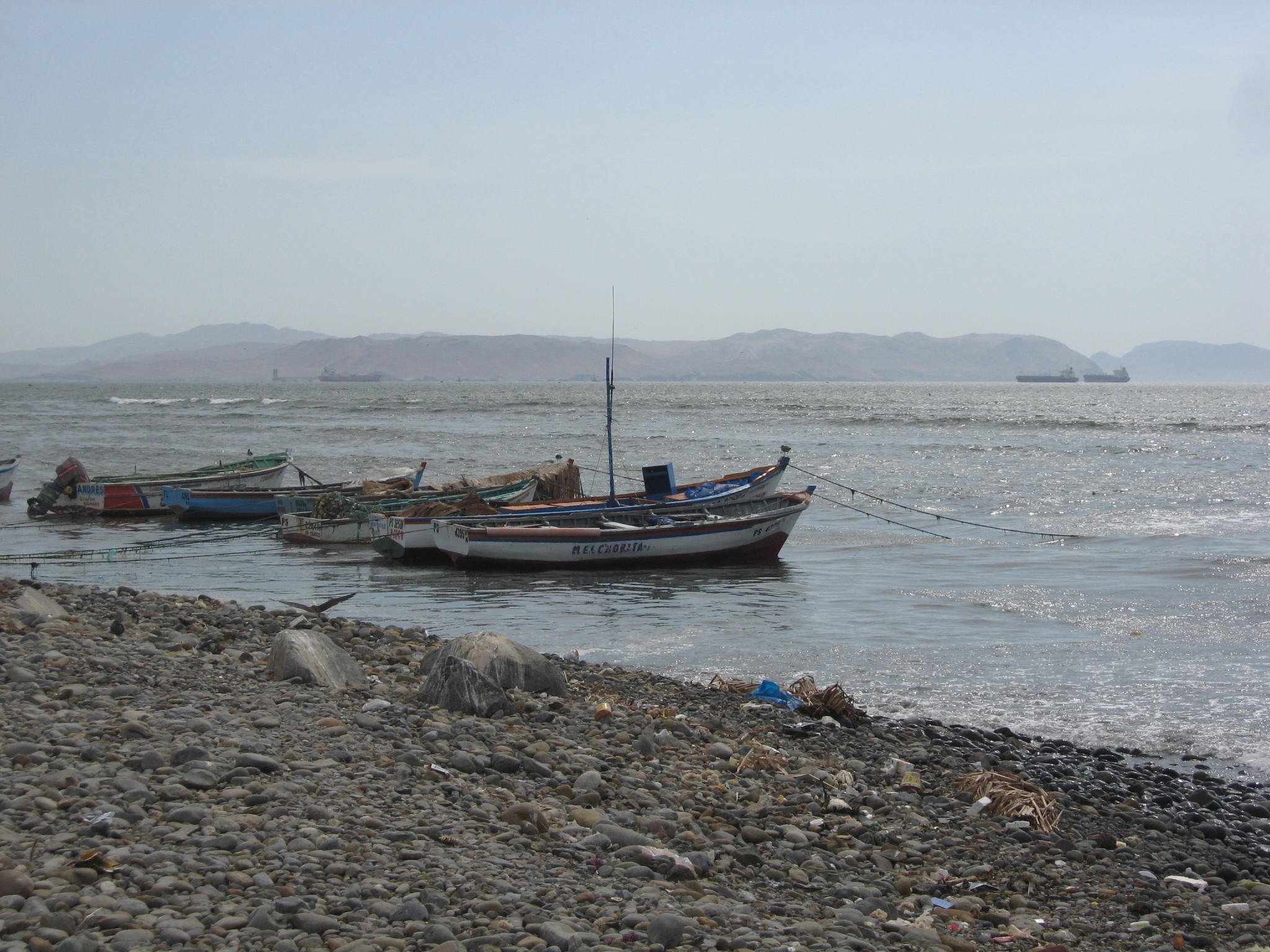
Small fishing boats in San Andres

Small fishing boats in San Andres

I stayed in the small village of San Andres, on the Pacific coast about 5 minutes from Pisco. San Andres is a very quiet seaside town, but a few tourists do come through there to get to the Pisco airport for scenic flights over the famous Nazca lines.

The seaside village of San Andres, near Pisco, Peru

The seaside village of San Andres, near Pisco, Peru

Birds on the beach in San Andres

Birds on the beach in San Andres

The beach in San Andres, near Pisco, Peru

The beach in San Andres, near Pisco, Peru

Near Pisco you also find the Paracas National Reserve and the Ballestas islands, where I was told you can find really beautiful beaches and a resort-style hotel, but I didn’t have time to go there.

In San Andres I stayed at the hostal “La Jalapa”, which is a very quiet and pretty hostal just at the edge of the town. It has nicely kept green areas, a pool and restaurant. I paid the silly rate of S/.30 per night and was very happy.

Hostal La Jalapa in San Andres, Peru

Hostal La Jalapa in San Andres, Peru

Peru’s desert coast

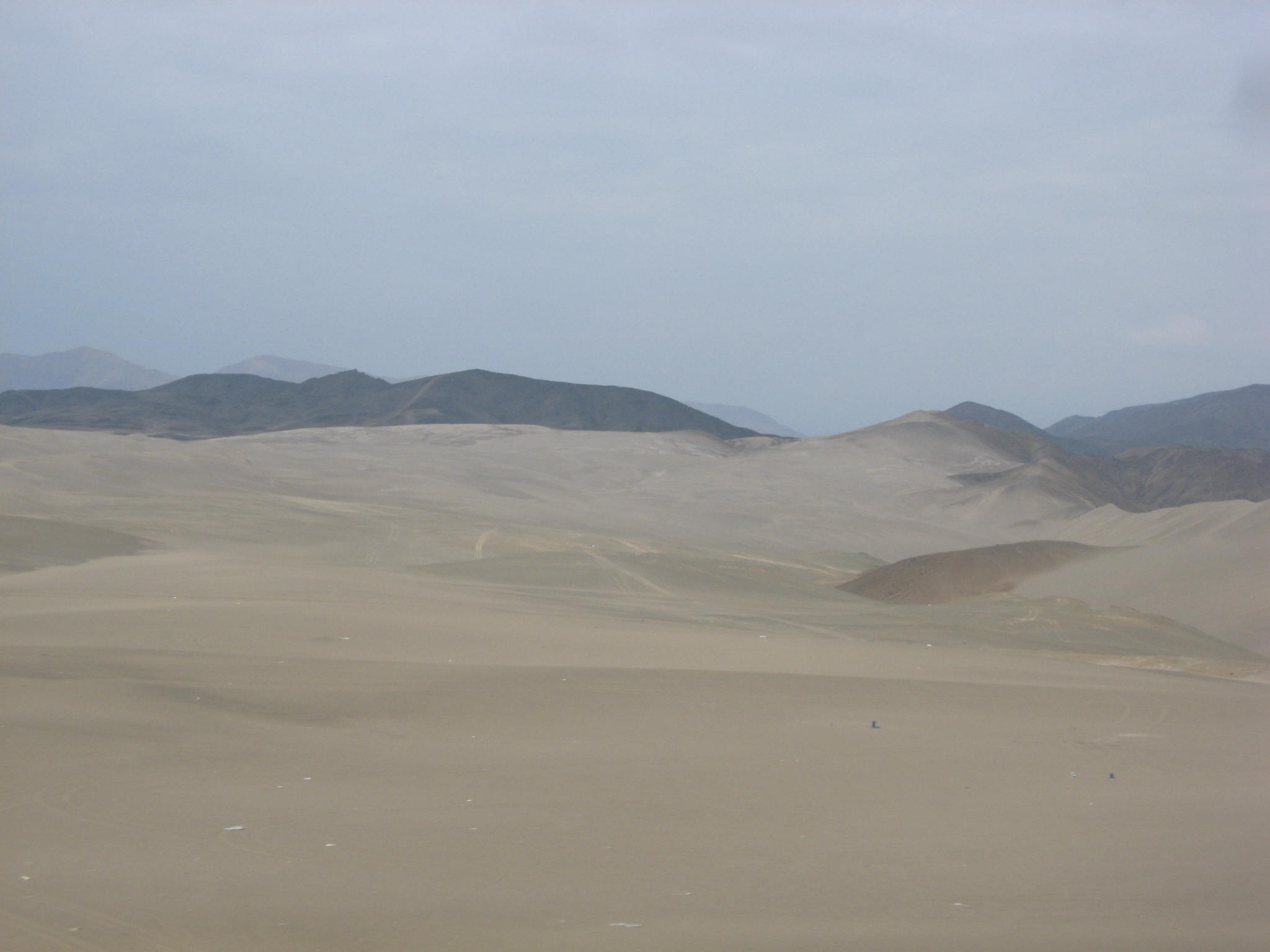
The Peruvian coast is known for great surf, Ceviche and beautiful seaside resorts such as Mancora and Huanchaco. However, less well known is that most of the Peruvian coastal area is actually a desert.

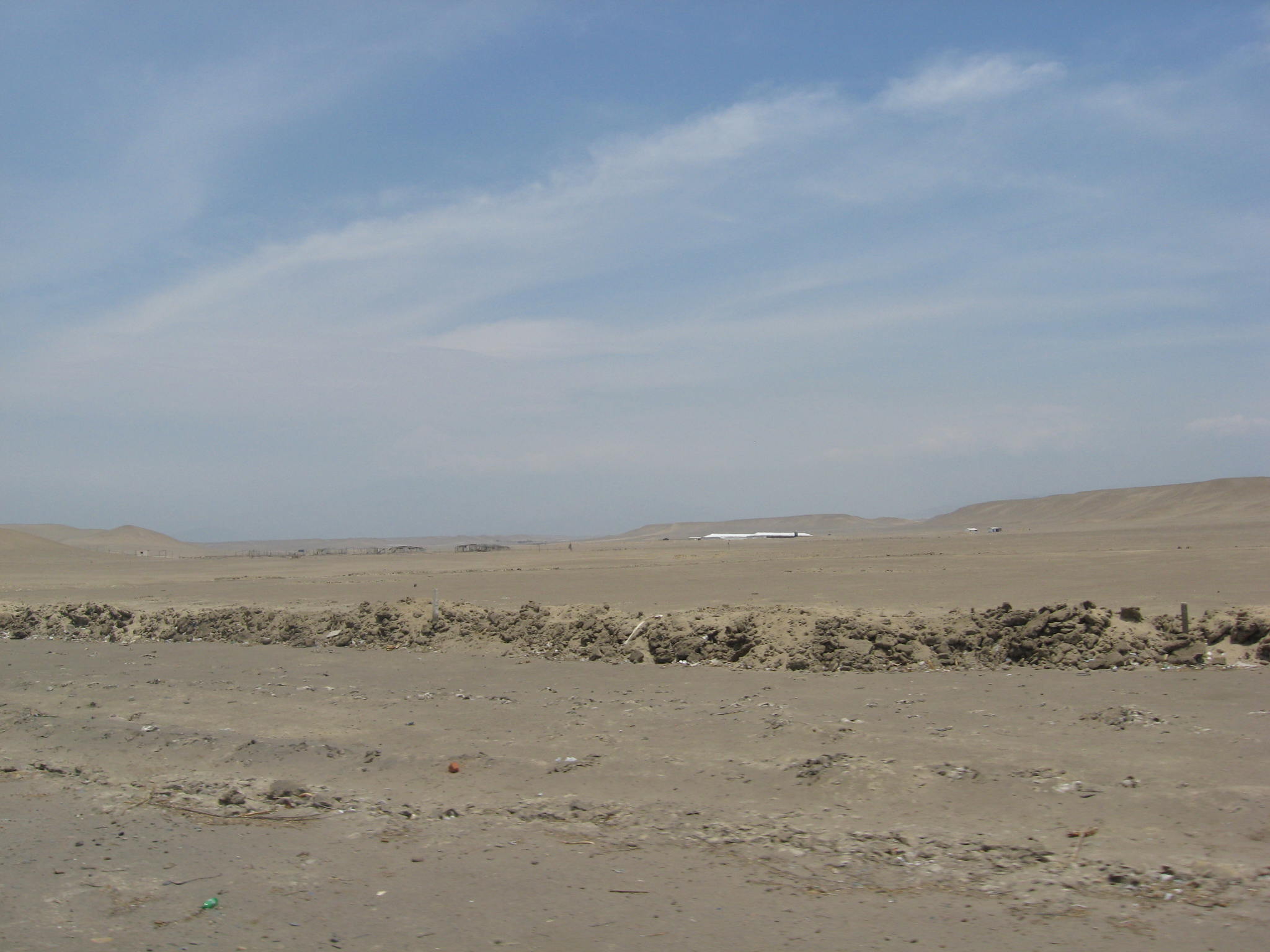
If you visit Peru and stay with the popular tourist destinations such as Lima, Miraflores, Cusco and Machu Picchu, you might never notice there’s a desert around here somewhere, but take a ride along the “Panamericana” (the main coastal highway) and the scenery looks like this:

Peru's desert coast

Peru's desert coast

Desert scenery along the Panamericana Sur

Desert scenery along the Panamericana Sur

I got a chance to do a little bit of flying near Pisco the other day, and this is what the Pacific coast near Paracas looks like from the air (click the image to enlarge):

Flying over Peru's desert coast

Flying over Peru's desert coast

The temperatures in the Peruvian coastal areas are not the kind of extreme heat that come to mind when we think of a desert climate, in fact in the South the temperatures are rather mild or cool outside the summer months and in the North the climate is year-round vacation weather. It’s not sweltering heat that makes Peru’s coastal areas a desert, just the lack of rain.

Where will you be in 2020?

Instead of doing some silly year-in-review post, the coming of the new decade has me pondering on how unpredictable the past 10 years have been for me, and wondering what the next 10 years have in store for us, God willing.

In the year 2000 I wasn’t thinking much about the future in 10 years, I was more preoccupied with the future 1 month at a time, but if you had told me in 2000 that by 2010 I would be:

  • Married to a beautiful Peruvian girl
  • Trying madly to keep up with a 18 month old baby
  • Living in Cusco, and,
  • Blogging about life in Peru

I would have probably replied something like:

  • Huh?
  • What??
  • Where is Cusco?
  • What’s a blog???

In hindsight there’s no doubt I could have done many things better, but at the same time I don’t have any regrets. I lived, loved and did the best I could at the time.

Happy New Year to all!!! If you’re ready to celebrate in the Peruvian tradition, put your yellow (good luck) or red (love) underwear on, eat 12 grapes at midnight and get out the fireworks and champagne.

Happy New Year

Happy New Year!

Watch this space for 2011 pictures coming up soon!