Forget 2012 – watch the ice on Ausangate

I shamelessly robbed this picture of my friends FB page, just gorgeous:

Nevado Ausangate

Nevado Ausangate near Cusco, Peru

Picture copyright Jorge Vera.

The picture’s caption:

“…ice is fast disappearing. Local people cite ancient legend that when all the ice is gone from Apu Ausangate, the world as we know it will end and a new one will be born.”

Eerrgghhh, if Hollywood can’t get the end of the world correct, surely Facebook can, right šŸ˜‰

All kidding aside, the indigenous Peruvian people do worship the “apu” or deity in the many mountain peaks of the Andes. “Nevado Ausangate” or “Apu Ausangate” is a magnificent mountain peak in the Southern Andes of Peru. It is the site of the annual SeƱor de Qoyllur Rit’i pilgrimage which has origins in Andean culture long before Christianity.

From The Sacred Land film project:

“Today, the indigenous Q’eros community of Quechua people revere the mountains of the Cordillera Vilcanota, believing that they are divinities to be protected. The apu’s servant cat Ccoa holds court in the belly of Ausangate in a palace that only great shamans dare to visit. The glaciers on Ausangate are where the spirits of the dead wait for salvation.”

More info about “apus” from Apus-Peru:

“In the Quechua language of the Andes, “Apu” refers to the spirit of each mountain which is not unlike a god. In every snow capped peak, to smaller hills, there is an Apu. Each Apu is different, with individual characteristics and personalities. They have in common that from them emerge the life giving waters of springs, lakes and rivers, as well as the forests and creatures that dwell in them. Like gods, the Apus possess the power of giving and taking life. Andean people look first to their local Apus and then to Mother Earth when they are undertaking a pilgrimage or enterprise.”

Willie Colon detained in Peru

This is a few days old, and just wild.

“After a successful concert in Lima, the veteran Puerto Rican salsa musician, born in New York, was intercepted on Saturday by Fiscal Police agents, on orders by attorney Lucila Cabrera, an expert in intellectual property crime.”

He’s accused of having plagiarized a song he recorded in 1974. Read the full story at Andina.

Can you say hypocrisy?

Here in Peru intellectual property rights are virtually non-existent. I’d venture to say in Cusco, a city of about 300,000 people, you CANNOT BUY ANY LEGAL CDs or DVDs. There is no store that I know of that sells the real thing. You can buy pirated CDs and DVDs for S/.2 – S/.4 (~$1) all day long.

The Willie Colon story is reminiscent of the controversy around Paul Simon’s “El Condor Pasa (If I Could)”, except that this was settled on friendly terms.

l’histoire se rĆ©pĆØte

Good article on Kyrgyzstan in the NY Times today. Reminiscent of the de-stabilizing effect of foreign influence in Latin America during the so-called Cold War, with disastrous results from Chile to El Salvador.

Here’s an excerpt:

ā€œLet’s be honest, Kyrgyzstan is turning into a collapsing state, or at least part of it is, and what was partially responsible is this geopolitical tug-of-war we had,ā€ said Alexander A. Cooley, who included Manas in a recent book about the politics of military bases. ā€œIn our attempts to secure these levers of influence and support the governing regime, we destabilized these state institutions. We are part of that dynamic.ā€ Read the full article here.

Visit to SeƱor de Huanca

Perhaps the most important religious shrine in the Cusco area today is the church of SeƱor de Huanca, in the Sacred Valley of the Inca, about an hour outside the city of Cusco. Many Cusquenians go here to worship and ask for the blessings of SeƱor de Huanca.

Patricia with the baby outside SeƱor de Huanca

Patricia with the baby outside SeƱor de Huanca

Inside the shrine, believers light candles and pray for blessings of SeƱor de Huanca. It is believed that if one enters the shrine with a pure heart, SeƱor de Huanca will grant you any blessings you wish, but if you go inside with less than a pure heart, you will not receive any blessings and may even find harm.

In front of SeƱor de Huanca's church

In front of SeƱor de Huanca's church

Family visit to SeƱor de Huanca

Family visit to SeƱor de Huanca

It is believed that here is where God made his home among men. There are actually 2 different stories as to the origin of SeƱor de Huanca, of miracles that are believed to have happened there.

Today, many Cusquenians bring their new cars here to be blessed, because it is believed SeƱor de Huanca will protect them from harm. In fact, when we were there an entire fleet of at least 15-20 delivery trucks for Coca-Cola / Inka Cola were there.

Overlooking the Sacred Valley of the Inka

Overlooking the Sacred Valley of the Inka

Mommy with baby Brianna by SeƱor de Huanca

Mommy with baby Brianna by SeƱor de Huanca

During the month of September, the month of SeƱor de Huanca, thousands of believers make a pilgrimage to SeƱor de Huanca. From outside Cusco, I believe the pilgrimage is about a 4-6 hour walk. I haven’t done it, but I’d like to some day.

To visit SeƱor de Huanca, you can take a taxi from Cusco (by the hospital EsSalud) for 6 Soles (~$2) per person, or you can take a bus to the nearby town of Pisaq and get a taxi from there.

If you’re visiting Cusco, a day-trip to SeƱor de Huanca is definitely worth it. The shrine of SeƱor de Huanca is in a beautiful area overlooking the Sacred Valley of the Inca. It is a very quiet place where you will find few tourists but typically several dozen locals who have come to worship. After visiting the church of SeƱor de Huanca you can enjoy typical Andean food in the nearby town of Pisac or in any of the towns in the “Valley of the South” on the way back to Cusco.

In this great future…

you can’t forget your past.

I may fuss about some things in Peru, but at the end of the day I’m very optimistic about the future. What keeps surprising me is how the young population (median age is 26) appears indifferent at times to the recent history of Peru.

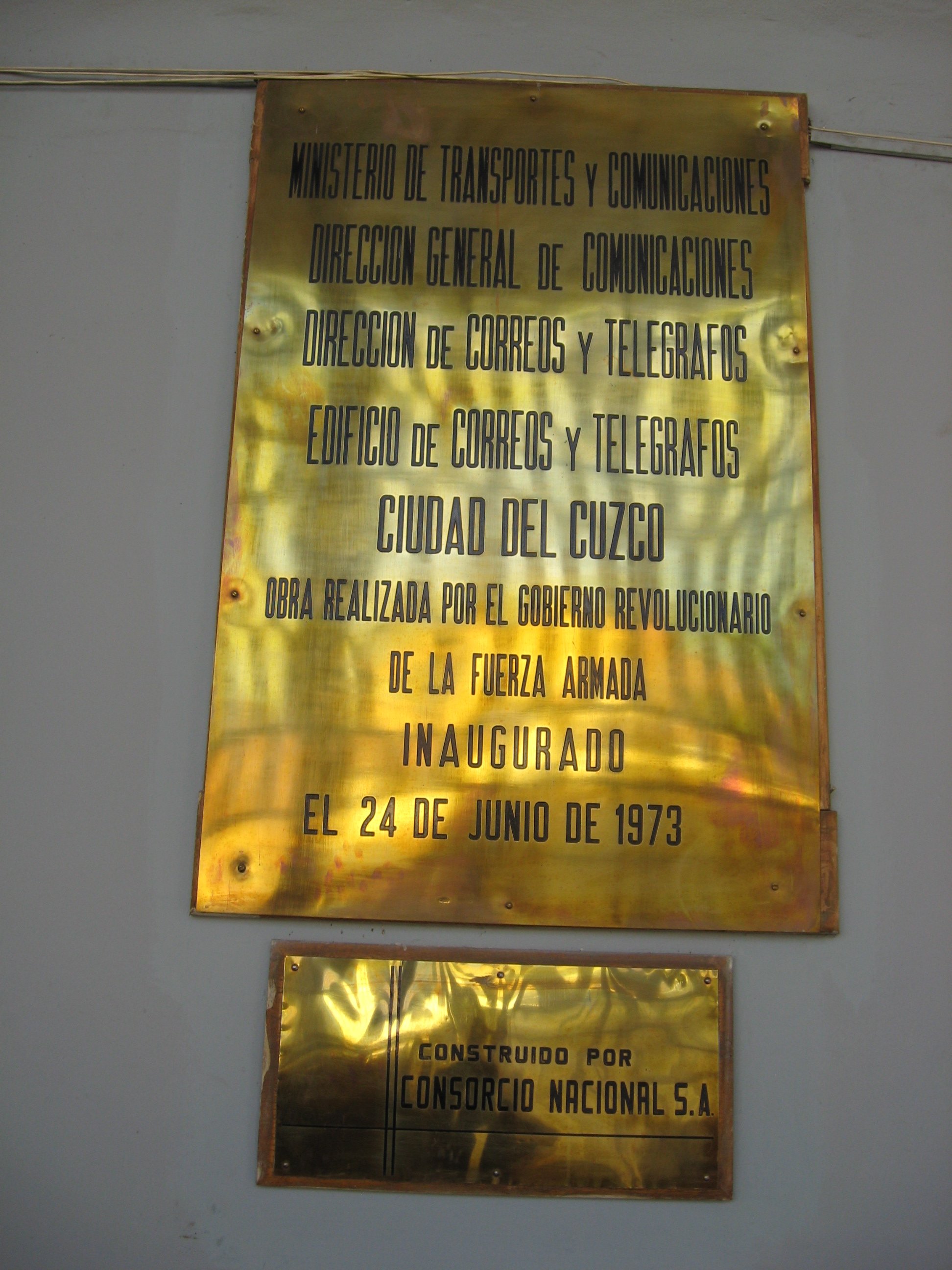
Take the post office here in Cuzco, for example. Looks ok from the outside…

Cuzco post office

Cuzco post office

Now inside: “…built by the revolutionary government of the armed forces of Peru. June 1973.”

Gobierno revolucionario de la fuerza armada

Gobierno revolucionario de la fuerza armada

The military government of Velasco Alvarado was later overthrown in another military coup, and in the 1980s followed by the disastrous first term of Alan Garcia, hyperinflation and the terrorism of Sendero Luminoso.

History intrigues me, a lot can be learned from it, but we often don’t. Just in way of one current example, here in Peru those who are considering to allow ex-militants of Sendero Luminoso back into politics should consider the simple wisdom of the late great Bob Marley:

“in this great future, you can’t forget your past…”

They weren’t idle words for Bob Marley… songwriter’s credit (and royalties) for the song “No woman no cry” is given to Vincent Ford, a man who ran a soup kitchen in the ghetto where Marley grew up. It is believed Marley wrote the song to console Mr. Ford’s widow at his death.

Here’s to hoping Peru won’t forget it’s past and the future will be bright.

Huacas del Sol y de la Luna

We visited the Huacas del Sol y de la Luna while we were in Trujillo last week. The Huacas del Sol y de la Luna are an archeological complex of the Moche, a pre-Inca civilization in Northern Peru. The complex consists of 2 temples, which resemble the Mexican Pyramids of the Sun and the Moon in Teotihuacan.

Significant archeological research has only been done at the complex since the early 1990s, the larger of the 2 pyramids, Huaca del Sol, has not been excavated so far. The Huaca de la Luna is the only one open to the public at this time.

Huaca del Sol near Trujillo, Peru

Huaca del Sol near Trujillo, Peru

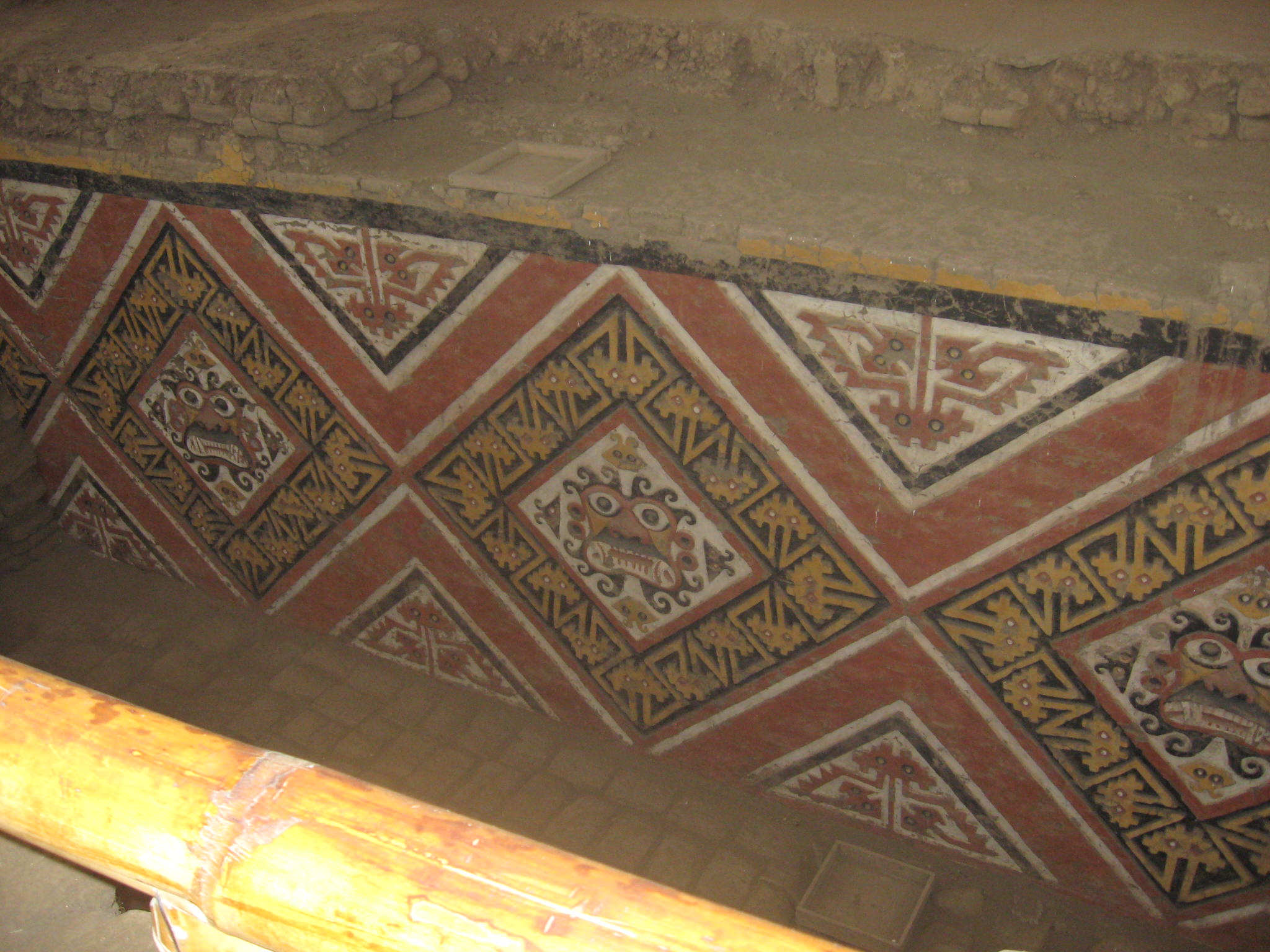
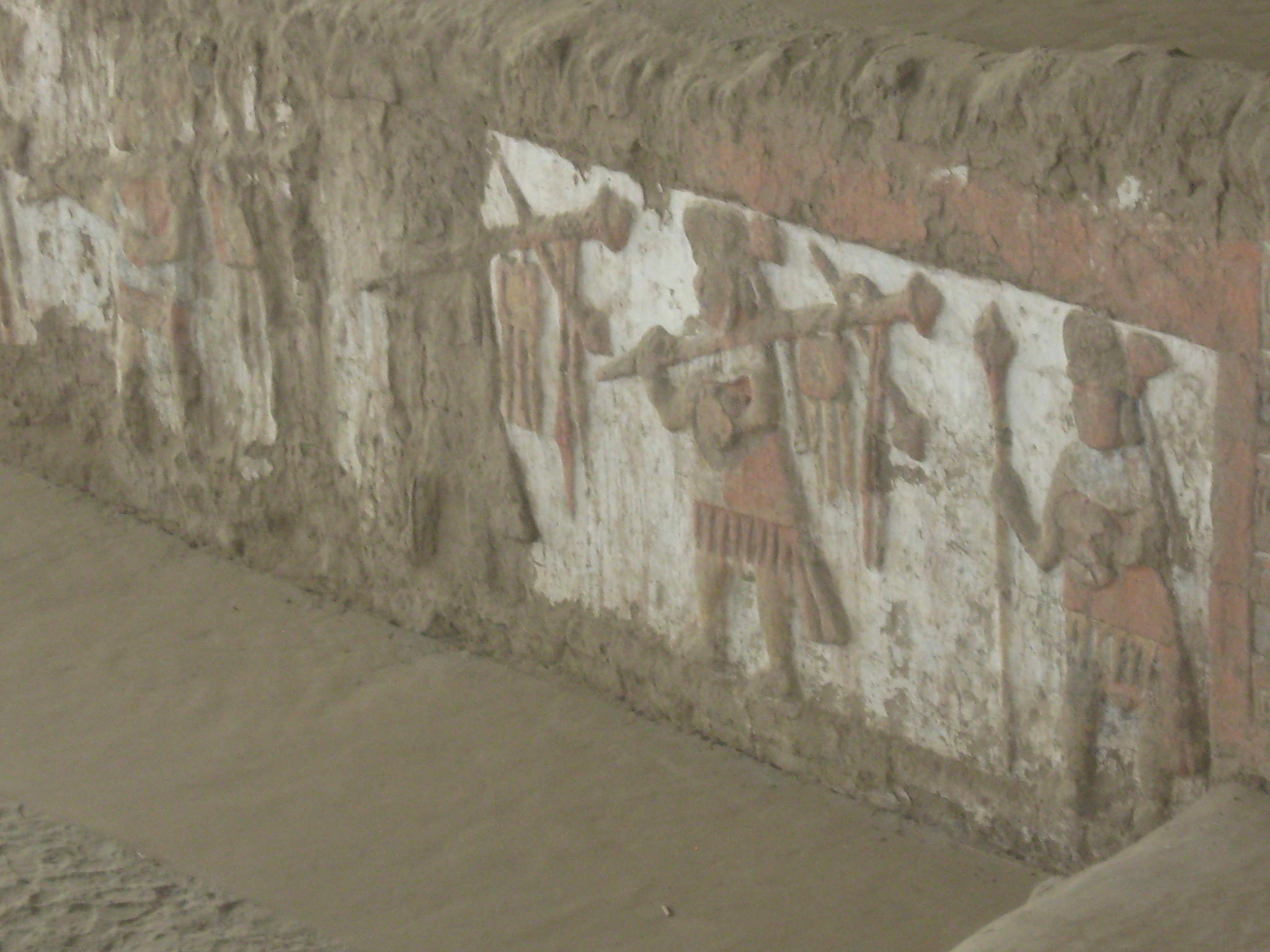
Unlike the archeological sites near Cusco, the Huacas del Sol y de la Luna are adorned with colorful paintings, typical of the Moche culture. Each of these paintings is about 1.7 meter (nearly 6 feet) tall. The typical Moche paintings are found both on the interior walls and on the exterior of the temples.

Moche paintings inside the Huaca de la Luna

Moche paintings inside the Huaca de la Luna

Moche painting representing the main Moche god

Moche painting representing the main Moche god

Paintings of Moche warriors

Paintings of Moche warriors

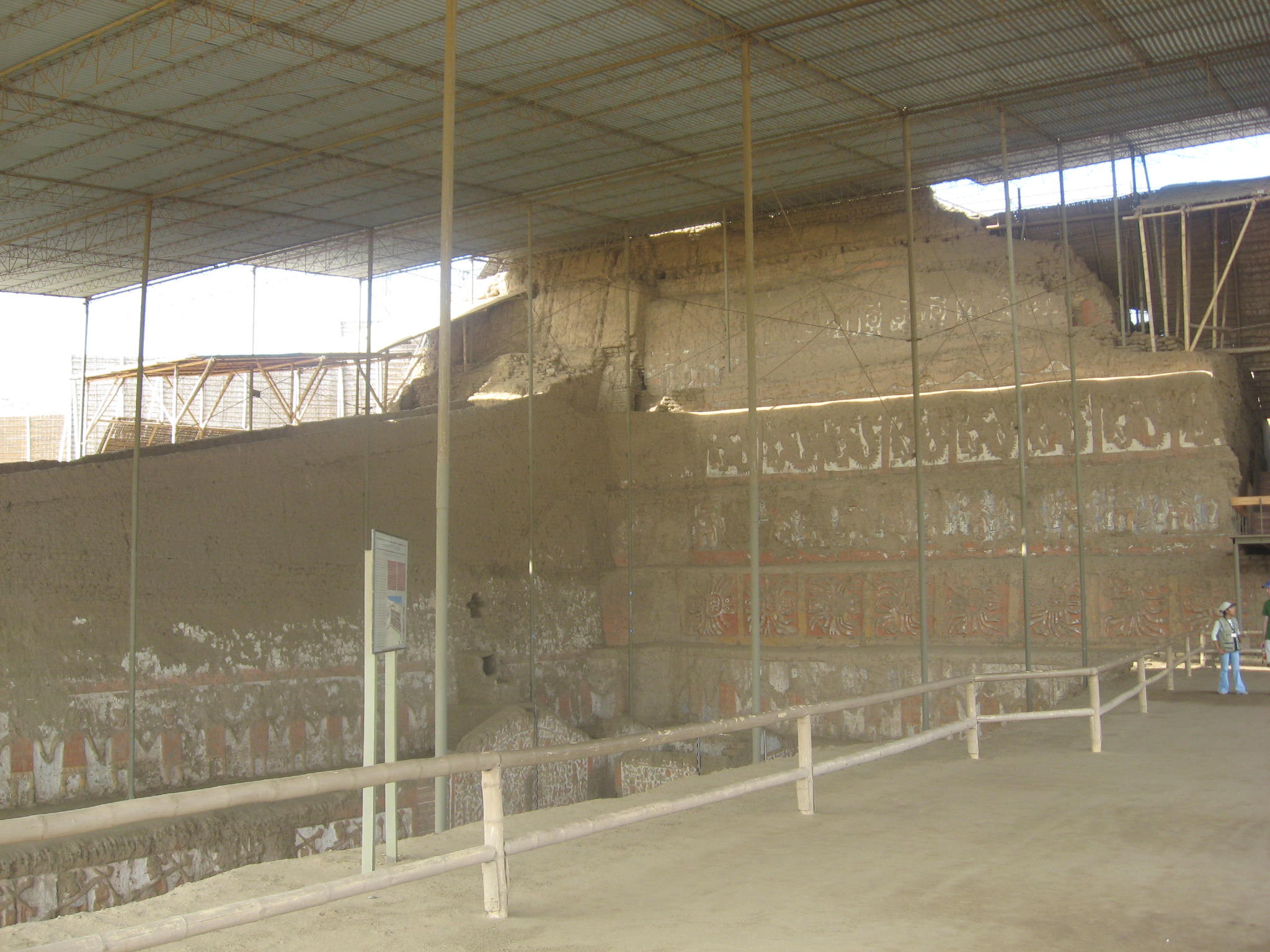
The Huaca de la Luna consists of 5 separate buildings, built over the top of each other to form the pyramid-like structure. The Huaca del Sol is estimated to consist of 11 buildings. It is believed with each new generation of priests or rulers the old temple was covered with clay brick (adobe) and a new temple was constructed on top of the former temple.

Note that on the exterior walls, the paintings don’t correspond with the levels of the building on the inside.

Exterior of the temple, with a ramp leading to the top

Exterior of the temple, with a ramp leading to the top

Huaca de la Luna near Trujillo, Peru

Huaca de la Luna near Trujillo, Peru

SeƱor de los Temblores

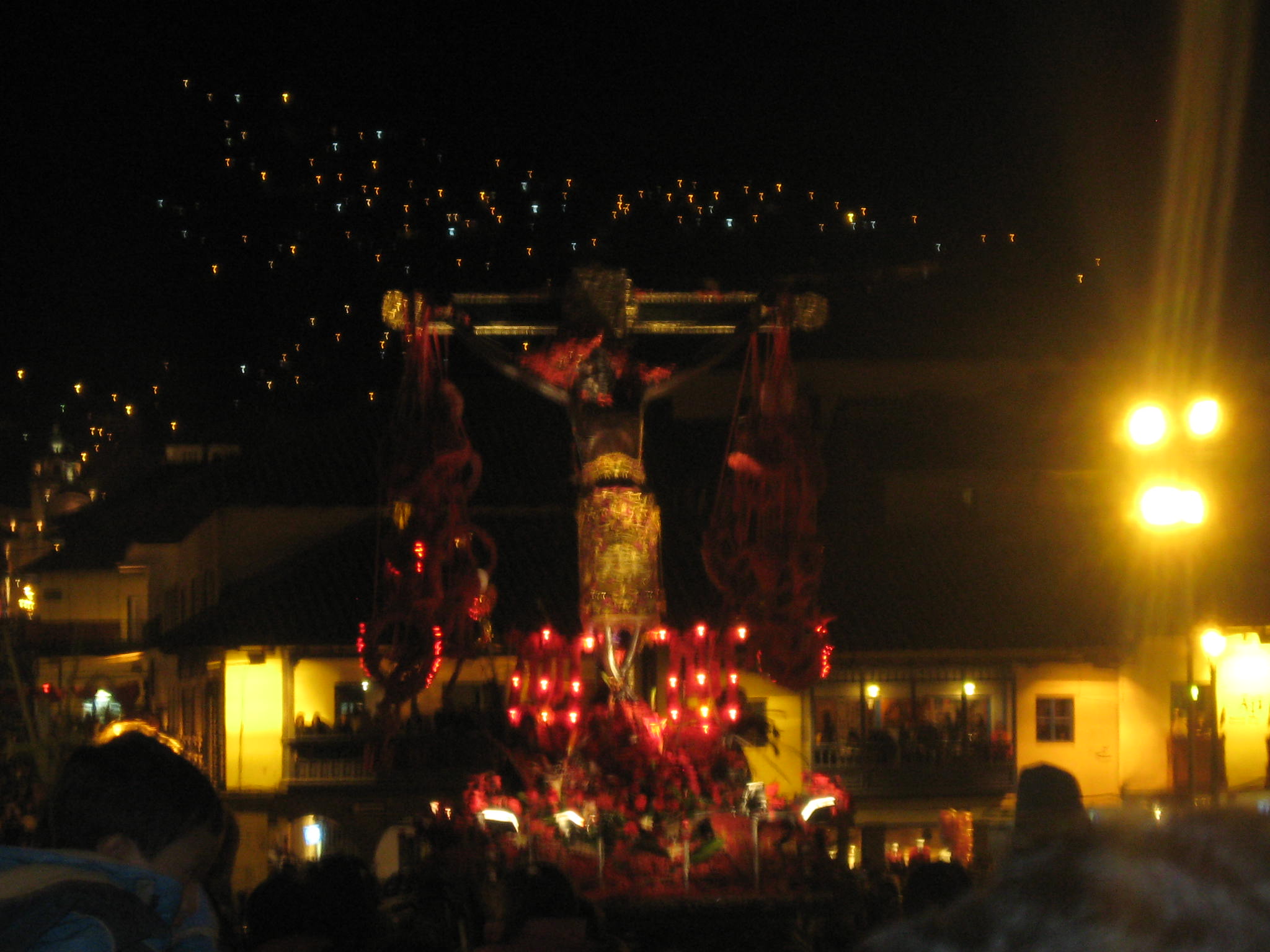
SeƱor de los Temblores is celebrated in Cusco during Holy Week, or Semana Santa. On Easter Monday the image of SeƱor de los Temblores is carried through the city in a procession that ends in front of the Cusco Cathedral on the Plaza de Armas, or main square, of Cusco. Tens of thousands gather on the Plaza de Armas and surrounding streets to see the procession.

Earthquakes are common here in the Andes, and people worship SeƱor de los Temblores because they believe he protects them from dangerous earthquakes. It is believed that the image of SeƱor de los Temblores was taken out during the devastating earthquake in Cusco in 1650, and the earthquake stopped. I’ve also heard many locals say the same thing happened during the earthquake in 1950, the most recent serious earthquake here in Cusco.

Patricia took some pictures of the procession of SeƱor de los Temblores this past Monday:

SeƱor de los Temblores

SeƱor de los Temblores

Annual procession of SeƱor de los Temblores

Annual procession of SeƱor de los Temblores

Crowd waiting for SeƱor de los Temblores

Crowd waiting for SeƱor de los Temblores

SeƱor de los Temblores by the Cusco Cathedral

SeƱor de los Temblores by the Cusco Cathedral

Sad day

Read the news yesterday that Billy Powell, keyboardist for the band Lynyrd Skynyrd, passed away at age 56. He was one of the survivors of the tragic plane crash in 1977 that killed several other members of the band.

Some decisions you make in life turn out much different than you might expect. If hadn’t bought an extra ticket to a Lynyrd Skynyrd show 5 years ago our lives might have been a lot different… I might have never met Patricia, moved to Peru, visited great places like Accha, Ancon or Lago Titicaca.

Here’s a tribute to Billy Powell, the famous piano intro of Freebird:

If you enjoy living in Latin America… Thank Ambassador Bob White.

Life in Peru has been good to me. I don’t regret for a minute leaving corporate America to spend time with Patricia here in Cusco. I’ve been able to travel, meet a lot of great people, learn a new culture and work on things I enjoy.

There are many sides to Peru and the country still faces a lot of difficult issues, such as poverty, corporate culture and environmental protections. That said, the country is safe, has a free and open society and a generally functional democracy. Today there are great opportunities in Peru, both in life and business.

Life in Peru hasn’t always been this good. In the decades of the Cold War most of Latin America was governed by ruthless dictators and torn by civil war. Basic human rights were violated by security forces, guerillas and paramilitaries alike.

I had the good fortune of meeting one man who dedicated his life and career to promoting human rights and a de-militarization of foreign policy in Latin America, Ambassador Bob White. I met Ambassador White at a conference on Cuba policy when I was in the air cargo business in Florida – thinking at the time at some point the US would normalize relations with Cuba and we could fly there.

It’s certainly not my place to tell Ambassador White’s story, but here are some links that are worth visiting:

The ambassador’s tale
Center for International Policy

During his work in foreign service, Ambassador White was one of the first to question US ties to Operation Condor and he worked tirelessly to bring to justice Salvadoran soldiers who murdered four American clergywomen in El Salvador in 1980. The women were killed only a day after being Ambassador White’s dinner guests at his residence.

Site where Northamerican churchwomen were dumped in El Salvador

Site where Northamerican churchwomen were dumped in El Salvador

Today half of Peru’s population is less than 26 years old and I am often surprised that many of them seem unaware or indifferent to Latin America’s recent history. I teach kids who have no bigger worry than getting a new cellphone or MP3 player. Yet were it not for people like Ambassador White who took a principled stand, life in Latin America today would not be what it is. While there is still a lot of work to be done, I am thankful Peru has great opportunities going forward.

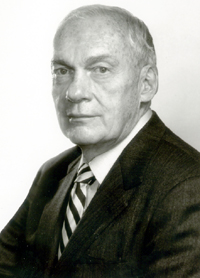
Ambassador Robert White

Ambassador Robert White

NB: Since 1990 Ambassador White has been President of the Center for International Policy, which advocates a responsible foreign policy and supports many Latin American causes.

NB: See the original photo used above on Flickr.

Ward Welvaert

Christmas in Peru

This year was my second Christmas in Peru. Like in the US and Europe Christmas here in Peru is a time for family and celebrating the birth of Christ Jesus. Of course Christmas in Peru also means food, gifts, fireworks and watching “Home Alone” 1, 2 and 3 for the 23rd time.

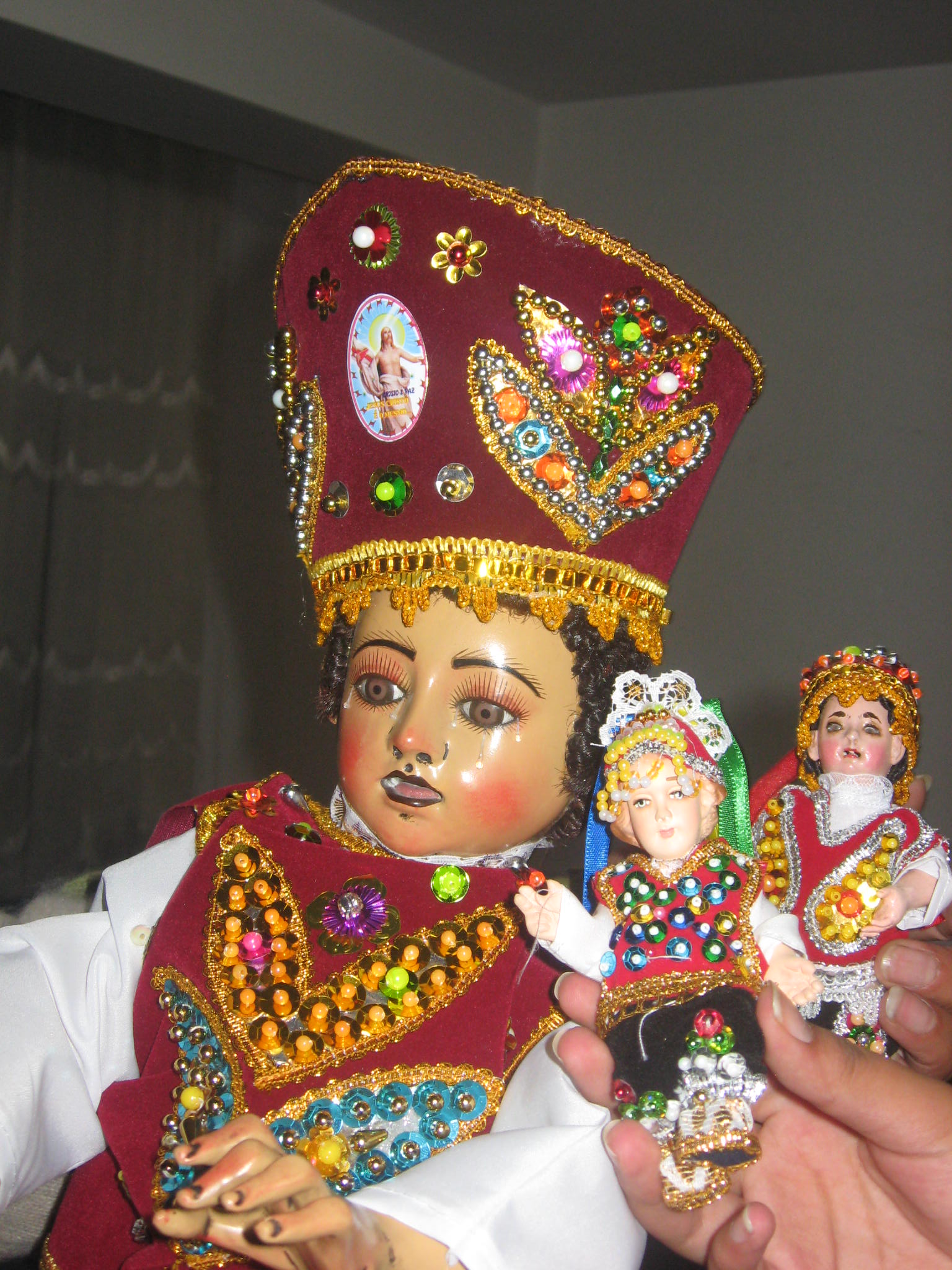
One interesting aspect of celebrating Christmas in Peru is how the traditional Andean religion and culture has blended with Christianity. For example, church altars are often adorned in gold (a throwback to the Inca’s time) and a very typical Peruvian “baby Jesus” figure is used in nativity scenes.

Typical Peruvian baby Jesus figures, NiƱos

Typical Peruvian 'baby Jesus' figures, known as 'NiƱos'.

Peruvians celebrate Christmas eve (“la Noche Buena”) with a dinner, followed by an exchange of gifts and fireworks at midnight. The traditional Christmas meal is turkey, and in the weeks leading up to Christmas the typical treat is hot chocolate with a sweet bread called “Panettone”.

I’ve noticed a lot of “Santa” images and figures, but Peruvian Santas don’t seem to follow the US tradition of putting gifts under the tree at night – gifts are simply exchanged between family and friends on Christmas eve. Unlike in the US, Christmas shopping in Peru is typically done only in the last week or even last few days before Christmas.

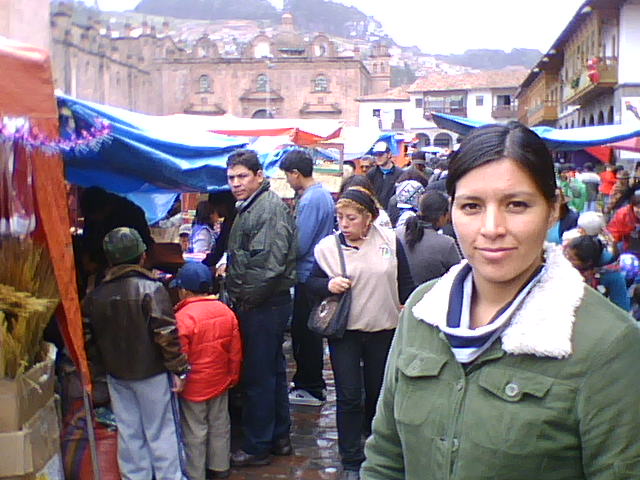
Last minute Christmas shopping at the Plaza de Armas in Cusco, Peru.

Last minute Christmas shopping at the Plaza de Armas in Cusco, Peru.

Overall we had a great Christmas, wishing everyone all the best.

Ward Welvaert