Egypt

Occasionally I get sidetracked into something totally unrelated to life in Peru, like the current news about violence and government crackdown in Egypt.

Here’s a bit of information from Congressional Research Service about US economic and military aid to Egypt:

Since 1979, Egypt has been the second largest recipient, after Israel, of U.S. foreign assistance. In FY2009, Egypt was the fifth largest aid recipient behind Israel, Afghanistan, Pakistan, and Iraq respectively. In the last decade, overall U.S. assistance to Egypt has declined from $2.1 billion in FY1998 to $1.6 billion in FY2009 owing to a gradual reduction in economic aid. In July 2007, the Bush Administration signed a 10-year Memorandum of Understanding (MOU) with Israel to increase U.S. military assistance from $2.4 billion in FY2008 to over $3 billion by 2018. Egypt received no corresponding increase in U.S. military aid; instead, the Bush Administration pledged to continue to provide Egypt with $1.3 billion in military aid annually, the same amount it has received annually since 1987.

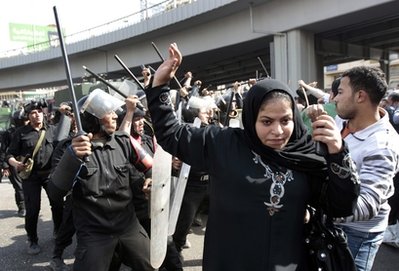
And for illustration:

APTOPIX Mideast Egypt Protest

Your tax dollars at work... (c) AP

Here’s what I’m thinking:

  • Sort of strange how we found it necessary to bring democracy to places like Iraq and Afghanistan but you never hear many calls for democracy in places like Egypt, Kuwait, or Saudi Arabia.
  • All that military assistance ($1.3 billion in military aid annually) is reminiscent of the 1970s fiasco when we provided F-14s – then the biggest and baddest weapon around – to the flimsy regime of the Shah in Iran, only to later regret it. Lesson learned? Didn’t think so.

All this is very similar to the US involvement in Latin America during the so called Cold War. Regimes that were aligned with Washington received all sorts of military and economic assistance. Oppressive regimes just pulled the “communist” card whenever they encountered any sort of opposition, and in swooped Washington to fight for freedom and democracy. Or was it bananas we were fighting for?

Here’s a comment from Ambassador Bob White about US involvement in Central America during the so called Cold War:

In 1981, the Reagan administration erroneously attributed revolutions in Central America to the Soviet Union and Cuba; “What we are facing in Central America,” said then Secretary of State Alexander Haig, “is a straight case of external aggression, nothing more, nothing less.” This of course was utter nonsense. If there was one thing we were not facing in Central America, it was foreign aggression. The rebellions in the region were home-grown and authentic, popular uprisings against the heaped- up injustices of decades. There would have been uprisings in these countries whether the Soviet Union and Cuba existed or not.

We have a gazillion dollar “intelligence” budget. Your tax dollars go to reports on Alan Garcia’s emotional and physical health and people who check out your *ss every time you board an airplane, but at the end of the day the US intelligence community is clueless. They’re just a bunch of people stuck in the same old ideologies, they will always arrive at the expected conclusion. The US intelligence community didn’t foresee Egypt any more than they did the fall of the Shah in Iran.

Still believe you live in the “Land of the Free” up there?

Mean Fat Pituca

NOTE: here in Peru the word “pituco” or “pituca” is used to describe arrogant or snobbish people who flaunt their money or status.

Just this morning I was walking along Av. Aramburu in Lima, going to Av. Arequipa to catch my combi. Aramburu is the dividing line between the wealthy financial district of San Isidro and the less affluent district of Surquillo. At the busy intersection between Aramburu and the “Via Expressa”, you may find the occasional panhandlers or homeless people, as well as streetvendors selling anything from pirated movies to anticuchos.

As I was walking past the “Via Expressa” bridge, one homeless lady in the street was holding out her hand. Right in front of me a snobbish-looking middle-age fat woman reached into her pocket, pulled out a crumpled up piece of paper, and with an angry snarl she threw this piece of paper right at the poor woman’s face.

I wanted to yell at the fat pituca b*tch, but I didn’t. Maybe I didn’t feel like making a scene, maybe I didn’t want to be a hero, or maybe I was just in a hurry. I’m not sure why, but I just shook my head and kept walking.

I understand the wealthy and middle class in Lima may feel insecure or infringed on by the poor, I really do. There’s a lot of wealth in places like Miraflores and San Isidro, surrounded by a lot of poverty in places like Callao or San Juan de Miraflores. And it’s not just money, also the way of life, the history, the massive migrations to Lima, and of course crime, that have created some degree of tension and social discrimination.

I don’t know the answers, but there was just no reason for that.

Pisco in pictures

I had a chance to visit the town of Pisco a few times recently. Pisco is about a 4-5 hour busride south of Lima, and best known as the namesake of the famous Pisco Sour drink (more on that later).

I’m not a great photographer, but here are some random pictures of my visit to Pisco (click on the pictures to enlarge):

A street leading to the main square in Pisco, Peru

A street leading to the main square in Pisco, Peru

Plaza de Armas, or main square, in Pisco, Peru

Plaza de Armas, or main square, in Pisco, Peru

The church on the main square in the town of Pisco, Peru

The church on the main square in the town of Pisco, Peru

You can see some construction going on next to the church. The town of Pisco was hit by a serious earthquake in 2007. It was hard for me to tell exactly what’s ongoing reconstruction from the earthquake versus some of the typical half-finished buildings you see in Peru, but there is still obvious earthquake damage in the area.

I think most of the economy in Pisco consists of growing grapes for the “Pisco” drink and fishing. Pisco also has a shared civilian/military airport, a relatively large seaport and some oil and gas installations. You can see the oceangoing ships in the background.

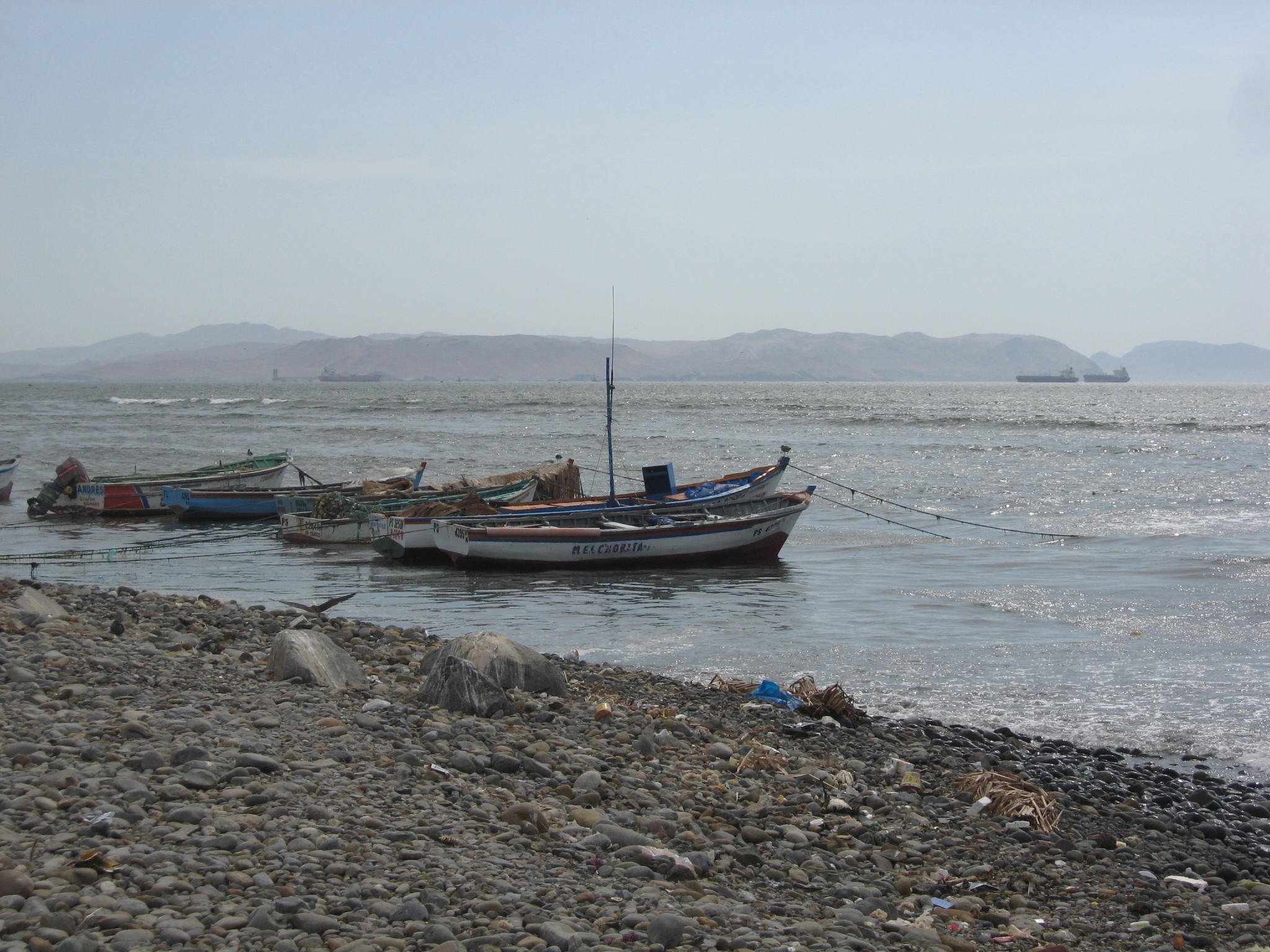
Small fishing boats in San Andres

Small fishing boats in San Andres

I stayed in the small village of San Andres, on the Pacific coast about 5 minutes from Pisco. San Andres is a very quiet seaside town, but a few tourists do come through there to get to the Pisco airport for scenic flights over the famous Nazca lines.

The seaside village of San Andres, near Pisco, Peru

The seaside village of San Andres, near Pisco, Peru

Birds on the beach in San Andres

Birds on the beach in San Andres

The beach in San Andres, near Pisco, Peru

The beach in San Andres, near Pisco, Peru

Near Pisco you also find the Paracas National Reserve and the Ballestas islands, where I was told you can find really beautiful beaches and a resort-style hotel, but I didn’t have time to go there.

In San Andres I stayed at the hostal “La Jalapa”, which is a very quiet and pretty hostal just at the edge of the town. It has nicely kept green areas, a pool and restaurant. I paid the silly rate of S/.30 per night and was very happy.

Hostal La Jalapa in San Andres, Peru

Hostal La Jalapa in San Andres, Peru

Peru’s desert coast

The Peruvian coast is known for great surf, Ceviche and beautiful seaside resorts such as Mancora and Huanchaco. However, less well known is that most of the Peruvian coastal area is actually a desert.

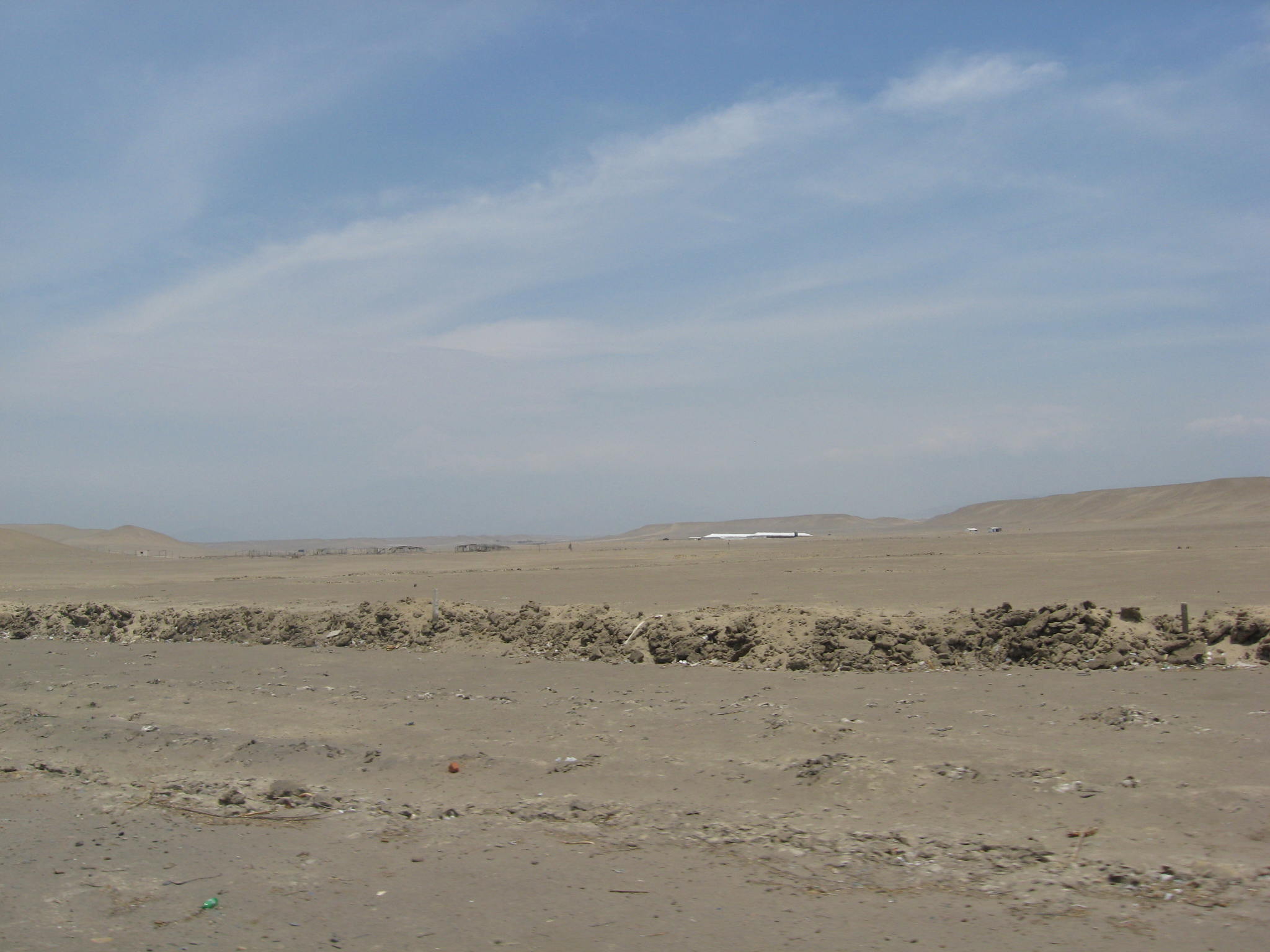
If you visit Peru and stay with the popular tourist destinations such as Lima, Miraflores, Cusco and Machu Picchu, you might never notice there’s a desert around here somewhere, but take a ride along the “Panamericana” (the main coastal highway) and the scenery looks like this:

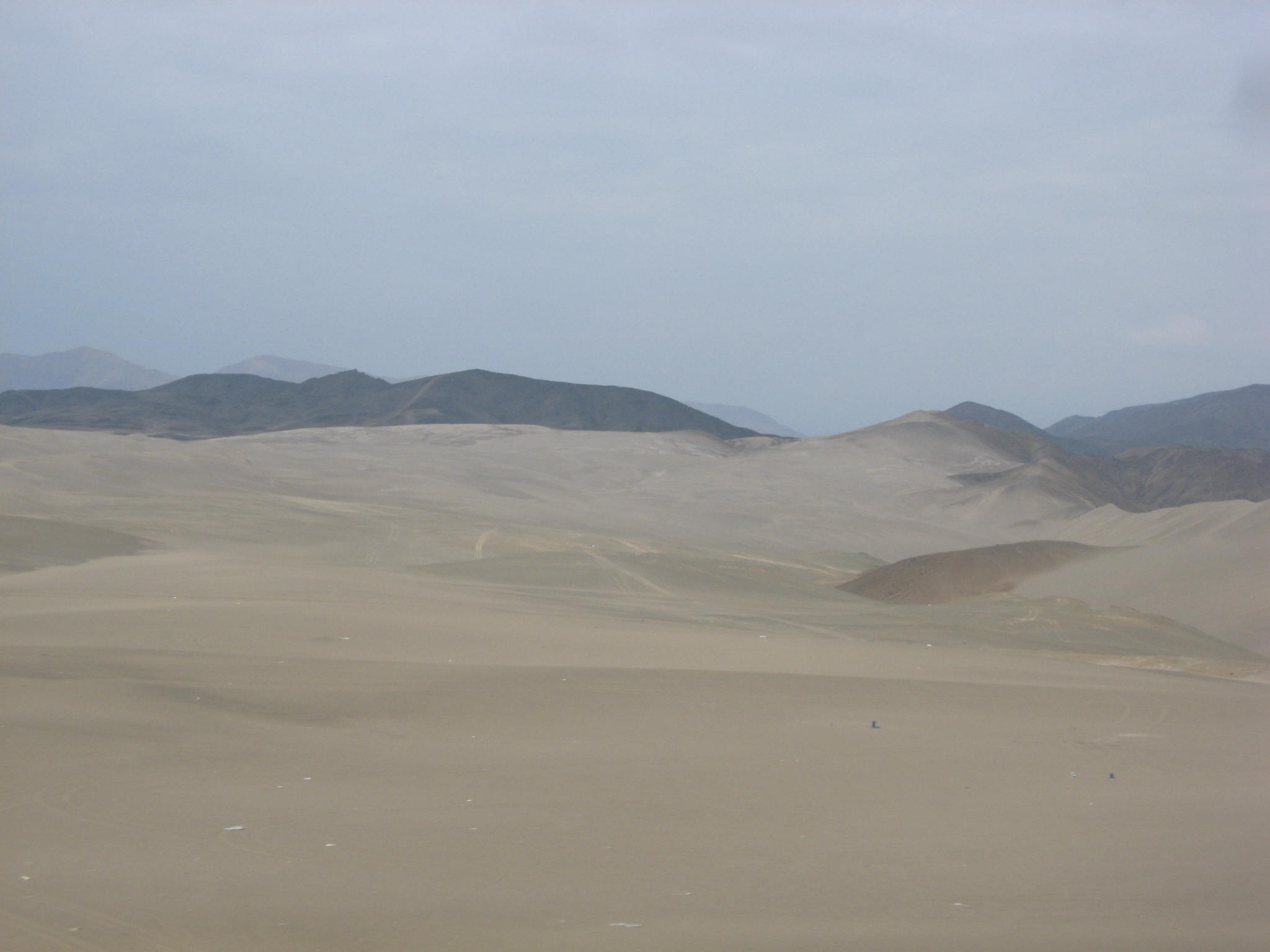
Peru's desert coast

Peru's desert coast

Desert scenery along the Panamericana Sur

Desert scenery along the Panamericana Sur

I got a chance to do a little bit of flying near Pisco the other day, and this is what the Pacific coast near Paracas looks like from the air (click the image to enlarge):

Flying over Peru's desert coast

Flying over Peru's desert coast

The temperatures in the Peruvian coastal areas are not the kind of extreme heat that come to mind when we think of a desert climate, in fact in the South the temperatures are rather mild or cool outside the summer months and in the North the climate is year-round vacation weather. It’s not sweltering heat that makes Peru’s coastal areas a desert, just the lack of rain.