Tramites y mas tramites
Alternate title: Reasons why Peru is poor, number 936
The absence of posting over the past 2 weeks (bad, bad blogger) was because we were in Lima working on a bunch of tramites, or loosely translated “applications”.
Tramites are basically a bunch of cumbersome bureaucratic paperwork. Compared to the US or Europe, simple things such as getting a driver’s license or incorporating a business require much more paperwork here in Peru, and cost a lot of otherwise productive time.
Worse yet, some tramites either have to be done in Lima or take a lot longer if done from in the provinces. This of course tends to hold back economic opportunities in the provinces as compared to Lima, while any well-fed monkey (but apparently not the idiots in suits who run Lima) can tell the provinces are exactly where more opportunities are needed in Peru.
Also frustrating is how some parts of the process that you expect to be straightforward can take so long. For example, it took us 4 days and 4 trips to downtown Lima to get our marriage license stamped by all the relevant pencil pushers.
So we were running around Lima like mad, spending half my earthly kingdom on cab fares and “pagos” at the Banco de la Nacion. But we didn’t do too bad on our tramites, really:
- Getting the Peruvian convalidacion of my pilot’s license – struck out, more on that later.
- Brianna’s Belgian passport – check
- Patricia’s Belgian visa – check
I started to lose my patience with the required español to holandés translations at the Belgian embassy… since there’s hardly anyone at the embassy who speaks holandés, but thankfully the really nice people at the embassy didn’t fault me for my rather skinny tolerance for bureaucracy
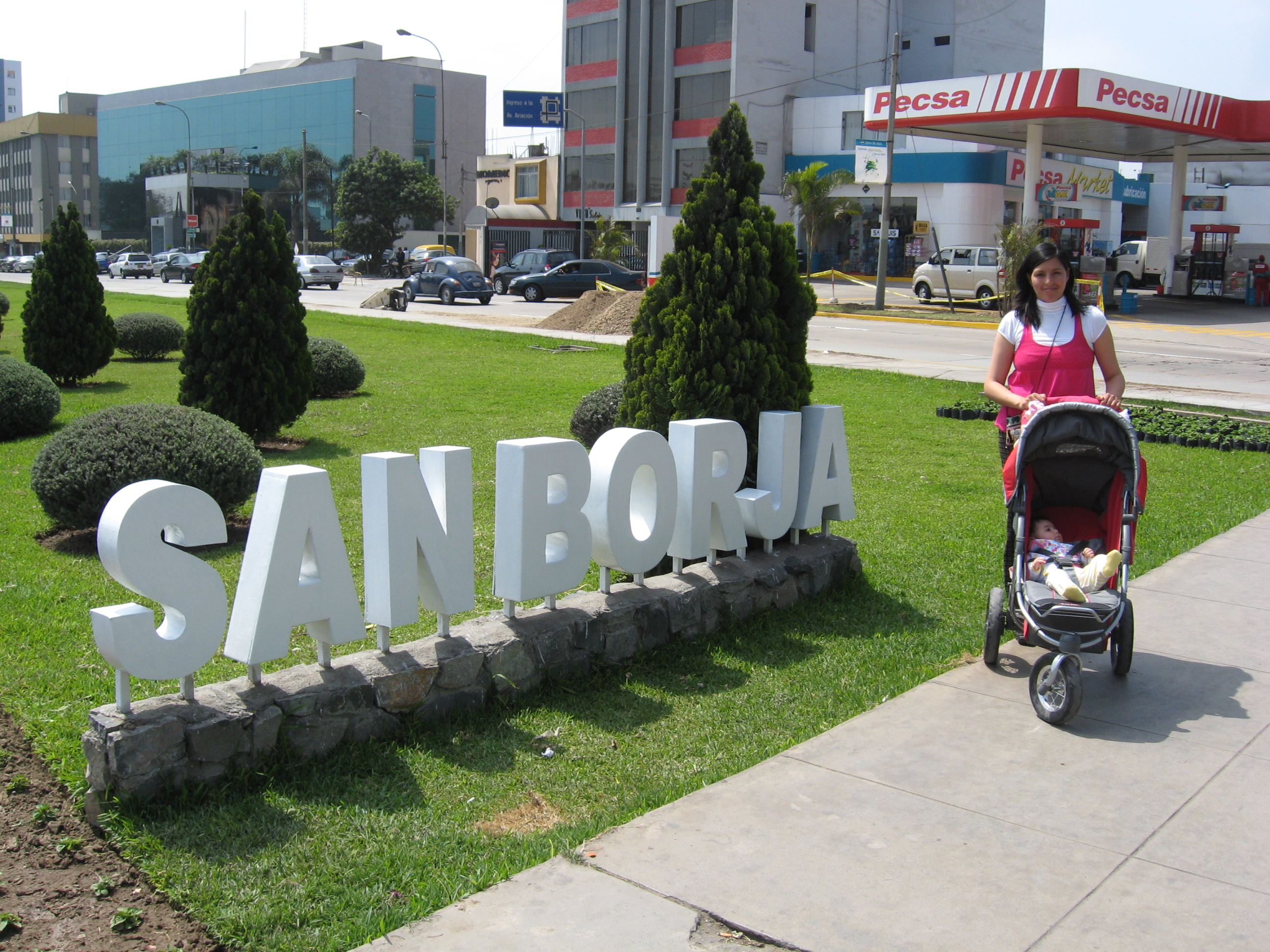
We were lucky to be able to stay in our cousin’s apartment in San Borja, so the logistics of traveling with baby were well taken care of.
Señor de los Milagros
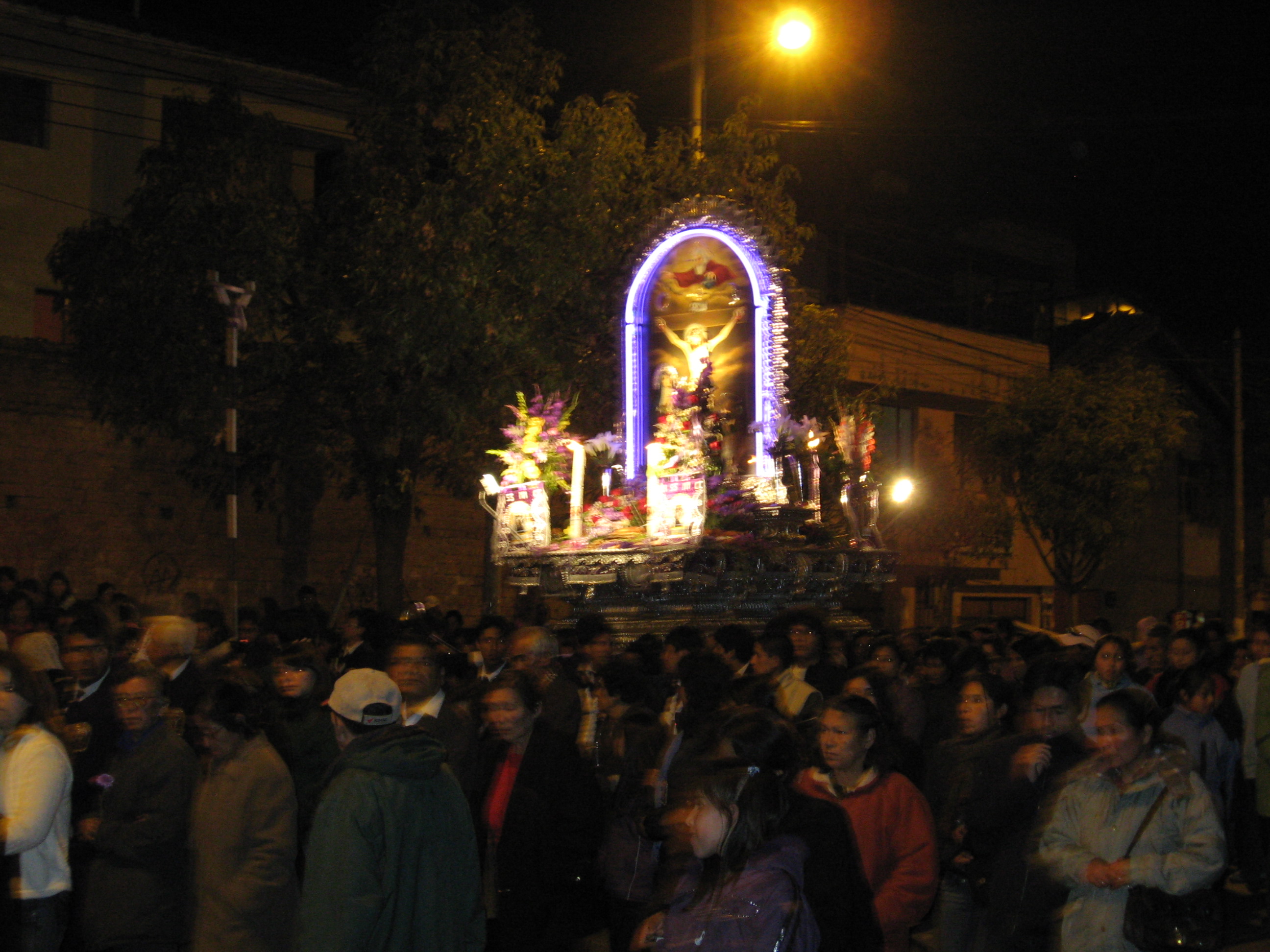
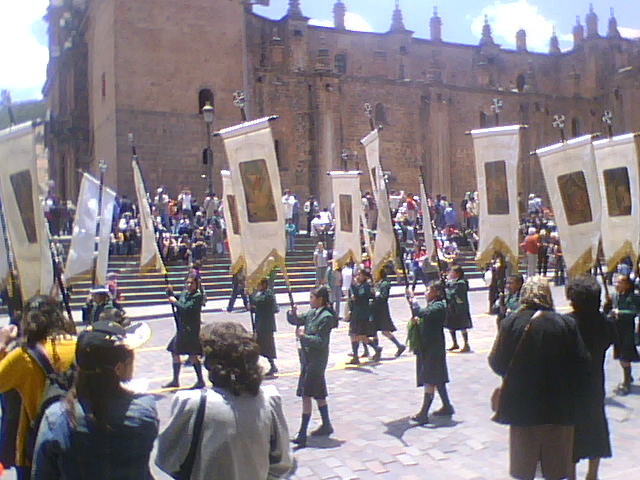
The procession of Señor de los Milagros in Cusco passed by our house last night. Peruvians worship Señor de los Milagros (Lord of Miracles) as it is believed he protects them from harm. An excellent explanation of the tradition from Kleph blog:
According to tradition, in 1651 a slave who had converted to Catholicism painted the depiction of Christ on the cross on the wall of a building in the outskirts of Lima where new devotees to the faith gathered to pray.
When a devastating earthquake struck the city four years later the entire building collapsed except for the wall adorned with the painting. Over the next several decades, the image became associated with miraculous incidents. More and more people, particularly the descendents of slaves, began to worship at the site.
This concerned both the church and Spanish authorities and, in 1671 the image was ordered destroyed. According to legend, workers were not able to do so. But, for whatever reason, officials eventually relented and built a proper church on the site – the church of Las Nazarenas.
When another huge earthquake struck Lima in 1687, the chapel was destroyed but, once again, the wall adorned with the painting remained standing. This cemented the importance of the image to the faithful and church leaders ordered a painting of the image to be taken out in procession that October – the tradition that continues to this day.
Here in Cusco the celebration of Señor de los Milagros is less elaborate than the mes morado (purple month) celebration in Lima. I imagine the simpler celebration in Cusco reflects the fact that Señor de los Milagros is native to Lima and Cusco has other typical celebrations of Señor de los Temblores during Holy Week (Semana Santa) and Señor de Huanca during the month of September.
Go Buckeyes!!!
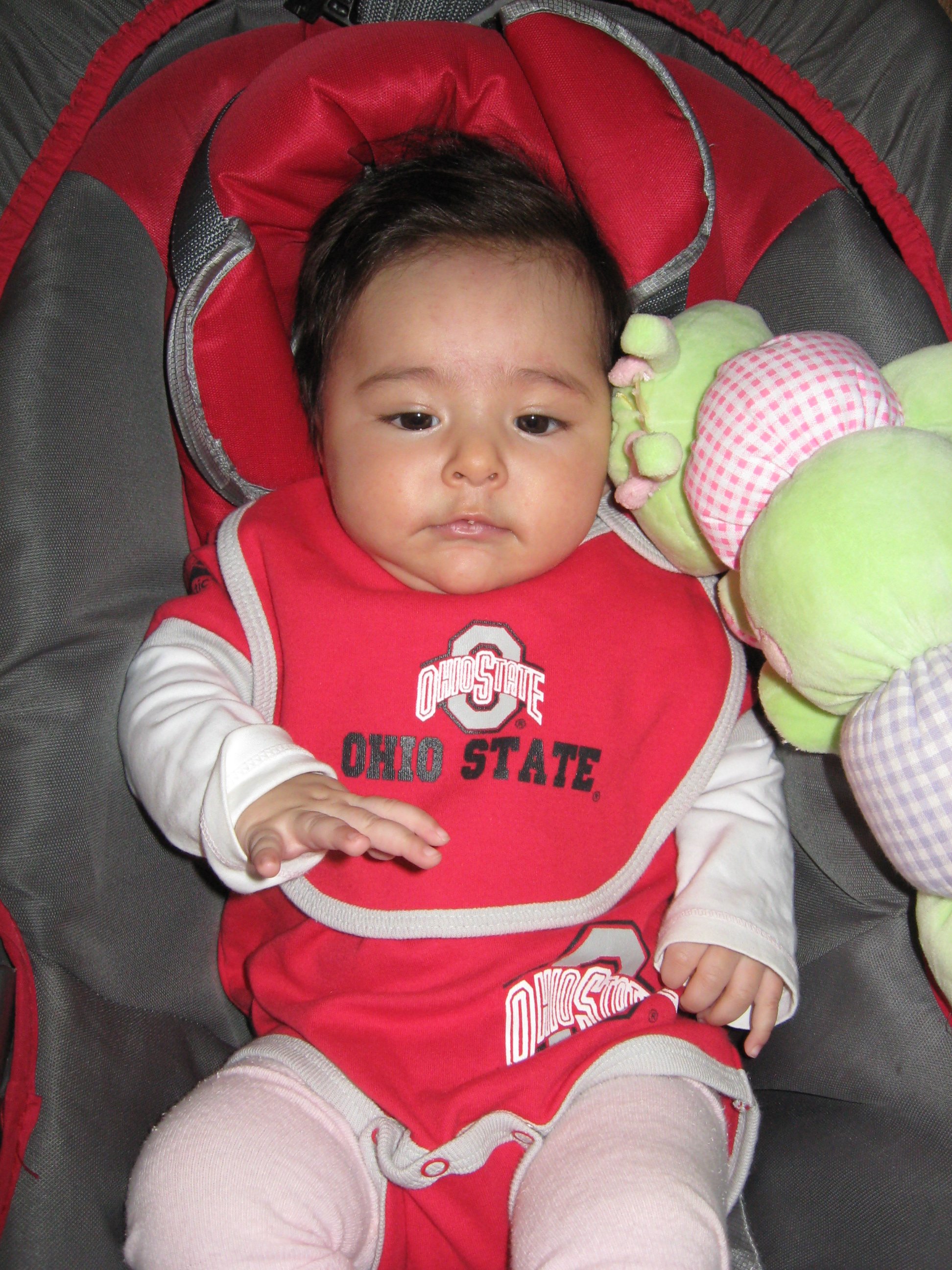
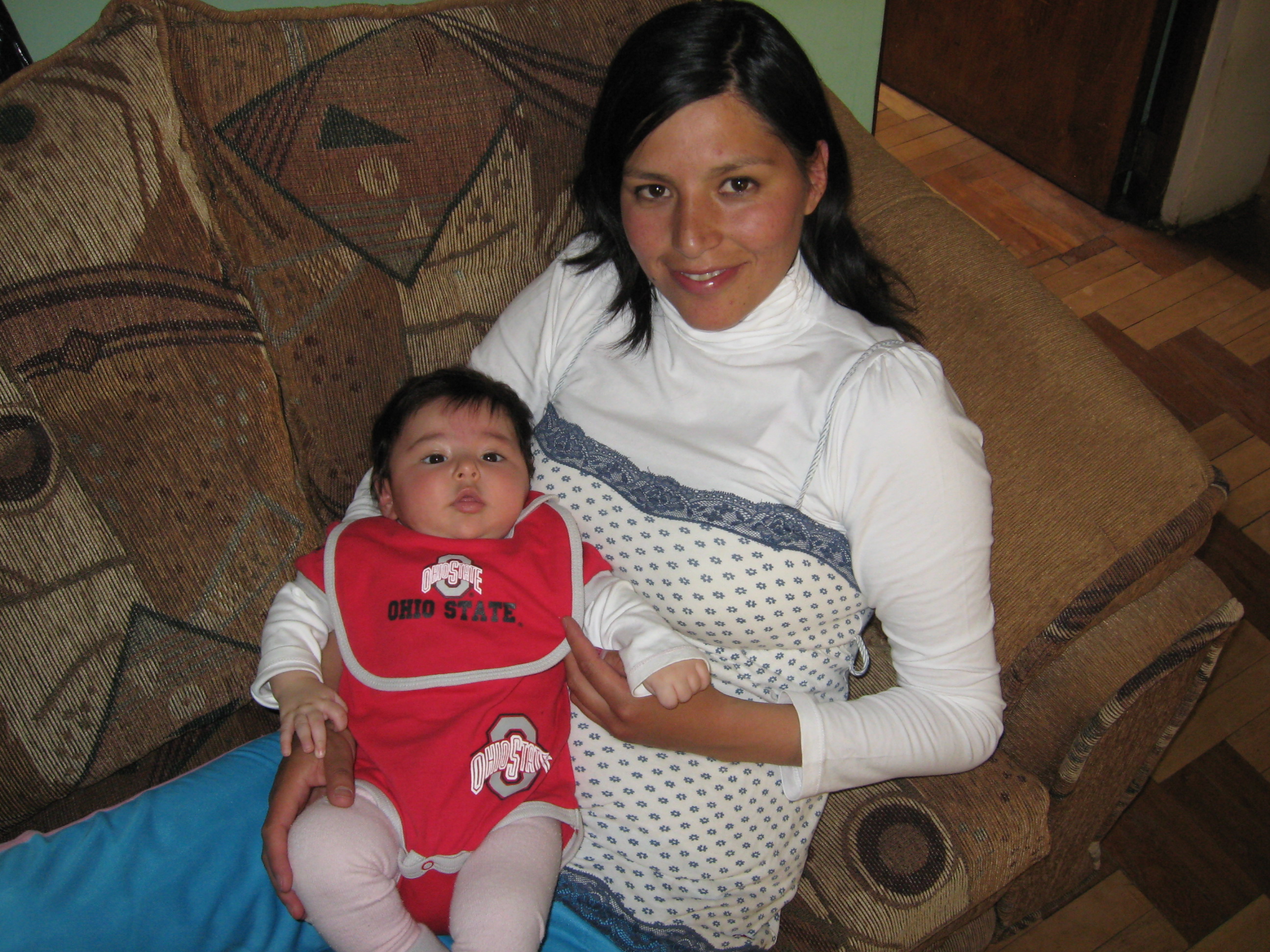
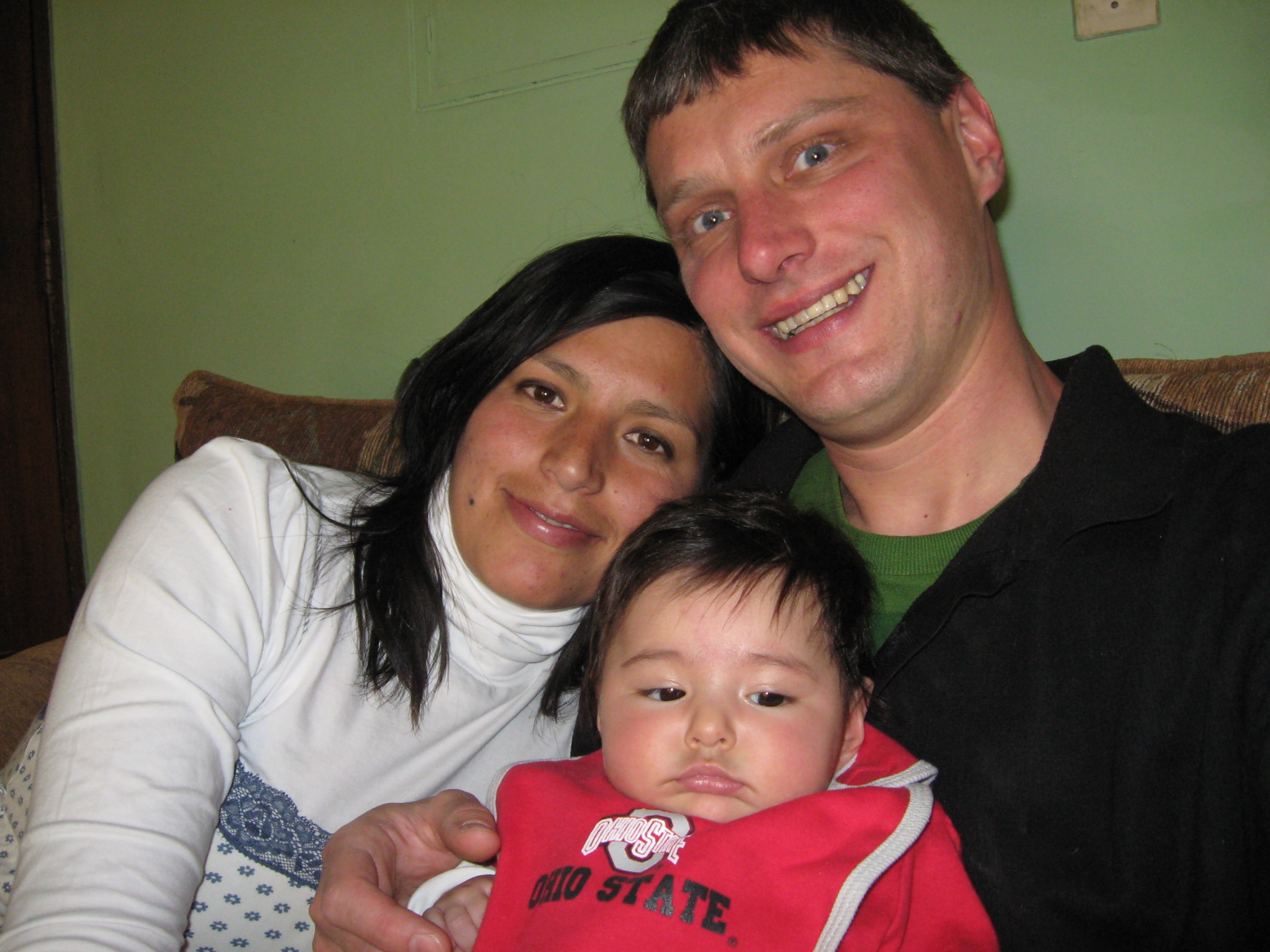
Mommy took some classes at Ohio State, so you know who baby’s rooting for on gameday…
American Football doesn’t exist in Peru, the only major sport is soccer, or fútbol. Our local team in Cusco, Cenciano, is pretty good, but I haven’t found any “Cenciano” baby outfits… maybe there’s a business opportunity here
Pisco Sour
Occasionally I try to explain to my gringo friends how to make Pisco Sour, the Peruvian national drink. This video does a much better job than I can, and it’s funny to boot. Otto posted it a while back, but it’s worth repeating. All of the commentary the bartender adds is quite true, by the way.
Here’s what you need to know about Pisco:
- It’s Peruvian, not Chilean. The drink is named after the town of Pisco, just south of Lima.
- Peruvians often have a Pisco Sour as an appetizer, but you can also drink Pisco in shots or mixed with Sprite, etc.
- It can be rather funny to see gringos here in Cusco drink Pisco… combine the elevation, the fact that they are away from home, and the smooth taste of Pisco Sour and they get more than a bit tipsy…
Tomorrow we’re making a big jar of Pisco Sour right here at our house
Batalla de Angamos
Today, October 8, is a holiday in Peru to remember the battle of Angamos. During this battle (LA BATALLA DE ANGAMOS), fought on October 8 of 1879 in the war between Peru and Chile, famous Peruvian Adm. Miguel Grau Seminario was killed aboard the ironclad Huáscar, which was subsequently captured by the Chilean navy.
We took a walk to the Plaza de Armas this morning, had some ice cream and watched a parade. The parade supposedly was not for the official holiday, but a religious procession that just happened to coincide with the holiday. It was a beautiful day out, but we forgot to take the camera so I took some crappy cellphone pictures instead
Gracias a la vida
English subtitles for the linguistically challenged, like myself
Sadly, the news on the condition of Mercedes Sosa’ is not good.
UPDATE: WaPo
Gracias a la vida.
Going to Rio in 2016
Good news for Latinos, the Olympics are coming to Rio. Other than Madrid and Rio, the other 2 finalist cities would not have been easily visited by Latinos. I’m glad Chicago didn’t win. I mean, I love the city of Chicago, but it’s, well, in the USA, and Latinos have a really tough time getting visas there
On a side note, my father wouldn’t watch a minute of the Beijing Olympics in 2008, he’s seen so much brutal poverty in China that he couldn’t stomach the fabulously expensive games for the elite… Rio will likely be more of the same.
Now it remains to be seen if Peruvian authorities will support Peruvian athletes leading up to the Olympics and put together a good team…