Baby pictures
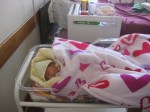
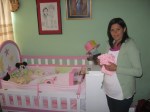
Here’s a few more pictures of our baby Brianna. Some were taken at the Clinica Paredes where she was born, and a few more here at our apartment in Cusco:
- At the clinic
- Que linda bebe!!
- At the clinic
- Baby Brianna at home
- Mom by baby in crib
- Brianna Nayaraq
She’s already a week old, and both mommy and baby are doing well.
I think all babies are cute, but it’s funny how many people here were hoping the baby would look like a gringa… “ojalá que salga con las ojos de su padre” … while all of my gringo friends were saying “let’s hope she looks like her mommy.”
Contract pilot blog
Here in Peru I don’t get a chance to do much aviation work. When I first came to Peru I was supposed to work for SEMAN, part of the Peruvian Air Force, but Alan Garcia decided to reassign some high ranking Air Force officers and my contract fell through.
However, when I’m in the US I always try to catch up on my flying – flying was after all my first career. So I started a new contract pilot blog where I can tell some of my tall (aren’t they all) flying stories
Honestly, like everything I do, I fly because it’s my passion. I like doing ferry flights, flight training, aircraft deliveries and repossessions.
This picture was taken when I was teaching a collegue at GE to fly. The picture may look as if we were flying sideways, but we weren’t. If you look at the top of the dashboard, it’s level with the runway. The picture was just taken at an angle, by a passenger in the backseat of the airplane
Baby arrives!!!
We are now the proud parents of a beautiful baby girl!!!
At almost 3.9kg (~8lbs 10 oz) she’s a big baby girl! Born on June 20, the shortest day of the Southern hemisphere. Mom and baby are both doing well!!!
La Oroya – DRP environmental report update
As a Fullbright scholar, Corey LaPlante studied the environmental impact of the La Oroya – Doe Run Peru (DRP) smelter over the past year or so. He published some summaries of his findings on his blog, including:
- Research that shows contamination in La Oroya may actually have increased since Doe Run arrived in 1997.
- Some regulatory background about Peru’s environmental management plan or PAMA. Excellent questions whether PAMA is really sufficient and whether Doe Run Peru has complied with its obligations.
- Research on children’s blood-lead levels near La Oroya. Interesting finding how the improvements advocated by Doe Run correspond with testing further and further away from the smelter.
I think Corey did a great job studying the environmental impact as well as the social and economic drivers that keep enabling the situation at La Oroya. He kept his research free of inflammatory rhetoric or ideological influences which all too often skew the environmental debate.
Again, check out his findings here.
Yippie, lukewarm shower
The Incas were great architects, but that was a long time ago. Building standards in Peru nowadays are pretty sad.
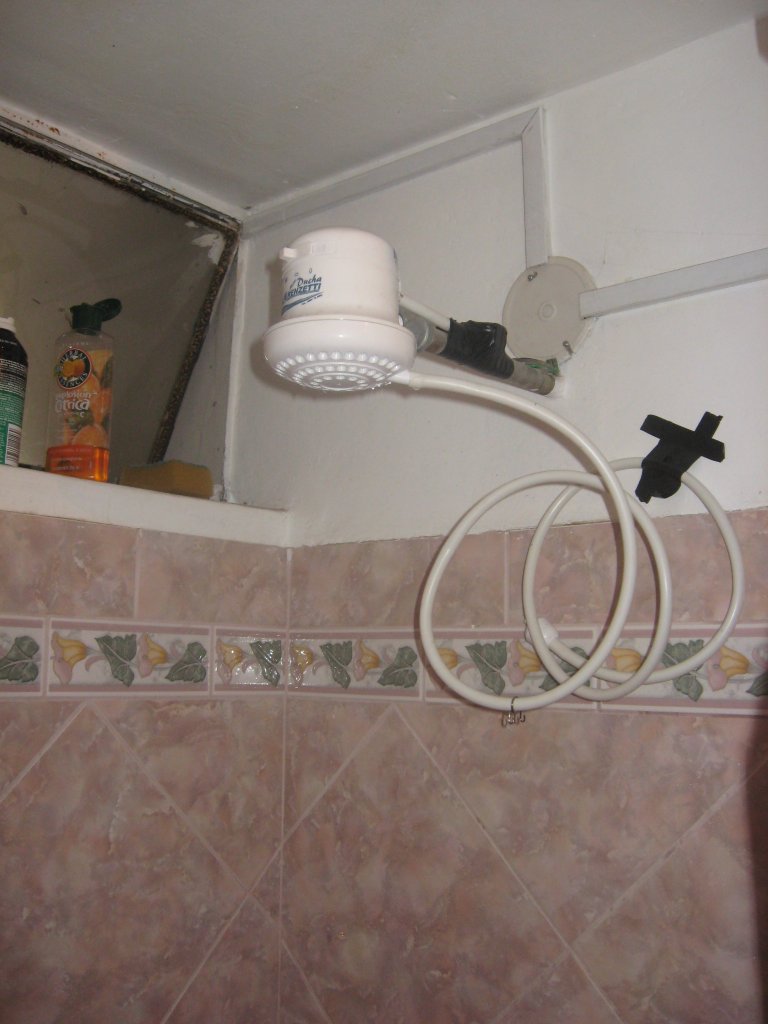
One of the more annoying characteristics of homes here in Cusco is that most of them lack hot water heaters and only use a little point-of-use heater at the shower head. I just installed this heater this morning, after the previous one blew up yesterday:
Yeap, those are 220V live electrical wires you’re looking at in the shower. In our buildings there is no ground wire, so you ground the thing to a nearby wall. I found out long ago that you don’t touch these heaters or metal window frames while you’re in the shower…
The heater itself cost me S/.37 (~$12) and is a certifiable piece of junk. It’s life expectancy is about 6 months, and the water is only lukewarm. When this one self-destructs in a few months I think I’ll look for a bigger and better one
Peru: good news update
After the violence in Bagua on June 5 it is good to read a few promising Peru news items:
- Controversial laws of the jungle may be revoked soon. (Spanish)
- Peruvian Prime Minister Yehude Simon indicated he may quit after calm is fully restored.
This does not mean all is well in the world of politics in Peru, it’s only words at this point. But it’s hope for a beginning to the end of Alan Garcia’s sell-out-Peru, money-at-all-cost policies.
Alan Garcia must go!
If you’ve been reading this blog for some time you know I love Peru. However, the government of Alan Garcia and its implementation of the Free Trade Agreement (FTA/TLC) between Peru and the US has put Peru on the brink of becoming a Police State:
- Violent repression of peaceful protests at Bagua.
- Blatantly racist government propaganda run on national TV in the aftermath.
- Suspension of opposition lawmakers for their support of the indigenous movement.
- Government shutdown of media channel sympathetic to the opposition. (IKN)
- Intimidation of the media and their families!
All this because of years of neglect (NY Times) of the indigenous people in Peru combined with Free Trade policies that have zoned 72% of the Peruvian Amazon for development and exploration (Duke University).
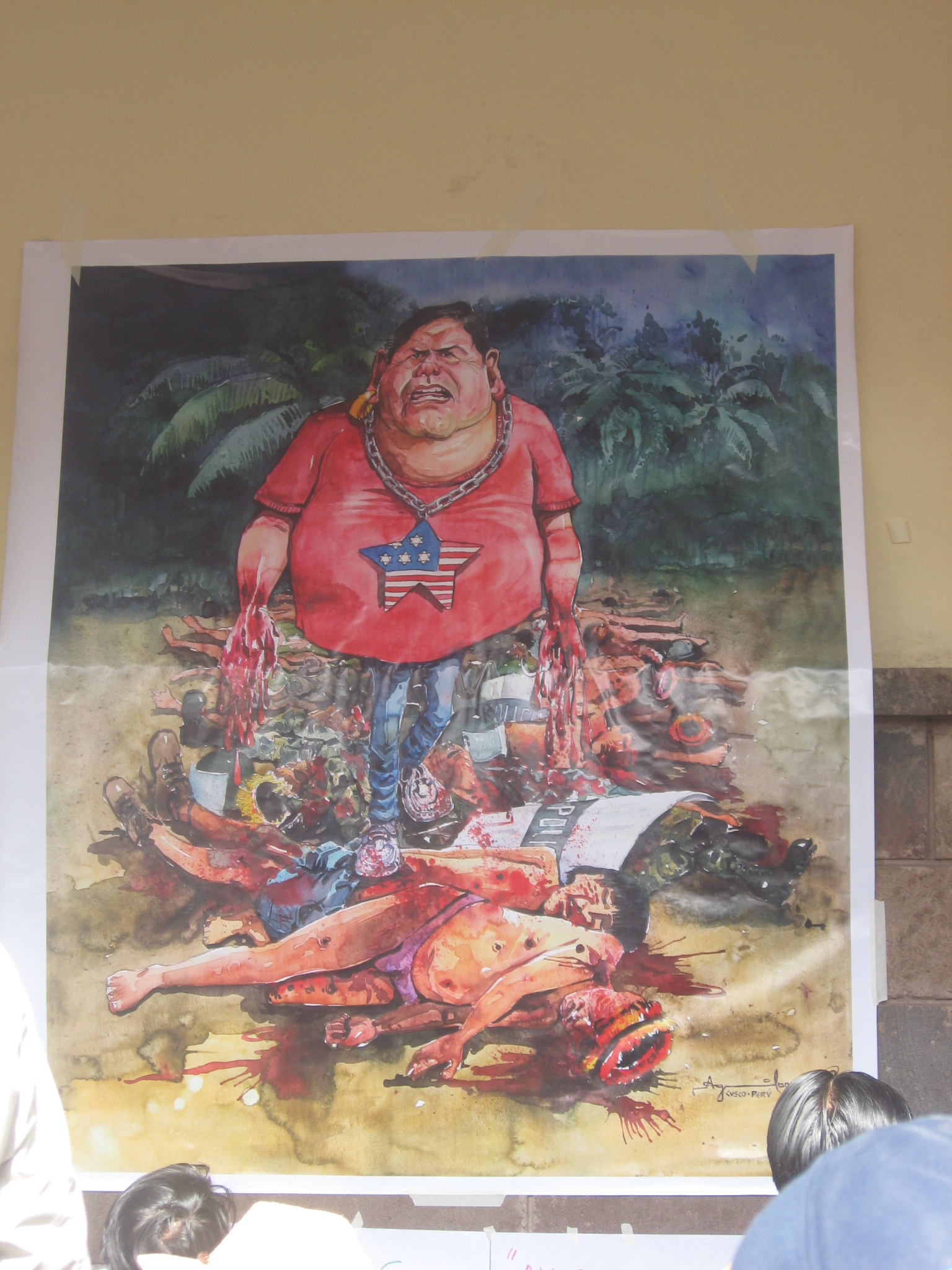
At the Corpus Christi celebrations in Cusco this week we saw this poster as one of many expressions of solidarity with the people of the Amazon. Unfortunately US and European media and governments have been largely quiet on the troubling developments in Peru. I’m convinced if the same kind of things took place in Ecuador, Venezuela or Bolivia – countries with left wing governments – there would be widespread media coverage and political condemnation.
People with different points of view may blame political opposition or foreign influence, but even if only 10% of the independent and eyewitness reports are true, the events at Bagua are still enough to demand Alan Garcia’s resignation.
It’s time to put ideologies aside and demand that Alan Garcia and his entire government resign!
Belgium requests inquiry into Bagua violence
I’m rather proud to see how the Belgian government has requested an investigation into the bloodbath at Bagua last week.
Minister De Gucht veroordeelt elk buitensporig gewelddadig optreden en verzoekt de Peruaanse autoriteiten de dialoog met de inheemse bevolking te hervatten.
Minister De Gucht roept de Peruaanse autoriteiten tevens op om een grondig en onafhankelijk onderzoek uit te voeren naar de feiten in kwestie. “
Loosely translated: “Deputy Prime Minister and Minister of Foreign Affairs Karel De Gucht regrets the recent violence between indigenous people and the Peruvian National Police. The Belgian government condemns unnecessary violence and requests that the Peruvian government opens a dialogue with the indigenous people. Minister De Gucht requests that the Peruvian authorities conduct a thorough and independent investigation into the events at Bagua.”
The racist pricks at Correo are denouncing this as foreign efforts to destabilize the country.
Belgium is trying to destabilize Peru… That is beyond laughable, so I borrowed this from Otto. To the delusional facists at Correo:
How to bring a dictator to justice – or not?
My good friends at CIP are participating in a presentation on the successful extradition of Alberto Fujimori.
I don’t mean to be insensitive to anyone who suffered from abuses under the Fujimori regime, but I have to disagree with the folks at CIP on this:
The Fujimori verdict and the “autor-mediato” principle give everyone in Peru who was complicit in the abuses of his regime a way to escape responsibility, and that is bad for Peru.
After the bloodbath in Bagua last week, you have to ask how the country is any better now than a decade ago, and how can a government that kills its own citizens and manipulates the media possibly have any credibility bringing their predecessors to justice?
Look, I love Peru but I’m not naive, there are a lot of issues. I worry that saying “justice has been done”, now that Fujimori is in jail, puts a false stamp of approval on the Peru of today. But the problems in Peru don’t begin or end with Alberto Fujimori or even Alan Garcia, just changing the puppet master at the top without changing the culture only gives us a false sense of improvement and a convenient excuse to escape accountability.
I’ve seen nothing but apathy here in Cusco around the Fujimori verdict, perhaps because many people remember how Peru was before Fujimori.
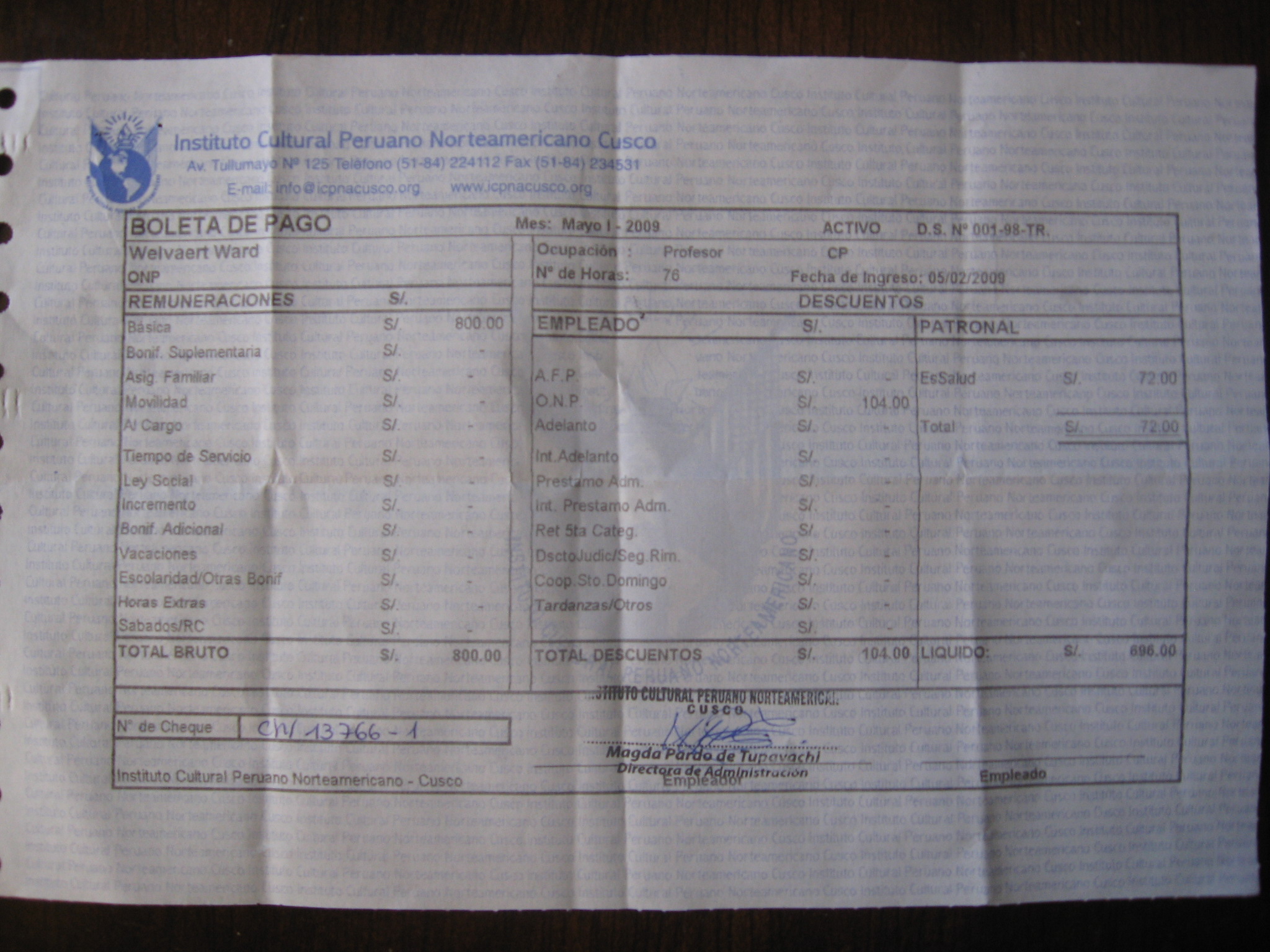
Boleta de Pago – Peruvian paycheck
Here’s my paycheck for teaching ESL part-time for the month of May.
“Read ‘em and weep boys” That’s what an instructor I used to know would say as he handed back his students’ graded exams. Same could be said for paychecks in Peru.
I only taught 2 classes, or about 4 hours a day, 18 days per month. The grand total is S/.800 (~ $280). Notice how S/.104 (~$35) is deducted for my retirement and my employer generously chips in S/.72 (~$25) for EsSalud health insurance. I take home S/.696 (~$250) at the end of the month.
That’s less than what the taxes on my WEEKLY paychecks at GE used to be
Not that I’m an ungrateful gringo, I just do the teaching job for fun, it’s a nice way to meet local people and get out of the house for a few hours. For a single person who wants to spend a few months in Latin America teaching ESL is actually a good gig. If you work full time (4 classes ~ 8 hrs / day) you can make about S/. 1,500 (~$500) per month, enough to cover your living expenses down here.
At ICPNA my pay is actually better than average for Peru. The minimum wage in Peru is around S/.550 (~$180) per month, average starting wages in Cusco for respectable jobs like drivers, nurses or teachers are around S/.800 (~$280) per month – full time.
If you ask me, the way to make money in Peru, start your own business. That’s what I tell all my students, “Make your own luck, don’t work slave labor for a bunch of old rich guys…”