Swine flu in Cusco?

Obvious disadvantage to living in a tourist town… From Diario del Cusco:

“El Ministro de Salud Oscar Ugarte precisó que se trata de una guía de turismo cusqueña que estuvo en contacto en días pasados con un grupo de turistas mexicanos que arribaron a la Ciudad Imperial el pasado viernes y desarrollaron la acostumbrada visita a los centros de atracción. La joven cuya identificación se mantiene en reserva por consideraciones al estado de salud, presentaba sintomatología similar al de la gripe porcina y fue sometida a exámenes inmediatos los cuales resultaron negativos en un primer estado. Este primer indicio motivó preocupación por la aparición del virus H1N1 causante de la crisis de salud que ha puesto al mundo al borde de la temida pandemia según precisó la Organización Mundial de la Salud no se trata de una gripe común.”

Hopefully these suspected cases will turn out ok. More info here regarding H1N1 swine flu.

One question that has been asked is why the “swine flu” is deadlier in Mexico than elsewhere. I’m no scientist, but I would look at the impact of the elevation of Mexico City (2,240 meters or 7,349 feet msl). Of course, Cusco is at an even higher elevation of 3,400 meters (~11,000 feet).

Here in Latin America there are several mega-cities, such as Mexico City (est. 19 million population) and Lima (est. 7-9 million population). Stuart has done a great job describing the mass migration to Lima over the past several decades. I’ve never been a big fan of mega-cities, and an outbreak such as the current swine flu only makes me wonder about the logic of millions of people living so close together.

Hopefully these reports of swine flu in Cusco will turn out to be the result of increased sensitivity, not actual cases of the swine flu.

UPDATE: according to El Comercio, swine flu has been ruled out in this case.

Journalism

From Time.com:

“The legislative achievements have been stupendous — the $789 billion stimulus bill, the budget plan that is still being hammered out (and may, ultimately, include the next landmark safety-net program, universal health insurance). There has also been a cascade of new policies to address the financial crisis…”

If you’re into the 100-day-Obama-lovefest, read the complete article: Joe Klein on the President’s Impressive Performance Thus Far.

To me this is terrible journalism, akin to the Latin Business Chronicle voting Alan Garcia as Leader of the Year. Where are the hard questions journalists are supposed to ask? Take this quote from an Obama speech for example:

“It is simply not sustainable,” he said, “to have an economy where, in one year, 40% of our corporate profits came from a financial sector that was based on inflated home prices, maxed-out credit cards, overleveraged banks and overvalued assets.”

This quote is completely contradictory to the economic policies the Obama administration has implemented, which amount to nothing more than printing up collosal amounts of money to keep the big banks and big wigs on Wall Street in business.

If Obama actually believed what he said in this particular quote, he would simply let some of the big banks (and GM) go bankrupt. If you think that sounds insensitive, it could be argued that throughout history successful societies have been distinguished by having some orderly liquidation/bankruptcy process, so that smart, innovative, successful businesses can replace those that for whatever reason became obsolete and insolvent. If anyone actually believes middle class America benefits from the big banks on Wall Street’s survival, I have a mountain top in Peru I’d like to sell them.

In fairness, other than the economic policies of the Summers-Geitner team I’m not critical of anything President Obama has done in his first 100 days, and to his defense Joe Klein does say it’s a “journalistic conceit” that the President could be assessed in 100 days. But to print these type of quotes without at least questioning whether the President’s policies are in line with what he said, is just plain terrible journalism.
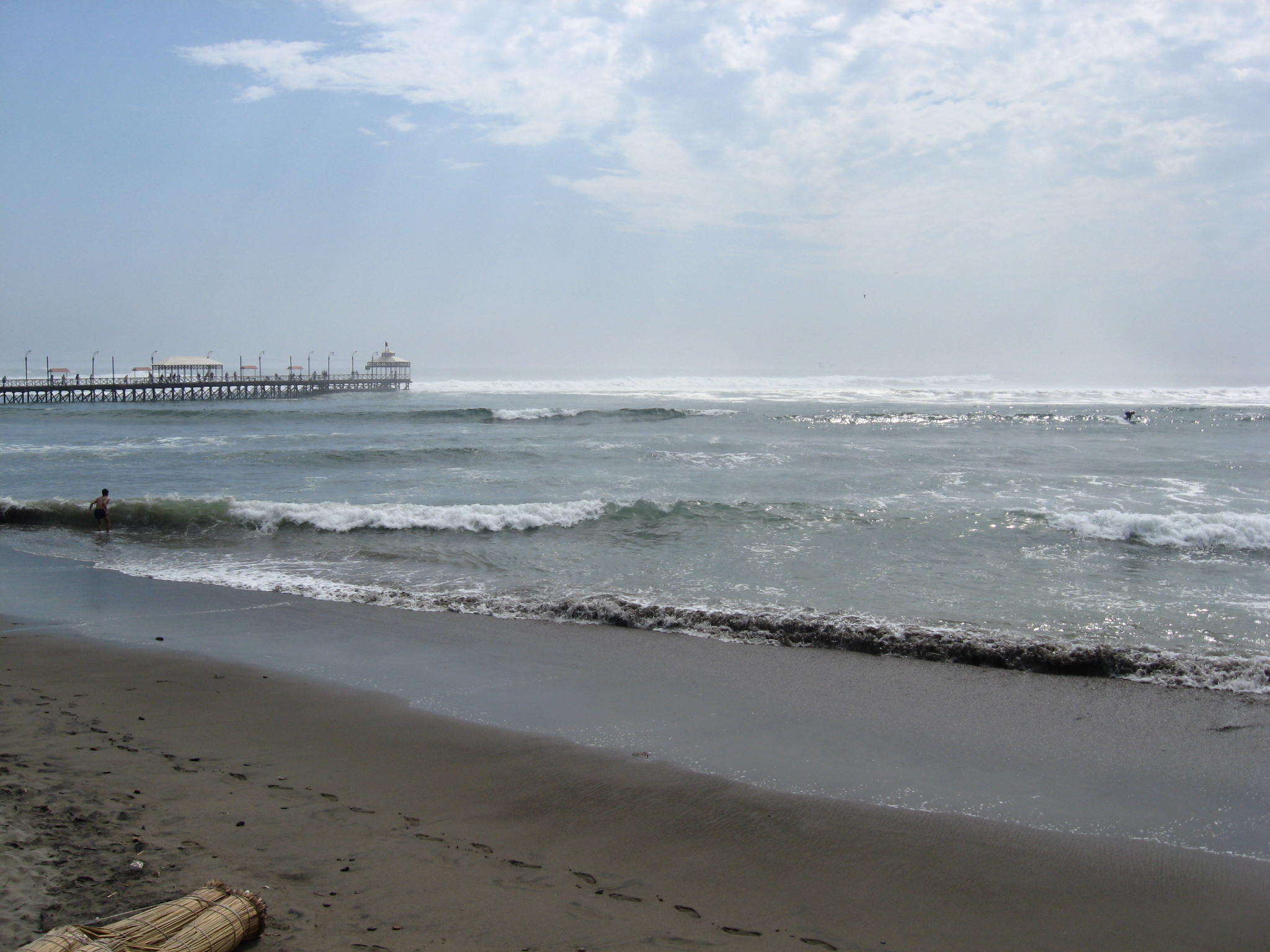
Huanchaco

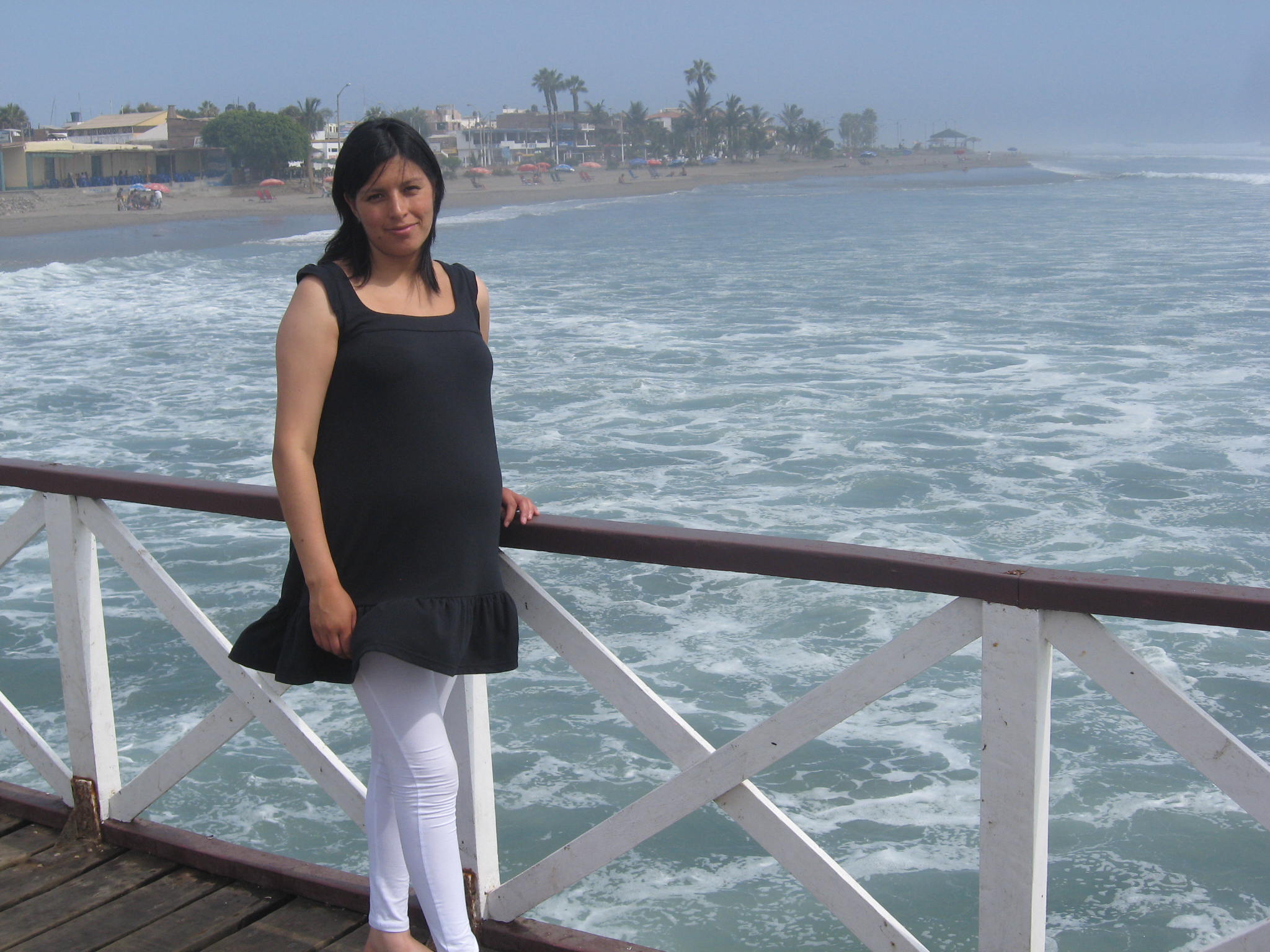
Last week we visited the seaside resort of Huanchaco, in the North of Peru. Huanchaco is a great little beach town, quiet, laidback and picturesque. The climate in the North of Peru is beautiful year round, and there is great surf on the Pacific Coast.

We took a walk down the malecon (boardwalk) and had lunch overlooking the ocean – after all, during our entire visit to Trujillo we were practically living like the Roman Emperor.

From Trujillo you can get to Huanchaco by taxi for about 20 Nuevos Soles (~ $7) or by public transportation, just ask the locals which bus to take. I highly recommend it!

Ceviche

Patricia had ceviche at a small seaside restaurant in Huanchaco last week. Ceviche is a typical Peruvian dish: fresh, uncooked fish, typically marinated in citrus and spices.

Ceviche

Ceviche

El Mochica, seaside restaurant in Huanchaco, Peru

El Mochica, seaside restaurant in Huanchaco, Peru

Huacas del Sol y de la Luna

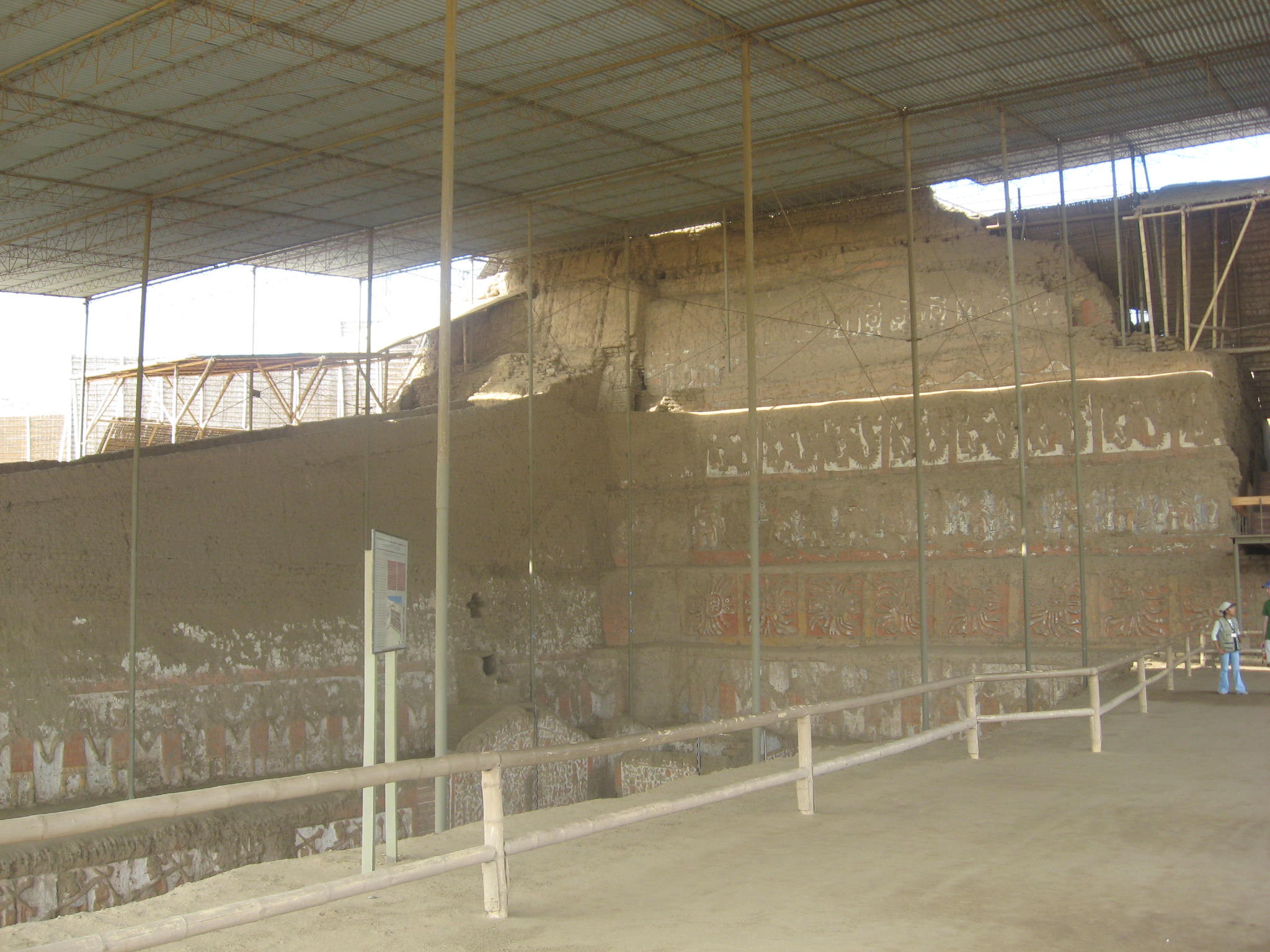
We visited the Huacas del Sol y de la Luna while we were in Trujillo last week. The Huacas del Sol y de la Luna are an archeological complex of the Moche, a pre-Inca civilization in Northern Peru. The complex consists of 2 temples, which resemble the Mexican Pyramids of the Sun and the Moon in Teotihuacan.

Significant archeological research has only been done at the complex since the early 1990s, the larger of the 2 pyramids, Huaca del Sol, has not been excavated so far. The Huaca de la Luna is the only one open to the public at this time.

Huaca del Sol near Trujillo, Peru

Huaca del Sol near Trujillo, Peru

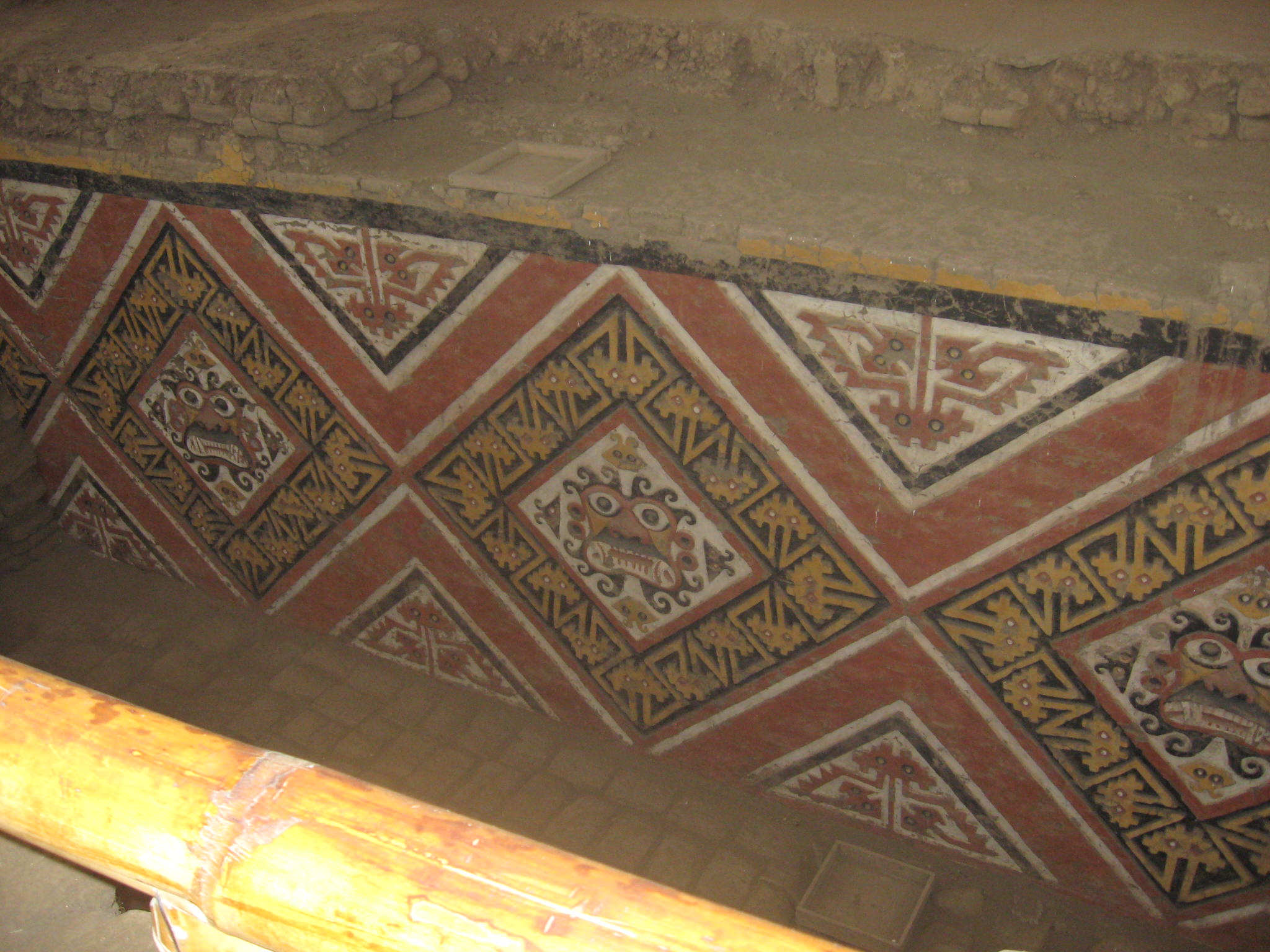
Unlike the archeological sites near Cusco, the Huacas del Sol y de la Luna are adorned with colorful paintings, typical of the Moche culture. Each of these paintings is about 1.7 meter (nearly 6 feet) tall. The typical Moche paintings are found both on the interior walls and on the exterior of the temples.

Moche paintings inside the Huaca de la Luna

Moche paintings inside the Huaca de la Luna

Moche painting representing the main Moche god

Moche painting representing the main Moche god

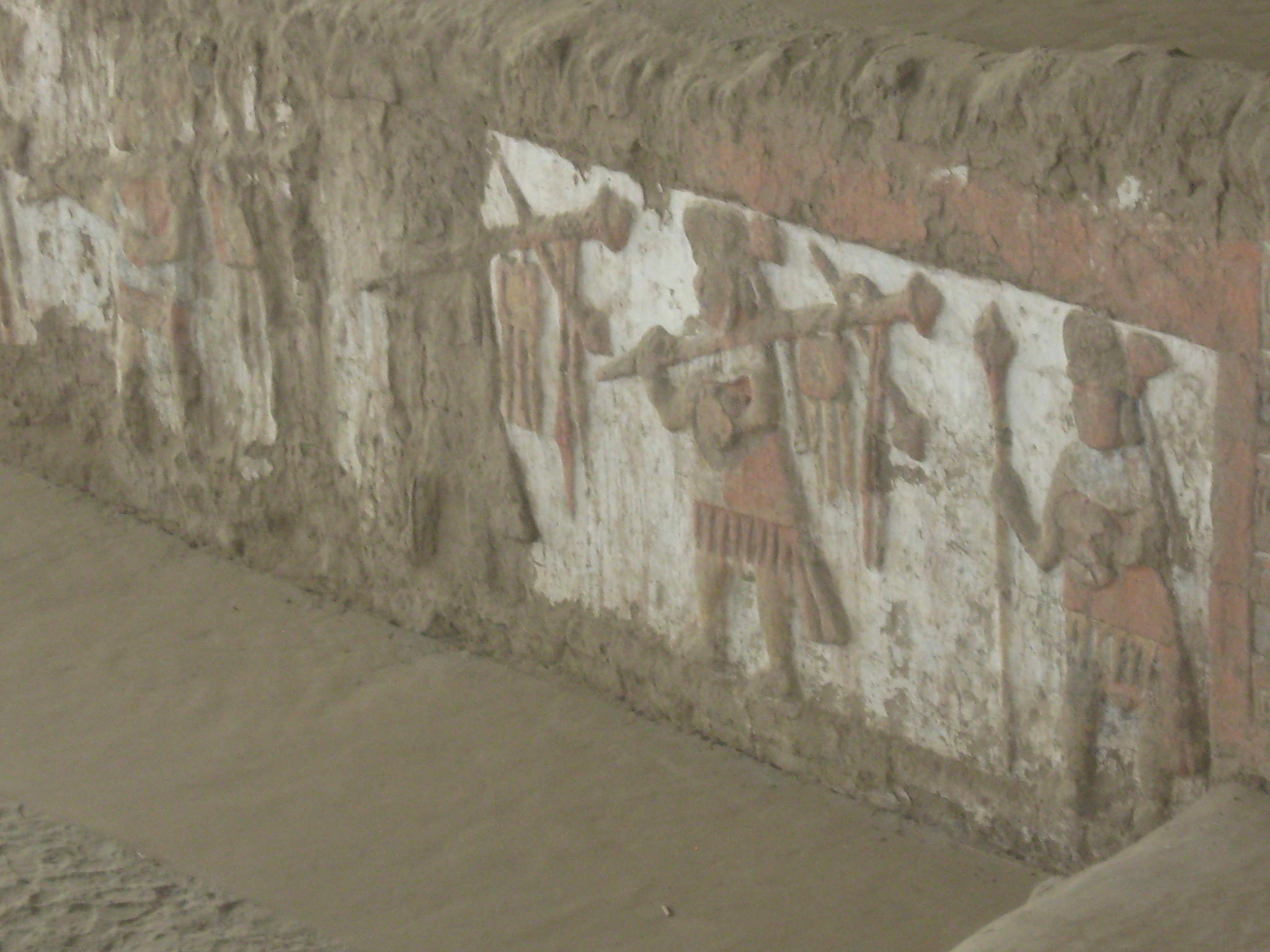
Paintings of Moche warriors

Paintings of Moche warriors

The Huaca de la Luna consists of 5 separate buildings, built over the top of each other to form the pyramid-like structure. The Huaca del Sol is estimated to consist of 11 buildings. It is believed with each new generation of priests or rulers the old temple was covered with clay brick (adobe) and a new temple was constructed on top of the former temple.

Note that on the exterior walls, the paintings don’t correspond with the levels of the building on the inside.

Exterior of the temple, with a ramp leading to the top

Exterior of the temple, with a ramp leading to the top

Huaca de la Luna near Trujillo, Peru

Huaca de la Luna near Trujillo, Peru

Algarrobina

We’ve been living like the Roman Emperor for almost a week now. We’re eating three-course meals with silver and porcelain every day – for breakfast. The reason for all this goodness is that we’re visiting a good friend of Patricia in Trujillo, the North of Peru. More on that later.

Algarrobina

Algarrobina

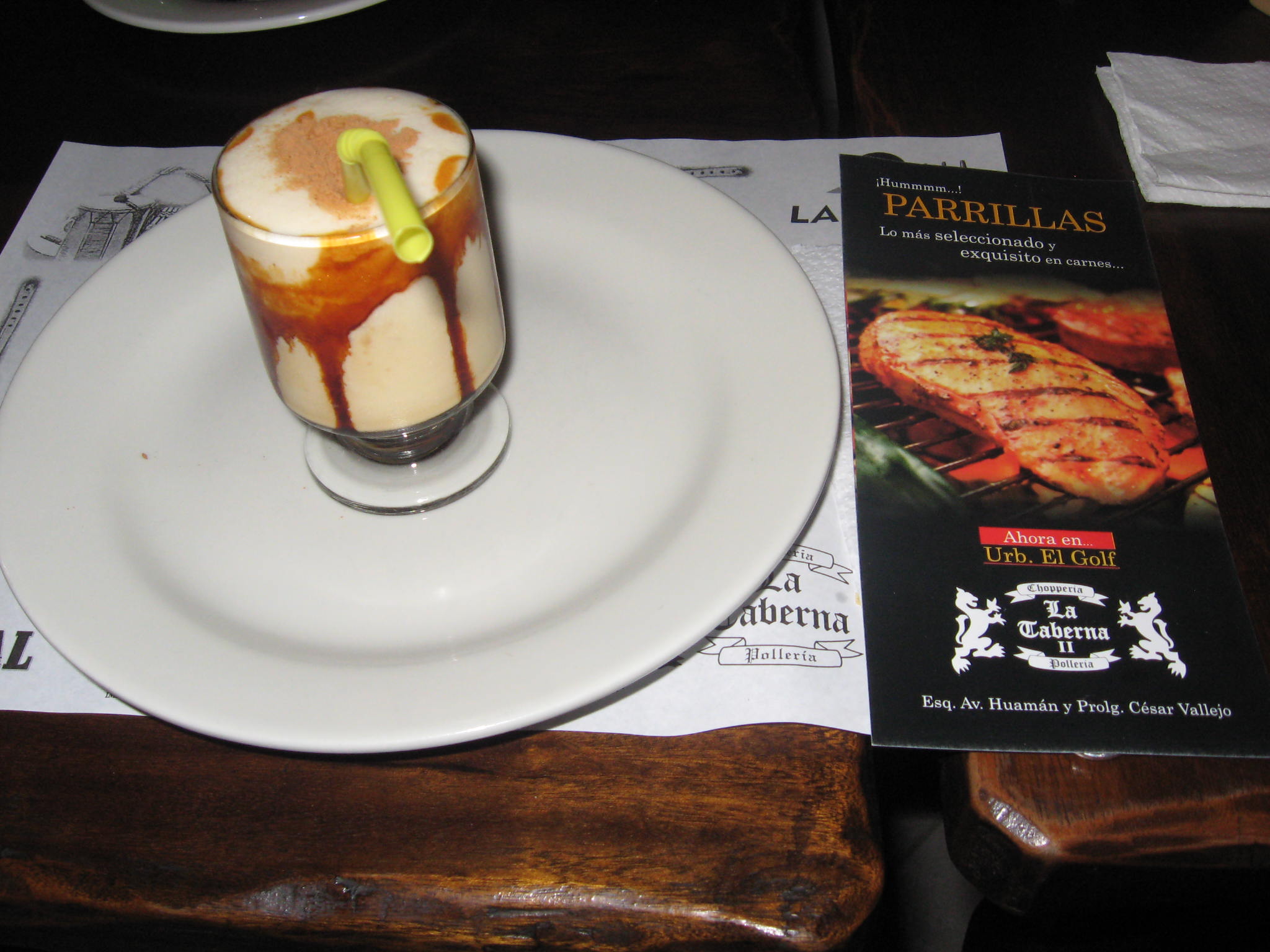
Monday night I had an Algarrobina, a drink typical of the North of Peru. The picture does not do justice to the presentation, it looked perfect before I got my grubby hands all over it.

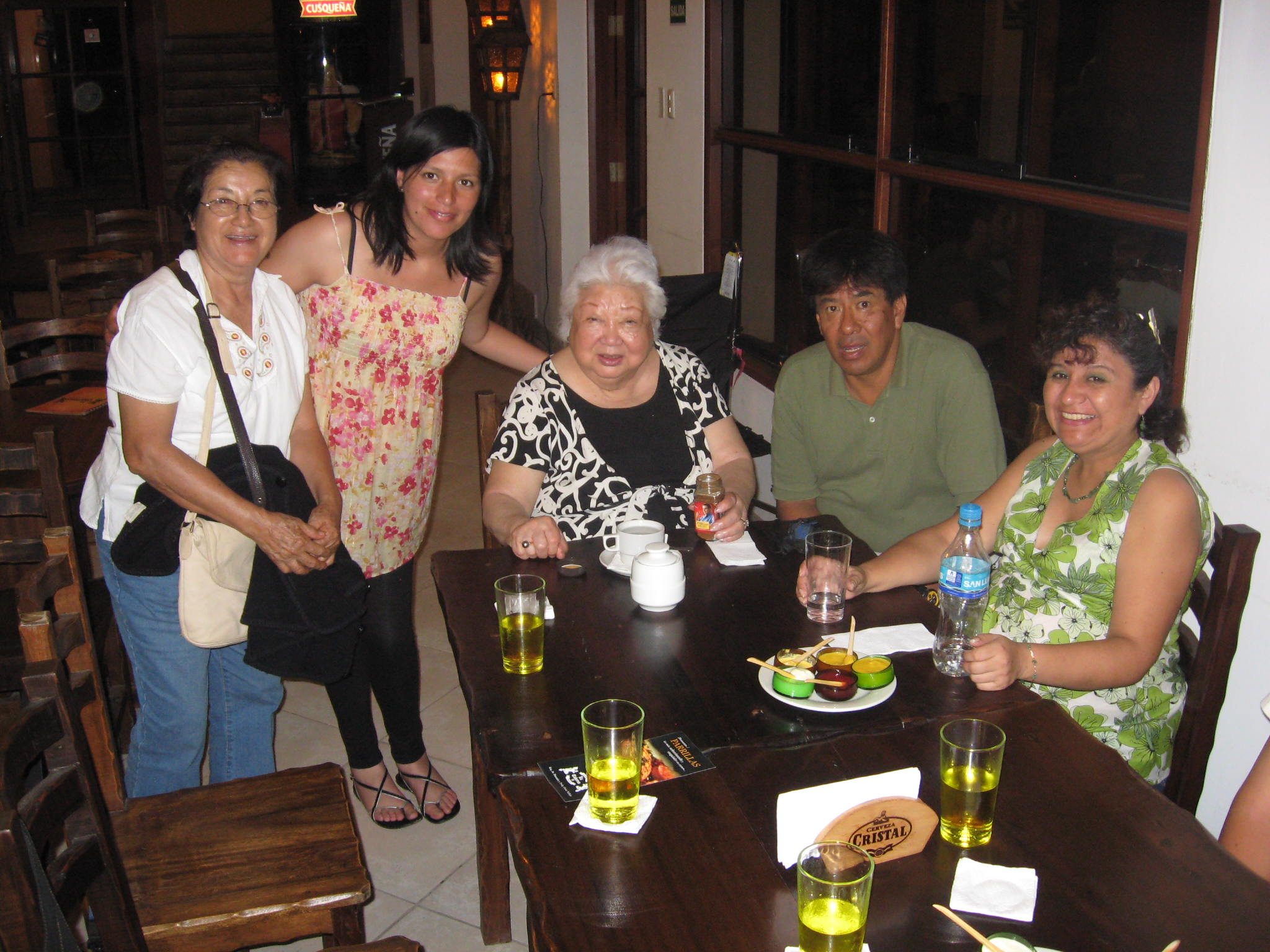
Carlos, the owner of La Taberna, with Patricia and other friends.

Carlos, the owner of La Taberna, with Patricia and other friends.

We were invited to “La Taberna II” by the owner Carlos, who is a good friend of our hosts. The restaurant is located at the corner of Avenida Huamán and Prolongación César Vallejo. It is one of the nicest restaurants in Trujillo, it would not at all be out of place in West Palm or Wrightsville Beach.

GM Bankruptcy

More talk today about a possible GM bankruptcy. Well, a monkey with a calculator could have figured out GM was bankrupt years ago, if you accounted for their off-balance sheet liabilities. Instead of addressing the problem then, GM stuck its head in the sand, overproduced cars and offered in-house financing to sell cars that the market couldn’t support, and thus to make their own numbers look better. The credit crisis didn’t hurt GM, GM helped create it.

On a different note, instead of fixing their disastrous labor relations GM tried to get rid of its union workforce and go to the greener pastures of Mexico. How’s that whole globalization thing working out?

Let’s have a look at a US made car, as seen on the road here in Peru, shall we:

US made car in Cusco, Peru

US made car in Cusco, Peru

Now take a look at the vast majority of cars on the road in Peru: made in Japan, Korea, and China.

Kind of says it all. The US auto industry messed up globalization beyond belief.

I’m not a happy camper about this: my brother works for GM in Europe, he and a lot of other good people might lose their jobs. This weekend I’m going to the beach. I’m writing a turnaround plan for GM, see if I won’t.

US – Cuba policy

President Obama has relaxed restrictions on travel and money transfers to Cuba.

Guess what? Peruvians don’t care. I don’t care. In fact, no one outside Miami or Washington DC cares.

Other than the US, practically the entire world has normal relations with Cuba. People here in Latin America travel freely to Cuba and have otherwise normal relations with Cuba. Many Latin American countries currently have democratically elected, yet left-leaning regimes (Ecuador, Bolivia, Brazil, Venezuela, …) and people still admire Ernesto ‘Che’ Guevara, evidenced by posters, shirts and hats with his name or semblance. For anyone who has lived in the poverty that still exists in Latin America, the US brand of capitalism and phobia of anything socialist is simply absurd.

I believe history won’t be kind to US politicians unless they normalize relations with Cuba immediately. The Cuba embargo hasn’t changed the Castro regime in nearly half a century, it’s become nothing but a distraction to many better causes our elected officials could spend their energy (and our tax dollars) on.

Señor de los Temblores

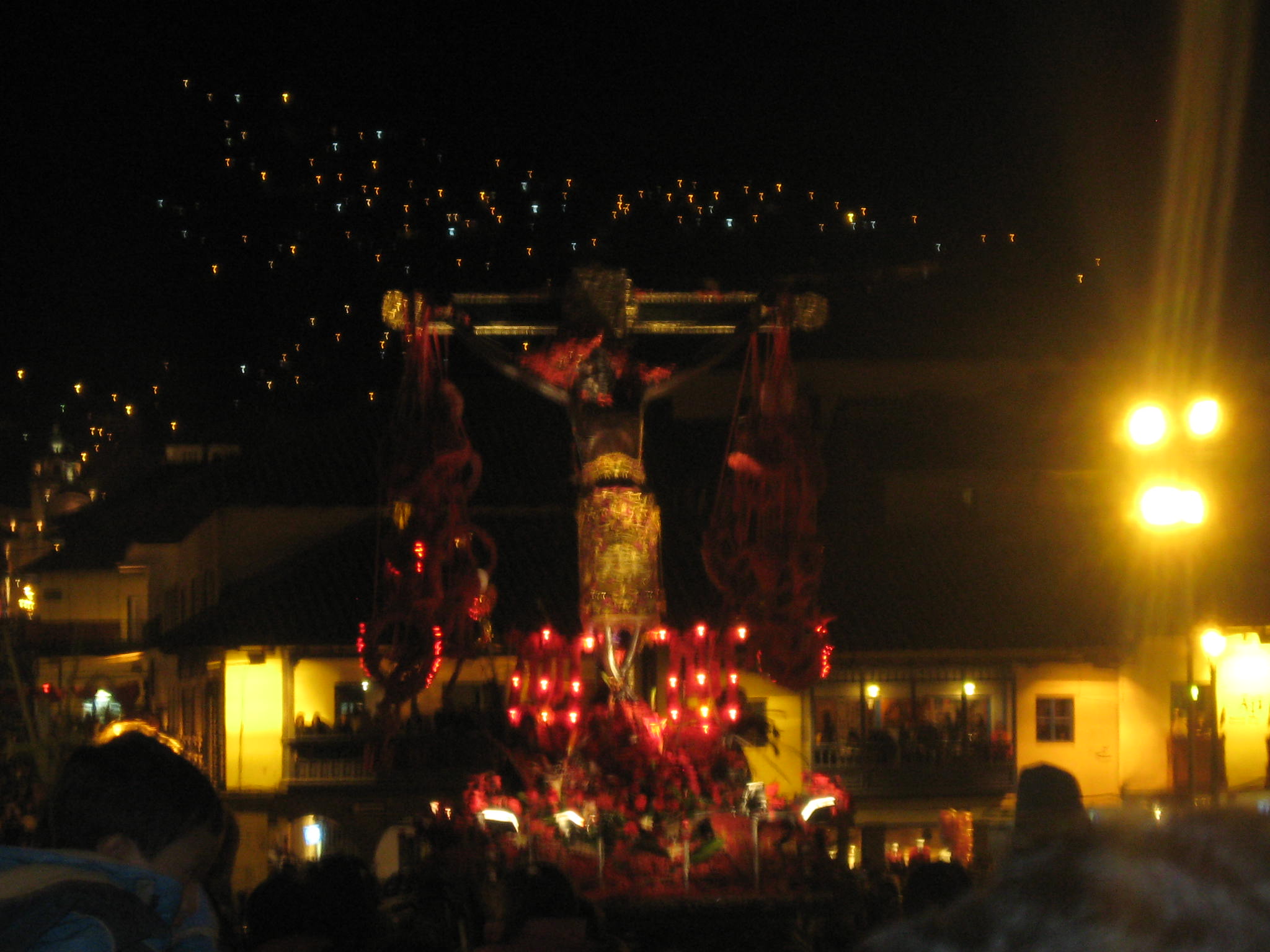
Señor de los Temblores is celebrated in Cusco during Holy Week, or Semana Santa. On Easter Monday the image of Señor de los Temblores is carried through the city in a procession that ends in front of the Cusco Cathedral on the Plaza de Armas, or main square, of Cusco. Tens of thousands gather on the Plaza de Armas and surrounding streets to see the procession.

Earthquakes are common here in the Andes, and people worship Señor de los Temblores because they believe he protects them from dangerous earthquakes. It is believed that the image of Señor de los Temblores was taken out during the devastating earthquake in Cusco in 1650, and the earthquake stopped. I’ve also heard many locals say the same thing happened during the earthquake in 1950, the most recent serious earthquake here in Cusco.

Patricia took some pictures of the procession of Señor de los Temblores this past Monday:

Señor de los Temblores

Señor de los Temblores

Annual procession of Señor de los Temblores

Annual procession of Señor de los Temblores

Crowd waiting for Señor de los Temblores

Crowd waiting for Señor de los Temblores

Señor de los Temblores by the Cusco Cathedral

Señor de los Temblores by the Cusco Cathedral